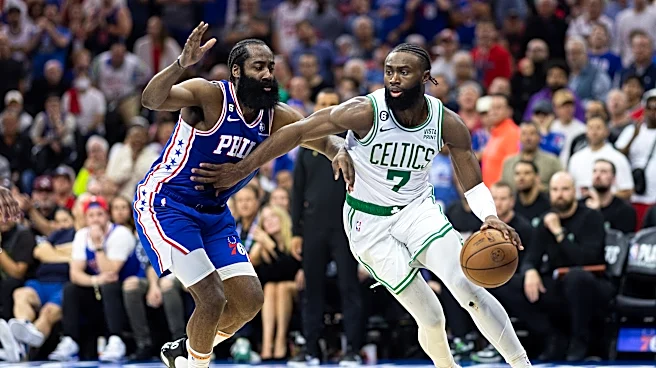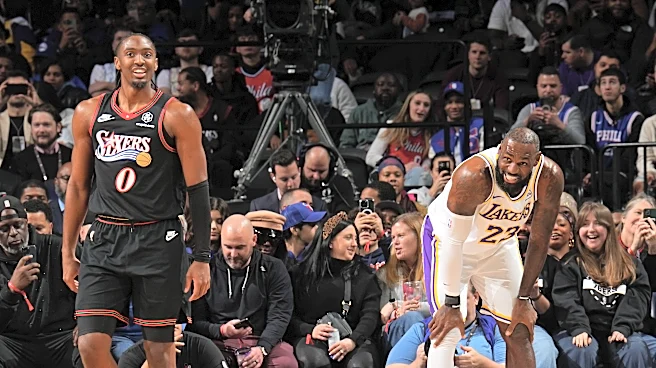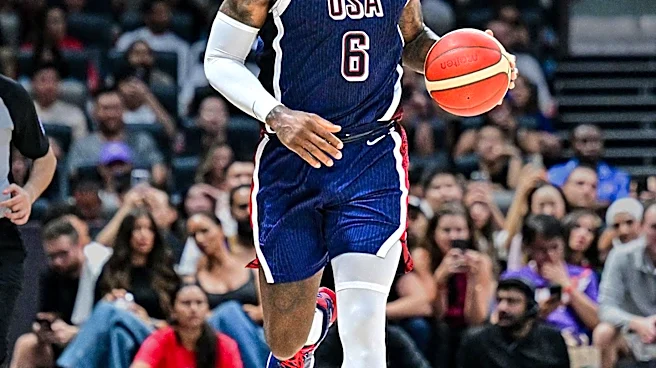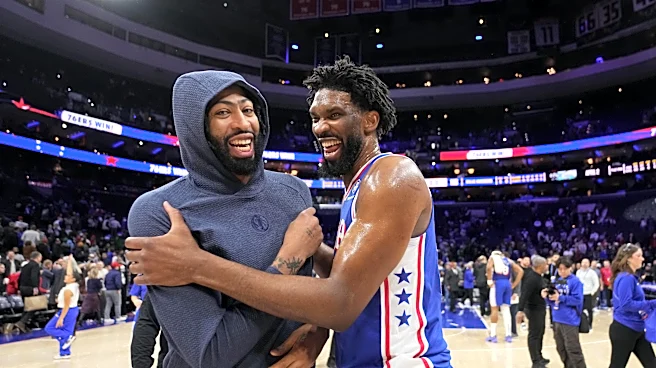





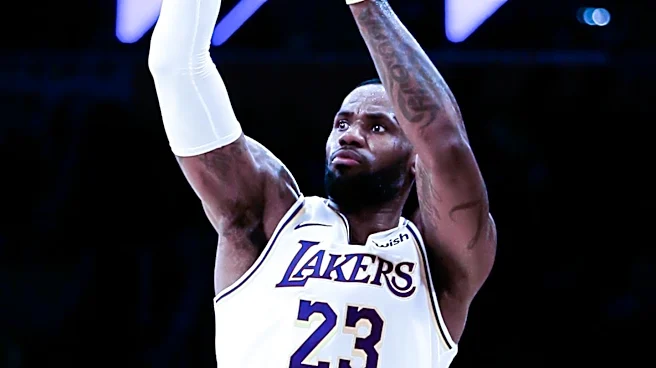
LeBron James reportedly joining the Philadelphia 76ers is the latest development in the constantly evolving Eastern Conference. How this affects the big picture in the uber-competitive East is simple: Philadelphia is one of the favourites to come out of the East.
But how does this impact the Toronto Raptors? Their seven-game series against the 76ers defined the 2019 championship run, and a potential trilogy (remembering the 2001 series featuring Vince Carter and Allen Iverson) seems like it’s a realistic
possibility.
Assuming Kawhi Leonard is traded to the Raptors, here’s how each team’s rotation looks:
Toronto
PG: Immanuel Quickley/Jamal Shead
SG: RJ Barrett/ Ja’Kobe Walter
SF: Kawhi Leonard/Collin Murray-Boyles
PF: Scottie Barnes/Kyle Anderson
C: Jakob Poeltl/Trayce Jackson-Davis
Philadelphia
PG: Tyrese Maxey/Labaron Philon Jr.
SG: VJ Edgecombe/Anfernee Simons
SF: Jaylen Brown/Dean Wade
PF: LeBron James
C: Joel Embiid/Adem Bona
Using these rosters – and acknowledging that should both organizations meet expectations and make ensuing trade deadline moves – let’s look at what advantages and issues the Raptors would have in a playoff matchup.
Starting lineup
As currently constructed, the 76ers boast one of the most complete starting lineups in recent memory. Offensively, they have the flexibility to hunt various matchups. The outside shooting isn’t necessarily elite, but they have enough firepower on the perimeter to get by. While it isn’t the most quantifiable stat, their starters have the stage presence to make big shots in high-pressure moments.
When healthy, Maxey and Embiid have always been a problem for the Raptors. Toronto still doesn’t have anyone on the roster to contain Maxey’s game-breaking speed and penetration, nor do they have the body to consistently contain Embiid.
What the Raptors do have is a duo best suited to negate the new additions of Brown and James. Even at 35-years-old, Leonard is more than capable of preventing Brown from taking over. While 76ers Head Coach Nick Nurse views James as a jumbo-wing hub, Barnes should have the advantage at this point in their respective careers regardless of scheme.
However, there should also be major concerns about what James does to unlock the off-ball versions of Maxey, Brown, and Edgecombe.
Despite the 76ers seemingly having the better starting five, they also have to deal with the best player on the court in Leonard. No one on their roster can guard Leonard and that matters in the post-season. Can Barrett knock down enough open shots when the 76ers rotate off him? Can Quickley hold his own defensively against Maxey without getting into foul trouble, so that he can be a threat on offence? Can Barnes continue his playoff ascension and dare James to prove that he still has enough in the tank?
Bench mob
During Game 7 of the 2019 playoff series, the Raptors opted for a strict seven-man rotation (Serge Ibaka played 29 minutes, while Fred VanVleet logged 15 minutes). Meanwhile, the 76ers deployed eight players. Assuming the DeMar DeRozan reunion falls through, it’s reasonable to project Shead, Walter and Murray-Boyles as the group that Raptors Head Coach Darko Rajakovic leans on.
Depending on what you value most off the bench, both the Raptors and 76ers have a case for the better unit. Toronto’s options are defensive stalwarts who are asked to be opportunistic scorers. While Philadelphia flaunts more offensively oriented players. Wade was unexpectedly annoying while guarding Brandon Ingram, but that won’t be an issue with Leonard.
There will also be fun minutes pitting Murray-Boyles against James, both in traditional and small-ball lineups. We’ll give the Raptors the slight edge in this department because of the flexibility that their bench offers.
Potential Needs
Raptors:
- Perimeter defence
- Big man (preferably one that can stretch the defence)
- Bench scoring
76ers:
- Perimeter defence
- Big man (extra bodies)