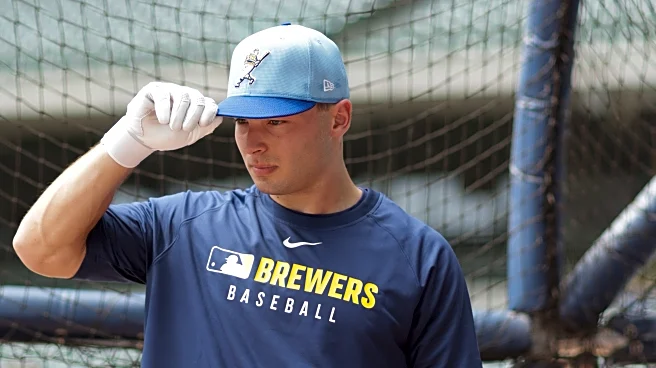

After breaking into the big leagues early in 2025, Caleb Durbin became one of the most intriguing and unexpected contributors on a Brewers team that rode young talent to the best record in baseball. The
question now for Milwaukee heading into 2026 isn’t just whether Durbin can be a solution at third base, but whether he should be the long-term one.
Durbin’s emergence came at a position that has been unsettled for Milwaukee for years, which only adds to the significance of his rookie season. What the Brewers must decide now is whether what they saw was a pleasant surprise or the foundation of a longer commitment.
Underdog Story & Strong Rookie Campaign
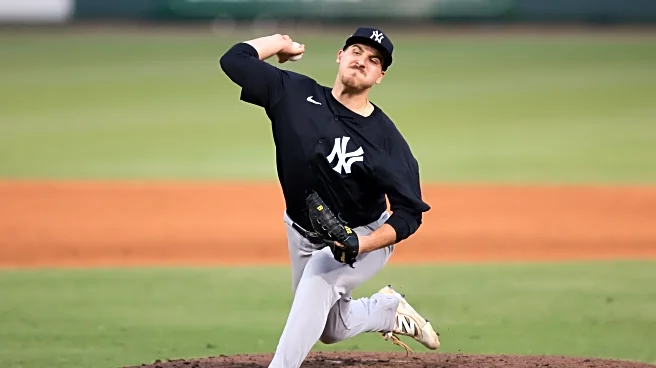
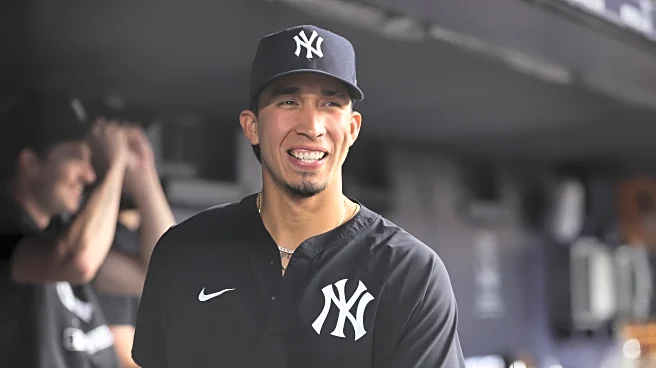
Durbin’s path to the majors was anything but conventional. A 14th-round draft pick out of Division III Washington University in St. Louis, he climbed the minor league ladder through performance rather than pedigree. He eventually arrived in Milwaukee as part of the trade that sent Devin Williams to the Yankees, initially viewed as depth rather than a future everyday player.
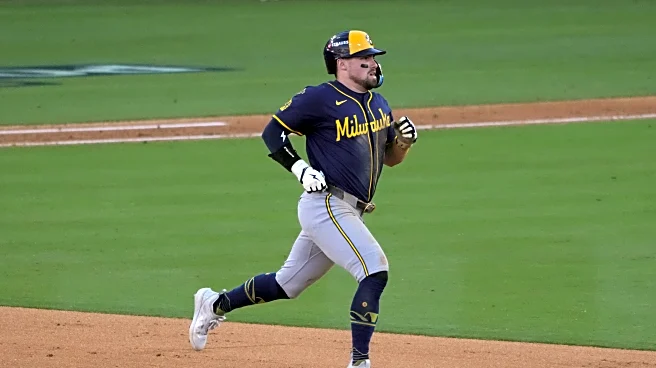
That perception changed quickly. When the Brewers struggled to get production from third base out of Vinny Capra and Oliver Dunn early in 2025, Durbin was given an opportunity and immediately brought energy to the lineup. He hit the ground running, earned consistent playing time, and by midseason had established himself as the club’s primary option at the position.
Durbin’s rookie campaign was quietly impressive. Over the course of the season, he posted a .256/.334/.387 slash line with 11 homers, 18 steals, and steady production across 136 games, totaling 2.8 bWAR, good for the seventh-best mark on the team (and fifth among position players). That value add was good enough for him to ultimately finish third in NL Rookie of the Year voting behind only Drake Baldwin of the Braves and Cade Horton of the Cubs.
He was also a strong presence at the plate in the postseason, appearing in all nine games and hitting .276/.364/.414 with two doubles, a triple, two RBIs, three runs, and three steals.
What stood out most was how well his skill set translated to the major league level, fitting in nicely as he played “Brewer Baseball.” He showed strong strike-zone awareness, kept his strikeout rate in check, and used his speed aggressively on the bases. Those traits helped him remain productive even with little power, a valuable quality for a young hitter adjusting to advanced pitching.
Still, the numbers also raise a natural question: Is that level of offense enough from a corner infield position over the long term?
Player Profile
At the plate, Durbin does not fit the traditional mold of a power-hitting third baseman. His value comes from contact, on-base ability, and speed rather than slugging. That profile can work, especially in a lineup that does not rely on any single player for offense, but it does leave less margin for error.
If Durbin settles in as a league-average hitter with strong on-base skills, he can absolutely be a productive regular. If the bat stalls or regresses, the lack of power could become more noticeable at a position typically associated with run production.
Defensively, third base has never been Durbin’s most natural position. He came up through the minors playing multiple spots in the infield, with more than half his games at second base, and that versatility remains part of his appeal. At third, he showed adequate range, solid instincts, and improving footwork, though his defense was not without rough patches.
For the Brewers, that versatility cuts both ways. It provides flexibility when constructing the roster, but it also makes it harder to know whether Durbin should be locked into one spot. Long term, his ability to remain reliable defensively at third base will be just as important as any gains he makes with the bat.
Cost, Control, & Opportunity
One of the strongest arguments in Durbin’s favor is control. Going into his age-26 season, the Brewers have multiple years of team control remaining, which gives them the freedom to be patient and allow him to grow without immediate financial pressure. Cost-controlled contributors who can play everyday roles are the backbone of how Milwaukee builds competitive rosters.
That context matters. Even if Durbin never becomes a star, being a steady, affordable option at third base has real value, particularly for a team that prioritizes flexibility and depth.
For Durbin to truly establish himself as the long-term answer at third base, a few things would need to happen over the next season or two:
- Continued offensive development, even if it comes in small increments
- Defensive consistency that removes doubt about his ability to stick at the position
- Maintaining his versatility without losing an everyday identity
If he can check those boxes, the Brewers will have little reason to look elsewhere.
Final Thoughts
So is Caleb Durbin the Brewers’ long-term answer at third base? The answer today is not definitive, but it is encouraging. He filled a long-standing organizational need, held his own over a full season, and fits the type of player Milwaukee has consistently succeeded with. However, I would have said the same thing about Joey Ortiz after his solid rookie year in 2024, and things are much murkier for him after a down 2025 campaign.
Durbin may not be a finished product, but in the interim, he has given the Brewers something they have rarely had at third base in recent years: a legitimate reason to stop searching.