



The top end goal of every business is to make money. But a college football program, even a Power 4 team at the FBS level isn’t a business per se. So the number one goal of a CFB program is to win the CFB Playoff National Championship.
This seems like a no-brainer, right? But while we all can agree that the #1 goal is to win and the #2 goal is to make money (merchandise, ticket sales, advertising, sponsorships, and increased enrollment), the greater question is what goes into creating a winning program?

When Dr. Eliyahu M. Goldratt and Jeff Cox published The Goal: A Process of Ongoing Improvement in 1984 I doubt they intended a college football blogger to reference their work over 40 years later. And yet the ideas in the book make total sense when it comes to high performance athletes and the football programs they play for.
In The Goal, the authors explain that the #1 goal is to make money. But it’s not done by running at maximum capacity all the time, that’s actually inefficient in the world of business. A football program, like a business, should be a holistic system. Athletes need high and low intensity days in order to survive a 50-week campaign.

In The Goal, the Dr. Goldratt and Mr. Cox break their key metrics (KPI’s in some circles) into three areas: Throughput, Inventory, and Operating Expense. In a business Throughput is turning raw materials into sales and thus cash. Inventory is the money tied up in the creation process, and Operating Expense is the money spend to turn inventory into throughput.
Goldratt focuses on the “Theory of Constraint” which is built more around optimizing the system to avoid bottlenecks than it is about running machines and workers 24/7. The idea of bottlenecks is that a factory is limited in speed based on their bottlenecks or lowest performers, not their elite performers.
The Theory of Constraint means to identify, load and attack the bottleneck to get it up to par with the rest of the plant. We all know that if your team is really good EXCEPT for your defensive backs you’ll lose a pair of games you shouldn’t because of 40 point shootouts. If the defensive back play is your bottleneck, you either need: a new DC, DB coach, new DB’s or an even better pass rush.

In the world of P4 football The Goal will always be to win the natty. Program head coaches want the Throughput to increase (wins), while the inventory (talent on hand) decreases and the operating expense decreases as well. Now in this instance we need to define throughput, bottlenecks and redefine the inventory and operating expense categories.
The Throughput will be the acquisition, development and deployment aspects of a program. This phrasing is typically attributed to Bill Connelly of ESPN. Acquisition will include freshman and transfer portal rankings from 2024-2026. Development are the number of NFL players from the school since the 2025 NFL Draft. Deployment is the SP+ data from March of ‘26 that ranks teams based on four metrics: 1- returning production, 2- recent history, 3- recent recruiting, and 4- coaching change effects.
The potential Bottlenecks in a program that can prevent victory can be talent, over strength of schedule, scheduling wrenches (Solid Verbal’s “letdown, look-ahead sandwich,” Bruce Feldman’s “Body Blow Theory,” My ‘Friday Night Flounders,’ etc.), coaching blunders, talent deficiencies, and program culture issues.
The Inventory in CFB will mean the 2026 SP+ returning production numbers, the number of players on the on3 top-100, and the number of 1st team preseason all-conference players from the program. In our world we want those numbers to actually go up, but the players to not return because they are now draft-worthy players.
Lastly the Operating Expense will define the head coach’s annual salary compared to their average wins per season- thus creating a ‘price per win’ number. Here you DO want a low number because it’s costing UNC a heck of a lot more per win for Bill Belichick than it does Central Michigan for Matt Drinkall– wins be damned.
The Miami Hurricanes
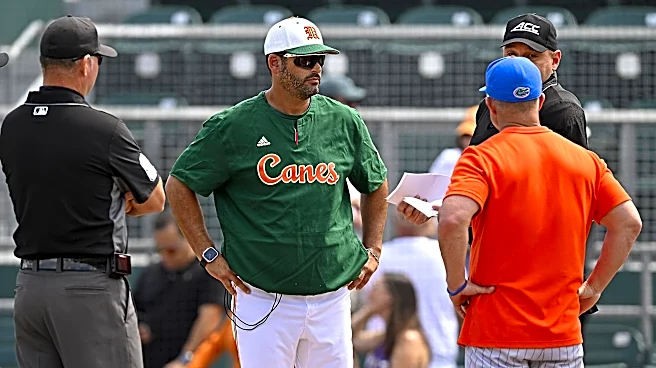
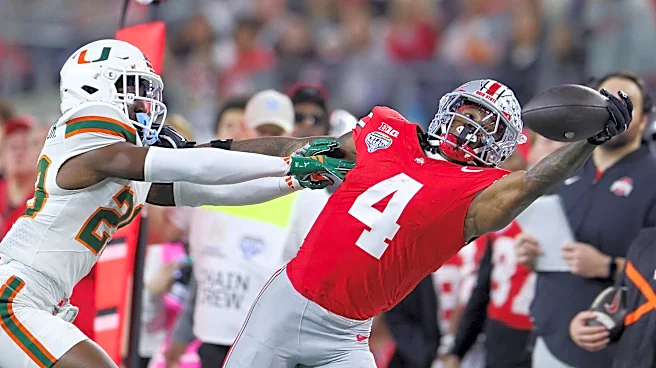
So where do Mario Cristobal’s Miami Hurricanes fit into The Goal? I expect the Miami Hurricanes to finish the regular season 11-1. It’s a disappointing season if Miami doesn’t win the ACC Championship and make it into the CFB Playoff in ‘26. So how will The U get there?
Throughput

The ‘Canes acquisition is far and above better than everyone on their schedule outside of Notre Dame. Both programs average 9th in the nation in freshmen recruiting. Miami’s last three portal classes are 6th in the nation while only FSU is close at 14th. When it comes to development, or the number of NFL players since ‘25, Miami is the top of their schedule at 22. The Irish are just behind the ‘Canes with 21, and Clemson is just behind them with 18.
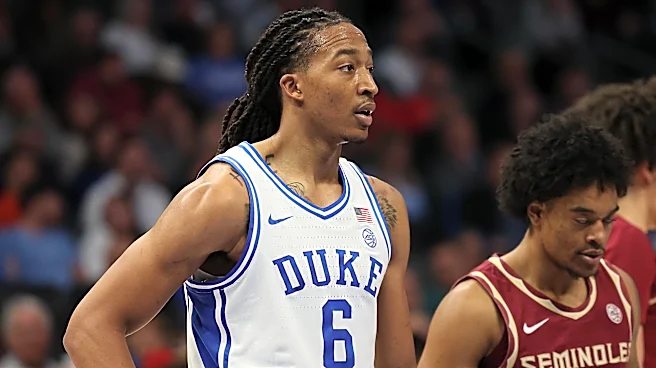
Deployment, or the SP+ numbers from Bill Connelly this preseason, has Miami ranked only below one team on their schedule- the ND Fighting Irish. Miami is ranked 8th overall in SP+ while ND is ranked 3rd. The next closest club is Clemson at 23rd. On offense ND is starting the season 3rd in SP+, Miami is 12th and Duke even without their QB Darian Mensah is 19th.
On defense Miami takes the top spot over their schedule at 7th in SP+. ND is 9th and Clemson is 16th. UM has the 42nd ranked kicking game per SP+ while BC is the leader on the schedule at 28th.
Bottleneck

Considering the ‘Canes extremely light strength of schedule per CFB News, SOS shouldn’t be a bottleneck for the ‘Canes. Miami leads off with three non-Saturday games but against lesser opponents in Stanford, FAMU and Wake Forest. After that it’s all Saturday affairs for the boys from Coral Gables. The ‘Canes SOS comes in at 59th of 138 FBS teams. Nine of Miami’s opponents have a tougher SOS than the ‘Canes, including Stanford at 19th in all of FBS.
The less analytical bottleneck for Miami will be asked in the form of a question: is Mario Cristobal still a game day chump? While the offensive meltdown vs. Louisville and overtime collapse against SMU say yes; major wins against Florida, FSU, Notre Dame, Texas A&M, Ole Miss, and Ohio State are to the contrary. The ‘Canes also hung with Indiana in the natty, but a special teams blunder did change the tide of the ballgame.
Inventory

The inventory space includes returning production per Bill Connelly, the On3 top-100 list and the Athlon preseason All-Conference Team honorees. Per Bill C, Miami returns the 78th most production in the nation at 49%. It’s safe to assume that it’s hard for even Damon Wilson III to replace Akheem Mesidor and Rueben Bain Jr’s production.
The Hurricanes have five players on the On3 top-100 list, including Malachi Toney at no5, Ahmad Moten at 27, Mensah at 44, Wilson at 54, and Mark Fletcher at 93 (un-der-ra-ted!!). Miami is tied with ND for the most top-100 players, FSU has two and the rest of Miami’s schedule is ‘not pictured here’ like a lame kid in the yearbook.
Per Athlon, the Miami Hurricanes have seven players on the All-ACC Team with Malachi Toney actually making the total number eight with him making it at both WR and PR. Clemson is next up on the schedule with four players, and Notre Dame has an asterisk at three players because I used the All-American 1st, 2nd and 3rd teams for their total.
Operating Expense

Again for Operating Expense I’m looking at the cost per win of the different head coaches on Miami’s schedule. Mario Cristobal’s assumed annual salary puts him at 8th compared to the other HC’s on Miami’s schedule. Bill Belichick’s four-win 2025 season puts him at no1 at $2.25M per win while Cristobal’s valued at $949K per win since returning home to Miami (averages 8.75 wins per year).
The Goal

The Miami Hurricanes should have only one goal with the current set-up in Coral Gables and the current landscape of college football: to win the CFB Playoff National Championship. Miami has seen the top of the mountain, but didn’t quite complete the journey back down. This time those orange and green starter jackets need to make it down from Rainbow Valley and back to Miami with the trophy.
Season Prediction: 11-1, ACC Champions, National Champions.