

I would normally sit here and tell you that a quarterback winning his first MVP and putting together his best individual season at age 37 is not a predictive indicator of what is to come. Smart bets would usually lean towards a return to normalcy and career baselines.
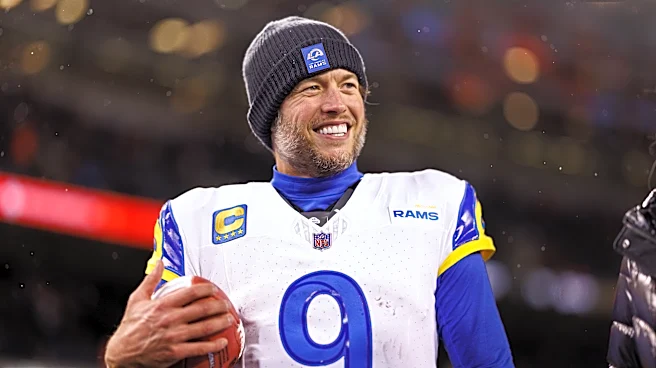
I’m known for finding the contrarian angle and embracing it in full. Today I’m embracing the consensus and building the case for why Matthew Stafford’s best season yet was real and potentially predictive for his performance in 2026.
Stafford was objectively great in 2025
One contrarian opinion is that Stafford won the MVP by default. That Patrick Mahomes, Joe Burrow, Brock Purdy, and others usually in the conversation spent too much time on the sidelines to create an opening for a player who had never seriously been in consideration.
But Stafford was the NFL’s best signal caller last season with no qualifications.
Stafford received Pro Football Focus (PFF)’s highest offensive and passing grades out of any quarterback who stepped on the field in 2025 at 92.0 and 91.7, respectively. On his heels was Joe Burrow—who played only eight games—at 91.8 and 91.3.
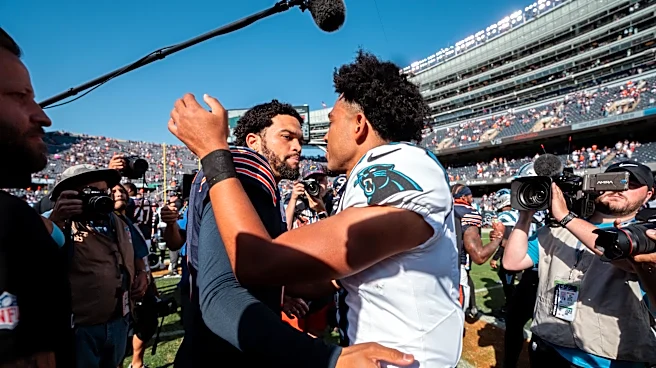
Even late into his 30’s, Stafford is still able to manufacture big-time throws with the best of them. He led the NFL with 58 such passes at a clip of 7.7%. The next closest players were Caleb Williams (one fewer game; 37 passes, 5.4%) and JJ McCarthy (7.3%).
Stafford was also one of the most aggressive quarterbacks in football with an average depth of target (ADOT) of 9.8. This is the second-highest mark of his tenured career and second in the NFL to only Marcus Mariota. Mariota’s offensive coordinator from last season, Kliff Kingsbury, is now a senior assistant on the Rams staff. The aggressiveness is not going anywhere.
But with aggression comes mistakes. Stafford is also more prone to turnovers when compared to the top of his peers like Burrow and others. Of all quarterbacks with at least 151 dropbacks, Stafford finished 23rd in turnover-worthy play rate at 3.3%. Burrow (0.7%), Jared Goff (2.0%), Josh Allen (2.4%), Dak Prescott (2.7%), Caleb Williams (3.1%), and Patrick Mahomes (3.1%) were all notably lower.
And Stafford isn’t the NFL’s most accurate passer either, which in part is attributable to his deeper depth of target. Using the same volume thresholds, Stafford ranked 31st in adjusted completion rate (ADJ%) at 72.3%. Goff (80.2%) and Brock Purdy (78.7%) were towards the top of the class.
The encouraging sign is that we know this is who Stafford is and it’s been the case for mostly his entire career. His performance in turnover-worthy play and adjusted completion rate were middle of the pack for his overall body of work. There are no indicators that Stafford’s skillset is declining, and that should give fans optimism heading into 2026.
PFF passing grade, big-time-throw rate, turnover-worthy play rate, average depth of target, and adjusted complete rate are the most stable and reliable indicators to predict future performance. Stafford either led the entire NFL in these marks or showed evident improvement from other stages in his career.
His MVP season was real. His likelihood to sustain this production into 2026 should also be high.
The subjective lens for how Stafford took a step forward
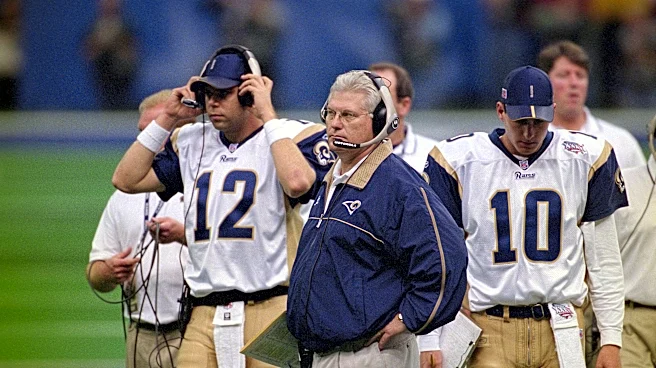
The Rams offense today is vastly different than how it looked when Stafford stepped under center in Los Angeles for the first time in 2021. LA is no longer a primary 11 personnel team. One of the most interesting wrinkles over the championship season—Stafford’s first with the team—was the deployment of empty formations to force decisions by the defense and trigger the quick passing game.
That is not who the Rams are any longer.
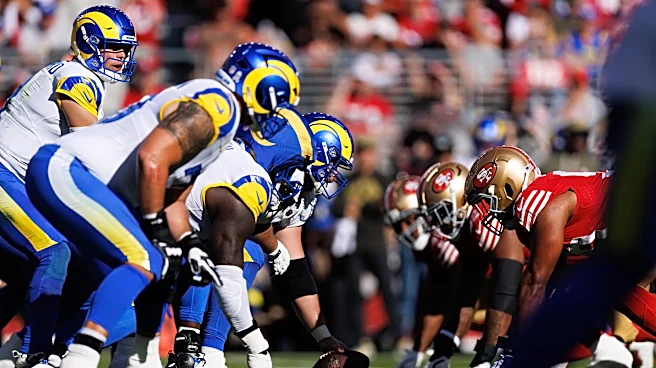
Instead, LA has recently leaned into heavier personnel packages with multiple tight ends and revamped their running game. The Rams are primarily a gap-based running scheme that now features a two-headed monster with Kyren Williams and Blake Corum.
So while Stafford made hay in his early Los Angeles days by getting away from play action passes that asked him to turn his back to the defense, he took a step forward in 2025 by the reintroduction of this element into the offense.
In terms of how often play action comprised his total dropbacks last season, Stafford (34.2%) finished third behind only Mariota (35.9%) and Daniel Jones (34.7%). In 2021 only 23.5% of Stafford’s dropbacks featured the play action concept.
And 2026 should be a continuation of this trend, especially considered Kingsbury’s offense with Mariota also deployed play action at a similar rate. While play action can at times be considered a crutch for bad quarterbacks, it can also be a mechanism for unlocking elite performance from great players. That was and is the case for Stafford.
Can Stafford replicate a historic season?
Setting the bar at winning MVP in back-to-back years is a losing game. Taking home the award requires near perfection, and the degree of difficulty is easily evidenced by the fact Stafford has only been in real consideration a single time over nearly two decades in the NFL.
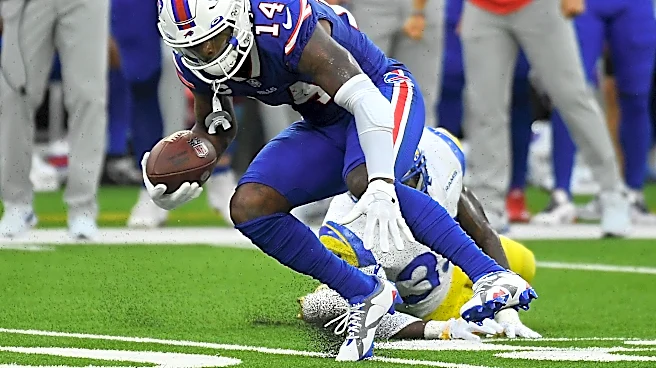
But if not Stafford, then who? Burrow would seem to be real competition if he’s able to stay healthy (a big if). The Chiefs have not fixed their core offensive issues and that gives me concern that Mahomes may not return to form—and that goes without mentioning his significant injury from last year. Similarly, the Bills have not surrounded Josh Allen with much in the way of weaponry. Lamar Jackson perennially belongs in the conversation and a fresh coaching staff could breathe new life into the Ravens organization.
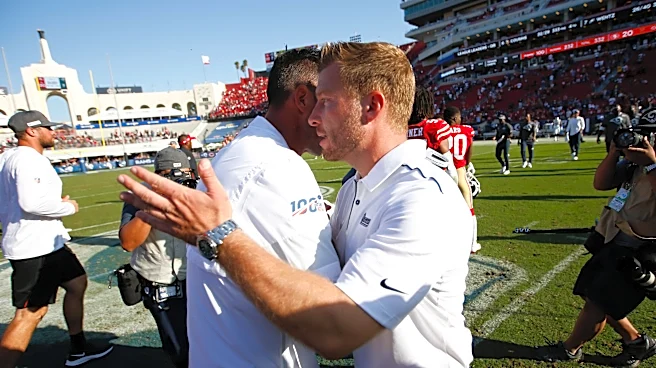
It’s difficult to bet against Stafford and Sean McVay. The Rams have found magic in their refreshed offensive approach, and the areas in which they performed well last season are stable indicators.
LA clearly has Super Bowl expectations. Stafford has taken a step forward late in his career and is playing the best football we’ve ever seen from him.
There are no convincing reasons other than age to expect Stafford to have a down year. He’s primed for success again in 2026.