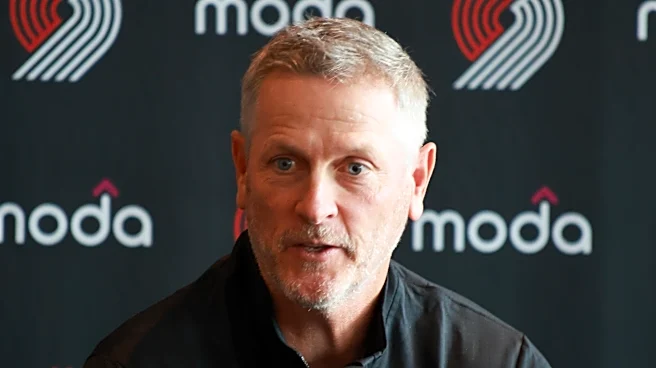



News broke yesterday that the Portland Trail Blazers hired long-time radio voice Travis Demers to become their television play-by-play broadcaster. It was a promotion from within for a familiar face after a tumultuous summer of controversy surrounding the position. It should have been a moment of relief and gratitude. Instead it’s turned into the latest firestorm surrounding the franchise.
Despite the promotion, Demers’ contract was not categorized as full-season, but provisional, game-by-game, with
room left for substitutes at the whim of the team. After seven years with the organization, stepping in with experience and cultural continuity to rescue the franchise after a nationally-embarrassing hiring process, Demers didn’t even get a standard lowball offer, the kind that his predecessor—NBA great Kevin Calabro—rejected. Instead he got a potential no-ball contract, like a day-hired office temp.
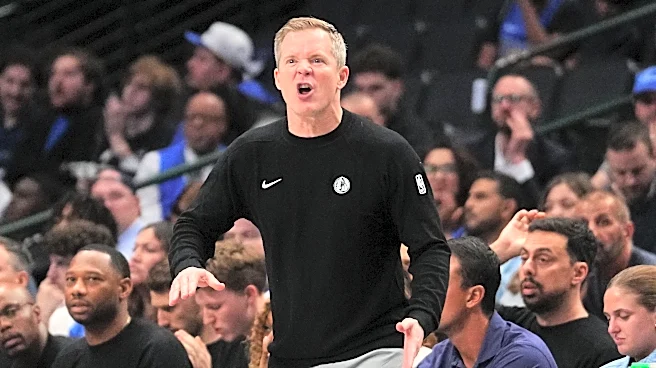
This comes on the heels of the Blazers parting with Calabro in a manner that seemed both acrimonious and centered on money. It follows the hiring of Head Coach Micah Nori in another national spectacle, an unprecedented single-year contract with no guarantee of further employment. And both of those events followed significant layoffs across the organization last spring, some of which may have contributed to the later hiring snafus.
Each and every step of the way, the message from the organization—presumably at the behest of new owner Tom Dundon—has been clear. This is a business. Smart businesses cut costs while maintaining production. The bottom line matters. Every dollar saved is a success. Precedent and loyalty be damned. It’s up to the employees in question to prove their worth and earn being retained and/or compensated at a higher level. Everybody named in the paragraphs above has a chance. Let them show their worth.
The idea is seductive, almost common-sensical: “If they produce, they’ll get paid. If not, we’ll find somebody who can.”
It’s also completely naïve and misplaced in the world of professional sports, especially in a place like Portland. Both the Blazers and the community surrounding them should hope for a change of heart, or at least better PR surrounding these events. Otherwise, we’re all in for continued headaches and, in the end, the potential for a nasty divorce.
The first, and lesser, reason this approach doesn’t work well is that most judgments in sports are nebulous. That’s the whole reason people can talk about the subject all day on sites like this. If we were able to end a discussion with a single number and/or proof, we’d have a reference site, not a community forum.
What, exactly, is successful coaching? Is it measured by wins? Statistical rankings? Player development? Locker room relations? Management skills and organizational influence? Deciding the metrics is, in itself, a value judgment. There’s no absolute standard. Heck, we can’t even pinpoint what percentage of a team’s success the coach is responsible for, let alone hold him or her accountable for it.
This is doubly so in a position like play-by-play announcer. Who gets to decide what a “good job” is? Opinions on the matter are as varied as the taste of viewers. A few talents rise above the rest, nearly-universally acclaimed as great. The Blazers aren’t shelling out the dough for those, though. So we’re left with a value judgment about how to make value judgments, with compensation tied to same.
That’s the minor part, though. The major issue is this:
Sports do contain a couple of inarguable, measurable metrics. And the vast majority of teams—including the Trail Blazers—simply cannot deliver on them.
The most obvious example is wins and losses. The NBA product is simple: basketball. But it’s not just any basketball. We could head to high school, our local college, or even to the rec center court to watch people play. We seek out NBA basketball because we want to see players at the highest level executing the best form of the sport possible.
There are many ways of measuring that, but the most obvious is wins. You know you’re playing at a high level when you win more than opposing teams do.
The problem is, the NBA is set up to make that impossible for all 30 teams. Half of league franchises are going to lose. Even among the winning half, only 4-5 each season have a legitimate chance at a title. Only one will actually win it.
The formal, business-based contract between an NBA franchise and its fans reads like this. “You give us money for tickets and such. We will provide high-level, winning basketball.” And almost all of those franchises are going to fail.
What do teams do when they’re not living up to their end of the bargain? They shell-game in substitutes for the payoff. They start talking about legacy and loyalty, about prominence and reputation in the community, about how much fun the experience is or how great it is to watch a team grow instead of just win. Because who would want to see actual success when you can see half the success at the same price, but say that you discovered this restaurant/band/clothing line first before it became all popular? You prescient, brilliant hipster, you. You’re way smarter than all those other so-called fans! That’ll be $69.95 plus tax for the upper-bowl seat, please. Don’t forget to buy a jersey!
But wait a minute here! Let’s reverse back to the premise we started with. This is a business. It needs to be run smartly with regards to the bottom-line cost and people have got to prove themselves before we’ll give them respect, a place in our organizational culture, or especially money.
You can see where this is going. Tom Dundon and company are about to be proved inveterate, brazen hypocrites the second you get a call from your season ticket sales representative.
“You purchased season tickets last year. Surely you want to be a part of the movement and grow with the team, right? It’s going to be so FUN this year and we have so many hopes! How many seats can we put you down for?”
Hold up. Seats?
“Yeah! Seats! Rip City runs deep, you know!”
Nah. Rip City is a business running on naked transactions. So…given our presumed contract terms and your performance, I think that you need to be on a provisional deal.
“Provisional…deal?”
Yeah. You’re trying to sell me season tickets. That makes no sense. Why should I be locked in for a whole season without proof of your ability? Ticket purchases should be performance-based trials. You reserve my seats. I’ll pay for the first game. If they win that one, I’ll pay for the next one. If they lose, though, I might not. If they lose too much, I’ll just drop the seats entirely. But for now, whenever you prove yourself, I’ll pay. When you don’t, I’m not obligated to.
“But professional sports teams can’t function on agreements like that!”
Yeah, we’re changing the rules. It’s just good business.
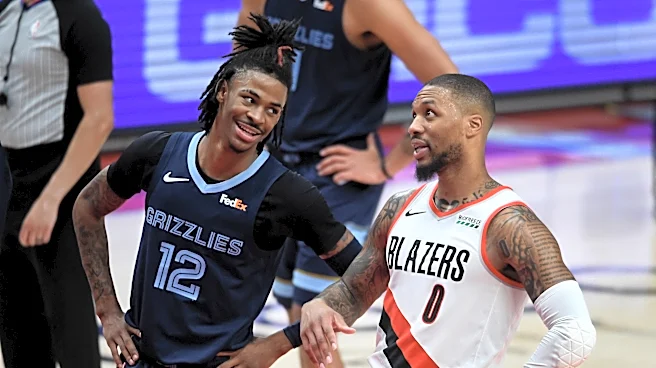
“But sir, what about Damian Lillard coming back? Don’t you want to see him play?”
Lillard? That’s old-regime talk. A franchise bloated with emotion and gullibility. I’ve got a message for you to pass upstairs to the new boss. It’s simple: Where are my wins, Tom?
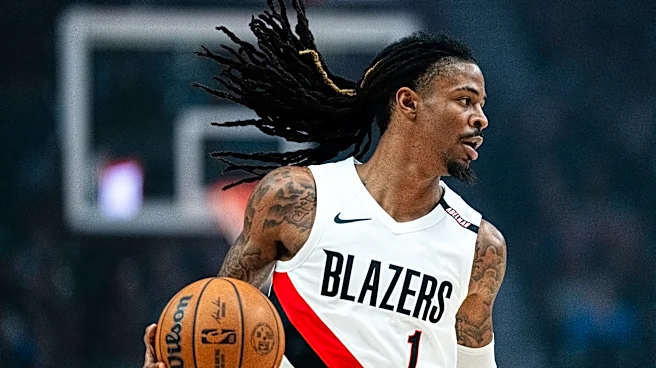
“But Ja Morant has…”
Where are my wins, Tom?
“But remember how exciting it was when Brandon Roy took us to…”
Where are my wins, Tom?
“Well we can’t guarantee wins…”
Let me stop you there. Then you’re not getting paid. And don’t talk to me about loyalty, history, community, camaraderie, legacy, excitement, enthusiasm, potential, talent, or anything else. You’ve already shown than none of those matter to you. Trail Blazers basketball doesn’t mean those things anymore. We are in a provisional, conditional relationship. Give me my wins or I don’t pay you my money. You’ve already shown that nothing else matters from your end. Fair is fair. That’s how it is now on my end too.
Obviously this is slightly overdrawn. And I would never suggest that you talk to an actual ticket agent like this. They’re good people, just doing their jobs. It’s not their fault. But you can see how basic concepts like loyalty and emotional investments that literally carry professional sports franchises get ripped apart by the approach the Blazers are taking, and publicizing, as “smart”. All I’m suggesting is that if the Blazers are going to be smart that way, their fans should get smart too.
But when your definition of “smart” makes the idea of season tickets seem foolish and hypocritical, maybe you ain’t that brilliant.
In the end, the Blazers aren’t selling a tangible product. If someone came and sold you an air conditioner, then delivered one that only half worked but waved a banner, set off inspirational fireworks in your front yard, and started talking about loyalty to their company as if it were an appropriate substitute, you’d say they were insane. One-star review, and only because you can’t give zero.
The Blazers aren’t selling basketball either. At 42 victories last year, their prices should be about 25% off compared to the winningest teams in the league. If you measure by 82 games, half off. But nope. They remain the same price, win or lose, rain or shine, title-hunting or tanking.
The Blazers, like every other professional sports team, are selling community: a feeling of warmth and excitement that everybody gathers around, an identity that people love to embrace. But you can’t sell community very well if you’re nationally known for screwing up, screwing over, and ripping apart the same in the name of good business. The problem here isn’t Tom Dundon’s acumen. It’s a basic misunderstanding of his true product and how to nurture it.
I’m not saying that you can’t replace play-by-play broadcasters, hire new coaches, or even trim the workforce in your organization. You just can’t do it like this when the whole thing is a smoke-and-mirror show that depends on the goodwill of the people around you and their good feelings towards your franchise. It’s a classic example of proving your the smartest guy in the room in the dumbest, most destructive way possible.
It’s unlikely Dundon will suffer directly for this. We live in an era where billionaires are insulated from most things. He could tank the Blazers into oblivion and still end up getting out of it ok. But dang, this process certainly bears some scrutiny, and maybe a shaking head or two. Otherwise all you can do is throw up your hands and walk away in disgust. Hopefully loyal, faithful Blazers fans won’t end up having to do just that.