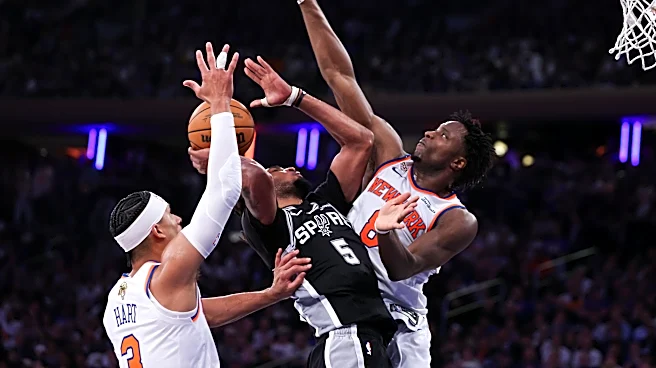







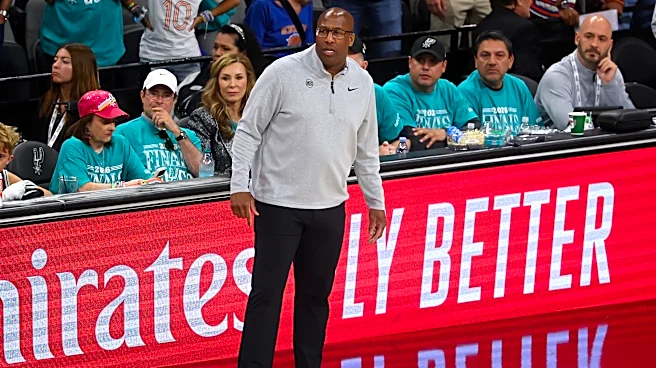
On Monday, I wrote about how Mike Brown was always making the right adjustments for the Knicks to allow them to cruise through this playoff run. The amount of adversity the Knicks have faced has been minimal, but they’ve done a great job adjusting to all of it.
Well, for the first time in over seven weeks, the Knicks lost. In-game adversity happens to everyone, but this was new. For the first time in 14 games, the Knicks didn’t have the in-game answer and walked away disappointed.
They’re still in
the driver’s seat in this series, but the margin for error is gone. Despite still being -180 favorites to win the series on FanDuel, they’re at risk of completely soiling the advantage they gained by winning the first two games in San Antonio. Winning Game 4 would restore their firm control of this series, while also putting them 48 minutes from a championship.
But how do they do that? Here are three adjustments they need to make to retake control of this series in Game 4:
Less Ball Dominant Brunson
Every series has a different strategy. After the last 2.5 series seemed to follow the strategy of running the offense through Karl-Anthony Towns at the top of the key, the Knicks seemed to shift back to leaning on heavy Jalen Brunson ballhandling through three games in this series.
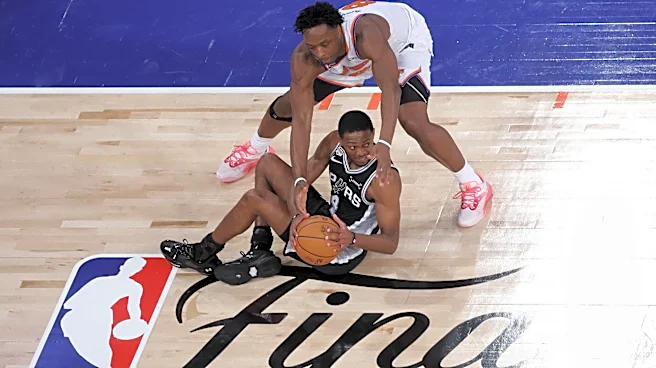
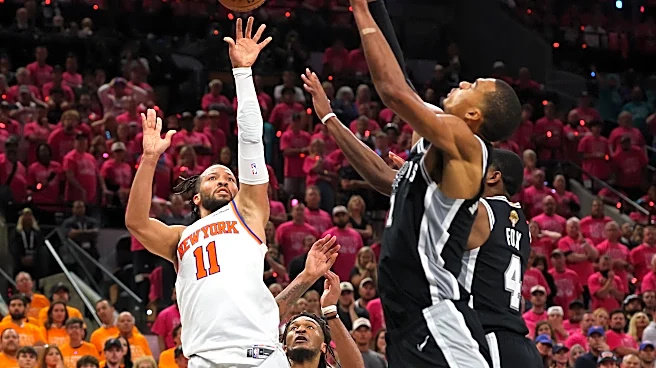
There are reasons for that, but it hasn’t had the intended effect through three games. The ball pressure from the likes of Stephon Castle and Dylan Harper is playing into their hands, slowing down the Knicks’ offense and forcing them to rush their actions in the final eight seconds of the shot clock. It goes against everything the Knicks set out to do when they hired Mike Brown.
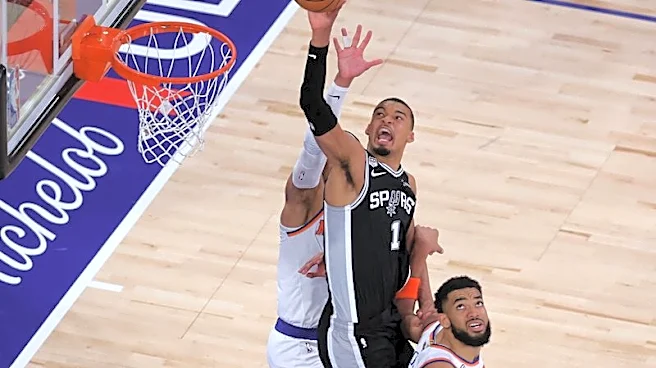
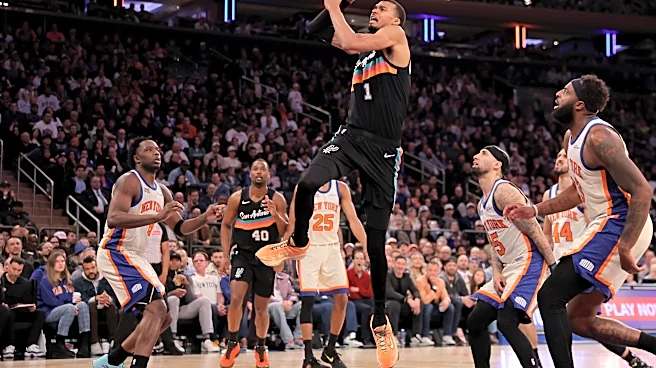
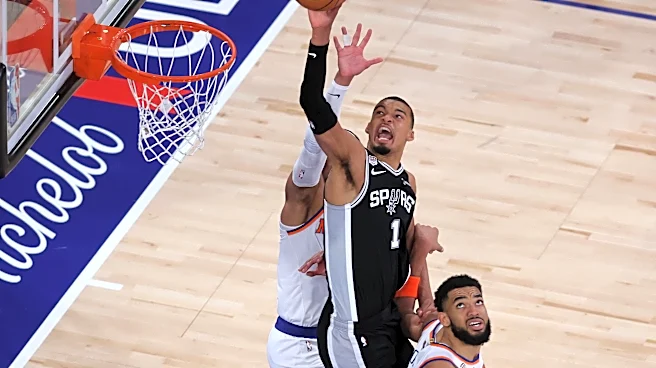
But it’s not as easy as just running the same actions that worked against Atlanta and those other Eastern Conference teams. The Spurs started the game with Wemby in the ghost coverage on Josh Hart, which puts a wing like Julian Champagnie or Devin Vassell on Towns. On paper, that sounds like a mismatch, but when you factor in Wemby’s ability to play free safety in the paint, it limits what Towns can feasibly do.
But there were times in the second half where Towns did have Wemby on him, but was pushed into the corner for Brunson to isolate. The common denominator on every possession where Brunson brings the ball up and doesn’t immediately move the ball is that the offense is stagnant until about eight on the shot clock.
There’s no clear solution against a defense that can give you so many looks, but the best option might be to take a considerable chunk of these Brunson-dominated possessions and throw multiple looks in there. Experiment with KAT as the facilitator even when he has a wing on him. Have Hart or Bridges bring the ball up. Get Brunson moving off the ball.
It’s not just in terms of a play-by-play basis; it’s also the degree to which he’s getting beaten up when he has the ball in his hands. You want him fresh for the second half, something the team did brilliantly against Cleveland.
(Also, the team as a whole just needs to stop being so careless with the ball. At least half of the team’s 13 turnovers were unforced and/or unnecessary)
Give the Spurs a Taste of Their Own Medicine
Speaking of ball pressure, why not try to give the Spurs a taste of their own medicine?
San Antonio only committed eight turnovers in Game 3, the fewest they have in the entire postseason to this point. For a team that is very young and turnover-prone, it’s a remarkable turnaround for them in a game that they needed to win badly to keep their championship hopes alive.
They struggled mightily with turnovers in the Western Conference Finals against Oklahoma City, turning it over 15 times in four games and at least 20 times in two of them. That’s because of OKC’s ability to put pressure on the ball with the likes of Lu Dort, Cason Wallace, and Alex Caruso.
The Knicks don’t have those levels of defenders, but they have enough talent on that end to at least try to fluster them. Mikal Bridges, Jose Alvarado, Deuce McBride, and even Jordan Clarkson to an extent are fully capable of providing backcourt pressure to slow down the Spurs’ offense in similar fashion to how they’re doing to the Knicks.
You see, the Knicks manage to score despite a stagnant offense through much of the shot clock because they’re veterans. When you put a young team in that situation, you’re much more likely to see frantic decisions and bad passes. Don’t you think that game-losing turnover in Game 2 was caused by them speeding up their internal clock?
Less time to run their half-court offense means less time for them to move the ball around. They’re much less iso-centric on offense and are able to swing the ball to open shooters (or find that 7’5” guy under the basket). We’ve seen a few times where they’re able to get the ball to Wemby with 8-10 seconds on the shot clock in a spot where he can take his time. Imagine how it would look if you started rushing him, giving him less time to methodically get to his spot?
It’s worth trying, at the very least.
Modifying the Minutes Distribution
If you look at the minutes distribution of Game 3, you notice something jarring right off the bat.
Mitchell Robinson and Deuce McBride, the team’s two core bench players, played 16 combined minutes.
16. The team’s usual sixth and seventh men played 16 combined minutes.
That’s not a criticism of Coach Brown, of course. Both men played pretty bad on Monday, but you have to wonder if there’s a better way to use them to put them in better positions to succeed.
For Robinson, whose effort level has been noticeably lacking the last two nights, in all fairness, he’s not getting much of an opportunity because of the looming threat of the Hack-a-Mitch. The Spurs got into the bonus relatively early in the first and second quarters, leading to Brown keeping him glued to the bench to not play into Mitch Johnson’s hands.
They seem not to want to run double big in this series because the Spurs don’t have a traditional 4, often playing Wemby or Luke Kornet around a few 6’6” guys at the wings. That’s all well and good, but if that’s the case, you still need to find opportunities to give Towns a rest and not go to small ball lineups against a team with a 7’5” alien.
Could putting Robinson in earlier in the first quarter work? Unless the Spurs commit a bunch of quick fouls, why can’t he sub in at the 6 or 7-minute mark for a few minutes? We know Towns is going to start the second with the bench unit, so he needs the rest. Best-case scenario, Mitch can play the whole back half of the quarter essentially. That also helps avoid foul trouble for Towns, who’s had some frustrating sequences in the last two games racking up fouls.
There’s also the matter of guard play. Some people are suggesting running Alvarado alongside Brunson to add another ballhandler who can take some of the pressure off Brunson, and they’d have a point in some regard:
I’m not so sure, though. The Spurs have some physical guards who can absolutely exploit a lineup of two miniature guards, so any offensive benefit gets completely thrown out by the defensive issues. The answer might just be to give Alvarado a longer leash at times, or try Clarkson in the same lineups as Brunson for spurts.
As for how to get McBride more involved? I’m not sure. He doesn’t really deserve to be the first sub over Landry Shamet right now, but he needs to be getting opportunities to do what he does best on offense: getting catch-and-shoot looks. He’s had almost no good looks through three games and has been forcing stuff up at times just to seemingly fit a quota.
I’m not sure what the fix is there right now, but it’s going to be hard to win this series without any contributions from Deuce.