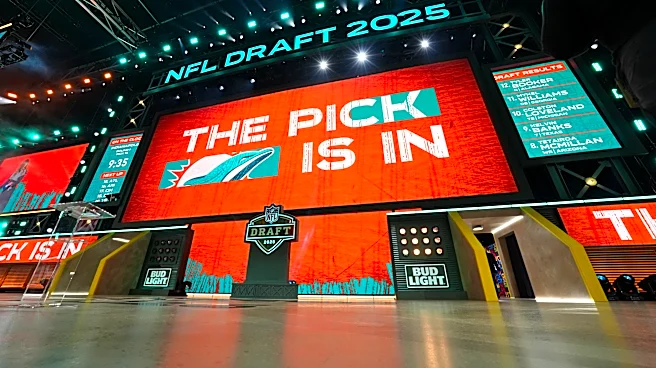


The sixth edition of our scouting project is here, bringing with it a new group of potential Miami Dolphins draft picks. As with the first five mock drafts, the goal of this process is not to pick the right player for the Dolphins with each of their selections, but rather to take a look at a possible pick to get a better idea of who they are. The players selected may have injury histories that might rule them out of the actual pick. Some may have off-the-field issues that could see the Dolphins remove
them from their internal draft board. Some might be the exact right pick for the Dolphins. That is the point for this series – getting a better look at some of the prospects.
As before, I have used the mock draft simulator at Pro Football and Sports Network to provide me a framework of the draft. Trades are allowed during the sim, though I only considered trades that were sent to me and did not initiate any trade negotiations. I continue to use the mock draft format as a way to narrow the possible prospects, and to give us a better look at someone maybe we had not considered for the pick.
With that said, we are on to the sixth version of the scouting mock draft:
2026 NFL Miami Dolphins Mock Draft Results – 6th Edition
(I made picks using the PFSN Mock Draft Simulator)
First Round
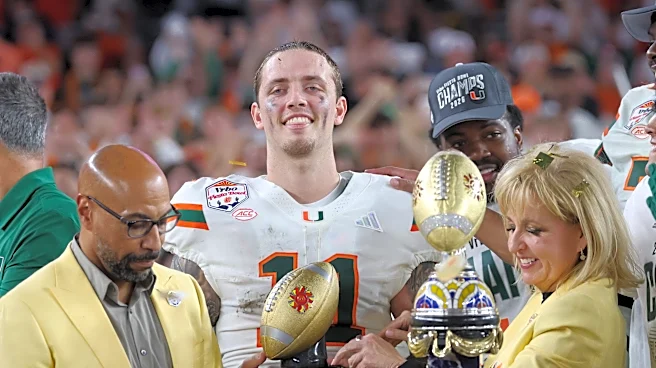
Pick 11 – Rueben Bain, Jr., Edge, Miami

Bain immediately provides the Dolphins with a starting edge rusher and works as a compliment for Chop Robinson on the other side. Miami would seemingly move into a 4-3 defensive scheme this year under new head coach Jeff Hafley, which should allow them to scheme ways to get Bain into the backfield and disrupting opposing offenses.
Recently, new reports have indicated Bain was involved in a car accident in 2024 that has some suggesting he could see a slide in the draft. According to the reports, Bain was cited for careless driving when he struck a barrier on I-95 in Miami, resulting in two passengers landing in the hospital, with 22-year-old Destiny Betts eventually passing away after three months in a coma. The charges were eventually dropped. NFL teams, reportedly, have known about this situation and it does not seem to have impacted his draft value for the most part.
What they are saying:
Pro Football and Sports Network: Rueben Bain Jr. has been a disruptive defender for as long as he’s been on the college football circuit. After joining the Hurricanes as a four-star recruit, Bain racked up 7.5 sacks, 13 tackles for loss, and three forced fumbles in his true freshman campaign.
Bain’s sophomore season was less productive due to a calf injury, but he returned to form as a legitimate game-wrecker at his best in 2025. He earned All-American honors in the process of accruing 8.5 sacks, 13 TFLs, and a strong PFSN EDGE Impact score of 82.7. At 275 pounds, Bain has a rare body type for the position, with elite compact mass and natural leverage, and he’s an explosive long-track accelerator with awesome raw hand power.
With his power and raw strength, Bain can sledge through tackles and overwhelm 1-on-1 as a pass-rusher, but he also has the hyper-elite sturdiness to absorb combo and duo blocks in the run game, and sets an edge with unflinching consistency. While power is Bain’s primary mode, he has a deep pass-rush bag and smooth upper-lower synergy, superb strength, IQ, and pursuit range in run defense, and surprising flexibility as a finisher. There has been talk of him potentially transitioning to DT in the NFL, but he fits best as an alignment-versatile EDGE, where he can use extended runways to channel power.
In that role, Bain can be a plus starter and situational game-wrecker in the NFL similar to how he was in college.
Lance Zierlein, NFL.com: Note taker, grudge holder and block destructor with a compact frame and defensive tackle play strength. Bain is ill-tempered with his take-ons, hitting blockers with heavy hand strikes. He plays through tight ends and can anchor against tackles and double teams. However, his lack of length can lead to him being smothered if he doesn’t land the first strike. He can bend and flip his hips at the top of the rush, swipe away punches and generate a strong bull rush. His playoff run showed an ability to generate quick wins if tackles are passive in setting to him. He can rush off the edge or mismatch guards as a sub-package rusher. Bain’s explosive power and toughness should translate, giving him a high floor as an NFL starter.
NFL Draft Buzz: The positional conversation around Bain will carry through April because his body type does not fit a single box. At around 265 pounds with sub-31-inch arms, he is undersized for a traditional edge alignment but too explosive to move inside full-time. The best answer is probably a hybrid role where he lines up on the edge as his base but kicks inside against guards on obvious passing downs. That kind of usage plays directly to his strengths: the quickness and power that give tackles problems will create even more trouble against guards who are not used to defending that athlete.
The arm length is going to show up in certain matchups. Long, athletic tackles at the NFL level will keep him at distance in ways college tackles could not. That is a real concern. But Bain led all FBS players with 83 pressures in 2025 and posted a 92.5 PFF grade against real competition in meaningful games. The production held up in the playoff when Miami needed it most, with five sacks across four CFP games.
A defense that values pass rush versatility and is willing to move Bain around the formation is the right fit. He does not need to be a 60-snap edge rusher anchoring against the run on every play. He needs a coordinator who will use his get-off and power creatively, mix alignments, and put him in positions where the arm length matters less. The motor and competitive makeup are not in question. The production is not in question. What Bain needs is the right scheme and a staff that knows how to maximize an atypical body with an uncommon skill set.
Todd McShay, The Ringer: The Player: Bain is a thickly built, power-based edge rusher with violent hands who’s an elite run defender and a highly disruptive pass rusher. He racked up 54 tackles, 15.5 TFL, and 9.5 sacks along with a forced fumble and an INT in 2025 and really peaked during the Hurricanes’ run to the CFP championship game.
He has impressive burst, bend, and flexibility given his thick frame. His combination of short-area burst and power, violent hands, and relentless motor translates well to the NFL, regardless of any concerns about his short arms. He’s a freight train on obvious passing downs. I’m impressed by his wide array of pass rush moves, mostly power based, including his Reggie White hump move. He finished his college career with 20.5 sacks and had 83 QB pressures in 2025, tied for the most ever in a season since 2014, according to PFF.
Bain’s versatility is a major asset. He lines up all along the defensive front. The most underrated aspect of his game is his ball location versus the run. He’s really committed to gap and scheme discipline. Bain’s short arms will concern some NFL personnel. He also lacks some suddenness and leaves tackles and sacks on the field because of his less than ideal redirect quickness.
The Draft: Teams are all over the board on Bain. Most draft boards have Arvell Reese and David Bailey graded higher. Some teams view Bain as the clear-cut no. 3 edge prospect and a top-15 lock, while others don’t view him as highly due to his arm length limitations and position-fit concerns. I’m in the former camp and will be shocked if he’s not a top-15 pick. His short arms (30 7/8 inches) are the biggest concern when it comes to his projection as a high-impact edge in the NFL. NFL teams don’t like outliers—no player with sub-31-inch arms has produced double-digit sacks in a season for the past 20 seasons. Bain will also have the shortest arms of any first-round edge selected during that span.
The Projection: Former Ravens All-Pro Terrell Suggs faced questions about his squatty frame, shorter arms, and marginal speed coming out of Arizona State in 2003. Now he’s a Hall of Fame finalist. Bain might not reach quite that level, but he grades out as a high-end NFL starter. The team that drafts Bain must know how to deploy him and play to his strengths. His impact as a rookie should be similar to Jared Verse’s in 2024 (full-time starter with 66 tackles, 11 TFL, and 4.5 sacks).
Pick 30 – TRADE
Dolphins send pick 30 to Atlanta Falcons for Pick 48, 2027 2nd Round Pick, 2027 3rd Round Pick. This also started a run of trades I made, looking to add picks this year as well as in 2027.
Second Round
Pick 43 – TRADE
Dolphins send pick 43 to Tampa Bay Buccaneers for Pick 46, 2027 4th Round Pick.
Pick 46 – TRADE
Dolphins send pick 46 to Kansas City Chiefs for Pick 53, 2027 3rd Round Pick
Pick 48 – TRADE
Dolphins send pick 48 to Green Bay Packers for Picks 52, 120
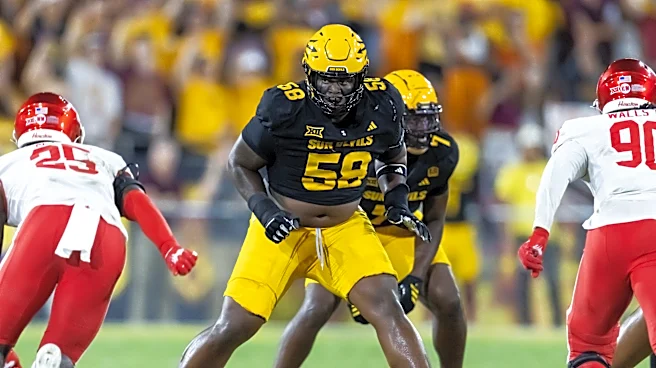
Pick 52 – Keith Abney II, CB, Arizona State

Abney may not be the top cornerback of the draft, but he may be one of the most solid when it all shakes out. If he is put into the right scheme, with the right responsibilities, he is going to flourish in the league. If he is asked to be alone and unafraid on an island against a number-one receiver, he may struggle. He is not the fastest, but he makes up for it with play recognition and technique. He can work outside or slide inside as needed.
What they are saying:
Pro Football and Sports Network: Keith Abney II was one of the stars of Arizona State’s CFB Playoff run in 2024, amassing 52 tackles, three INTs, and nine PBUs in a breakout campaign. As a junior, he compounded that momentum, registering two INTs, 12 pass breakups, and an elite PFSN CB Impact score of 92.9. At around 5’11”,190 pounds, Abney is close to average size, but his most pivotal physical quality is his energized motion and foot speed, combined with his wicked play pace and mental urgency.
He doesn’t quite have elite burst or long speed, but he’s more than explosive enough, and he’s extremely fluid decelerating and redirecting overtop routes, with a sharp competitive focus and quick processing capacity that enables him to play passes with precision. Abney can work in press-man with his hyper-disciplined mirror-motor, as well as pedal, plant, and drive with efficiency in off-man and zone, and he’s unusually consistent as a tackler for his size. Abney’s max outcome could be similar to Jaylon Johnson — a non-elite athlete and at times overlooked prospect, who went on to be a stellar pro with his quicks, fluidity, and competitive consistency.
Lance Zierlein, NFL.com: Feisty boundary corner with the makeup to slide inside and become a problem for offenses as a pro nickelback. Abney’s coverage IQ and competitiveness are loud on tape. He pairs impressive instincts and recognition with the ball skills of a receiver. He’s physical in press, but he loses ground and picks up penalties when it hits the third level. His top-end speed and closing quickness from depth are average. He’s also average in mirroring a shifty release, so rookie reps inside could be a little bumpy. Abney profiles as a zone-match nickelback with a physical press presence.
NFL Draft Buzz: After watching Abney work through his junior tape, I came away convinced this is a player who will carve out a real career in the NFL, though not necessarily as a perimeter lockdown corner. His best football at the next level will come in a scheme that lets him play off-man, zone, or pattern-match concepts where his processing and physicality can shine without putting him on an island against burners who can just run past him. The tools are there for a starting-caliber defensive back, but the framework around him matters. Drop him into a heavy Cover 1 man scheme and ask him to trail a 4.3 receiver all game, and you are going to see flags and touchdowns. Put him in a system that values anticipation, film study, and controlled aggression, and you have yourself a weapon.
The penalty issue is the elephant in the room, and it is worth sitting with for a moment. Thirteen flags in two seasons at the college level, where officials give corners considerably more room to be handsy, is a number that should give any defensive coordinator pause. The good news is that the grabbiness stems from competitiveness rather than panic. He is not reaching because he is lost; he is reaching because he wants to dominate the rep. That is a coachable distinction. NFL technique work, specifically learning when to use his hands and when to let his feet do the talking, could clean this up significantly. His improvement from 2024 to 2025 across virtually every metric shows he responds to coaching and puts in the work between seasons.
Abney’s ceiling is a quality CB2 who can slide into the slot on passing downs and give a defense real versatility in sub-packages. His floor is a core special teamer and rotational nickel who competes for snaps and contributes immediately in that role. The tackling, the ball production, the competitive fire, and the scheme versatility all translate. The size, speed limitations, and penalty tendencies keep him from being a first-round talent, but there is a starting-caliber NFL corner in here for the defense that knows how to use him. He is not a projection pick; he is a player right now who just needs the right scheme fit to maximize what he does well.
Daniel Harms, Bleacher Report: Keith Abney is a true competitor who fights for every inch and then some to make plays on the football field. He sees the game quickly and fluidly, communicates with his teammates, and triggers throwing on motions and route breaks. Abney’s work ethic shows in his improvement in both the physical and mental aspects of the game, and NFL teams will see that.
The 5’10”, 187-pound former 3-star recruit has enjoyed another great performance in his junior season with the Sun Devils after breaking out as a sophomore. He built on that by adding 44 tackles (36 solo), one tackle for loss, one sack, two interceptions, 12 passes defensed, one fumble recovery, and two forced fumbles.
Todd McShay, The Ringer: The Player: Abney is an undersized corner with short arms, but he plays bigger than his size, and he has the tape of a day-two selection. He’s a physical press corner who reroutes receivers. He smoothly turns and runs with receivers. He didn’t run at the combine but reportedly ran in the mid-4.4s at his Arizona State pro day. He had five interceptions and 21 passes defended over the past two seasons. He breaks well on the ball, takes excellent angles, and launches himself in front of receivers. He splits high-low route combinations, passes off receivers, and plays the ball instead of the man in zone looks. He tracks the ball well and has good hand-eye coordination.
Abney’s a reliable wrap-up tackler who steps up in run support and limits production after the catch, but his size and length are concerning. Bigger receivers gain separation from him with strength at the top of their routes. Abney is competitive and can make plays in contested situations, but he’s not built to regularly come down with 50-50 balls. As a run defender, he gets stuck on blocks. He almost exclusively played on the outside at Arizona State. He projects as a nickel in the NFL. He gets grabby, and he was penalized 13 times over the past two seasons, according to PFF. He bites on double moves, and he doesn’t have great recovery speed.
The Draft: Abney is in the mix to be a top-10 corner. He almost exclusively played on the outside at Arizona State but projects as a nickel in the NFL.
The Projection: A good comparison for Abney is Upton Stout, a 2025 third-round pick who is coming off a promising season playing nickel back for the 49ers. Stout moved to nickel as a senior in college but primarily played wide corner prior to that. Abney and Stout have similar frames, length, speed, and competitive playing styles.
Pick 53 – A.J. Haulcy, S, LSU

The first three players we are looking at in this scouting profile are all defensive players. That was not intentional, but it does suggest where the Dolphins may have to look this year. Haulcy could give Miami a player who can fill several different roles as the team needs. He can be an immediate starter in Cover 2 or Cover 4 schemes, responsible for covering a portion of the field in a zone system. He can come up and help in the box as a run stuffer, though he is not always consistent on his solo tackling. He is not going to be a free safety playing centerfield, but he could be a perfect strong safety in Miami’s system.
What they are saying:
Lance Zierlein, NFL.com: Haulcy, aka Mr. Give Me That, is a throwback safety with a compact, densely muscled frame and a pro feel for reading the field. He’s a rare blend of ballhawk and enforcer who can scurry into passing lanes for takeaways or run through a receiver to break up a pass. His pattern recognition and instincts are top-notch and he’s decisive in his reactions. A lack of sustained top-end speed could create mismatches in man coverage. He’s more effective playing forward than he is at guarding large spaces in deeper coverages. He’s rock-steady as a finisher but sees the missed tackle total tick higher as an open-field tackler. Haulcy’s frame and game are pro-ready, though. He projects as a good NFL starter in a zone-heavy scheme.
NFL Draft Buzz: Haulcy’s tape is the tape of a zone coverage safety who understands spacing. He sits between route concepts, processes the quarterback’s progressions, and arrives on the ball with timing that comes from recognition, not guessing. That skill set translates directly to defenses that lean on two-high shells and split-field coverage. He is not a centerfield-type safety. The speed and hip fluidity to patrol deep thirds alone against NFL speed are not there. But in a structure where he can work from the hash to the numbers, play as a robber, or handle half-field zone responsibilities, he will limit throws into his area and come up with the ball when quarterbacks test him.
At 222 pounds, the run defense piece rounds out the profile. Haulcy has the frame and willingness to play down near the line of scrimmage, take on blocks, and fill gaps. That combination of coverage instinct and physical run support gives him value as a strong safety or box safety in a system that does not need its deep safety to be a pure single-high athlete. His best role is probably the down safety in a Cover 2 or Cover 4 scheme where he can handle intermediate zones and contribute against the run on early downs.
The tackling inconsistency and limited recovery speed are real concerns that will narrow his margin at the next level. But four years of production at three schools against steadily increasing competition speaks to a player who wins with processing and toughness.
Daniel Harms, Bleacher Report: AJ Haulcy looks like a linebacker playing safety, but his zone instincts and impressive downhill click and close speed give him a unique skillset at the top of defenses. Best as a split-field safety or robber, he operates quickly and efficiently, moving toward the line of scrimmage with great instincts and play development eyes.
The former 3-star recruit and transfer from Houston and New Mexico has made a name for himself with his nose for the football. He’s put up 347 tackles (203 solo), four tackles for loss, ten interceptions, 19 passes defensed, and four forced fumbles in his collegiate career. He’s always around the football, and those instincts pay off in more ways than one.
Todd McShay, The Ringer: The Player: Haulcy is an experienced and productive safety with a good blend of size and speed. He’s at his best when he can read receivers and quarterbacks in off coverage and zone looks. He’s quick to trigger, breaks well on the ball, and jumps routes. He can sort out route combinations and has enough range to cover a deep half. He is a physical presence and a big hitter in coverage.
He tracks the ball well and doesn’t play the man in zone looks. He had eight interceptions combined over the past two seasons.
Haulcy doesn’t have the ideal range or length for a free safety. His short arms hinder his ability to get his hands on passes, and he’s much less effective in man than he is in zone. He is a downhill run stopper who closes well and chases with good effort. He can slip blocks and shoot gaps when he plays in the box. It’s hard to argue with the numbers: He tied for the third-most solo tackles (49) in the SEC last season and was tied for the second-most solo tackles in the Big 12 in 2023 (73), when he played at Houston. In 2022, as a true freshman at New Mexico, he had a 24-tackle game against Fresno State.
Despite those numbers, his reliability as a tackler comes into question. He missed 16 tackles in 2025 and 47 over the past three seasons, according to PFF. He fails to wrap up at times and takes inconsistent angles. He’s a little tight, and he struggles to finish in space because of his short arms.
The Draft: Haulcy is a top-seven safety prospect and a top-100 overall prospect in this class. No LSU defensive back has been drafted in the past two drafts, following a nine-year streak of at least one being taken.
The Projection: 2025 third-round pick Xavier Watts, who started 17 games and picked off five passes for the Falcons last season, is an interesting comp for Haulcy. Both are playmakers with good size and average speed, and they’re tough run defenders but inconsistent tacklers.
Third Round
Pick 75 – Ted Hurst, WR, Georgia State

Hurst is a developmental selection who will be able to pick up playing time during his rookie year, but will not reach his full potential until a couple of years down the road. He has the size and speed to be a star in the NFL, but he does not always put it all together, especially on contested throws, and he will need time to adjust from Georgia State to the NFL game. Once he has the ball in his hands, he is a threat to break it for a big gain, but he may be relegated to specific packages early in his rookie season.
What they are saying:
Pro Football and Sports Network: Ted Hurst has the potential to be one of the earliest-selected Group of Six players on the offensive side of the ball. At a long and lean 6’3″ and 193 pounds, Hurst has an imposing build and catch radius, to pair with gliding long-strider acceleration and speed working the intermediate and deep ranges. With his frame and long-strider range alone, Hurst can splice up seams and box out smaller defenders with instinctive positioning, timing, smooth body control, and snare high-difficulty passes with quick reaction speed and sound catch technique.
That catch-point appeal is expected at his size, but what defies expectation is Hurst’s hip fluidity, bend, and stride retraction freedom as a route runner. Hurst can actively stem and press DBs upfield with his speed, before sinking and retracting into open voids. Hurst isn’t as efficient as a RAC threat, nor does he have as much consistency working against press and early contact.
Nevertheless, his combined separation and catch-point profile is extremely appealing at 6’3″, and he has more than enough long speed to stretch seams and threaten vertical as well.
Lance Zierlein, NFL.com: Long-legged, vertical-minded wideout with the speed and ability to stress corners from snap to whistle. Hurst is quick to beat press and hit the accelerator into his route work. He has the hips, feet and balance to run a more robust route tree than what we saw from him in college. He’s an above-average ball-tracker deep and a dangerous catch-and-run option. The hands are average and he needs to become more assertive on 50/50 balls on all three levels. Hurst appears capable of surviving the jump in competition and projects as a “Z” receiver with quality upside.
NFL Draft Buzz: Hurst fits best as a “Z” receiver in an offense that uses motion and formation variety to manufacture free releases. That matters early in his career because press coverage remains a real problem, and NFL corners will be stronger and more disciplined than anything he saw in the Sun Belt. But the important thing is what happens after the release. He changes speeds through his stems, sinks his hips on breaks with fluidity rare for his frame, and finds zone windows with a feel that his average depth of target shift from 17.2 to 12.6 yards between 2024 and 2025 confirms was already developing. His receiving grade climbed meaningfully in that same window. The route tree is further along than his college offense required.
At 206 on a 6-4 frame with a 99th-percentile broad jump, the physical projection is encouraging. There is room for 10 to 15 pounds of added weight without losing the movement skills, and that kind of development directly addresses his two biggest limitations: surviving press and finishing contested catches, where his numbers were only average despite the length. His speed is good enough to threaten vertically, but he separates with acceleration and timing rather than blowing past coverage. That style translates if the body catches up.
Expect him to push for the number three receiver role as a rookie in the right system, with third-down and red zone reps from Week 1 given his ball tracking, catch radius, and understanding of leverage. The drop issues need monitoring. His hands graded average across both Georgia State seasons, and that cannot persist against tighter coverage windows. But the combination of size, route feel, and athletic testing puts a real ceiling on this player. With physical development and an expanded release package, he can grow into a starting outside receiver by year two. The tape backs that up more than the stat sheet does.
Damien Parson, Bleacher Report: Ted Hurst is a pure X receiver who can dominate the catch point and convert contested catches at a high rate.
The 6’3″, 200-pound prospect arrived at Valdosta State as a 0-star recruit in the 2022 class. Hurst transferred after two years to Georgia State and appeared in more than 45 games during his collegiate career.
In the NFL, Hurst projects as an X receiver and WR2/3 with impact-player potential.
Todd McShay, The Ringer: The Player: Hurst is a small-school prospect with elite traits who turned a lot of NFL decision-makers’ heads with his strong showing against higher-caliber defensive backs at the Senior Bowl and sensational testing numbers at the combine. He spent two years at Valdosta State before transferring to Georgia State for the past two seasons, where he racked up 127 catches for 1,965 yards (15.5 yards per catch) and 15 touchdowns. Hurst displayed an elite combination of size, length, speed, and lower-body explosion at the combine. At nearly 6-foot-4 and 206 pounds with long arms (32 5/8 inches) and big hands (9 3/4 inches), Hurst ran an excellent 40 time of 4.42 seconds while also turning in the best broad jump (11 feet, 3 inches) of the wide receivers in attendance and an above-average 36.5-inch vertical jump.
Georgia State went 4-20 in his two seasons there, and his production versus top competition was a bit of a mixed bag. He mustered just 41 yards on four receptions in games vs. Ole Miss (2025), Georgia Tech (2024), and James Madison (2024). He fared better in four other games versus higher-level opponents, combining for 356 yards on 24 catches against Vanderbilt (2024 and 2025), James Madison (2025), and Memphis (2025). Hurst is a long-striding gazelle in the vertical passing game. He gets over the top in a hurry and has the length to go up and get the ball. He transitions upfield efficiently in the short passing game and accelerates well after the catch. He also has nifty feet for his length and enough lateral quickness to make the first defender miss.
His ball skills have room for growth. He attacks the ball with his hands and shows the ability to pluck it with confidence away from his frame, on the run, and over his head. He does a lot of dirty work over the middle of the field and makes tough catches in traffic and while getting hit. He had some impressive head-top catches in the red zone in college. But he also had some below-the-waist drops, and I’d like to see him attack the ball more aggressively sometimes. He can also be a bit inconsistent when tracking the ball vertically.
He needs to refine his route running by developing crisper breaks, improving his leverage and tempo, and setting DBs up with subtle moves. But thanks to his speed and length, he can naturally create separation in a way that few wide receivers can.
The Draft: Hurst is too unproven and unpolished to come off the board in the top 50 picks in a loaded wide receiver class, but he’s also too talented to last until day three.
The Projection: Hurst shares many similarities with Christian Watson and Marquez Valdes-Scantling when they entered the draft. The NFL will be a real transition from the level of competition Hurst faced in college, and teams will bet on his long-term upside as a big-play perimeter receiver who is equally dangerous after the catch. As a rookie, the expectation should probably be for Hurst to serve as a no. 4 receiver who works his way up to having a starting role in a three-receiver package.
Pick 87 – Malik Muhammad, CB, Texas

The Dolphins have a major need at cornerback and they could address it with multiple early picks this year. Muhammad has the size and the athleticism to be a really strong cornerback prospect this year. He has to improve his footwork and bigger wide receivers can outmuscle him for position and the ball. If he can be coached up on his technique and adds some muscle, he might be a steal of a pick in the third round.
What they are saying:
Pro Football and Sports Network: Malik Muhammad is an early declare in the 2026 NFL Draft, who holds merit as a mid-to-late Day 2 option with impact starter upside at the CB position. A former four-star recruit, Muhammad excelled in 2025, earning a strong 83.1 PFSN CB Impact score. Per TruMedia, he allowed a mere 59.4 QB Rating on targets to his side of the field, and more often than not, he dissuaded targets entirely; he went over 10 coverage snaps per target, and allowed just a half-yard per coverage snap.
At a proportionally long 6’0″, 190 pounds, Muhammad has all of the requisite physical tools to be a scheme-diverse cover man. He’s extremely explosive and fluid, with great long speed, effervescent reactive coil, easy sink and redirection, and he combines that physical pallet with elite raw processing and route vision working in zone. His over-arching physicality is the biggest flaw in his game; he brings excellent effort and tenacity, but he’s extremely inconsistent with his footwork and targeted physicality in press-man, and in run support, he routinely struggles to take proper angles, engage blocks effectively, or secure tackles.
That said, if Muhammad can continue refining his technique and targeted physicality, he has the high-level coverage athleticism and mental acuity to be an asset on the back end.
Lance Zierlein, NFL.com: Muhammad has good coverage talent to offset his slender frame. He can man up from press or off and is a plus pattern-matcher, staying in-phase and shadowing break points. He displays outstanding vision and adheres to his zone-cover principles, allowing him to play with ideal efficiency on all three levels. He can get outmuscled by big, strong wideouts inside the route and at the catch-point, but he doesn’t give in and usually holds his own. He does a nice job of chopping pass-catchers down in space but a lack of play strength shows up in occasional broken tackles. Muhammad has Day 2 talent and starter-level ability.
NFL Draft Buzz: Muhammad’s combine performance answered the one lingering question about his candidacy: how the athleticism would test in a controlled setting. A 4.42 forty with the best 10-yard split in the cornerback group confirmed the burst and acceleration visible on his Texas tape. A 130-inch broad jump at the 92nd percentile adds another data point to what the film already suggested. His 32 3/8-inch arms give him the reach to compete on the boundary, and the on-field drills showcased change-of-direction ability and ball skills that separate him from the stiffer corners in this class.
His best fit is in a defense that leans on pattern-match zone concepts while still asking its corners to play man on isolations. Muhammad handles both, but his processing speed and instincts are most dangerous when he can read the quarterback’s eyes and break on throws. The technical foundation from Texas’ coaching staff gives him a head start on adjusting to NFL route trees and timing concepts. He is comfortable operating as a boundary corner, and the arm length should ease concerns about his frame holding up outside.
The weight is worth watching. At 182 pounds he will need to add mass without sacrificing the speed and fluidity that define his game. But the combine showed a player whose athletic testing backs up his film, and the coverage ability was already good enough to hold up against SEC competition as a sophomore. He does his best work quietly, taking away his side of the field without generating splash plays. For a coordinator who values technique, versatility, and competitive toughness over interception totals, Muhammad fits the mold of a long-term boundary starter.
Todd McShay, The Ringer: The Player: Muhammad’s statistical production isn’t eye-popping, but he’s an instinctive and quick corner with good length. He shows a good feel for route combinations, passes off receivers, and rarely gets caught out of position in zone looks. He closes quickly, breaking on passes thrown in front of him. He doesn’t guard grass and doesn’t stay connected to a receiver when the ball is in the air. He reads receivers, gets his eyes on the quarterback, and quickly triggers in off coverage. He tied for the quickest 10-yard split among cornerbacks at the combine.
He has the frame and length to compete with bigger receivers in 50-50 situations. He can deflect passes without going through the back of the receiver. He mirrors the receiver’s release, uses the correct hands to widen receivers, and stays in phase early as a press corner. He runs well enough to stay in phase, but he can be beaten over the top when he doesn’t win at the line of scrimmage. He has a tendency to bite on double moves and often doesn’t recover well. He’s physical and tough, but he’s lean and can get pushed around at the top of routes. He intercepted three passes in 41 career games and doesn’t pluck the ball like a receiver. He gets stuck on blocks and gives up ground, but he’s quick to trigger in run support, and he’s willing to stick his face in the fan as a tackler.
The Draft: Muhammad is a potential top-100 prospect and was one of seven Texas players invited to the combine. Twenty-three Texas players have been selected over the past two drafts, 11 of whom were taken in the top 100 picks.
The Projection: 2022 third-round pick Cor’Dale Flott is an interesting comparison. Muhammad has longer arms and is slightly heavier coming out of college, but they both have lean frames and similar speeds and playing styles. Flott started 24 of the 28 games he played in over the past two seasons and recently signed a three-year deal with the Titans. Muhammad could follow a similar path and develop into a starter in time.
Pick 90 – Keyron Crawford, Edge, Auburn

A double-up at the edge position could be in the offering for the Dolphins this year. Crawford is probably not an every-down defensive end, but he could be the rotational player who comes in on passing downs to add additional pressure in the backfield. He may not be the perfect fit for Miami, likely find more success as an outside linebacker rather than a hand-in-the-dirt defensive end, but the Dolphins could look to add him as a blitzing option, creating multiple threats with Chop Robinson.
What they are saying:
Pro Football and Sports Network: Keyron Crawford stands out as an ideal value in the “designated pass rusher” mold. He began his career at Arkansas State in 2022, and in 2023, he emerged as a high-quality pressure producer, amassing 5.5 sacks and 10.5 tackles for loss. In 2024, he transferred to Auburn, and though he spent his first year with the Tigers behind Keldric Faulk and Jalen McLeod on the depth chart, he took up a place opposite Faulk as a quality starter in 2025.
In his final collegiate season, Crawford accumulated five sacks, 9.5 TFLs, and a strong PFSN EDGE Impact grade of 84.2. Per TruMedia, he also logged an impressive pressure rate of almost 20%. At 6’4″, 251 pounds, Crawford has good frame density, and though his arms are shorter than average, he compensates for his lacking power profile with sufficient burst, bend, agility, leveraging skills, and pass-rush nuance, and he brings urgency in pursuit.
He may never have the sheer size or play strength to play with his hand in the dirt in even-front schemes consistently, but as an odd and hybrid-front rush linebacker and designated pass rusher, he has immediate rotational appeal, and could go on to become a mid-level starting talent.
Lance Zierlein, NFL.com: Crawford is a stand-up rush linebacker prospect with plus athletic traits, but he’ll need more seasoning to reach his potential. He started playing football in his senior year of high school and is still developing both instincts and technique. The former high school basketball player has toughness to match his athleticism but isn’t ready to set an NFL edge yet. He’s twitchy and rushes with ideal energy as a hungry quarterback-hunter. However, he might benefit from dialing back his constant acceleration and becoming more intentional with his rush. Crawford has special teams and situational rush value now, but his best football is still to come.
NFL Draft Buzz: Crawford’s transition from basketball court to football field makes his developmental arc unlike most prospects in this class. He’s only been playing organized football for five years, yet he’s already producing at the SEC level against premier competition. That trajectory matters when projecting his ceiling, because he’s clearly not close to a finished product. The physical tools are legitimate: the burst, the bend, the lateral quickness to threaten blockers with an outside rush. What’s missing is the veteran polish that comes from years of repetitions against high-level competition.
The NFL fit that makes the most sense involves a 3-4 scheme where Crawford can operate as a designated rush outside linebacker on passing downs while his run defense fundamentals continue to develop. Defensive coordinators who can isolate him in favorable matchups and let him pin his ears back will get the most out of his athletic profile early in his career. The coverage experience from Auburn’s “Buck” role adds some flexibility, though expecting him to handle complex zone responsibilities immediately seems overly ambitious. He’s best suited to be a complementary piece initially, someone who can rotate in on obvious passing situations and provide juice off the edge.
There’s genuine upside here if you buy into the projection. Crawford got noticeably better from his first year at Auburn to his second, and there’s no reason to think that growth has plateaued. His work ethic and competitive makeup have earned praise from those who’ve watched him closely, and the mental edge he brings to the field is apparent on film. He’ll need patient coaching and a defined role to start, but the bet on Crawford is a bet on continued development from a player who’s proven he can climb the learning curve quickly.
Todd McShay, The Ringer: The Player: Crawford is a late-blooming edge prospect who began playing football only five years ago, and his trajectory reflects that inexperience. He started at Arkansas State and finished at Auburn, and he broke out in his second year at each stop, showing clear year-over-year growth and emerging as a disruptive presence.
He’s a stand-up edge with a lean frame, shorter arms, and room to add strength, but his athletic traits are highly appealing. Crawford is a twitchy, explosive mover with excellent first-step quickness, bend, lateral agility, and closing speed. He plays with relentless energy and flashes the ability to win both around the edge and working back inside.
As a pass rusher, he’s still developing his toolbox. He needs to add more counters and refine his hands, but he already generates pressure at a high rate (43 pressures and a 19.6 percent win rate in 2025), indicating real upside. His hand quickness and ability to reset for leverage help him compete despite his lack of length and bulk.
Against the run, he’s improving. He shows good recognition and discipline, plays with a solid base, and uses his hands effectively to hold his ground, though his frame can still be tested by bigger blockers.
Crawford also brings versatility, with experience dropping into coverage. He has the natural instincts and enough movement skills to hold up in space.
The biggest concern is finishing—his shorter arms contribute to a high missed tackle rate (24.4 percent), limiting his ability to consistently close plays.
The Draft: He’s still too raw to be considered a plug-and-play starter worth drafting in the first two rounds. However, Crawford should provide value as a designated pass rusher as a rookie, and he can hone his skills to push for an every-down role as a second- or third-year player, making him a solid Round 3 pick.
The Projection: Crawford fits perfectly in a versatile OLB role as a stand-up edge in a base 3-4 scheme. He has some shades of Jalyx Hunt, who is slightly shorter but has longer arms. They also share twitchiness, relentless motors, and positional versatility, with the ability to rush and drop in coverage.
Pick 94 – TRADE
Dolphins send pick 94 to the Cincinnati Bengals for pick 110, 2027 4th round pick
Fourth Round
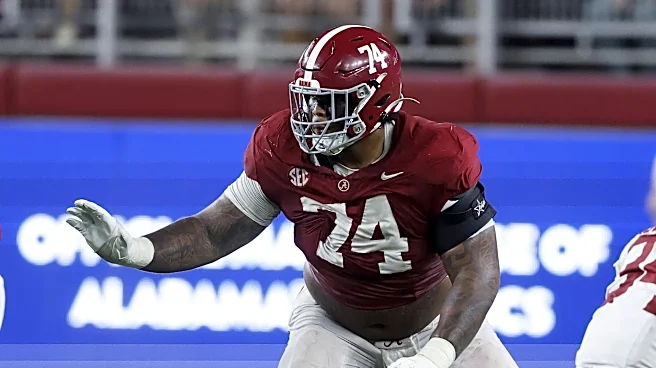
Pick 110 – Brian Parker II, G, Duke

Parker is a five-position prospect for the offensive line, but likely has to settle somewhere on the inside. He has the potential to develop into a starting center, but could be best as a guard, which is the case if the Dolphins select him here. He could serve as the backup to Aaron Brewer as the center for the Dolphins, but could factor into a position battle to start at guard as a rookie.
What they are saying:
Pro Football and Sports Network: Brian Parker II is a compelling mid-round offensive line prospect in the 2026 NFL Draft, who closely follows his fellow alumnus Graham Barton as a potential interior offensive line convert at the tackle position. Parker actually played center in high school, before switching out to tackle with the Blue Devils, where he’s mainly played right tackle over left. At 6’5″, 300 pounds, Parker has a densely-built frame with impressive overall mass and good proportions, and while he’s not close to the athlete that Barton is, Parker still has enough functional athleticism to get out of his stance, reach landmarks, and swivel, and he can punish opponents with overwhelming rotational torque and driving power at the point.
At the very least, he’s a five-position flex lineman who provides immediate depth. At his best, he’s a long-term starter at center or guard.
Lance Zierlein, NFL.com: Tackle-to-center prospect with well-composed frame, good body control and sound technique. Parker consistently centers his blocks and operates with inside hands/good grip strength. He gets to his landmarks under control as a move blocker, has average drive strength on gap-scheme blocks and constantly covers his target. His underhook punch has some pepper to it, but below-average length makes timing and anchor essential. He plays with a quality mirror and clearly sees rush games. Parker’s measurables are average but he plays like a future starting center with guard flexibility.
NFL Draft Buzz: Parker’s future in the NFL is almost certainly on the interior, and that is not a knock. His tape at right tackle is excellent, but the physical profile tells you everything you need to know about where he will settle at the next level. The arms are short, the frame tops out in the low 300s, and he is not going to win many reps against NFL edge rushers with pure length and power. What he does bring, though, is a rare combination of body control, hand accuracy, and processing ability that translates beautifully to center or guard. His Shrine Bowl showing confirmed what the tape already suggested: this is a guy who can snap the ball, make calls, and handle the chess match of interior blocking without missing a beat.
The pass protection numbers over his career are hard to argue with. The efficiency was elite-level, and it was not a product of scheme or easy matchups. He faced real ACC pass rushers and consistently won his reps through technique, timing, and anticipation. In a league that increasingly values interior linemen who can keep the pocket clean and handle pressure packages, Parker checks a lot of boxes. He is not going to maul people in the run game or blow open holes by himself, but he will sustain blocks, stay connected, and finish with effort. The growth trajectory alone is encouraging: this is a player who got meaningfully better every single year he was at Duke.
Parker has the look of a long-term starting center who can also slide to guard in a pinch. Zone-heavy offenses that prize technique and athleticism over brute strength will get the most out of him. His football character is obvious: the academic honors, the leadership, the willingness to switch positions at an all-star game to show teams what he can do. There are real concerns about his size and power ceiling, and he is going to have to prove he can handle the biggest, strongest interior defenders at the pro level without getting overwhelmed. But the floor here is a dependable backup who can play three interior positions from Day 1, and the ceiling is a quality NFL starter at center.
Pick 120 – Sam Roush, TE, Stanford

Roush could end up being a perfect mid-round pick for the Dolphins. He is a traditional in-line tight end who can block and provide protection, but is also a decent pass catcher. He might be the Pro Bowl tight end who is putting up highlights and scoring touchdowns every week, but he could be the possession-type receiver in the middle of the field. He has a drops issue that needs some coaching, but as a rotational number two tight end early in his career, Roush might be exactly what Miami needs.
What they are saying:
Pro Football and Sports Network: Sam Roush joined the Stanford Cardinal in 2022 and saw immediate action as a rotational blocker and special teams contributor. In 2023, he emerged as a full-time starter as a true sophomore, and he caught 40 passes as a junior in 2024. Roush’s senior campaign was his most productive; he accrued 49 catches for 545 yards and two touchdowns, earning a strong PFSN TE Impact grade of 83.9.
The raw talent has always been clear with Roush, and that’s part of what allowed him to acclimate so quickly at the collegiate level. At around 6’5″, 260 pounds, Roush has great size and explosiveness, to go along with steely competitive toughness and physicality. He’s an excellent blocking presence who, though he experiences lapses in balance and technical control, has the range, corrective quickness, and power profile to position himself effectively and drive through blocks.
Meanwhile, as a pass-catcher, his production is a function of his smooth seam-splitting athleticism and box-out ability. Roush’s catching technique can be tighter and more consistent, and his stem work as a route runner still needs major work, but he passes the requisite athletic and intangible thresholds, and his efficiency as a producer bodes well for his development as a potential high-end TE2 and eventual starter down the line.
Lance Zierlein, NFL.com: In a draft landscape full of pass-catching tight ends, Roush stands out as one of the few plug-and-play “Y” tight ends (in-line blocking TE) available. He can make cut-off blocks in zone and combo blocks in gap schemes. He holds his own in pass protection, too. As a receiver, he’s not stiff, but he lacks elusiveness underneath. He needs to apply more of his tough playing style to win combat catches and expand his role beyond run blocker/zone beater. While his catch production might draw questions, his size, toughness and pro-ready blocking profile could push him into Day 2 consideration.
NFL Draft Buzz: Indianapolis changed the conversation on Sam Roush. Before the Combine, the tape showed a well-coached, ascending tight end from a run-first Stanford system who did a little bit of everything without doing any one thing at an eye-popping level. The athletic testing told a different story entirely. A 267-pound man has no business posting a 38.5-inch vertical and a 10-foot-6 broad jump, let alone running a three-cone faster than Kyle Pitts and showing agility on a weight-adjusted basis that compares to Sam LaPorta. That 87 athleticism score, third among all tight ends, forced evaluators to look at the film with different eyes, and what you see when you go back is a player whose physical ceiling was never fully tapped in an offense that leaned on the ground game.
The fit that maximizes Roush is a traditional scheme that values inline tight ends and asks them to wear multiple hats. Think Baltimore’s tight end rotation, or what San Francisco does with their multi-tight end personnel groupings: block on early downs, release into routes off play-action, contribute in pass protection, and give the quarterback a trustworthy target on third and medium. He is not a move tight end who should be split out wide on every third down, but he is far more than a blocking specialist. That steady production curve at Stanford, improving his catch totals and yardage every year despite the offense never centering around him, suggests a player who will only produce more when a coaching staff actually designs touches for him. Red zone and play-action heavy offenses should have him circled.
The drops are real, and that 74.3 passer rating when targeted is not something you can hand-wave away. His route breaks need to get sharper, and the blocking technique requires a position coach willing to invest daily reps in his footwork and hand placement. Those are fair concerns. But the athletic testing puts a new floor and ceiling on this evaluation that the pre-Combine tape alone did not reveal. Roush is a high-character, ascending player with legitimate NFL size, verified explosion, bloodlines steeped in professional football, and the kind of work ethic that coaches trust. He played against quality competition throughout his ACC career and improved every single season. The tight end position rewards patience and development more than almost any spot on the roster, and Roush’s trajectory says he is not close to finished yet. An NFL team that grabs him on Day 2 is getting a player with a real chance to grow into a starting-caliber TE2 who can spot-start without hurting you and whose athletic upside gives him a path to more than that if the technical pieces come together.
Daniel Harms, Bleacher Report: Stanford has a rich history of churning out NFL-caliber tight ends. Sam Roush is next in line with the talent to develop into something more. He presents untapped receiving upside that will entice NFL scouts. He also executed a wide range of blocks as part of the Cardinal offense.
The former 4-star recruit has played all 48 games during his collegiate career and went from a special-teams contributor to an every-game starter, during which he put up a career-best 49 catches for 545 yards and two touchdowns in 2025.
Roush is a workmanlike player who will do whatever a team needs, with growth potential as a reliable receiving threat.
Todd McShay, The Ringer: The Player: Roush is a versatile Y tight end with legitimate in-line capability. He brings a level of physicality and core strength as a blocker that few tight end prospects possess. He also has the flexibility to be an aggressive and smart route runner, with reliable hands and impressive contact balance after the catch. In his final two seasons at Stanford, he totaled 89 catches for 879 yards (9.9 yards per catch) and four touchdowns. He’s smart and durable, finishing his college career with 30 consecutive starts. He won multiple academic honors and comes from an impressive athletic family—his great uncle Merlin Olsen is a Pro Football Hall of Famer.
Roush is not a seam stretcher, and his short arms are cause for some concern. But his combine workout displayed some untapped explosive athletic traits that can be nurtured in the NFL. While he’s not a burner, he runs physical, crisp routes and exhibits some good acceleration out of his cuts. His body control and stop-start ability (both impressive for a 6-foot-6, 267-pound player) really show up on tape, and they were further confirmed by a three-cone of 7.08 seconds, best among tight ends, and a good short shuttle of 4.37 seconds.
He has good but not elite skills. He plucks the ball and seamlessly transitions upfield. He didn’t get many downfield catch opportunities in college, but when he did, I really liked his tracking ability and his confidence attacking the ball. He shows good focus and will make some tough contested catches while securing the ball in traffic. However, his shorter arms show up in two areas: First, when the ball is low and/or behind him in the quick game, he has difficulty adjusting to it. Second, he failed on a couple of opportunities to reach back over and head-top smaller defensive backs. There are only a few examples of those two limitations on tape, but there will be some concern about his smaller-than-ideal catch radius.
Roush is really strong after the catch. He runs with good contact balance and bounces off tackles. He also displays excellent ball security, with only one fumble on 119 career receptions, which he recovered. And he’s one of the best blocking tight ends in this class. Yes, his short arms show up on tape, and he fails to sustain at times, but his effort is awesome, he takes good angles, he shows good pop at the point of attack, and he fights to the finish.
The Draft: Roush is an underrated talent who was overlooked while playing for a dismal Stanford offense (ranked worse than 105th nationally in scoring offense each of the past two seasons). This is a deep but back-loaded tight end class after Oregon’s Kenyon Sadiq and Vanderbilt’s Eli Stowers. Roush is one of several tight end prospects who should come off the board in the third or fourth round.
The Projection: Roush should immediately contribute as a rookie and emerge as a 12-personnel starter early in his career (he’s the type of player who should get 55-65 catches, 600-750 receiving yards, and five to seven touchdowns). Roush’s game and traits compare favorably to those of Pat Freiermuth and Cole Kmet.
Pick 130 – Drew Allar, QB, Penn State

Allar is a developmental project that comes with concerns about his recovery from a season-ending ankle injury last year. If this was the 2025 NFL Draft, Allar would be discussed as a top-ten draft pick and as a franchise changing quarterback. He went back to college and struggled before the injury. Was the regression Allar or was it the weaponry around him? The mechanics will need to be worked on and his confidence has to be rebuilt. But, he looks like a quarterback and he has shown the flashes that had Penn State rocking in 2024. Todd McShay has Allar’s window as anywhere from Byron Leftwich to Joe Flacco – could the Dolphins look to stash him away behind Malik Willis and give him time to develop?
What they are saying:
Pro Football and Sports Network: Drew Allar is perhaps the most quintessential “prototypical QB” in the 2026 NFL Draft. A former five-star recruit, he has the frame at 6’5″, 235 pounds. He has the rocket arm, and he has the nimble mobility and arm elasticity to work off-platform.
He also accrued a glowing record of 26-9 in his time as a starter, and helped lead Penn State to the CFB Playoff semifinals in 2024, showing glimpses of very real pre-snap command, post-snap processing, and break anticipation in the process. While Allar has an enticing blend of raw talent and offensive command, however, flaws remain on his profile. His accuracy and precision runs very hot-and-cold, his dropback and release mechanics are near liability level, and he’s not the level of rushing threat to create his way out of bad situations consistently.
His season-ending ankle injury suffered in November also clouds his immediate availability. Allar will check all the cosmetic boxes for teams, and he’ll be just a 22-year old rookie despite being a three-year collegiate starter. He’s a low-price, low-risk investment in later rounds, but his mechanics essentially need to be rebuilt from the ground up before he can take live reps reliably.
Lance Zierlein, NFL.com: Allar looks the part with prototypical size and an effortless arm that can make any NFL throw. However, inconsistent touch and ball placement are a major hindrance. In big moments and big games, he hasn’t proven he can rise to the occasion or sustain efficiency. The stats looked good in a conservative offense as a sophomore, but his play became more erratic once the playbook was opened up and more responsibility was put on his plate. He can be slow to process and get to his best option. He also struggles to adjust his pre-snap plan to fit the coverage. It’s worth noting Allar’s receivers struggled to win man-coverage matchups for him. Against zone, he makes anticipatory throws and beats coverage at an adequate clip. Mechanical fixes are possible, but confidence, poise and recognition must be the foundation of any rebound. Allar projects as an average backup with high-end traits.
NFL Draft Buzz: The conventional wisdom says returning to school is almost always the right call. Sharpen your game, add to the tape, and watch your stock climb. Drew Allar is a painful reminder that the conventional wisdom doesn’t always apply. Multiple reports had him pegged as a first-round pick in the 2025 draft. NFL GMs were scouting him heavily during the College Football Playoff. One source said Allar “probably” have been the No. 2 overall pick to Cleveland, the team he grew up rooting for. Instead, Allar bet on himself, watched his supporting cast deteriorate around him, suffered a season-ending injury five games into 2025, and turned what could have been a nine-figure career into a coin flip. It was, by any honest measure, a massive miscalculation.
What makes Allar’s situation so maddening is that the talent hasn’t disappeared. It’s still in there. You catch flashes of it on the 2024 tape when his feet are set and the pocket is clean, and the ball comes out with a velocity and trajectory that maybe five or six guys in this entire draft class can replicate. There is first-round ability locked inside Allar’s frame, and the right coaching staff with the right scheme could be the key that turns it. He needs structure: play-action concepts that move the pocket laterally, RPO packages that simplify his reads to one or two options, and a run game committed enough to keep defenses from teeing off on his processing limitations. A coordinator who asks him to stand tall in a collapsing pocket and work through a full-field concept on third-and-eight is going to get the worst version of this player. But a coordinator who builds around his arm, protects him with scheme, and gives him high-percentage layups to build confidence on could unearth something special.
The question every team in this draft has to answer is whether they believe they’re the ones who can unlock it. Because the gap between Allar at his best and Allar at his worst is as wide as any quarterback in this class. His ceiling is a legitimate NFL starter with the arm to win games in January. His floor is a career backup who looks like a franchise quarterback in shorts and never puts it together when the lights come on. The season-ending injury muddies the evaluation further, robbing teams of the extended 2025 look that could have settled the debate one way or the other. He is a Day 2 or early Day 3 selection now, but somewhere in the film room, a quarterback coach is going to watch his best reps and convince himself he’s found the steal of the draft. Whether that conviction holds up against three years of inconsistent tape is the billion-dollar question.
Todd McShay, The Ringer: The Player: Allar is a traits-driven quarterback with prototypical NFL size, arm talent, and mental processing, but his projection is complicated by inconsistencies in accuracy, pocket movement, and decision-making under pressure. A multiyear starter with flashes of high-level play, he offers intriguing upside in a structured system but carries notable developmental risk.
From a mental standpoint, Allar is advanced. He processes quickly, works through full-field progressions, and shows strong coverage recognition—particularly against zone. His eyes are decisive, and he generally understands where to go with the football. His ball security is solid, but his aggressiveness can work against him; he has a tendency to bypass easy completions in search of bigger plays, leading to unnecessary sacks and stalled drives.
As a passer, Allar presents a unique profile. He shows excellent accuracy and touch on in-breaking routes, crossers, and layered throws over the middle, where his anticipation and arm talent shine. However, his inability to consistently lead receivers is a major concern. He frequently leaves throws behind or on the body on verticals, seams, and perimeter routes, limiting run-after-the-catch opportunities and big-play efficiency. This inconsistency extends outside of structure, where his accuracy becomes more erratic.
Athletically, he’s functional but limited. He has enough toughness and balance to operate within the pocket and pick up yards when needed, but he lacks suddenness and escapability. He’s not a creator outside of structure, and his effectiveness drops when he’s forced off-platform—particularly when throwing on the move.
The Draft: While evaluations are mixed, league sentiment is that Allar could be selected on day two.
The Projection: The high-end comparison is Joe Flacco—similar size and arm talent, though Flacco entered the league with better mobility. A team drafting Allar would be betting on improved ball placement at the next level. Lower-end comparisons include Drew Lock and Byron Leftwich—quarterbacks with good tools who struggled to consistently put it all together at the NFL level.
Fifth Round
Pick 151 – Keyshaun Elliott, LB, Arizona State

Elliott should be a tackling machine, and in the box, he really is. His range is what makes him fall in the draft and causes concerns when he is chasing toward the sideline. A middle linebacker who will give the team everything he has, Elliott could develop into a solid NFL starter or be a rotational player and primarily a special-teams contributor.
What they are saying:
Pro Football and Sports Network: Keyshaun Elliott is an intriguing mid-round LB prospect with a recognizable starter-level floor and exciting upside if he can keep building his frame. Elliott began his career as an unheralded signee with the New Mexico State Aggies in 2022, and immediately earned rotational reps as a true freshman. In 2023, Elliott was an emergent All-CUSA performer, and transferred to Arizona State as a junior in 2024.
In 2024, he retained his impact role, but the 2025 campaign saw Elliott produce career-best numbers in several important categories. Starting 12 games for the Sun Devils, Elliott amassed 98 tackles, 14 tackles for loss, and seven sacks. Per TruMedia, he achieved an incredible 68.2% pressure rate on blitzing reps.
Elliott’s most prevalent value comes as a run defender and blitz component. At around 6’2″, 231 pounds, with 4.58 speed, he’s well-built and rangy tracking plays laterally, and he’s one of the best natural processors in the class, with elite processing, vision, and reaction-to-stimulus when encountering angle fluctuations. There are elements of Elliott’s game that still demand improvement.
An 18% missed tackle rate from 2025 is extremely concerning, and points to a length limitation as well as issues breaking down and maintaining tackling angles in pursuit. Additionally, while Elliott has good coverage mobility and zone feel, his ball tracking and blind spot IQ leaves more to be desired. At 231 pounds, adding more mass to his frame will also be imperative.
Having said all this, Elliott has the athletic and intangible qualities to be a potential mid-round gem and future quality starter at the LB position, if he can attack his areas of improvement with zeal.
Lance Zierlein, NFL.com: Big, productive inside linebacker lacking the athletic traits to make enough plays on the next level. Elliott has earned praise for his exceptional work ethic and football character. His instincts and reaction time are average, though. He can be heavy-handed when taking on blocks and his execution is inconsistent. His pursuit speed to the sideline is too heavy-footed in pass coverage and as an open-field tackler. His pathway will need to be as a physical thumper who can star on special teams.
To highlight the player’s measurements, use:NFL Draft Buzz: The production is real and the football character is the kind NFL staffs trust in a huddle, but the coverage limitations keep this profile from reaching true three-down status without help from the scheme. Elliott is a downhill thumper who diagnoses quickly when his eyes are right and arrives with pop in his hands at the point of attack. His pro day timing is passable speed for a stack linebacker, and it confirms what the tape already said: he can run the alley and chase the seam, but he’s not closing on sideline throws or recovering when his first read is wrong.
Run downs are where he earns snaps early, in a gap-sound front that asks him to stack, shed and tackle between the tackles. He fits cleanly as a Mike in base packages and carries real value as a green dot communicator given the quarterback background and pre-snap recognition. The senior year pass rush production deserves more weight than a stat line suggests. Seven sacks came with genuine feel for blitz timing, heavy hands through contact and a knack for picking his lane against interior protection, and a defense that wants a designed green-dot pressure on third down has a real answer built into this skill set.
Special teams will determine whether he sticks as a core four contributor or settles into a rotational role, and the leadership and study habits are there to build on. The realistic outcome is a run-down starter and sub-package blitzer whose third-down role depends on how aggressively a coordinator trusts him to get home. Drop him into zone coverage in nickel and the problems show up fast.
Sixth Round
No Picks
Seventh Round

Pick 227 – Fa’Alili Fa’amoe, G, Wake Forest
In the seventh round, we are likely looking for flyers on developmental players who have the potential to grow into a solid NFL player. Fa’amoe is exactly that. He will need time to develop at the NFL level, especially as he moves to guard for the first time after playing tackle at Wake Forest. He might end up being an undrafted free agent, but there are enough flashes to consider selecting him in the seventh round with an eye toward the bottom of the roster or on the practice squad.
What they are saying:
Lance Zierlein, NFL.com: Well-proportioned right tackle with good size and average consistency in both phases. Fa’amoe can be hit or miss as a run blocker. He rarely wins with leverage but has reps where he generates movement. On other reps, he ends up on the ground or fails to sustain blocks due to a lack of positioning and footwork. He has a firm pass punch and inconsistent reactive quickness to mirror sudden counters and inside moves. Fa’amoe should garner Day 3 interest as a backup right tackle with the potential to help at right guard as well.
NFL Draft Buzz: Fa’amoe has never taken a snap at guard in a game, but that is where his NFL future lives. Watch him in the Mississippi State bowl game and you see what he can be in a condensed space: his punch lands clean, he sits into his anchor, and on combo blocks he physically relocated defensive tackles off the line of scrimmage. Those reps are real. But then go back to the NC State film, where he was beaten across his face multiple times on reach blocks and ended up on the ground twice in the run game, and you see the other side. That week-to-week variance in the ground game followed him from Pullman to Winston-Salem and it is the main reason he is not a higher-rated prospect.
In pass protection, there is more to like. His kick-slide is compact and keeps him positioned between the rusher and the quarterback. He absorbs bull rushes with his upper body and rarely gets displaced straight back. The Virginia Tech game stood out on film because he handled both power and an occasional inside counter without giving up a pressure. Where he gets into trouble is when edge rushers with real closing speed bend the corner; his feet just do not carry him far enough to seal the edge. That is a tackle problem, not necessarily a guard problem, and moving him inside shortens the space he has to cover.
A gap-scheme system makes the most sense. He can fire off the ball on pulls and trap blocks, lock on in phone-booth pass protection between the guards, and handle double-teams at the point of attack. Zone-heavy offenses that need their linemen to cover ground laterally and climb to linebackers are a harder fit. He is a developmental backup who could stick on a roster as a swing interior piece if a staff commits to coaching him at a new position. The tools are there in his hands and his anchor. The feet are what cap his upside.
Brandon Thorn, Bleacher Report: Fa’alili Fa’amoe is a heavy-bodied offensive line prospect with big hands, good arm length and square power to anchor and generate displacement on double-teams. However, his marginal athleticism, late feet and limited recovery create soft edges and issues versus movement.
A position shift to guard—despite zero career starts—offers his best chance to make an NFL roster, making him a logical gap-scheme UDFA swing.
Fa’amoe is a 6’5″, 317-pound guard prospect who committed to Washington State as a 3-star recruit in the 2020 class before transferring to Wake Forest in 2025. He began his career on the defensive line before making the switch as a redshirt freshman in 2022 for the Cougars.
The former Demon Deacon started 38 career games at right tackle, including 26 for Washington State from 2022-2024 and 12 for Wake Forest in 2025. He was a team captain in 2024 and capped off his college career by participating in the Shrine Bowl.
Pick 238 – Fernando Carmona, Jr., G, Arkansas

Carmona is another guard project who could become a solid contributor and be a depth piece on the offensive line. He has the potential to be really good as an interior pass protector, and he has the nasty streak you want from someone in that role, but he needs to be coached on his technique. He might be another player to stash on the practice squad for a year as he works to improve him game.
What they are saying:
Pro Football and Sports Network: Fernando Carmona Jr. transferred to Arkansas from San Jose State in 2024, after starting two full seasons at left tackle and earning honorable mention All-Mountain West recognition in 2023. Upon arriving at Arkansas, he began his tenure with the Razorbacks at LT, but a streaky acclimation to SEC play led him to kick inside to left guard for his final season.
At guard, Carmona looked more comfortable — registering an elite PFSN OL Impact grade of 91 — and that’s likely where he’ll stick at the NFL level. Carmona’s linear athleticism pops, and he has hyper-elite raw power capacity when he’s able to work on the attack as a puller and climber. He’s not shy about finishing opponents in the dirt, either — though he can employ better discipline at times (10 penalties in 2025).
He’s not overly flexible; he especially lacks in knee bend, and he needs to improve his leverage acquisition and pad level in pass protection. Still, Carmona brings experience, explosive straight-line athleticism, menacing power capacity, and relentless physicality. With improvements in leverage play and hand replacement, he can be an effective starter inside, with a particular affinity for gap schemes.
Lance Zierlein, NFL.com: Carmona is a combative lineman who brings energy to the locker room and an edge to the field. He carries a burly build with short arms, making the move to guard in 2025 after three seasons at left tackle. He’s tough and plays with maximum effort. He can win some alley fights but will lose at least as many on the NFL level due to his lack of body control and inconsistent hands. Technical improvement is possible and his tackle background in the SEC could give him a head start in pass pro, but backup duty appears to be his ceiling.
NFL Draft Buzz: Fernando Carmona Jr. projects as a high-upside offensive tackle prospect with the potential to develop into a quality NFL starter. His combination of size, athleticism, and power provides an excellent foundation for success at the next level. Carmona’s ability to generate movement in the run game and his quick feet in pass protection make him a scheme-versatile prospect.
While Carmona’s technique is still developing, his rapid improvement at San Jose State suggests significant room for growth. His transition to the SEC will be crucial in his development, as it will expose him to elite edge rushers and complex defensive schemes. NFL teams will closely monitor his performance against this elevated competition to gauge his readiness for the pro level.
Carmona’s potential as a blindside protector, combined with his physicality in the run game, makes him an intriguing prospect for teams in need of offensive line help. His background as a former tight end also hints at untapped athletic potential that could be fully realized with continued coaching and development at the NFL level.