



Every day, we’ll take a closer look at another member of the 2026-27 Phoenix Suns, examining what they bring to the roster and what their role could mean for the season ahead as we count down to training camp and the preseason.
Duop Reath
Center, 6’9”, 245 pounds, 30 years old, 4th season
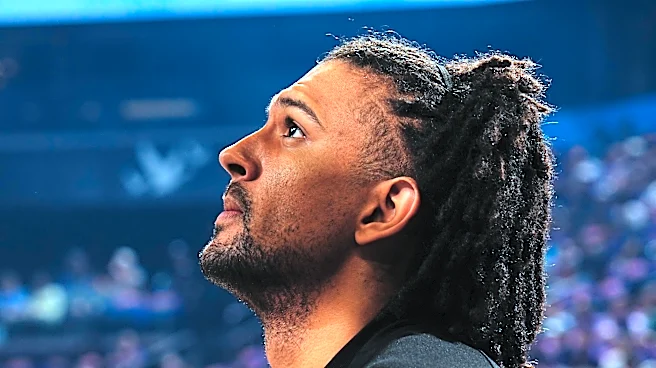
Was writing a player preview about Duop Reath on my bingo card when we originally scheduled our Player Preview series here at Bright Side of the Sun? Nope. But like champions, we adjust. The Phoenix Suns have signed Reath, and
therefore we need to give you an introduction to who he is, what he’s done, and what he could potentially become as a member of this team.
He’s ultimately been brought in to compete for a role at the back end of the center rotation following the injury to Mark Williams. How much he actually plays, or whether he ultimately sticks on the roster, remains to be seen.
But what do we know about him? What has he done in the past? What does the scouting report look like? And what could he potentially bring to the Phoenix Suns? We’ll break all of that down in this Player Preview.
I recommend you start with understanding his journey to the NBA.
Last Season
Per Paul Navarre at Blazer’s Edge:
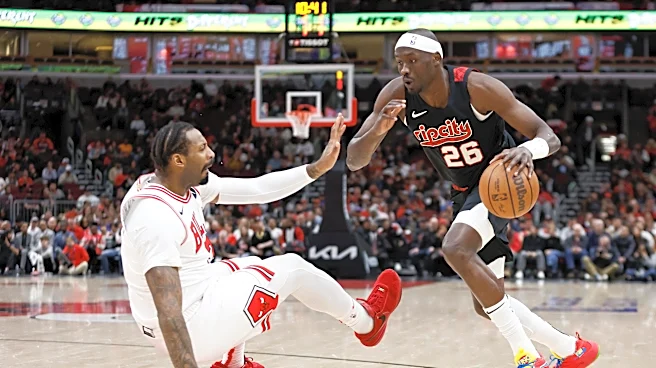
Reath averaged 13.3 minutes per game over 146 games with the Blazers between 2023 and 2026. He scored 6.2 points per game with 2.6 rebounds and .4 blocks. He shot 42% from the three-point arc during the 2025-26 season in Portland.
Reath last played for the Blazers on January 18, 2026. On January 29 it was announced that Reath had a stress fracture in his foot and that he had undergone successful surgery. Reath was traded on February 1st to the Atlanta Hawks along with two future second-round picks for Vit Krejci. Atlanta made the trade knowing that Reath would miss the rest of the season. They waived the big Australian four days later. Reath has not played since.
Contract and Roster Context
Per Duane Rankin, he will be on a training camp invite.
What He Brings
Aside from the competition he brings to the back end of the roster, Reath possesses something that immediately makes him interesting for the Suns. He can stretch the floor. Last season, Reath shot 41.8% from beyond the arc, although the volume wasn’t really there. He went 23-of-55 from deep for the season. For his career, he’s a 35.7% three point shooter, which is ultimately where one of his biggest offensive strengths lies.
If the Suns want a backup big who can stretch the floor when called upon, Reath can fulfill that role. And if you put him in the right corner, he can make you pay. Reath is a career 48.2% three point shooter from that area of the floor.
That ability gives Phoenix another option at center and a different offensive skill set to work with, depending on what a matchup requires.

Another thing Reath brings is the potential to provide mentorship, especially for Khaman Maluach. Maluach is stepping into an increased role this season, with a lot more responsibility being placed on his shoulders to produce with the opportunity in front of him.
Reath may only be around for a short period of time if he ultimately doesn’t make the roster, but there is still value in having him around Maluach during training camp. Reath has experienced a tumultuous basketball journey of his own, and he was born in Sudan, not far from where Maluach was born in South Sudan. That shared background and experience could create a natural kinship between the two. And perhaps that opens the door for some mentorship along the way, with Reath helping Maluach prepare for what lies ahead.
What Needs to Improve
While his ability to stretch the floor is a positive, there is plenty of opportunity throughout the rest of Reath’s game.
He isn’t a great rebounder on either end of the floor. He isn’t a great finisher, nor is he particularly effective defending on the perimeter. Where he does shine defensively is with his rim protection and ability to provide help defense. That creates a challenge if Reath ultimately becomes the third member of the Suns’ center rotation. Phoenix already has Oso Ighodaro, who isn’t necessarily a great rebounder himself, especially on the defensive end. Some of that is understandable because Oso is a switchable big who frequently gets pulled away from the paint.
Still, if you’re subbing Oso out and replacing him with Reath, the rebounding deficiency doesn’t disappear. It could become even more glaring.

Final Word
I love that the Suns brought Reath in to create competition for that third-string center role. It’s a smart way to operate, especially when it doesn’t cost you anything. There could be some ancillary benefits along the way, as I mentioned with the potential mentorship of Khaman Maluach. He gives Phoenix another body, another shooting profile, and another player who can push the final roster spots during camp. Maybe that turns into a roster spot, maybe it becomes a G League opportunity, and maybe it ends there. Either way, Reath gives the Suns something they needed: competition without commitment.
Ultimately, though, I don’t think Reath makes the team. Could he end up on a two-way contract? The opportunity exists because this is his fourth season, the final year he would be eligible for that type of deal. I’d much rather keep CJ Huntley on a two-way contract, focus on developing him, and provide Reath with an opportunity to play in the G League if that path presents itself.
I love his journey. I love his story. And I love how the Suns are approaching this. I simply don’t think Reath is going to have much of an impact on the Phoenix Suns this season. He is this year’s Jared Butler.