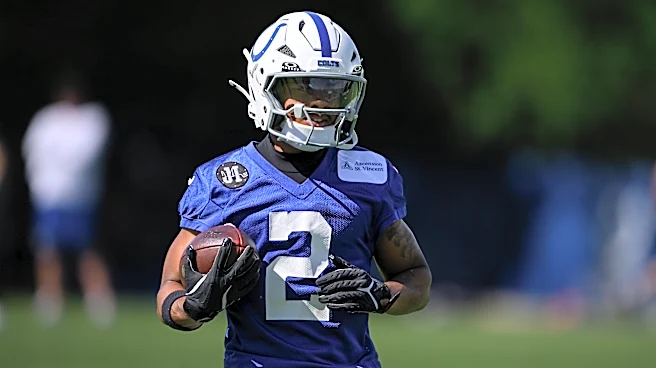

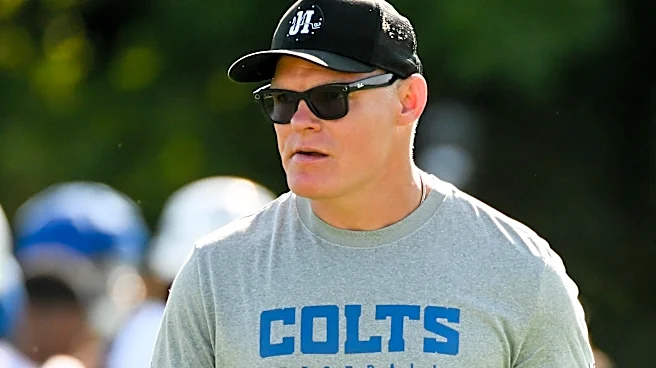
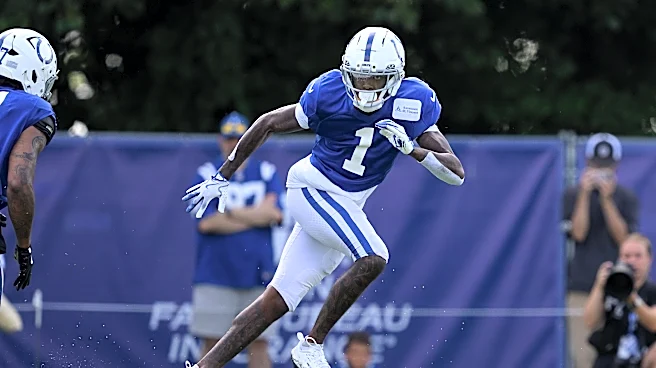
“A guy that can play inside and outside now for us, and his role is going to improve this season.“
That was Shane Steichen on Josh Downs, and it feels like one of the more important offensive developments of Colts training camp. Downs has already proven he can play in this league, and now the conversation is shifting from whether he belongs to how much more Indianapolis can put on his plate. That is where this season gets interesting, because Downs does not need to become a traditional No. 1 receiver
to become one of the most important players in the Colts’ passing game.
The role was always likely to grow. Michael Pittman Jr. is gone, Alec Pierce has a different job as the vertical outside receiver, and Tyler Warren is a major piece at tight end, which leaves Downs in a spot where his weekly target share could climb quickly. He may not be the primary read on every concept, and he does not have to be used the same way Pierce is, but Downs is the type of receiver who can end up with the most targets in a lot of games simply because of how he wins. He separates quickly, works well underneath and intermediate, and gives the quarterback answers on the downs that usually decide drives.
That has been the most impressive part of Downs since he got to Indianapolis. Even with inconsistent quarterback play, he has found ways to be productive and reliable. The Colts have not exactly given him a stable offensive environment, yet his skill set has translated because separation travels. Quarterbacks trust receivers who get open on time, and Downs does that about as well as anyone on the roster. He is especially valuable on third down, where timing, leverage and route detail matter more than size or straight-line speed.
The outside part of Steichen’s quote is important too. Downs’ best work still comes from the slot, and that should remain the foundation of his role, but he is not limited to only being a slot receiver. If the Colts can move him outside in certain looks, use him in motion and make defenses declare how they want to match him, the offense becomes less predictable. That does not mean forcing him into a role that does not fit. It means expanding the menu so defenses cannot treat him like a static inside option.
He can become a 100-catch receiver and the idea is not ridiculous. That does not mean he has to turn into a superstar overnight, and it does not mean he needs to be force-fed empty targets. It means the opportunity is there if the Colts build the passing game correctly. Downs is the kind of player who can catch six balls in a game without it feeling like the offense was designed around him, because so much of his production can come naturally through option routes, quick-game concepts, third-down throws and answers against pressure.
For the Colts, that kind of player is extremely valuable. This offense still begins with Jonathan Taylor, and Warren may become the most dangerous matchup piece, but Downs can be the receiver who keeps the passing game on schedule. That role is not always flashy, yet it is often the difference between an offense that has to survive on explosives and one that can consistently move the chains.
Training camp buzz always needs to be handled carefully, because every summer has players who look ready for a leap and then settle back into what they were. Downs feels different because this is not random hype attached to an unknown player. This is the next logical step for someone who has already shown he can win in the NFL, now entering a season where the depth chart and coaching staff are pointing toward more responsibility.
The Colts do not need Downs to become something he is not. They need to lean into what he already does well and give him more chances to do it from different spots. If that happens, his expanded role could end up being one of the biggest reasons the passing game takes a needed step forward.