
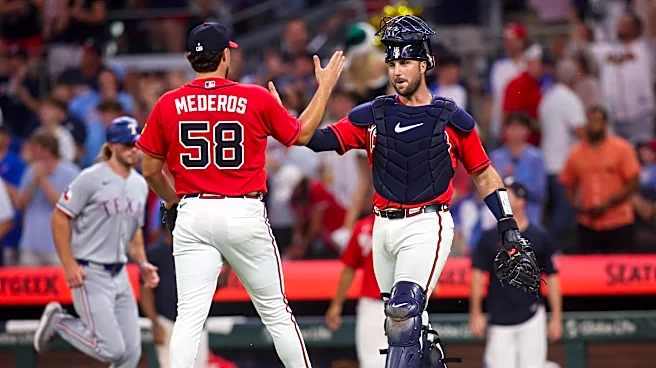


After what felt like a never-ending wait, the time to trade is nearly upon Major League Baseball. This year’s trade deadline is August 3 at 6 p.m. ET, giving contending clubs just two weeks to reinforce their rosters for the stretch drive. The Atlanta Braves are one of many teams seeking the missing pieces for their rosters.
The trade deadline is not what it used to be, however.
When the expanded playoff format went into place in 2022, it created more opportunity for clubs on the bubble to ponder their
postseason chances. This caused many teams that previously had little or no path to the playoffs to take more time to carefully consider the decision to sell at the trade deadline.
Heading into Monday’s action, 23 of the 30 teams in MLB are within 4-1/2 games of a playoff berth. That creates an incredible amount of intrigue leading up to the deadline.
Atlanta entered the second half in first place, but its hold on the top spot in the National League East diminished greatly over the past two months. The Philadelphia Phillies whittled the Braves’ 10-1/2 game lead down to just two games by the All-Star break. The Miami Marlins also transformed into one of the hottest teams in baseball over the past six weeks, putting the Braves in the middle of a full-blown division race. Atlanta’s lead is currently three games, but in order to hold off these rivals and secure a postseason spot, the time to add pieces is near.
Over the winter, Braves general manager Alex Anthopoulos expressed a desire to acquire a proven starter who could bolster the rotation come playoff time. When that did not happen during the offseason, it left Atlanta to depend on its organizational depth and a stable of starters with a litany of durability concerns and questionable availability in some cases.
Given the injuries which began in spring training and persisted throughout the regular season, it goes without saying that the Braves find themselves in a familiar position of needing help in the starting rotation. While it may have been reported that Anthopoulos is prioritizing offense in advance of the August 3 deadline, there is little reason to believe Atlanta will not also be having serious discussions about addressing their many pitching issues.
Just what are those issues? I’m glad you asked.
Potential returns for both Spencer Schwellenbach and Spencer Strider remain unclear. Though Schwellenbach is in Florida ramping up his throwing progression, Strider has not picked up a baseball since being placed on the injured list on June 13 with elbow inflammation. Given his lengthy history of elbow issues, both the injury and time remaining may be working against him.
AJ Smith-Shawver and Hurston Waldrep could help but carry their own viability concerns. Smith-Shawver is currently rehabbing with Triple-A Gwinnett and could be closing in his return from Tommy John surgery in just 13 months. Waldrep underwent surgery to remove loose bodies from his elbow in Spring Training. Though he returned to the Atlanta rotation a few weeks ago, Waldrep was optioned back to Gwinnett to allow additional time to return to his 2025 form.
Martin Perez patched one of the rotation spots and should return this week after an injury scare when he was struck in the forearm with a line drive. All of these circumstances led to top prospects JR Ritchie and Owen Murphy being pressed into duty to mixed results.
With Reynaldo Lopez and Grant Holmes each essentially being five-inning pitchers and Bryce Elder regressing mightily after a strong start, there are simply more questions than answers for Atlanta’s starting five after Chris Sale takes his turn.
In 38 games since June 1, the Atlanta rotation averaged 4-2/3 innings per start. Only the Washington Nationals, San Diego Padres, and Chicago White Sox have received fewer innings from their rotation over that stretch. Braves starting pitchers have produced a combined 0.7 fWAR since June 1, a mark that is tied for 25th in Major League Baseball. Considering that Sale accounts for a 1.3 fWAR in his past seven starts, this paints a rather unflattering picture of the other eight Braves to start a game during that time.
Now that you’re up to speed on where the Braves stand, what they need, and why the need it, let’s take a look at some of the candidates. There will certainly be others, but I’ve identified 11 pitchers that could be dealt by the deadline. Since the ideal fit is subjective and is oftentimes price dependent, I’ll leave you to debate the merits and cost of acquiring each.
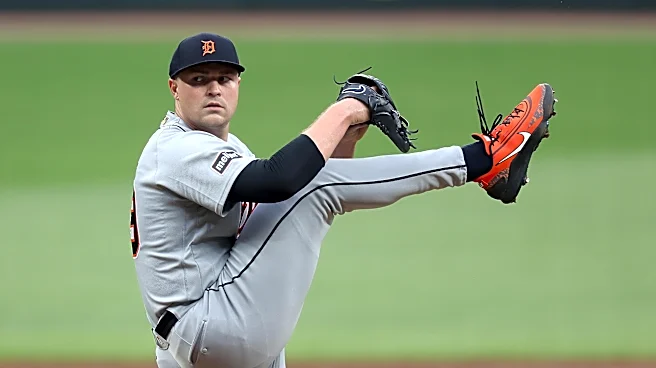
Tarik Skubal | DET | 29 y/o | 2.2 fWAR
May as well get this one out of the way first, because there’s not a bigger name that could be on the move as we approach the trade deadline. Skubal is the two-time, reigning, defending American League Cy Young Award winner. You don’t need me to tell you what that kind of talent can do for the rotation of any contending club. As such, expect just about every single contender or postseason hopeful to at least inquire with Detroit about Skubal.
That’s the good, but here’s the rest of the story. Skubal has appeared mortal at times this season. After starting 31 games, surpassing both 190 innings and 200 strikeouts while posting 2.39 and 2.21 ERAs in 2024 and 2025 respectively, Skubal is 6-5 with a 2.83 ERA in 14 starts this season. He also underwent surgery to clear loose bodies from his pitching elbow.
That cost him just six weeks because it was a cutting-edge procedure, but Skubal has been more homer-prone – eight in 39-1/3 innings – since returning to the Detroit rotation in mid-June. Of course, he also averaged 12.1 K/9 over that stretch. The first start out of the All-Star break was vintage Skubal – seven scoreless innings with nine strikeouts on Saturday, so perhaps the elevated home run rate is not quite the canary in the coal mine after all.

Regardless of the in-season elbow surgery, it’s hard to talk anyone out of the desire to add Skubal. However, the prospect bounty required will be exorbitant, even if there are lingering questions about not only his health but his direct path into whatever free agency looks like with a potential work stoppage awaiting. The last part of that discussion can wait, but it’s worth noting Skubal is due the remainder of a $32 million salary this season. Obviously, that’s unlikely to dissuade many suitors who are in the market for arguably the best pitcher in the game for the stretch drive.
Joe Ryan | MIN | 30 y/o | 3.3 fWAR
While the Minnesota Twins were the busiest team at the trade deadline a year ago, they currently have a legitimate shot at a postseason berth. The Twins find themselves contending for one of the AL Wild Card spots and are also in range in the AL Central race. That could make ace starter Joe Ryan difficult to acquire despite heavy interest.
Ryan is 6-5 with a 2.85 ERA in 20 starts and has struck out 128 batters across 110-1/3 innings while holding opponents to a .218 batting average and just a .614 OPS. Minnesota avoided arbitration by signing Ryan to a contract that calls for $6.1 million for this season and includes a $13 million mutual option with a $100,000 buyout for 2027. He is under team control through arbitration for another year even if that option is not exercised. Given his impressive work again this season, Ryan is likely to be one of the most sought-after starters on the trade market. As a result, he could be one of the most expensive to acquire given he is not just a rental.
Sonny Gray | BOS | 36 y/o | 1.8 fWAR
The 36-year-old veteran is currently fronting the rotation of the surging Red Sox. Gray is 12-1 with a 2. 48 ERA in 18 starts and Boston is riding a 13-game winning streak. The incredible turnaround allowed the Red Sox to claim the third Wild Card spot in the AL. Boston is a case study for why clubs aren’t in a hurry to trade off their pieces and what a well-timed winning streak can do for a team that many gave up on following an abysmal start. All of that winning puts Gray’s availability in serious question unless Boston falls apart in the next two weeks.
While his numbers are solid, Gray is significantly outperforming his both his 3.65 FIP and 3.67 xFIP and a 7.97 K/9 is his lowest since 2016, his fourth season in the big leagues. That does not necessarily set off alarm bells but is worth noting for sustainability’s sake. One of Gray’s best abilities is availability. He’s averaged 31 starts and 177 innings from 2023-2025. If a team is looking for a proven arm to throw competitive innings, then Gray may just be your guy.
Gray has a no-trade clause but could be convinced to waive it to pitch for Atlanta, a team close to his home in the Nashville area. The St. Louis Cardinals are paying $20 million of Gray’s $35 million salary this season, making the financial component more palatable for any team that acquires him. Gray also has a $30 million mutual option for 2027 which carries a $5 million buyout. The big question now is will the Red Sox actually be sellers? Time will tell.
Reid Detmers | LAA | 27 y/o | 3.0 fWAR
One of the youngest arms who could hit the market, Detmers is a talented yet inconsistent lefty starter who comes with several years of team control attached. In parts of six seasons with the Angels, Detmers has yet to really put everything together. He owns a 24-37 record to go along with a 4.64 ERA in 564 innings and moved back to the rotation this season after spending 2025 in the bullpen for Los Angeles.
The strikeout numbers are intriguing. Detmers has posted 10.2 K/9 and has 130 strikeouts in 114-2/3 innings across 19 starts this season. Just 3-6 with a 4.16 ERA, Detmers holds a respectable 3.21 FIP and 3.26 xERA per FanGraphs. Given the Angels are one of the worst fielding teams in baseball, a change of scenery could be just what Detmers needs to level up.

Unlike some of the bigger name starters who could change addresses by the deadline, the price tag on Detmers could be more reasonable. The fact that he’s not eligible for free agency until after the 2028 season only enhances Detmers’ value when parting with prospects.
Casey Mize | DET | 29 y/o | 2.7 fWAR
It took eight years, but the top pick in the 2018 draft is enjoying his best season as Detroit is struggling to stay afloat in the AL Central race. While Skubal is the Tigers starter everyone is talking about, Mize could be the more realistic target. The 4-6 record is deceiving as Mize owns a 2.79 ERA that is backed by a 2.62 FIP and 3.12 xERA. He is also averaging a career-best 9.2 K/9 through 15 starts and 80-1/3 innings this season.
Here’s the bad news, however. Mize was forced out of his most recent start over the weekend after being struck in the left wrist by a comebacker. While the Tigers aren’t overly concerned with that issue, it was revealed that Mize is also dealing with groin tightness. Mize described his early exit as precautionary, but the severity of that issue could impact his availability.
A true rental, Mize will be a free agent following the season. While his résumé is considerably lighter than Skubal’s, plenty of teams would like to add a capable starter who is enjoying his best season just as the pennant race heats up. Mize is an Alabama native who attended Auburn University before being drafted by the Tigers eight years ago. While he may not have produced the career Detroit envisioned, Mize picked a great time to put things together and could command a decent return in trade if he does get moved.
Michael Wacha | KCR | 35 y/o | 1.8 fWAR
One of two veterans the Royals could shop at the deadline, Michael Wacha is a battle-tested starter who provides quality innings on an annual basis. From 2022-2025, Wacha averaged 27 starts and 150 innings while logging a 3.46 ERA – though it does come against a 4.24 xERA. What’s hard to argue with are the innings themselves, which is what the Braves desperately need. An All-Star for the second time in his career – and first time in 11 years – Wacha leads the AL with 119-1/3 innings pitched while posting a 3.77 ERA in 19 starts thus far this season.
Wacha is owed the remainder of an $18 million salary this season and $14 million for 2027. The Royals also hold a $14 million team option with a $1 million buyout for 2028, which would be Wacha’s age-36 season. Given the money attached, Wacha may not be the most expensive trade piece moved at the deadline in terms of prospect return. His consistency, however, should be in demand and thus garner some value heading back to Kansas City.
Robbie Ray | SFG | 34 y/o | 0.7 fWAR
A former Cy Young Award winner who could be on the move as the San Francisco Giants reevaluate just what it is they’re building, Robbie Ray is putting together a solid season in the final year of a five-year, $115 million deal he signed with the Mariners prior to 2022. Ray made just 32 starts for Seattle before being shipped to San Francisco in January of 2024. After fully recovering from Tommy John surgery, he went 11-8 with a 3.65 ERA in 32 starts for the Giants last year, averaging 9.2 K/9 and posting a 2.2 fWAR.
While no longer a frontline starter who can lead the league in strikeouts, Ray still profiles as solid mid-rotation arm. He is 8-6 with a 3.33 ERA in 110-2/3 innings for the Giants so far in 2026 and could bolster the Braves’ depleted ranks and provide them with a second lefty in rotation. Another rental acquisition that will likely command a modest return unless a team is willing to overpay in prospect capital, Ray should draw interest from numerous contenders.
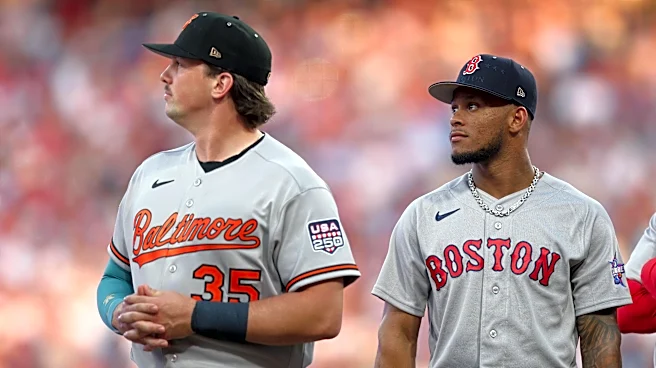
Trevor Rogers | BAL | 28 y/o | 1.9 fWAR
The Orioles entered the season with high hopes and Trevor Rogers was supposed to be part of their success on the mound. Instead, the club stumbled out of the gate and spent the majority of 2026 looking up in the standings at the Rays, Yankees and Blue Jays. Rogers was solid in his first three outings this season before getting absolutely blasted for a 10.01 ERA over the next seven starts and then spending a few weeks on the injured list due to a severe illness.
Rogers returned to form in June and owns a 1.69 ERA over his last eight starts while throwing 48 innings and allowing just two home runs. This looks a lot like the version of Rogers that went 9-3 with a 1.81 ERA in 18 starts for Baltimore last season. He may be outpitching his FIP, but Rogers has a five-pitch mix that can garner good results.
Acquired him from the Marlins at the trade deadline in 2024, he has enjoyed some success in Baltimore. Yet another pending free agent on this list, Rogers is owed just $6.2 million in his final year of arbitration. The Orioles are just two games out of the final Wild Card spot, so they may just hold onto Rogers and ride out the final two months.
Michael Soroka | ARI | 28 y/o | 2.2 fWAR
Here’s a blast from the past. After years of injuries and the subsequent search for consistency, Michael Soroka appears to have his career back on track with Arizona. He signed a one-year, $7.5 million contract over the winter and delivered a strong first half, going 8-3 with a 3.07 ERA (2.93 FIP) in 15 starts. Not only is Soroka boasting a healthy 8.7 K/9, but he finally solved the home run problem that plagued him since returning to the mound in 2023 after two major Achilles injuries with Atlanta. In short, Soroka looks a lot like the All-Star pitcher he was for the Braves at just 21 years old in 2019.
Unfortunately, Soroka is currently on the 15-day IL with a strained left glute. That injury occurred roughly a month ago and he is not expected back until early August. Not only will Arizona not have Soroka’s services at a critical juncture of their season, but they will not be able to showcase him for other teams should they decide to sell.
The Diamondbacks may be buried in the NL West standings, but the remain very much alive in the Wild Card. Arizona enters the week just a half game out of the race, though there is a three-way tie for that final spot. Like many teams, the next two weeks could decide the fate of the Diamondbacks when it comes to buying or selling at the deadline. If Soroka is made available, he would be an attractive piece for any contender to add to its rotation.
Seth Lugo | KCR | 36 y/o | 1.1 fWAR
Aside from Michael Wacha, another veteran starter the Royals could make available is righty Seth Lugo. After seven seasons pitching mostly in relief for the New York Mets, Lugo moved to the rotation with the San Diego Padres in 2023 and parlayed his success into a multi-year deal with Kansas City. The runner-up for the AL Cy Young in 2024 when he posted a career-high 4.7 fWAR and went 16-9 with a 3.00 ERA in 33 starts, regression came calling for Lugo over the past year and a half. He owns a 4.25 ERA over his past 46 starts, but his 5.31 xERA is the worst of the 42 starting pitchers who’ve thrown at least 250 innings since the start of 2025. His strikeout rate has also declined for the seventh consecutive season.

Whether or not the Royals want to cover some or most of his considerable salary in order to improve their prospect return is the major consideration in a Lugo trade. He is owed the remainder of a $21.5 million salary this season along with another $21.5 million next season, plus a $3 million buyout of his $17.5 million team option for 2028. There’s been no indication the Royals want to dump salary, even though they are operating at a club-record $140 million payroll this season. They may be hesitant to subtract veteran starters that could help them next season, cover some of the salary, and then have to find capable replacements.
Freddy Peralta | NYM | 30 y/o | 1.2 fWAR
The Mets acquired Freddy Peralta from the Brewers to help them make a playoff push in 2026, but the season has not played out favorably for New York or its newest starter. In the final season of a five-year contract, Peralta is suffering through his worst season. Just 5-8 with a 4.66 ERA in 20 starts, Peralta’s strikeout rate is a career-low 9.0 K/9 and his stuff has taken a noticeable step back as measured by MLB’s Statcast data.
What you have here is both a rental and a project, which is not exactly a great combination. Though stranger things have happened, the fact that Peralta is pitching for a division rival that seldom trades with Atlanta only raises the level of skepticism that a deal would materialize. This is due to the mutual desire by both clubs not to help one another outweighing any tangible benefit to swapping players. The last trade between the two teams was June 8, 2016, when Atlanta sent infielder Kelly Johnson to New York in exchange for pitching prospect Akeel Morris. Most importantly, this version of Peralta seems a far cry from the one who finished fifth in NL Cy Young voting just last year for Milwaukee.