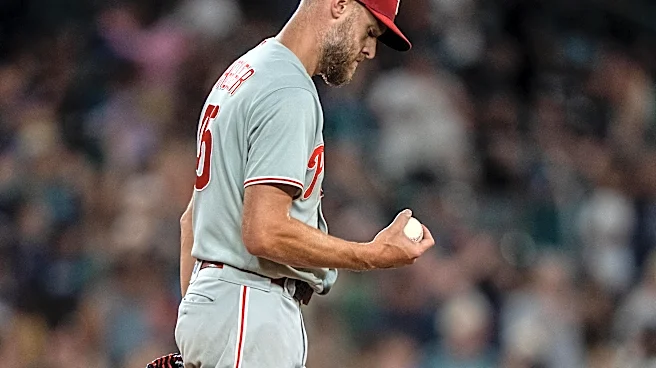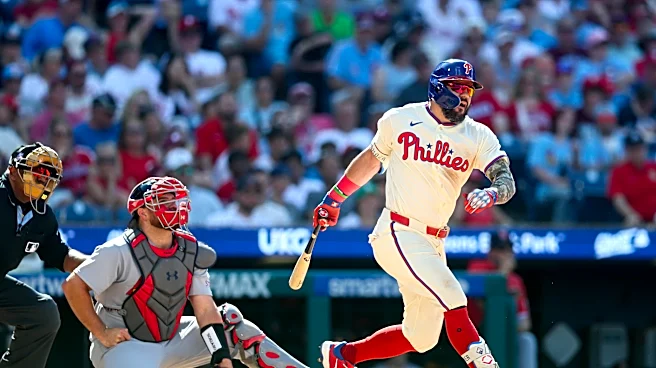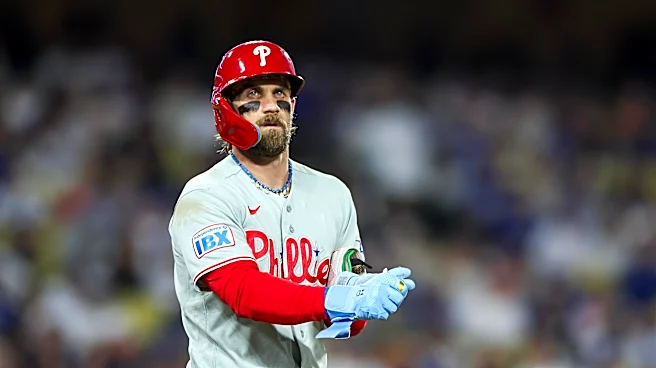


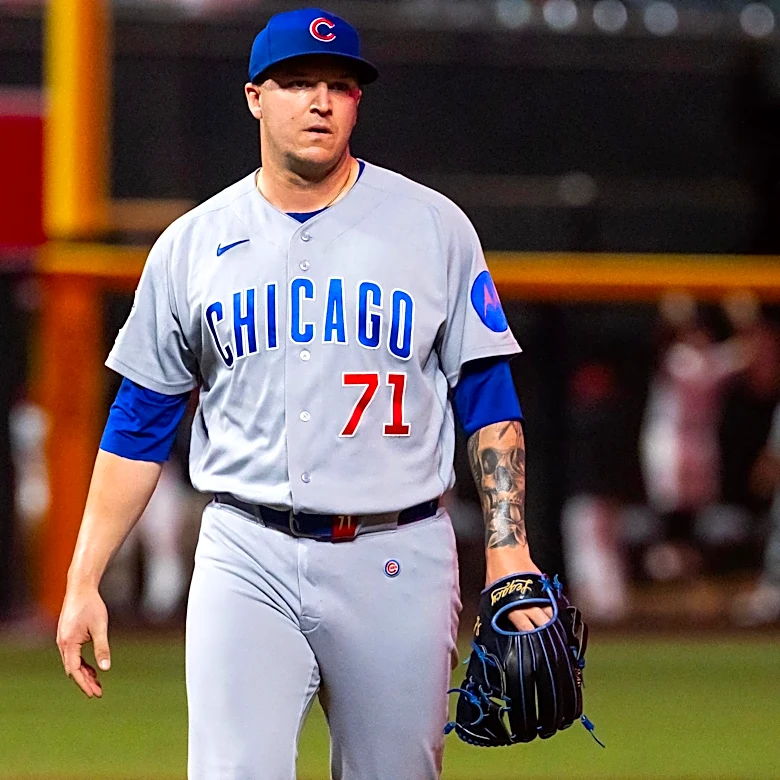

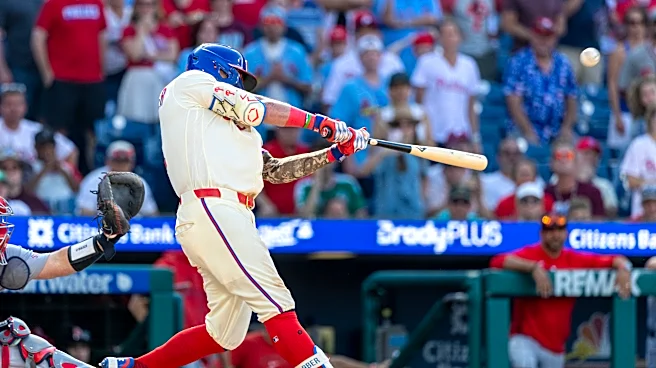

Imagine that you are a MLB pitcher. Perhaps you’re a fireballing southpaw, perhaps you’re a crafty control artist. The type of pitcher you are doesn’t really matter for our purposes (although if you imagined yourself as a knuckleballer, you’re a hurler after my own heart). Imagine that you’re facing the Phillies. First up is Trea Turner. He’s fast, and he’s good, but you get past him. Then there’s Kyle Schwarber. Your heart is in your throat as he takes mighty hacks at your offerings. You could swear
you felt the wind from the last one buffeting your face. But finally, mercifully, you manage to make him take the K. Then Bryce Harper is up. You really don’t want to face him. But you have to. But you don’t really have to. You can just toss him some pitches outside; maybe you’ll get lucky and he’ll chase. You can probably handle whoever is taking cleanup for the Phillies; sometimes it’s Alec Bohm, and sometimes it’s Brandon Marsh, and they both have the potential to be dangerous, but they don’t keep pitchers awake at night like the opening trio did. You can risk a walk. Sure enough, the free pass comes to pass, and to the plate comes… Luis Arraez.
That is the nightmare scenario that has awaited opposing pitchers since the trade deadline. Imagine facing Schwarber and Harper knowing that the fourth man up is the Contact King, who you can strike out about as often as you can open your Christmas presents: once a year, if you’re good. One of the main cases for acquiring Arraez, and for hitting him in the cleanup spot, is that he would offer protection to the big sluggers. Having had Arraez in the fold for a few weeks, we can start to take stock: have opponents started to pitch to the Phillies’ leadoff trio differently now that Arraez looms in the spot after them? (All stats prior to Tuesday night’s game)
So far, no signs that pitchers are less willing to throw pitches outside the zone with Arraez at cleanup. Turner and Harper are taking more pitches outside this month than last, though I doubt that’s a meaningful increase.
What about the pitchers’ tendencies when the batter is ahead in the count, when the dread threat of a baserunner for Arraez to bring home is looming?
No real indication that pitchers are more reluctant to go outside when the batter has the advantage either. And I won’t make you look at another chart (yet), but two of them (Harper and Turner) are getting more pitches outside the zone when they’re in a three-ball count, although that’s getting into tiny sample sizes and subsequent lack of real meaning.
But that isn’t to say that nothing has changed for the Phillies who bat before the new guy. Both Harper and Turner have increased their walk rates month-over-month. And while Turner’s increase is small enough that it doesn’t seem terribly significant, Harper’s is notable: from 12.7% in July to 28% in August. As for how he’s walking so much more when he’s no more likely to get pitches out of the zone, there can really be only one explanation: he’s chasing less. 13% less than last month, to be specific. His in zone swing rate has dropped a bit too, from 71.1% t0 64.4%. He’s also missing less when he does swing in the zone, having cut his miss rate on pitches in the zone by more than half: 21.1% to 8.9%%. Perhaps he’s taking some cues from Arraez.
For the moment, that isn’t producing a different approach from opposing pitchers. But they won’t let that turbocharged walk rate stand for long. If Harper keeps this up, opposing pitchers may respond by tossing him more pitches in the zone. Of course, that creates a problem of its own. Do you put Harper on first with the three-time defending batting champ behind him? Or do you risk him putting one in the seats? There’s no good answer. Aren’t you glad you’re not a pitcher?