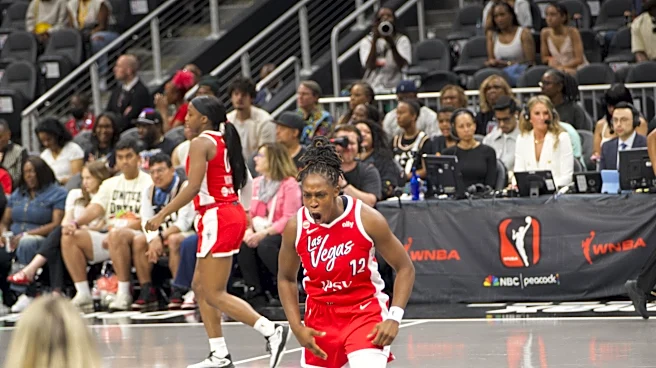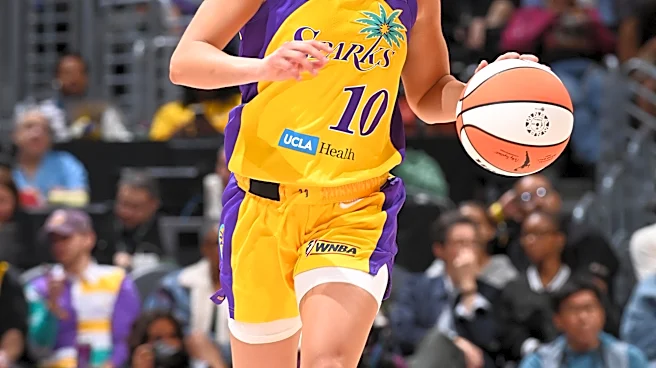





The 2026 WNBA has gotten off to a blistering start.
Now 10 days in, all teams have played at least three games, most have four contests under their belts and the Las Vegas Aces and Connecticut Sun have somehow played in five matchups. While plenty of things will shift between now and the end of the year, early signs indicate how the league has changed and where it might be heading.
Here are a trio of observations from the start of the season. In the comments, let us know what you think of these developments
before sharing your own takeaways.
Too many fouls are being called

Before WNBA games were played, it was clear that change was coming regarding the officiating. Based on comments from players, coaches and the league, there was a consensus that the game had gotten too physical and that a reset was required.
Well, early on, these adjustments haven’t led to freedom of movement or flowing offenses. Instead, it’s been an ugly gridlock, where, like a traffic jam, everyone seems unsatisfied, frustrated and wondering what’s causing the constant stoppage of play.
Over the first 10 days across 30 games, we’ve seen 1,316 fouls called. That’s an average of 21.9 fouls per game for each team. Last season, teams averaged just 17.5 fouls per game.
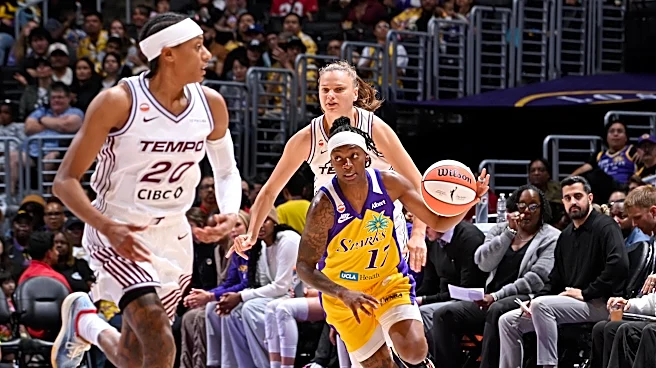
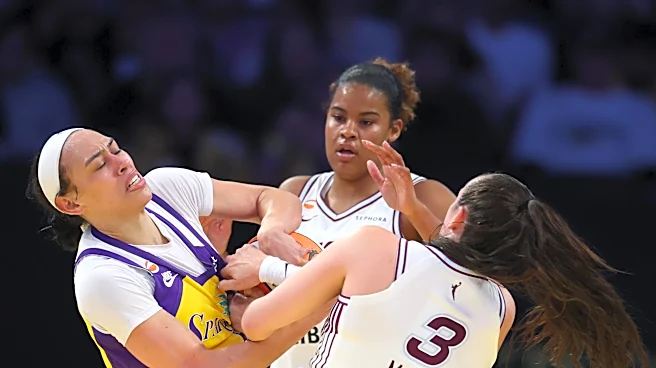
The contest the Los Angeles Spark and Toronto Tempo this past Sunday was the best example of how bad things have gotten. There were 59 fouls and 72 free throw attempts. Add in multiple challenges and reviews, and the game had no pace or flow at all.
Here’s what Sparks head coach Lynne Roberts said after the game:
That was ugly. That was hard to watch. 72 free throws? I get it, they’re trying to clean it up, but that’s painful. So, it is hard. I think Toronto went five minutes in the third quarter without attempting a field goal because they just were shooting free throws.
These are the growing pains that come with an officiating shift. It will take time for either the change to fully take place, or for the WNBA to decide the game was actually fine as it was before, and we go back to the typical amount of fouls.
Until then, teams will have to navigate this situation and figure out how to still earn results.
Pace is picking up

Every season, it seems the WNBA’s speed continues to increase, and 2026 does not appear to be an exception.
So far, there are not one, not two, but three teams with a pace over 100. As a stat, pace reflects the number of possessions in a 48-minute game; per 40 minutes, four teams are registering more than 83 possessions, with the Indiana Fever topping 84. Last season, no team cracked the century mark in pace, so it’ll be interesting to see if teams begin to slow down or if a desire to push the pace guarantees that this trend continues.
Now, there isn’t exactly a correlation between playing with pace and winning.
Currently, the three teams leading in pace are the aforementioned Fever, Aces and Sun. And only Las Vegas has a winning record. Last year, the top two teams in pace were the Sparks and Wings, and neither team was above .500.
Still, the desire is there to push the pace to gain more possessions, which can help a team win the numbers game. How teams will balance pace with success is still being sorted out, but expect the trend to continue. The only question is how much the pace will increase, and whether this will be the first time since 2010 that the highest-paced team exceeds 100.
Is anyone still a shooter?

Over the past three seasons, teams’ 3-point attempts have slowly increased from 22.1 per game to 24.2. This year, it’s actually taking a slight dip with teams taking just 24 a game. On these attempts, teams aren’t shooting better either. Currently, franchises are knocking down just 33.2 percent of their attempts from beyond the arc.
That’s the worst 3-point shooting percentage for the league since 2015, when teams only converted on 32.5 percent of their shots from downtown.
What is the reason for the dip in attempts and an increase in misses?
Well, the main thing to consider is that it’s still early. Perhaps players are just finding their rhythm, and once they do, the 3-ball will start going in more often. Also, while 30 games across the WNBA is good data, it’s still a relatively small sample size. Before making any declarative statements, more games have to be played.
Another theory is that perimeter defense has improved. The chess match between what offenses want to do and what defenses want to take away continues, and perhaps the defense is currently ahead of the curve. Defenders are rushing players off the line and getting them inside the arc, eliminating a 3-point attempt before it even starts.
With teams wanting to discourage the 3 and some of the best players wanting to bang in the post, this could be the perfect cocktail to create 3-point regression and a paint-scoring resurgence. This season, teams are averaging 39.2 points in the paint, compared to 35.6 last year.
If this trend continues, perhaps it’s a sign of the return of the big. A’ja Wilson, after all, is the best player, and other elite young bigs are emerging like Dominique Malonga, Aliyah Boston and Angel Reese, to name a few.
Time will tell if such a change is underway or if we start seeing teams chucking up shots in bunches by summertime. For now, it’s something to monitor as we continue playing out the first quarter of this WNBA season.