





Kyle Dubas has been driving a significant portion of the Pittsburgh Penguins fan base (and some of its media) a little mad over the past two years. There is a perception they haven’t really picked a direction, and are subjecting themselves to the possibility of being stuck in the NHL’s no-man’s land.
I am not sure I agree with that assessment because they have clearly picked a direction, and it is absolutely a long-term direction.
It is just not in the traditional sense that teams tend to think long-term.
It is not a complete tear it down to the ground rebuild. It is not a full-scale tank where you gut the organization of every useful player and accept being awful for five years or longer. We have seen over the past decade that is a tough path to dig yourself out of.
The idea of rebuilding without doing that seems to be a foreign concept to people because … well … most teams don’t try it any other way.
But look at what the Penguins are doing, and very clearly not doing.
They are not investing in long-term contracts for veteran players.
They are not making significant investments on older players.
They are not even signing or acquiring that many older players outside of some cheap, veteran reclamation projects or bottom-of-the-lineup depth pieces. They are not giving up assets to acquire older players.
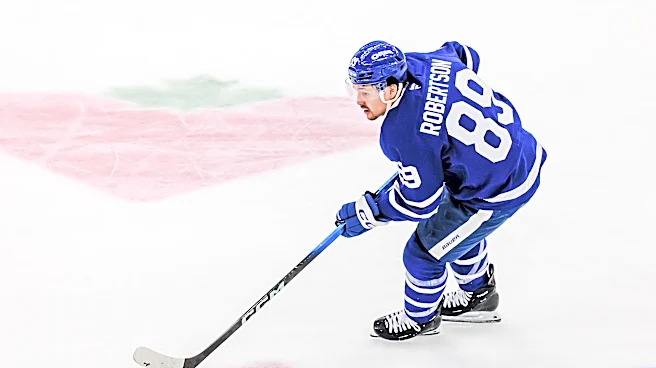
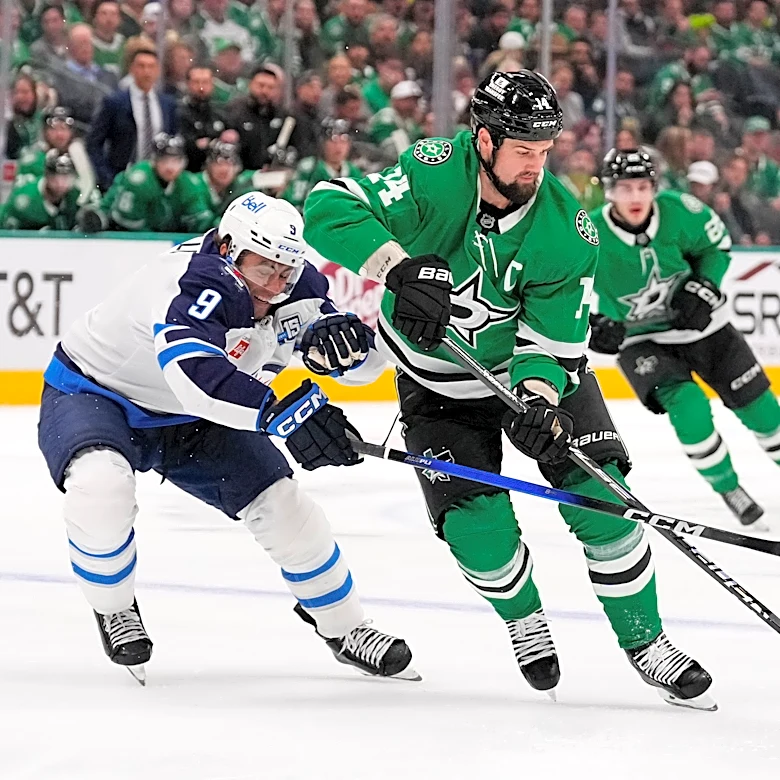
The only established veteran they seem to have even any hint of an interest in that would be a long-term investment is Jason Robertson. And even he is still only 26 years old. He is also one of the absolute best players in hockey and could give them the superstar talent at the top of the lineup they are still lacking. Every team in the league, regardless of its situation, should be interested in him. They are not unique in that interest.
They spent two years accumulating as many draft picks as possible, and as far into the future as they can.
Over the past three years they have made 25 draft picks (a net-gain of four picks over what they would have started with), including nine in the first two rounds (a net-gain of three picks over what they would have started with).
Of those nine picks in the first two rounds, eight of them have come within the top-50 picks, including six in the top-40 picks. That also includes four picks in the first round.
There are basically two ways to find impact talent at the draft.
- Pick at the very top.
- Give yourself as many picks as possible and try to increase your odds further down the board.
The Penguins, for now, have chosen the latter route (and this can work … just look at the current Stanley Cup champions).
They may have already found one impact player in Ben Kindel.
Nearly every single move they have made has been done with the intention of getting younger and bringing in assets that can be part of the future or used for the future.
None of that is the practice of a team that’s not looking toward the future and doesn’t know what it wants.
Along with that, they have very clearly identified the type of player they DO want to take bets on and acquire. They are players that not only allow the Penguins to potentially remain competitive through a rebuild, but might also still have serious long-term value when the team might be getting closer to serious contention again.
Dubas has flat out told you what type of player he is looking for.
He also keeps showing you.
If you look at the players he has been acquiring over the past two years, whether via trade or free agency, there is a very common template for what they are.
- Players in their early-to-mid-20s
- Players that have played in smaller roles on their previous teams, and perhaps even an under-utilized role.
- Players that have been highly, highly productive within that role, and have not had the opportunity to break out of it. It does not produce big box-score numbers. It produces big per minute numbers.
- Players that the Penguins can potentially give bigger opportunities to and see if they can emerge.
The Penguins are betting that production can translate into something bigger with more opportunity.
Let’s just look at some of the forwards he has either traded for, or signed, going back to the start of the 2024-25 season.
The table below looks at all of their 5-on-5 play in the three full seasons prior to the Penguins acquiring them. It’s a look at their time-on-ice per game, goals per 60 minutes, points per 60 minutes, goals scored share and expected goals share.
Players are sorted by goals/60.
Nobody older than 27. Only two players older than 25. Nobody that averaged more than 12:16 of 5-on-5 ice-time per game, with most of them in the 10-12 minute range.
Almost all of them players that were scoring goals and producing at a high rate in the minutes they were being given.
Just look at the top-four guys specifically: Robertson, Chinakhov, Novak and Soderblom.
Not only were they all averaging right around one goal per 60 minutes, all four of them were among the top-three goal-scoring forwards per 60 minutes on their previous teams. They were all among the top-five forwards in terms of overall points per 60 minutes.
Outside of Chinakhov, they were all at least breaking even from a possession standpoint and in terms of out-scoring their opponents.
They may not have been getting big minutes on their previous teams, but they were largely winning the minutes they were getting.
When you have a player that is winning their minutes in a smaller role, it is worth giving them a bigger role to see if they can win those minutes as well.
The early returns on Chinakhov are extremely promising. Same for Soderblom. We will find out about Robertson this season. Novak has largely been as advertised and what he showed in Nashville.
Even going further down the list, Brazeau had strong underlying numbers and a track record of being a late-bloomer offensively at the lower levels. He had a breakout year to some degree in Pittsburgh, as did Dewar. Lapierre fits into their mold as a depth player.
It is a similar storyline with the defensemen that have been acquired.
Again, it is mostly guys in their mid-20s. Mostly guys that played in small roles. Almost all of them very productive and effective in those roles. Girard is the only one that had established himself as a regular player at the time the Penguins acquired him.
I already dug into the Korczak addition and why I like it, and why there are some Chinakhov vibes with him on defense. He was highly productive and effective when he played, but his team, for one reason or another, either didn’t trust him to do more, or didn’t have the openings to give him the opportunity to do more.
Carlile has a nearly identical profile to what Wotherspoon was, while also being a couple of years younger.
Not all of these guys are going to pan out. Not all of them are going to arrive in Pittsburgh and suddenly blossom. Some will fail. Some will be depth players. But maybe Chinakhov builds on what he did in the second half and becomes a top-line player. That is a potential long-term piece. Maybe Robertson gets a bigger, more consistent role and scores 25 or 30. That is another potential long-term piece. Maybe Korczak becomes an effective No. 4 or 5 guy long-term.
You can not always bank on draft lottery luck and the right player being available in the right year. Sometimes you have to take your bets and try to find players in different ways. This is a way the Penguins have clearly chosen.
You want to try and figure out who might be on Kyle Dubas’ radar? Look for a mid-20s player that’s winning smaller minutes and a smaller role, but not quite getting a bigger role on his current team. Because it is probably that guy on his radar.