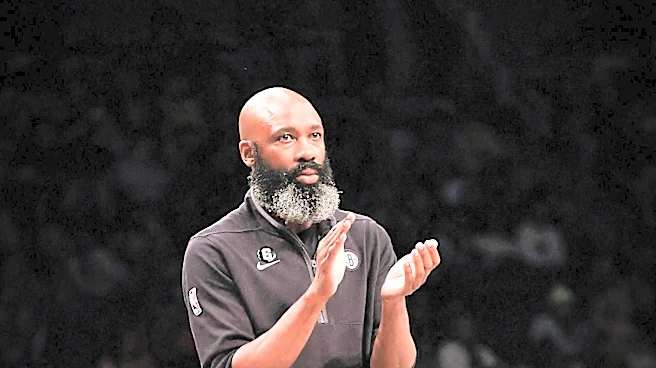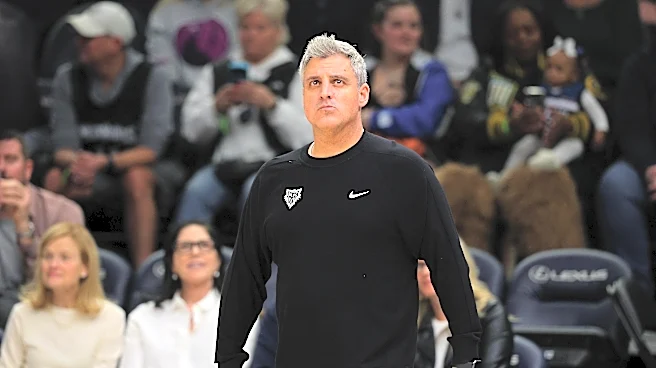





Yesterday the Portland Trail Blazers welcomed Micah Nori as their next head coach. The hire came after an extended process. Though rumors of their search started in May, the Blazers were the last NBA franchise to fill their vacant coaching position this summer.
Along with the appointment came news of a highly-unusual contract structure for Nori. Jason Quick of The Athletic reported that the deal had only a single guaranteed year attached, with the second and third at the team’s discretion.
Since that
report broke, debate has raged in NBA circles about the suitability of such an agreement, what new Blazers owner Tom Dundon was trying to engineer with the deal, and whether, in fact, this is actually a good thing. Those questions have been echoed in early returns on the signing in the Blazer’s Edge Mailbag and the comments sections of this site, with opinions ranging from “master coup for the Blazers” to “terrible idea”.
In truth, the move is both and neither. As often happens in life, the suitability depends on which angle you’re viewing from, whose perspective you take.
Arguments for the Contract
Plenty of people are advocating for some version of the following three points:
- It’s a smart financial savings for the Trail Blazers organization.
- Incentive- and/or performance-based contracts are appropriate for coaches, especially unproven ones (as Nori is at the head coaching level)
- Dundon is trying to change the way the league works. He should be regarded as a maverick, perhaps a genius, for bucking the establishment.
Saving Money
The money-saving assertion is inarguable. The Blazers are presumably paying less, with less guaranteed money on the line, than any other NBA franchise who welcomed a coach this year. The Chicago Bulls, who hired former Blazers coach Tiago Splitter just a week ago, reportedly paid $7 million per year for three years, plus a fourth on a team option. That’s considered average for NBA coaches nowadays. By comparison, the Blazers got a steal.
Probation Is Good!
The tendency to suspect untried coaches is exacerbated by the journey the Blazers made with Splitter’s predecessor, former head coach Chauncey Billups.
Billups received his appointment in 2021 with no head coaching experience anywhere, let alone in the NBA. It was understood that he’d be supervising a franchise rebuild. Expectations were low. Still, he managed to tunnel under the bar, amassing a 117-212 cumulative record, the lowest winning percentage of any Portland coach since the Blazers were an expansion franchise back in the early 1970’s. Billups’ loss total exceeded every prior coach except for Jack Ramsay, Nate McMillan, and Terry Stotts, each of whom coached hundreds of more games than he.
Despite that, and fairly massive public sentiment against him, the Blazers extended Billups’ contract in 2025, making him the worst long-term coach (by winning percentage) to receive such an honor in NBA history. He repaid them by getting arrested at the start of the 2025-26 season, coaching exactly one game under his new deal before being suspended by the NBA for federal gambling indictments. He hasn’t returned since.
The cherry on top of this Disaster Sundae is that the Blazers still owe Billups the money on that extension, pending some kind of conviction or ruling that would invalidate his contract for moral turpitude. As far as we know, that hasn’t happened yet. It may not, depending on legal proceedings and the wording of the agreement.
Summarizing:
- The Blazers are already paying a coach, likely to the tune of $4-5 million per year. From an organizational standpoint, that’s a huge expense in addition to whatever they pay Nori. From the corporate point of view, that’s all overhead. Businesses don’t like that at all, particularly when they’re getting no return on that money, as is true with Billups.
- The team just got a real-life, close-up view of likely the worst example in league history of what can go wrong when you offer (and then re-offer) guaranteed money to a coach with no formal experience, no history, and no production. This literally cannot have gone worse.
In this light, putting Nori on a limited, performance-based deal makes sense. The Blazers don’t incur any more financial risk than necessary at a position they’re already dumping money into. Portland gets to kick the tires on their new coach before committing. They have off-ramps every season if this goes wrong. There’s no way the Billups fiasco can repeat. This makes total sense, given their recent experience.
Time to Change?
As for the third point, Dundon changing the league…maybe. In order to justify that claim, we’ll need to see not only the outcome of this experience in Portland, but whether any other teams start to copy it.
It’s possible that Dundon has found an approach that nobody else thought of or had the guts to implement, overturning culture and tradition in iconoclastic fashion. It’s also possible that practices exist for a reason and that bucking them will have predictably negative results that more experienced managers have foreseen.
Even if that’s true, though, it’s guaranteed that other NBA owners will be watching this experiment with interest. They’re going to let the Blazers be their crash-test dummy. It’s a no-lose situation for them. If Dundon and the Blazers fall flat on their face, that’s one less competing team. It makes them all look better. If this succeeds, Portland may have opened a door that saves them plenty of money down the road. What’s not to like?
Side Trip: Coach Finch
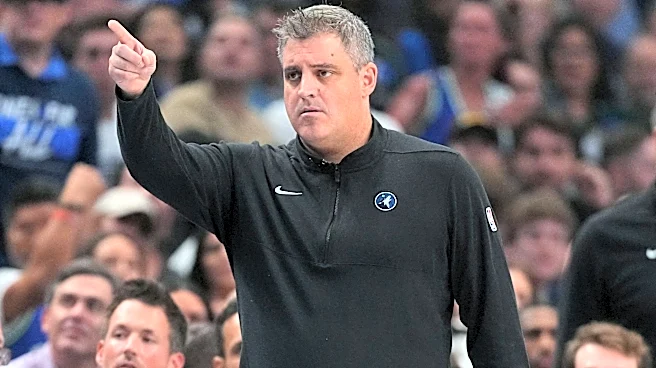
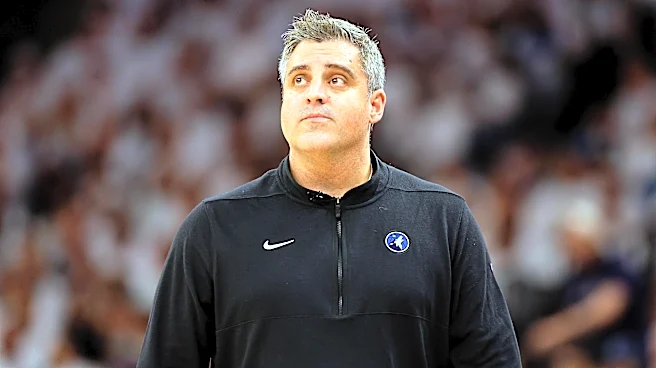
Before we leave this section, one more side note. Some will point to statements by Minnesota Timberwolves coach Chris Finch–Nori’s former head coach–as advocating for the contract his recent assistant signed. A subscription is required to read the whole article from The Athletic, but summarizing, Finch lamented the focus on Nori’s contract as opposed to his hiring:
I thought it was a shame that a lot of the story about Micah’s great opportunity was overshadowed by the nature of the deal that he signed… That’s a personal decision. That’s a business decision. That’s between him, the team and the agent.
Finch also explained that there are only 30 head coaching jobs in the league, and that getting one is an honor.
To be clear, these statements were NOT made in support of the Blazers or the contract they offered Coach Nori, but in support of Nori himself. To argue otherwise would be disingenuous. Making that argument requires the next logical step that Finch would be upset–or at least would have moderated his comments–if Nori had gotten a better deal. That’s patently ridiculous. This was a coach trying to lift a former coworker above the raging debate, putting focus on the man instead of the money on the day he was hired as a head coach for the first time in his 17-year NBA career. It was not a “Good job, Blazers! You got him for cheap with only a small commitment!” statement. It was a reminder not to forget Nori in all the controversy caused by his contract.
Chances are 100 out of 100 that Finch, and every NBA coach past, present, and future, wishes Nori had gotten a better deal from the Blazers. Finch was simply moving the focus away from that and back to his colleague at a time when his hiring should be celebrated.
Arguments Against the Contract
In the face of the pro-contract assertions above, several potential negatives rear their heads.
Team Identity
We can start critiquing the Nori deal with a simple question: Who are the Trail Blazers?
All of the arguments we just listed in favor of the contract structure start with the same premise: the Trail Blazers are a corporate entity, a business unto themselves, represented chiefly by their owner. Success for the business is defined as success for the whole enterprise.
That definition creates a narrow circle. Even the team’s employees stand outside it. Conversations praising the deal paint Nori as an outsider, a new hire, someone whose payment is a detriment. Getting him as cheaply as possible helps the franchise. It’s a shrewd move. Giving him too much money would hurt the franchise. It’s a dumb mistake. Nowhere in these descriptions is “he” part of “the franchise” even though they just hired him as their new Head Coach.
The follow-up question is obvious. Is a sports team simply defined by its owner and its corporate status or are players and coaches and other employees also “Trail Blazers”?
When people say, “We got a good deal on our coach,” who is the “we”? It’s not Nori. He actually got a low, condition-filled contract. It’s not Deni Avdija or the players. It’s some mystical entity with a pinwheel logo removed from all of these participants.
Who really benefits from the money saved from Nori’s below-average paycheck? It’s not the players. Their salaries are already prescribed, for the most part, with limits and comps and boundaries in force. It’s probably not other employees. Reductions in one section of the “expenses” ledger don’t get transferred to other sections. Instead they help the bottom line. They save the owners money. Fair enough. But when you’re talking about owners, you’re not talking about a “we”, but a “they”.
What Side Are Fans On?
Make no mistake, fans stand outside of this tightly-defined circle of identity too.
Fans are, at heart, consumers. The product is basketball and the experiences surrounding it: nights out at games, sitting by the TV with your family watching, talking about the team on sites like this. It’s a provider-customer relationship. If you don’t believe me, let’s head to Blazers HQ and check out their corporate operating manuals. That’s exactly how their policies and procedures are going to describe, and treat, fans: as customers.
Let’s say you loved Twinkies with a deep and abiding passion. As a result, you became a supporter of the Hostess corporation. You rooted for them to succeed. You bought t-shirts with their logo emblazoned on it. You’re a Hostess Cheerleader for life!
Then Hostess, in a cost-cutting measure, replaced the sweet, delicious cream filling in your Twinkies with a mixture of soy by-product and scraps off of the Elmer’s Glue factory floor. This saved them money! For the corporation, its owners, and its investors, it’s a good thing. But it’s clearly not the best move for you, the consumer, nor for the taste of the snacks you adore.
Would you seriously advocate, “Hostess Forever!” if the actual product that you interface with declines in quality? Do public-facing corporations deserve allegiance just because they exist, are owned by someone, and are trying to generate money? Or does the actual output of that corporation actually matter to the people who consume it?
Why, then, would anyone cheer a cost-cutting move by the Trail Blazers unless that move also led to improvement of the product that we all gather around?
Imagine your dream coach as a Blazers fan. It doesn’t matter if the team can actually get that person. Just envision it. Who is it? Pat Riley? Eric Spoelstra? Phil Jackson? Mark Daigneault? Dusty May? Whoever your favorite is, ask yourself this: could the Blazers get that coach on the same deal they just gave Coach Nori? If your answer is, “No,” then a deal like this does not–and cannot–get your team the optimal candidate. If your favorite coach would laugh and be insulted by being offered such a deal, that tells you how far away from optimal this is.
So then, who convinced fans that they’re supposed to identify with the corporate incarnation of their favorite team and the person who owns it as opposed to the players, coaches, and other staff? That’s a major ask. And a major leap.
Inverting the Standard
Let’s circle back to Coach Nori in particular. He may be exactly the right hire for this position. His 17 years of assistant coach experience should give him credibility with the fan base. He deserves the chance to prove himself.
We can say those things full-voice while also claiming, without backtracking at all on that support, that the way the Blazers have structured things threatens to make life more difficult for the person they hired to do this job.
Remember what we said about defining the “we” of the franchise above. This contract sends a message: Coach Nori is not part of that “we”. He is less a part of the “we” of his team than any coach in the entire league. Even those currently on the last year of their deals have prior seasons in which they got paid as evidence of buy-in. Nori has no past and no guaranteed future in Portland. He is perpetually and formally on the edge of being out The only coaches who are less “we” with their teams are the ones who have been fired already.
Some will say, “Practically speaking, any coach can be fired at any time!” That is true. But it ignores a simple reality. Once a coach is hired on a multi-year deal, he is assumed to be hired until there’s overwhelming stimulus to let him go. Inertia, finances, and relationship-building all make the dismissal bar pretty high. A few coaches get fired mid-contract each season. Most don’t. Either way, the standard is, “You’re here until you hear different.”
Portland’s contract with Coach Nori inverts this. Now the standard is, “Meet specifications and standards or you’re going to be let go.” The review is automatic and annual. There’s no presumption he will be working for the Blazers unless he hears different. The presumption is that he might not. And it might be for reasons he can’t anticipate or control.
That’s an entirely different level of security. That’s going to affect how he’s perceived, received, and conducts himself.
Coaching Relationships
Coaching, particularly at the NBA level, is a complex, never-ending web of relationships. A coach has a relationship with each of his players, with the locker room collectively, with his assistant coaches, with the General Manager, with the owner, with media, and with fans. Some of those weigh more than others, but they all exist.
How a coach is perceived in each of those relationships matters. A coach inherently asks people to do things that are against their natural self-interest. Coaches ask players to accept roles, give up shots, sit on the bench in favor of others even though they’ve been the best player in their entire universe for the entirety of their basketball career up to this point. Coaches ask assistant coaches to perform, advise, and support even though every one of those assistants wants the job the Head Coach has. Coaches explain losses and odd decisions to media and fans. Coaches tell GM’s when their pet projects aren’t working out. Coaches convince owners to shell out money to them, personally. Every one of these things would be an instant, and quite justifiable, “No!” from the recipient if all things were equal. It’s the coach’s job to turn that “No,” not only into, “Yes,” but a happy and supportive “Yes”.
In this environment, credibility and perception matter. People have to believe in coaches more than they believe in what’s instinctively and naturally good for themselves. Players have to believe in coaches more than agents or family members who are in their ear telling them they need to play more and earn more. Fans and media have to believe in coaches more than they believe in their sacred conviction that every game is winnable and every problem has a solution. Assistants have to believe in their head coach’s plans and schemes more than their own. No amount of intellect, will, or bullying will remove the demand and need for that belief.
Faith, trust, belief, confidence: these are as important in NBA coaching relationships as intellectual knowledge or X’s and O’s. Without the former qualities, the latter don’t get a chance to convey.
Now stop and think. Why does a contract like Nori’s exist in the first place?
The usual message when you hire a coach is, “We’ve got the right guy. We’re backing up that conviction by hiring him and paying him.” But that’s only halfway happening here. This probationary contract implies that the Blazers don’t have full conviction. They want to walk back their decision at need without any obligation or commitment. Their opening message is, “We don’t know if we have the right guy yet.”
That’s going to impact the coach’s credibility and belief from the start. Players and other coaches will hear it. It’s embedded in the DNA of the relationship now. “This is the coach we’re not sure of.”
When that coach then asks someone work against their own self-interest–when the coach has to deliver a tough message that maybe you’re not as good as you thought you were, maybe you need to work harder to earn playing time, maybe your idea or skill or contribution isn’t the center of everything–how stable is the platform the message coming from? Why should I accept those things from a coach people only half believe in? Why should I sacrifice myself and my own well-being for you, Coach, when you’re not guaranteed to be here next year and someone just like you might be asking me to do something completely different?
Relationships are like field goal shots. Only a certain percentage of them are successful. That’s true no matter who you are, no matter your personal qualifications, no matter how strongly you’re motivated. Anyone who’s ever been married for more than 10 seconds will tell you that there are days when the last person you want to see or talk to is your spouse. What keeps you together through those “it’s not working” times? Often it’s the commitment you’ve made to each other and the shared history you’ve built.
Again, Coach Nori has no shared history with the team or its players. In the absence of that, his contract is supposed to provide the commitment that assures everyone that their buy-in is worth it. This contract doesn’t provide any of that. It leaves no safety net, no incentive except the personal character and goodwill of the people involved, when things don’t go optimally.
I’d be willing to bet that, if a marriage contract said, “Until our monthly review,” instead of, “‘Til death do us part,” far fewer marriages would survive. We’d be waiting on that review opportunity to bring up the argument about toilet seats and Aunt Martha. Factor in the reality that we could get any number of new spouses at the drop of a hat (as an NBA team can get new coaches) and you have almost zero incentive to work through anything.
The problem is, of course, that being a part of a professional sports team means working through everything. You can’t run a single set out there without four other guys. It only gets more complex from there.
I believe that, by the dint of his will, professional experience, and communication skills, Coach Nori can overcome the “hired you to fire you/no confidence” nature of his contract. But that doesn’t change the fact that it’s a negative. It makes life harder for him in his first professional head coaching assignment leading a team that’s kind of like a Rorschach Test of “good, bad, or stalled in place” anyway.
This contract gives Coach Nori a reputation as the cheap hire, the coach that took the job nobody wanted, the guy who will work for a contract that good coaches would laugh at. He’s not the LeBron James of coaches, according to this contract. He’s being painted as a low-end role-player. And this in a league that very much has hierarchy based on contract size, reputation, and achievements. That’s a big hole to dig out of on Day One of your job. None of it has anything to do with Nori’s actual abilities and qualifications. It’s all about how the franchise is treating him.
How No-Lose Becomes No-Win
Speaking of the franchise, what’s the end game here? This contract looks good in a money-saving sense at first blush, but what are the outcomes?
If Coach Nori doesn’t work out–either because he’s not good or because the hole was too deep to dig out of–where does that leave the Blazers? Are they going to fire him at the end of the year and then chase their fourth new coach in four seasons? We’ve seen that become a recipe for disaster plenty of times in this league. It’s a sign of a foundering, directionless franchise.
And, by the way, if that does happen, who’s going to be lining up to coach the Blazers afterwards? Portland is going to be a pariah in the Coaching Union. Big-time coaches wouldn’t even look twice. Decent coaches are going to go anywhere else they can to get a better contract and work for people who don’t fire coaches every ten seconds. The pipeline into Portland will be full of coaches who have no other choice but to accept the Blazers’ terms. That’s not exactly the cream of the crop, else why would they have no alternatives?
If this doesn’t work, the Blazers are in danger of going from a reasonably-decent, run-of-the-mill franchise to your late-night payday-loan strip-mall location for desperate coaches. On your last leg? See us. We’ll employ you! [Terms and conditions apply.]
That reputation takes a long time to wash off. Nobody’s going to help you out of it. Not fellow owners. Not other coaches for sure. They have a vested interest in seeing this approach doesn’t work because it’s costing them money. Players aren’t going to advocate for you either. Who wants to work for the cheap, seedy strip-mall joint if you can join a multinational banking corporation like the Lakers or Celtics instead?
But let’s say the opposite happens. What if Coach Nori succeeds beyond all expectations? He takes this rag-tag group deep into the playoffs, wins coach of the year, and becomes anointed as the Next Big Thing. How likely is he to want to remain with Portland? The first team to flash actual money at him…he gawn. And that’s probably true even if the Blazers reverse course and match the offer. Too late! Should have thought of that to begin with.
That’s a real danger that this type of contract. Initially meant to protect against failure, it’s might ultimately work against Portland’s success. Trying not to lose, the Blazers may be creating a no-win situation in which their reputation falls further.
Onward and Forward
Looking forward, it’s quite possible that this all works out just fine. Or, failing that, at least the “not fine” is within the bell curve of NBA culture and acceptability. In other words, even if the Blazers don’t win big, maybe this won’t sway things enough to make them look foolish.
However, if the Blazers do succeed, I’m comfortably sure it’ll be because of the knowledge and character of the coaches and players involved, not because of the contract the coach is signed to. My critique of this process is clear:
- It doesn’t do one, single team to make the team better. If a coach is going to be good, they’re not going to be good because you paid them less, nor because you put the threat of dismissal over their head every year. All you do is cheese off the good coaches. Your hiring process should already be sound enough to weed out the bad ones without making the contract do that work for you.
- It makes life harder for the coach, introducing perils and pitfalls that other coaches don’t have to deal with. This lessens the chance of success, particularly for a first-time coach.
- It also could go south in a way that harms the franchise’s reputation, which could have ramifications for coaches and players in the future.
For these reasons, I think this is a bad idea. There’s a reason this hasn’t been done before. Maybe that will change! Maybe every franchise will end up doing the same thing. At that point, there’s no discussion and everyone can praise the Dundon Method. Until then, it’s just another competitive disadvantage for the Blazers when attracting coaches and top talent that the franchise really didn’t need.
Fortunately, nobody publicly brings up what the coach makes during the season unless things start going really wrong. We’ll hope that the behind-the-scenes effects are small and that we all can concentrate on basketball during the year. Let’s see what Coach Nori is made of and hope he makes management rip up that contract soon and offer him a long-term deal because of all his obvious success.