





The offseason is here for most Arizona sports, the 2025-26 season in the books and the 2026-27 seasons still a few months away.
What better time than now to press pause and check the pulse of each Wildcat program?
Over the next few weeks we’ll take a look at each of the UA’s men’s and women’s athletic programs to see what shape they’re in, as well as the prospects for the near future. We’ll break down each team and evaluate how it has performed under the current coaching staff, comparing it to how it looked
beforehand, and assess how it fits into the Big 12 Conference.
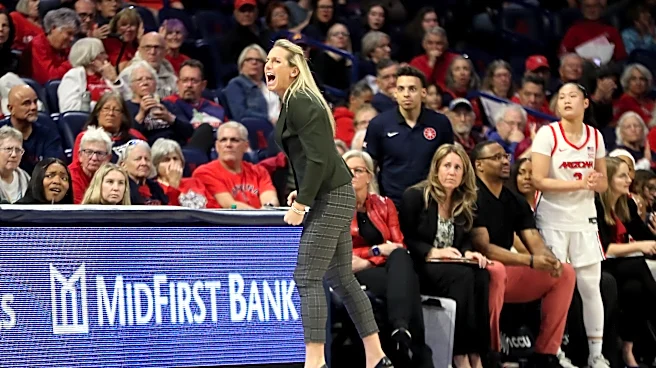
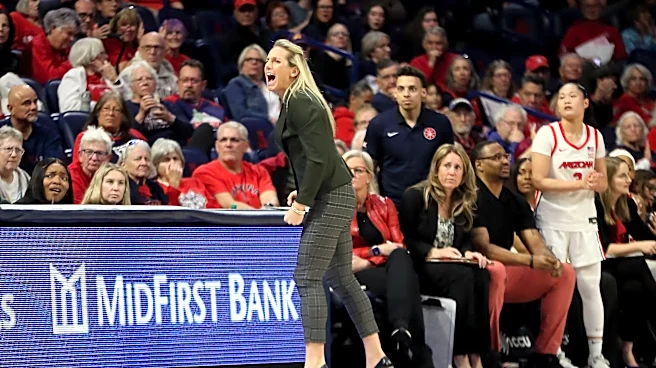
Next up: Women’s basketball under Becky Burke
How it looked before
The Adia Barnes era has already been dissected to death. In short, “it was the best of times, it was the worst of times,” if you want to go with a narrative.
The program reached its heights under the former head coach. There was also a lot of negative chatter about player relationships and transfers.
What it comes down to is that Barnes is still the last Arizona coach to take her team to a national title game other than triathlon coach Wes Johnson. Johnson has won the last two national titles in triathlon, although they come in an “emerging sport” rather than a full NCAA sport. The women’s basketball program is trying to get back to the status that Barnes attained during her nine years in Tucson.
Taking Stock 2026
The offseason provides a great opportunity to evaluate each of Arizona’s athletic programs under its current leadership. Check back each day for another sport breakdown.
Tuesday, June 16: Men’s and women’s track and field
Sunday, May 31: Football
Monday, June 1: Volleyball
Tuesday, June 2: Soccer
Wednesday, June 3: Triathlon
Thursday, June 4: Cross country
Friday, June 5: Men’s and women’s swimming
Saturday, June 6: Men’s basketball
Sunday, June 7: Women’s basketball
Monday, June 8: Gymnastics
Tuesday, June 9: Beach volleyball
Wednesday, June 10: Women’s golf
Thursday, June 11: Women’s tennis
Friday, June 12: Men’s tennis
Saturday, June 13: Baseball
Sunday, June 14: Softball
Monday, June 15: Men’s golf
Where things stand now
Becky Burke was hired late in the cycle last year with the announcement coming in mid-April. It left a lot to be desired in regards to recruiting and hiring staff. The portal was largely picked over. Burke had to make hiring decisions quickly so the program could recruit.
The rushed timeline certainly took its toll. The Wildcats got three transfers from Power 4 teams and two recruits who had decommitted from Power 4 programs.
None of the Power 4 players had played much. In fact, two hadn’t played at all in their only year at a Power 4 school. The other played 34 minutes over two years. All three would be gone when the season ended with one leaving before ever playing a game.
As for the decommits from other Power 4 programs, again one never played a game. She left before official practices even started. The other began the season as a starter but saw her minutes wane as the season wore on. She, too, was gone at season’s end.
Even with a bit of turmoil and a roster made up almost entirely of former mid-major players, the team improved as the season went on. The Wildcats lost their first exhibition to Division II West Texas A&M. They then went 9-2 against a preconference slate that was played entirely against mid-major teams and entirely at home. It didn’t look hopeful as far as Big 12 play.
Burke got the team to compete hard, though. While they went 3-15 in Big 12 play, many of the scores were closer than expected. The Wildcats continued to fight even after losing leading scorer Mickayla Perdue early in conference play. They were typically done in by one very bad quarter when they couldn’t score. Six of their conference losses were by single digits.
In addition to having two players leave without ever playing, there was some turmoil during the season. Starting point guard Lani Cornfield was benched for part or all of several games for disciplinary reasons. Fellow senior Nora Francois also found herself benched one game for disciplinary reasons. As has become typical in a perpetually online world, there were complaints about playing time and relationships posted to social media by family.
Burke let it roll off her back, often saying that she realizes that not everyone can play for her. She is looking for players who can be held to her standards and deal with direct coaching. She also let it be known that playing time would largely depend on doing as instructed, something she praised freshman Molly Ladwig for being able to do last season.
While the transfer portal didn’t open until after the national championship, Arizona players began announcing intentions to leave almost immediately. The program reached the end of the season with 12 players and an early entry freshman who did not play. Three of those players had exhausted their eligibility. Montaya Dew officially announced her medical retirement. Six more went into the portal. The Wildcats were left with two players who actually saw time on the court and a freshman who didn’t play.
There was also a shakeup on the staff. General manager Michelle Marciniak left to care for her mother and take a job as CEO of the Women’s Basketball Hall of Fame. Associate head coach Ashley Odom departed. Sources originally said that assistant coach Jenna Knudson would be assigned to another job on the staff, but she eventually took a job as an assistant in her home state of Colorado. Director of basketball operations Allese Williams also left.
The radical change on the roster and staff meant that Burke was once more in the building phase. She did an impressive job of it, bringing in several transfers from other Power 4 programs, including a former McDonald’s All-American.
She signed one of the top freshman classes in the Big 12. ESPN has it as the No. 17 class overall and first in the Big 12. 247sports has it at No. 20 and third in the Big 12 after Kansas and Utah. That group included late additions of former Florida commit Arynn Finley and Polish forward Karolina Ułan. Most of the six-player class has four-star rankings.
Burke also did a strong job of rebuilding her staff. She brought in Kent State head coach Todd Starkey as her associate head coach. She added assistant coach Devan Newman, whom she has known since her playing days at Louisville. Returning coaches James Ewing and Julie Hairgrove were given new titles. Peyton Klauber was brought over from the marketing team to take over as DOBO.
This group of players and staff is undertaking what Burke calls “Year 1.” She considers 2025-26 to be “Year 0” because of the disadvantages the program was faced with. She believes Year 1 will impress the thousands of fans who continued to support the program through the ups and downs of last season.
Life in the Big 12
Arizona’s first year in the Big 12 wasn’t one of its best years, but it still ended up in the top half of its conference and got a bye on the first day of the conference tournament. Despite playing several teams closer than expected, the Wildcats fell dramatically in the first year under Burke.
Arizona finished the season 15th in the 16-team league. It had the same record as UCF, but the Knights won the head-to-head match-up and got the 14 seed in the league tourney.
The Wildcats should be much more competitive in its third Big 12 season now that Burke has had a full season to recruit at the high school level and got the full portal window, as well. The return of Sumayah Sugapong and Ladwig should help with establishing the toughness and discipline she wants from her players.
The league saw some big shifts in the off-season. Many of the teams who finished in the top half underwent significant attrition.
Iowa State was gutted by the transfer portal with nine players leaving. The Cyclones lost their top three scorers and top two rebounders, including former Wildcat Jada Williams. Williams became one of three former Wildcats who transferred for the second time, joining Skylar Jones and Kailyn Gilbert. (Sahnya Jah transferred for the third time in as many years, ending up at Cincinnati.)
Oklahoma State also lost nine, including two double-digit scores. It responded by picking up a number of top players, including former ISU star Audi Crooks. In all, the Cowgirls added six transfers.
The conference’s top three teams were largely spared, though. TCU lost four, but only Donovyn Hunter was a major contributor. The Horned Frogs got several players from the portal but didn’t make the kind of splashy signings they did the last two years when they added Hailey van Lith and Olivia Miles. While head coach Mark Campbell still has a very good roster, he will be trying to repeat the success of the past two seasons without the kind of marquee additions he had during those years.
West Virginia also lost four, but the Mountaineers added more than they lost. They picked up nine players, including taking former members of BYU and UCF. Five of their nine additions averaged double figures in scoring last season.
Baylor tied Kansas and Texas Tech with the fewest transfers out. The Bears lost two. Their additions included Jones, who left Louisville before the end of the season.
While Arizona has increased its athleticism and skill level, Burke will be putting together almost an entirely new team for the second straight year. Getting them all on the same page and avoiding some of the disciplinary issues they had last season will be key, but she has proven that she can get the most out of the talent on her roster even when dealing with a few distractions.
It will be difficult to jump over last year’s top four finishers, but there’s no reason this edition of the Wildcats can’t compete well enough to end up near the middle of the Big 12 next season. Burke believes that she has the players and staff in place to make strides. Assuming everyone stays healthy, there’s no reason to doubt that.
One big question
The biggest question for Arizona is whether it can improve fast enough to be a postseason contender next season. The expansion of the NCAA Tournament from 68 to 76 teams certainly won’t hurt. That not only puts more teams in the Big Dance but also opens the WBIT for eight more teams that would have missed out or played in the WNIT.
That’s not the only reason the Wildcats should be in the conversation later into the season, though. The recruiting done by Burke and her staff has created a team that simply has a higher ceiling.
There will be a lot on Sugapong’s shoulders. She is the only proven scorer at this level and she will be one of just three players who are seniors or graduate students. Arizona will go with six freshmen, two true sophomores, and one redshirt sophomore, but all of the young players have the talent and potential to compete in a Power 4 league.
An improvement in the nonconference scheduling should help Arizona’s NET, as well. The Wildcats not only played a schedule of mid-major teams in 2025-26, but they weren’t from the top mid-major leagues. While the team awaits the release of its full schedule, it’s already public that UA will start the season playing Stanford on a neutral court in Las Vegas. The Cardinal aren’t the same program they used to be, but they are a far cry above last year’s slate.
The postseason seems very much a realistic goal for this group. Even if they end up in the WBIT instead of the NCAA Tournament, it will be a strong sign of progress under Burke’s guidance.