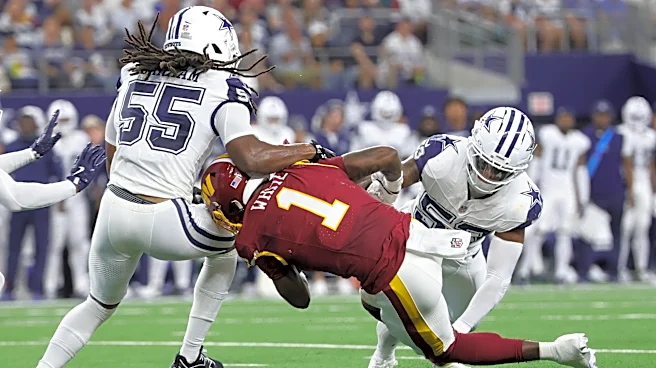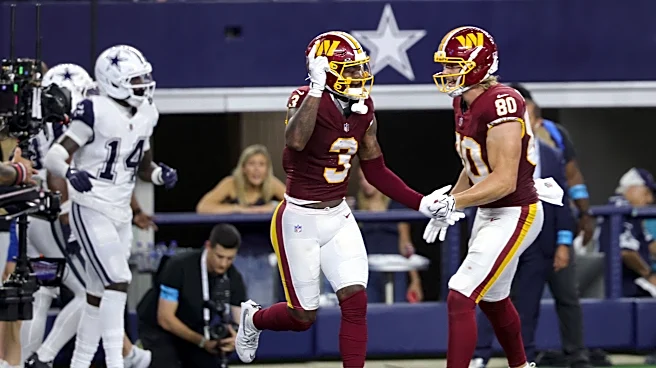


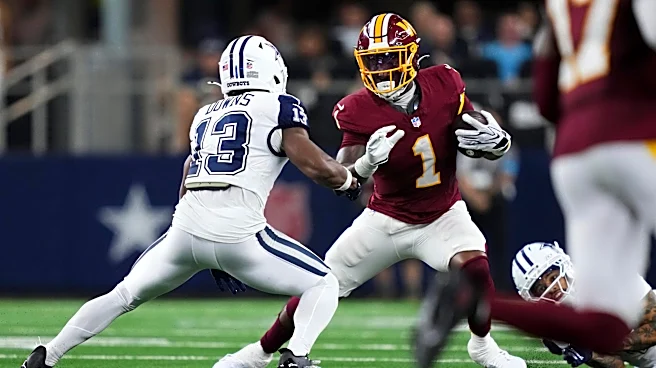
Washington’s defense has been one of the biggest storylines through the first two weeks of the season, but not necessarily for the reasons the team wanted. The pass defense continues to give up too many explosive plays, and the defense has yet to create a turnover under new defensive coordinator Daronte Jones. One area that deserves more attention, however, is the dramatic improvement against the run.
Improving the run defense was a major priority for Adam Peters this offseason, and Washington has
already shown signs of progress. The defense has consistently created second- and third-and-long situations by producing tackles for loss and no-gain runs. The front is playing faster, winning at the point of attack and allowing linebackers and defensive backs to attack downhill.
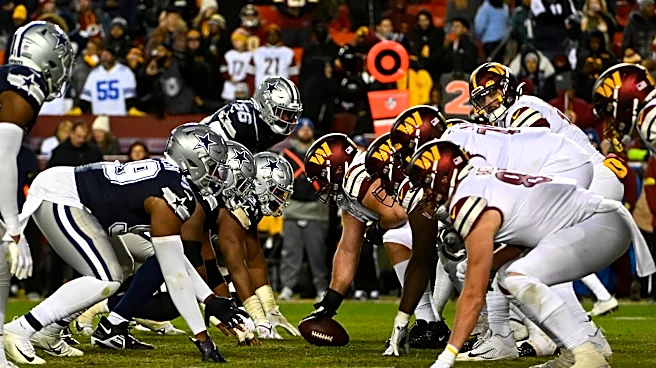
Let’s take a look at a few plays that explain why Washington’s defense has been successful against the run.
Daron Payne’s Impact Against the Run
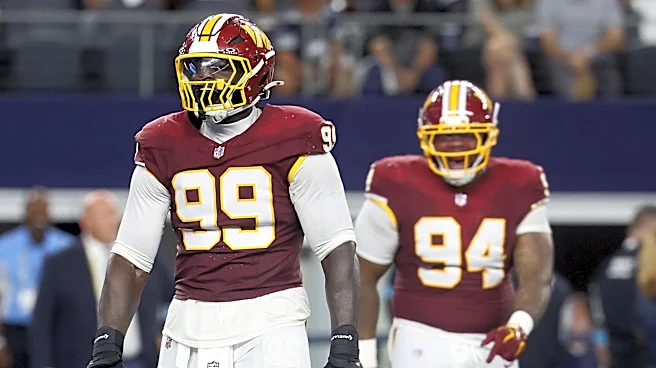
Daron Payne hasn’t been an impactful pass rusher yet, but his presence in the run game has certainly been felt. Payne, aligned overtop of the right tackle (4-tech), makes the tackle as a backside defender. Payne wins this rep with good pad level at the point of contact, then shows the functional strength to stack and shed the lineman to free himself for the tackle. Payne’s ability to stay clean and his vision to locate the ball carrier keep the run from getting anywhere. Javon Kinlaw also deserves credit for stalemating his blocker and preventing the running lane from developing toward the backside.
Javon Kinlaw Is Winning at the Point of Attack
Javon Kinlaw has also made his mark in the run game. Javon Kinlaw (3-tech) is aligned in between the right guard and tackle, and Dallas is attempting a power run to his side, making him a playside defender. The Cowboys’ right tackle tries to down-block him, aiming to send him toward the center, but Kinlaw doesn’t allow it. This is a great example of his play strength and hand usage. Kinlaw uses his outside hand to knock the tackle off balance and create a direct path to the ball carrier. Instead of allowing the offensive line to dictate his movement, Kinlaw controls the block and puts himself in position to make the play.
Nick Cross Is Playing Fast
Nick Cross has lived at the line of scrimmage and in the opponents’ backfield. After recording two tackles for loss against Philadelphia, Cross added another against Dallas. His mental processing and closing speed let him attack the line of scrimmage before blockers can get into position. On this play, Cross blitzes as Dallas runs away from him. The Cowboys’ receiver is supposed to account for Cross, but Cross gets downhill so quickly that the receiver never gets a clean shot at him, and he is a free runner in the backfield.
Tim Settle Is Giving Washington Interior Stability
Tim Settle has been one of the more important additions to Washington’s defensive line early this season. Aligned as a shade (2i) inside the right guard, Settle stalemates the combo block and prevents offensive linemen from moving him off the ball. His functional strength gives Washington a different type of presence in the middle of the defense.
But Settle’s strength isn’t the only thing that stands out. His hand usage and ability to disengage from blocks—particularly with his long-arm technique—make it difficult for runners to get through the line and reach the second level.
The Run Defense Has Improved. The Pass Defense Still Has Work to Do.
What hurt Washington’s rush defense was Jalen Hurts mostly in week one, but beyond that, it has been the most improved area of the defense as a byproduct of this offseason’s retooling. Washington is playing with more speed and overall play strength, and the defense is getting downhill much faster. The Eagles and Cowboys have both struggled at times to create consistent movement at the line of scrimmage.
But the improvement against the run also highlights the biggest problem facing this defense. Washington is playing well enough in one area to put offenses in unfavorable situations, yet the defense continues to give those offenses opportunities to create explosive plays through the air. The problems against Dallas went well beyond Mike Sainristil and Jartavius Martin, who have both struggled to start the season. Receivers came open at multiple levels of the defense, and several of those plays resulted from communication breakdowns, defenders losing track of receivers in their zones, and overall poor positioning. Dak Prescott deserves credit for making plays with his arm, but Washington made his job easier by not being in a good position to defend against him.
In this Trap or Dive film session below, we dissect the struggles in the pass game. Specifically, we’ll discuss a handful of plays that highlight critical communication and coverage breakdowns that continue to hurt the defense in the passing game.
Comment and let us know your thoughts on the state of the Commanders defense. Don’t forget to also subscribe to the Trap or Dive Podcast.