

College athletics, once grounded in loyalty, growth, and tradition, now seems more like free agency without guidelines. It is getting to where there have to be more regulations or guidelines for it to survive.
College sports are changing at breakneck speed, and not everyone believes it’s for the better.
As the transfer portal and NIL money continue to reshape the landscape, the question facing fans, coaches, and lawmakers is no longer whether reform is needed—but who will step in to save the very foundation of the game.
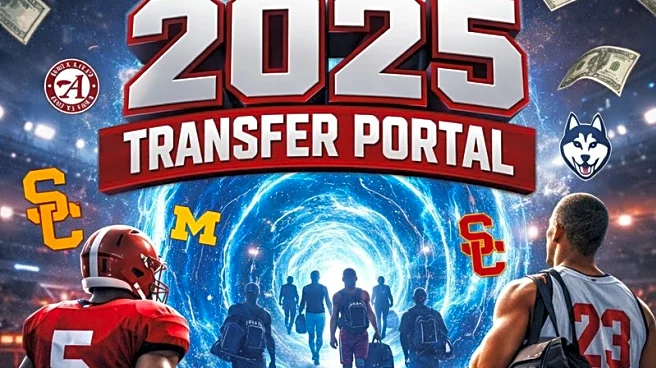
The NCAA Transfer Portal has changed the way we experience college athletics in ways that the NCAA has not seen since the last major rule change four decades ago.
College sports have drifted far from the values they were traditionally built on — loyalty to school, long-term player development, and a sense of tradition that connected generations of fans and more importantly an actual college degree.
Now, because of the transfer portal and NIL money, the system feels chaotic and unregulated, like professional free agency, but without the structure, contracts, or rules that pro leagues rely on.
Established in October 2018, the Transfer Portal was designed to create a fairer and more transparent process for players wishing to transfer colleges.
By allowing student-athletes to post their interest in leaving their current institution to transfer to another institution, and to give institutions the ability to centrally manage their rosters, the NCAA Transfer Portal was supposed to empower student-athletes to make decisions regarding their own athletic futures.
In practice, however, the Transfer Portal has revolutionized both the structure of college athletics, and the stability of college athletics.
Prior to the establishment of the Transfer Portal, student-athletes were required to seek the approval of their current institution to contact other institutions and discuss potential transfers.
Additionally, student-athletes were often forced to sit out a year prior to competing for their new institution.
By removing these barriers to entry, the Transfer Portal opened new avenues for student-athletes to transfer between institutions.
When combined with the implementation of Name, Image, and Likeness (NIL) in 2021, the NCAA Transfer Portal ushered in a new era of student-athlete movement that mirrors that of professional free agency.
College athletics currently find itself at a crossroads, and while the Transfer Portal has provided opportunities for student-athletes to find better situations, it has also led to issues related to roster instability and continuity.
By early January 2026, more than 4,500 college football players had already entered the transfer portal during the initial 2025–26 window, shattering previous records, that’s between 25% to 30% of all scholarship athletes.
With the portal remaining open until mid-January, that number is expected to climb even higher, adding to the thousands of football and basketball players who moved through the portal earlier in 2025—clear evidence of the sustained, high-volume churn now defining the NCAA transfer system.
Important points to consider what this has done to college athletics.
- The transfer portal has created constant roster turnover.
- NIL deals have introduced money-driven decisions into recruiting and transferring.
- Top coaches like Nick Saban, Dabo Swinney, Jim Harbaugh, and Lane Kiffin have publicly warned that the system is unsustainable.
- Fans feel disconnected because teams change dramatically every year.
- Lawmakers (including Congress and the President) are being positioned as the only ones with the authority to fix the system.
Many of the nation’s top coaches have expressed concerns related to the Transfer Portal, including Alabama’s Nick Saban, who stated that “players should have the opportunity to better themselves.
That part is correct.” However, Saban and many other coaches have also expressed concern related to the unintended consequences of the Transfer Portal. For example, Saban stated that “we’ve created a system where there is no loyalty on either side…you can’t build a team if you don’t have continuity.”
Roster turnover has led to decreased fan loyalty and has negatively impacted on the development of players.
High school recruits are now less likely to be recruited by colleges, as many coaches are instead choosing to sign experienced transfers.
As Saban bluntly stated, “why would you recruit a high school player and develop them for two or three years, if someone else can just buy them?”
Other coaches have voiced similar concerns, including Clemson’s Dabo Swinney, who has emphasized the importance of culture and responsibility. Swinney stated that “there has to be some level of accountability…if everything is transactional, you lose what makes college sports special.”
Similarly, former head coach, Michigan’s Jim Harbaugh has called for a more structured approach to the Transfer Portal, stating that “if players are going to be treated like pros, then the system needs contracts and rules like a pro system.”
Additionally, even those coaches who have benefited from Transfer Portal recognize its shortcomings.
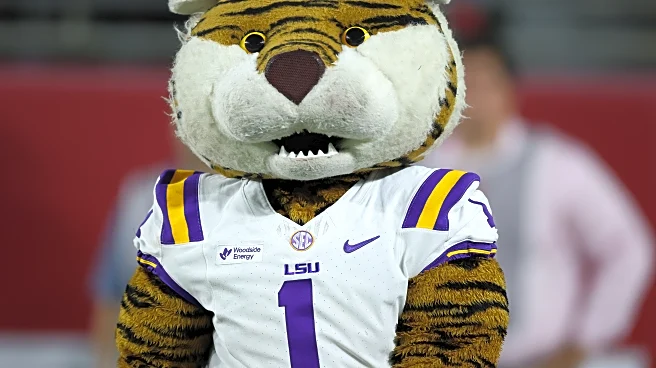
For example, Ole Miss, now LSU head coach Lane Kiffin stated that “the portal isn’t equal. It’s not the same game for everyone,” which speaks directly to the disproportionate impact that Transfer Portal has on mid-major and smaller programs.
These institutions are often victimized by larger programs, which use the Transfer Portal to raid the rosters of mid-major and smaller programs after they have achieved success.
Respected voices outside of the coaching ranks have also sounded the alarm on the Transfer Portal.
For example, ESPN analyst and former coach Urban Meyer stated that “if there are no guardrails, the sport will eat itself,” while broadcaster Kirk Herbstreit stated that “it’s hard to sell tradition and rivalries when rosters change every year.”
College sports need to address the structural and stability-related issues created by Transfer Portal.
However, the NCAA does not have the authority to make meaningful reforms to the Transfer Portal alone.
Therefore, meaningful reform must come from Congress, with leadership from the White House.
Congress should first establish a federal NIL framework that recognizes college athletes as amateur professionals, not employees, but rather as participants in regulated contracts.
NIL agreements should be standardized, registered and enforceable. If a student-athlete enters an NIL contract with performance expectations, academic requirements, or a time associated with their employment at a specific institution, those expectations should be enforceable.
Likewise, if a student-athlete breaches those expectations or leaves a school without just cause, repayment or claw-back provisions should be enforced, similarly to the professional world.
.
Such a window would enable institutions to enforce roster deadlines without fear of legal challenge.
Furthermore, a short and predictable window would provide stability to college athletics and protect fans from the constant roster chaos that currently exists in college athletics.
Furthermore, immediate eligibility should be limited by law. Student-athletes should be entitled to at least one free transfer with no penalties, after which point, student-athletes should either be subject to a one-year waiting period prior to competing for their new institution or be prohibited from receiving NIL compensation based on their competitive participation.
Freedom of movement should not include freedom of consequence.
Lastly, NIL should be earned, not promised. Congress may prevent institutions from providing NIL compensation as a recruitment incentive or as an enticement to transfer.
Instead, compensation should be tied to actual services performed, such as appearances, endorsements, community service, media engagements, or participation in the field. There is no reason to compensate a student-athlete for production unless they produce.
In addition to establishing limits on the number of times a student-athlete can transfer with no penalty, Congress may provide federal incentives for institutions to provide graduate-based NIL bonuses, academic achievement standards, and institutional commitments to maintain a stable roster over extended periods of time.
Providing incentives for long-term commitments would promote the development of students, without limiting the rights of student-athletes to move freely within the collegiate system.
The Transfer Portal is here to stay, and student-athlete empowerment is an important aspect of the Transfer Portal.
Nevertheless, as many of the sport’s most respected leaders have warned, freedom without structure is detrimental to the very foundations of college athletics.
College sports have become chaotic and money-driven, and unless someone with real authority steps in, the traditions and stability that once defined the game may disappear.
President Trump and Congress should enact legislation that establishes a single, narrowly defined national transfer window through federal antitrust protection for the NCAA.
Trump has likewise criticized the transfer portal and the present NIL arrangement, describing it as a “disaster” and “a mess” for college sports.
In addition, he believes the system is “like trading playing cards,” which creates an u
unstable environment at the colleges, drives up costs, and places great pressure on the athletic departments (with many relying on football and basketball to fund their Olympic and non-Olympic sports).
Trump repeatedly warns that if there isn’t reform, the existing model will ultimately pose a threat to the existence of these programs.
He has publicly encouraged legendary former University of Alabama Coach Nick Saban to assist in leading reform and has indicated he supports federal intervention using Executive Authority to limit third party NIL contracts with the ultimate goal of returning balance, responsibility and long-term stability to college sports
With clear federal regulations, enforceable contracts, and leadership from Congress and President Trump, college athletics can transition to a system that values NIL earned through contributions to their institution, rewards commitment, and allows fans to once again rely on the teams they support.