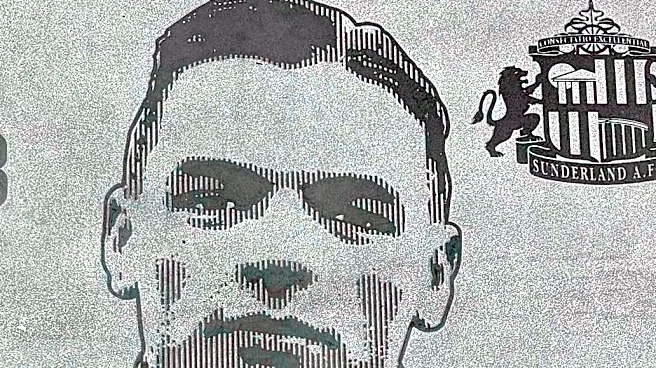








My first real flirtation with the long and storied history of Sunderland AFC came over twenty five years ago.
In those somewhat carefree, pre-Internet days, the ability to spend hours reading up on all things red and white, learning about the iconic players, games and moments of years gone by was limited (I probably wouldn’t have had the attention span to do so either, in all honesty), but when one day, my father brought home an updated edition of a book written by one Leonard Francis Shackleton,
my attention was piqued.

That’s the self-same copy pictured above.
At the time, dad worked in the same office building as Shackleton’s son Roger, through whom he was able to secure a copy of the former Lads’ forward’s memoir, and he duly informed me that Shack had been a Wearside demi-god during the 1950s — skilled, charismatic and a sprinkler of magic dust on the Sunderland sides of that era.
Even though I was probably too young to really understand why he was — and remains — such a revered figure in our area, even a glance at the front cover would give you the sense that this was a footballer with that most elusive of qualities: genuine presence, and let’s be honest, the honorific title of The Clown Prince of Soccer is hardly the kind of label you could overlook.
That was my first taste of exactly with what kind of historically important football club my allegiance lay.
At the time, we were in a good place on the pitch under Peter Reid and I’d already enjoyed countless memorable moments in the years prior, but as a youngster, I didn’t fully gain an appreciation of the hundred-plus years’ worth of history that had unfolded before my red and white love affair began in 1996.
Fast forward to 2026, and the younger fans of today have a multitude of options to hand should they wish to discover more about the heritage of Sunderland AFC.
There are webpages, books and YouTube videos aplenty, and as the club has recently turned what always sounded like an good idea to reality in the shape of the newly-installed Legends’ Way, visitors to the Stadium of Light will have an opportunity to learn more about our club before they’ve even passed through the turnstiles.
At the time of writing, four sections’ worth of commemorative stones (‘Carter’, ‘Kerr’ ‘Rowell’ and ‘Shackleton’) have been installed, with more to follow, taking pride of place outside the stadium’s South Stand.
I paid a visit there last week, armed only with the knowledge that our stone was in the ‘Carter’ section and a handy digital map emailed by the club. I had a suspicion that finding it would be a “needle in a haystack”-type of assignment, but find it I did.

These memorials in honour of loved ones and lifelong Sunderland fans — behind which will lie stories and countless priceless moments spanning years and maybe even generations of fandom — are another piece of a puzzle that’s seen the club and the city start to pay tribute to its most iconic figures in impressive fashion.
It’s also yet more proof of football’s enduring ability to unite people around a common passion.
Indeed, as I scanned the rows and rows of stones, I found myself reflecting on how we go about venerating the great men that’ve represented Sunderland AFC over the years — something that feels even more notable given the tasteful references to the 1937 FA Cup success that are contained within our eye-catching new home shirt.
Who could fail to be moved, for example, when Jimmy Montgomery appeared on the pitch last May as the West Stand took on his name in honour of his years of service to the club? Likewise, how could you fail to be grabbed by the array of murals that adorn the insides of the concourse, giving fans young and old a glimpse into our past in the shape of visual tributes to some of our all-time greats?
Every football club — no, that’s not broad enough — every sporting organisation should, to my mind at least, be aware of the power of the past, of how certain names evoke memories of glorious days and how they can go about preserving that.
Even if some of the names included on Legends’ Way (as I wrote about earlier this year) are controversial and their credentials for selection somewhat dubious, the idea itself is superb and to my eyes, it looks like it’s been done to a very high standard.
Suffice it to say, it looks tremendous now.

It’ll doubtless look even more impactful as it grows, more stones are added and this granite monolith of all things red and white gradually becomes part of the Stadium of Light experience; something to be enjoyed and hopefully appreciated by home supporters as well as visiting fans.
One day, perhaps a young fan attending a game with his father for the first time will get a glimpse of one of the Sunderland icons preserved there and will ask who they were, why they were loved and why they’ve been commemorated, just like I did with Shackleton’s book all those years ago.
That, in a nutshell, is what it’s all about, and as the inscription on the Murray Gates reads, it truly is for us all.