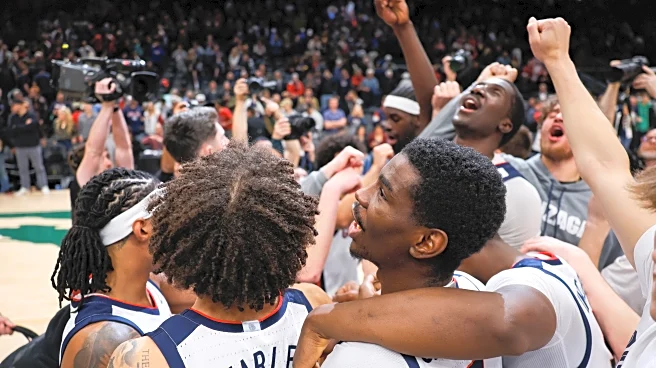

The Bulldogs will return to the Kennel on Wednesday night for a matchup with the Campbell Fighting Camels. Tipoff is set for 6:00 PM PST at the McCarthy Athletic Center, with coverage on ESPN+. The Zags
bring a 10-1 record back onto their home floor after their 10-point win over UCLA against a Campbell team sitting at 5-5 on the season. The Zags enter the week ranked No. 7 in the AP Poll and No. 2 on KenPom, while the Camels arrive out of the CAA well outside the national analytic picture, and fresh off a narrow 69-64 win over Ball State.
Gonzaga remains unbeaten at home this season and still looks like a group playing well below its eventual ceiling, with rotations, timing, and role clarity sharpening by the week. Campbell is organized and competitive enough to punish sloppiness, but this matchup functions primarily as a tune-up before a road trip to Oregon and the turn toward conference play, giving the Zags space to clean things up, stretch the bench, and reinforce habits that matter far more in March than they ever will on a December night at the Kennel.
Meet the Fighting Camels
Campbell comes to Spokane with a résumé that swings wildly from one extreme to the other, which honestly makes them a little more interesting than the average December visitor. They have some ugly losses including a 99-51 trip to Wake Forest, and they have games where the offense absolutely demolished the competition, like a 149-point (not a typo) outburst against DIII Virginia-Lynchburg, a game where Campbell racked up 41 combined assists and grabbed 70 total rebounds (22 of those for Chris Fields Jr. alone).
The team is led by senior guard DJ Smith, who averages just under 20 points per game while taking on a heavy usage and carrying the offense for long stretches. Dovydas Butka, the 6’9” Lithuanian sophomore, provides the secondary punch and a real interior presence, putting up 16.4 ppg while pulling down nearly nine boards per night. The aforementioned Chris Fields Jr. cleans up everything else, leading the team in rebounding with 9.6 per game while doing a little bit of everything defensively. When Campbell plays well, it usually looks the same: Smith serves as the primary playmaker and looks to score or work it inside, Butka finishes possessions and tries to work around the rim, Chris Fields Jr. works the glass very aggressively, and the Camels hang around long enough to make teams uncomfortable for as long as they can.
The last time Gonzaga and Campbell shared a court was back in December of 2012, a 74-52 Zag win full of its own bizarre stats. In that game, Elias Harris somehow handed out six assists, Kevin Pangos swiped five steals, and Kelly Olynyk came off the bench to score 13 points and went a perfect 10-for-10 at the free-throw line. Thirteen years later, the assignment for Campbell remains the same: survive the Kennel, weather the first wave, and hope the margin stays respectable.
Things to Look For:
There really aren’t “keys to victory” here in the traditional sense. Think of it as a chance to see who looks comfortable, who looks decisive, and who uses the minutes to sharpen rather than float. Instead, here are some things to look out for.
1. A get-right game for Tyon Grant-Foster
Grant-Foster’s night against UCLA summed up where he’s at right now. He played 18 minutes, scored seven points, missed both of his threes, and never quite found a rhythm. The effort is there every possession, the athleticism pops immediately, but the fit still feels unsettled, especially when he starts hunting shots instead of letting the game come to him.
This is the kind of matchup where the path forward can be simplified. Grant-Foster doesn’t need to space the floor with pull-up threes. He needs to rebound like a maniac, sprint the floor, cut hard, and attack the rim or get to his midrange game quickly, before the offense stalls. When he plays fast and vertical, Gonzaga gets something it doesn’t have from many other bench pieces. If those habits show up early and often on Wednesday, that’s a meaningful win regardless of the score.
2. Taking the right shots
This probably never turns into an elite three-point shooting team, which raises the importance of shot selection more than raw percentage. Gonzaga can live without volume shooting nights, but it needs to become more discerning about which threes it takes. Against UCLA, Steele Venters and Emmanuel Innocenti combined to go 0-for-4 from deep, and the misses felt more about context than confidence.
The good stuff remains obvious. Corner threes in transition work when they come in rhythm. Pull-ups can stretch a defense and keep perimeter defenses honest. The problem shows up when those shots replace the offense rather than emerge from it. Historically, Gonzaga basketball has looked best when it sets its spacing, moves defenders, and delivers the ball to shooters already set, squared, and ready. Think Nolan Hickman threes. Feet planted. Time to load. Space created through motion and movement.
When this team settles for quick pull-ups, above-the-break looks with a hand in the face, or threes for Ike/Huff, the possession can painfully stall out. A game like this offers room to slow things down, trust the sets, and make sure the right guys are taking the right shots from the right spots.
3. Lineup experimentation
Games like this exist precisely so Gonzaga can get weird with its rotations. I, for one, think it’s time to let Mario Saint Supery take a breather, to let Braeden Smith chill out for a bit, and to finally let Jalen Warley play the position he’s spent the vast majority of his college career playing: point guard. This game is the perfect opportunity to hand Warley the ball, let him cook, and just see what the offense looks like when a 6’7″ decision-maker is steering things instead of setting screens and working the ball inside from the wing.
Once you go there, the next step is obvious (if you’re deranged): with Warley at the 1, you could put Davis Fogle at the 2, Steele Venters at the 3, Tyon Grant-Foster at the 4, and Ismaila Diagne at the 5. That’s four guys at 6’7″ surrounding a true seven-footer in the low post. Switchable everywhere. Length in every passing lane. It would be pure chaos, a cursed circus of Slendermen all hunting their own shots and totally disregarding the flow of the scripted offense. I see nothing wrong with this lineup.
Would it be weird? Absolutely. Would it work for long stretches? Probably not. But in a game like this, the upside comes from finding out, and the floor remains hilariously high. Jalen Warley was a three-year starter playing point guard in the SEC. Someone please explain why a lineup of four 6’7″ dudes and a seven-footer wouldn’t at least kind of work, or at the very least be incredibly fun to watch.
Final Thoughts
This one sits firmly in the December utility category. The result will fade quickly, but the minutes still matter, especially for a Gonzaga team that continues to look very good while still feeling unfinished.
The real takeaways here come down to who looks comfortable, who plays fast without forcing the issue, and which lineup combinations feel worth circling back to when the stakes rise. Gonzaga has already dragged itself through a nonconference gauntlet, so there’s room for this one to breathe a little. A loud night in the Kennel, some lineup tinkering, and a few players taking full advantage of expanded opportunity would make this more than enough reason to tune in.