


The usual course of these things is to look at what the opponents are doing and look at what the Texans are doing and predict what will happen in this week’s game. We have two 0-4 football teams this week so neither team will be good across the board. What i will be doing this week is looking at what those in the industry lovingly call :self-scouting.“ Self scouting is the most important scouting because it involves what you are actually doing well and who is actually doing the the good and the bad.
This week, we are taking a look at the offense and next week we will take a look at the defense. It is one thing to look at your rankings as a team, but now that we are four weeks in, we can take stock in what opponents actually do and how that pertains to what you do. Obviously, the offense has always been more in the crosshairs even if it is not particularly fair in terms of how the early season has gone so far. As per usual, there are some good things and some bad things. Let’s employ the sandwich and start with some positives.
What is going right
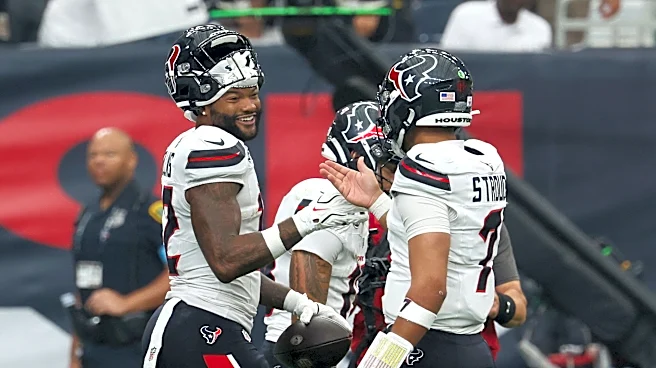
The number one thing here is obviously the performance of C.J. Stroud. He has a 95.7 quarterback rating. If you were simply to give that number to most fans at the beginning of the season they would naturally assume that we were no worse than 2-2 and likely 3-1 going into the Titans game. We should say this without reservation, very little of this 0-4 streak is Stroud’s fault. If Stroud puts these numbers up over a full season it will likely be one of the best quarterback seasons ever for a Texans quarterback.
However, this isn’t to say that all has been sunshine and roses for the Texans quarterback. There are some numbers that are not terrific, but one has to wonder how much of that Stroud and how much of that is what is going on beyond Stroud. When looking at Stroud and the passing game there are a few stats we can look at that help explain success and lack of success. Two of those hidden numbers are the percentage of targets of become catches and the success rate (as measured in first downs and predicted first downs). We will look at all of the primary receivers here and see what you notice.
This does not include the backs out of the backfield which has to be considered. Woody Marks and David Montgomery have combined for 14 catches on 16 targets. Their success rate combines for over 50 percent. A number of teams have succeeded historically on a short passing game, but those quarterbacks usually hover around a 70 percent completion percentage where Stroud sits at 61,5. Even if we ignore Stroud for a moment, we can see there are two targets that are dragging down the whole thing.
Xavier Hutchinson and Jared Warune have combined for 38 targets and 16 receptions. If you take those out then Stroud is close to that 70 percent. This is where advanced analytics come into play. Hutchinson is on pace to have 50+ catches on the season. At first blish this looks good for a third or fourth wide receiver. The problem is the efficiency is very low. Noel and Boutte are a lot more efficient when looking at the numbers, so the obvious takeaway is that they should be a much more featured part of the offense than Hutchinson and Wayne.
All that being said, obviously increased exposure is not a guarantee for success. So, it would appear that having them play more is not the only answer. The other answer comes in a relying on players like Schultz and Moreau in combination with more opportunities for Montgomery and Marks to elevate the short passing attack. That would definitely get Stroud closer to that 70 percent completion percentage and would maximize the passing game in lieu of a failed running attack.
Focus on the running game
The early going is definitely eye opening when you look at the Texans first four opponents independent of the Texans game. Of the first four opponents, three of them are among the worst rushing defenses in the league. The Cowboys sit as the worst by virtue of the fact that they are one of two teams to play five games. However, the Bills and the Colts are also among the bottom ten teams against the run. Remove the Texans from their schedule and they obviously look worse on a per game basis.
Not included in these numbers are the 66 yards that Stroud has gained on nine carries. Obviously, Stroud is not a traditional running threat like some other quarterbacks in the league. I would never advocate for including that as an established part of the offense. However, this gets us to what the Texans have been doing versus what has actually worked.
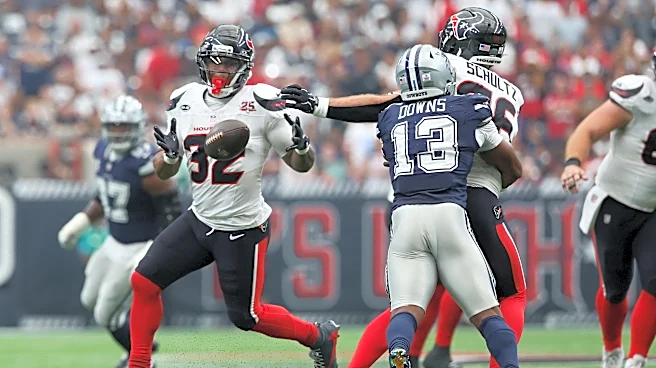
Montgomery has gotten more than half of the team’s carries and he is the least effective. Is that his fault? The Texans are DAL (dead ass last) in the percentage of times a runner is hit at or before the line of scrimmage. Montgomery has taken the bulk of that. They sit at 60 percent and that is six percentage points worse than 31st place. It should be obvious that most if not all of those are happening on traditional running plays. A portion of self-scouting occurs when we admit to what is happening. We could say it is the offensive line’s fault or the running back’s fault, but neither explanation changes what is actually happening.
So, what is actually happenng is that the team is less successful on David Montgomery running plays than anything else they are doing. Again, this is not a slight on Montgomery. What it does show is that they are slightly more effective with Marks running the ball and more effective on jet sweeps. I’m not for giving a wide receiver ten carries a game, but some running offenses (most notably the 49ers with Deebo Samuel) have used that tactic to maximum effect.
The likely solution here for the short-term is inverting the way you use Marks and Montgomery. Marks should be getting the 10-15 carries where Montgomery should be getting the 5-10. The Texans might also employ more jet sweeps (maybe five a game) to keep the defense on their toes. That would probably maximize the running game to the point where it becomes a plausible threat.
Putting it all together
The Texans move the ball more through the air than on the ground. That statement alone is not stepping out on a limb. The likely fan response is “well duh.” It seems that leaning into that would be the most elegant solution. It means having more Boutte and Noel on the field than Hutchinson and Wayne. It also would mean utilizing more two tight end formations where Moreau and Schultz can get involved in the passing game. Doing all of that (while also including Marks and Montgomery in the passing game) would get you closer to a 70 percent completion rate and therefore running more efficiently than what is currently happening.
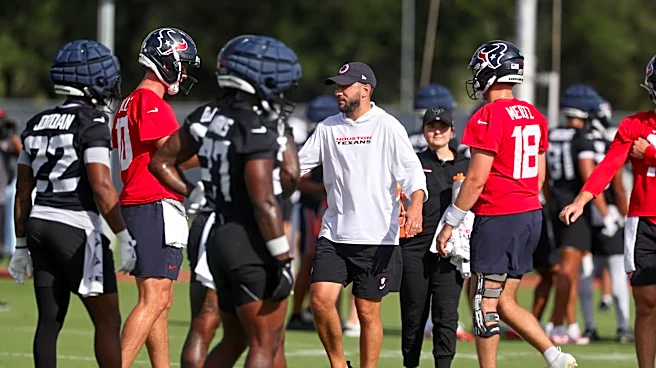
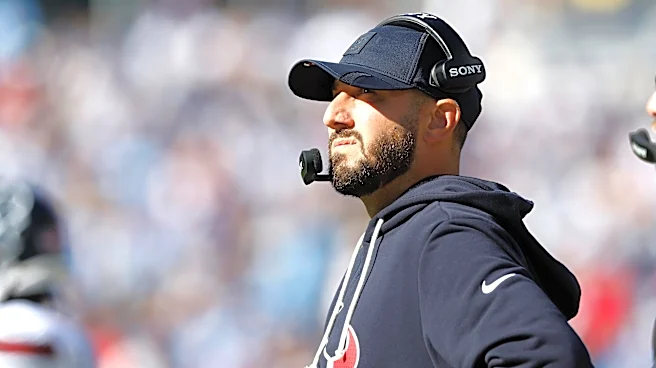
This of course brings us to Nick Caley and whether he is capable of recognizing what is actually happening and responding to it intelligently. Smart play callers respond to what is actually happening and not to what they hope will happen. We would all love an offense where the backs get 20-30 carries a game and grind it out on the ground. That is not who the Texans are right now and it will be better in the short term if we simply admit that and react accordingly.