

That’s a wrap, folks! 84 wins, 78 losses. By the end of 2025, it was at least theoretically possible to squint and see the bones of an 80-ish win team in 2026. but having actually gotten there, I almost don’t know what to say. This game was superfluous, but for some reason, 84 is a more pleasing number to me than 83. I don’t really know why. Maybe I like even numbers. Maybe it’s just because it’s bigger. But I’m glad they managed to end this season with a win, and make it feel like they still have
momentum heading into this week’s Wild Card series despite the disappointing division loss.
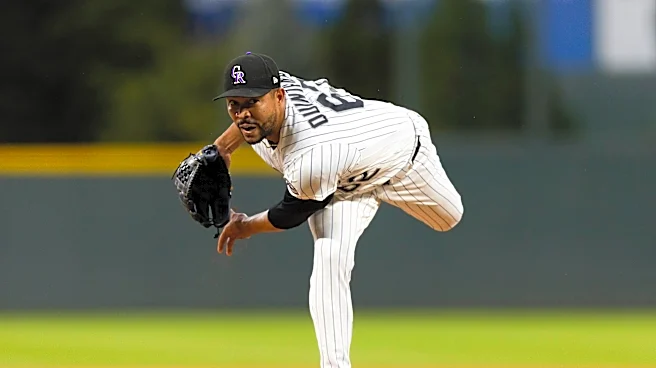
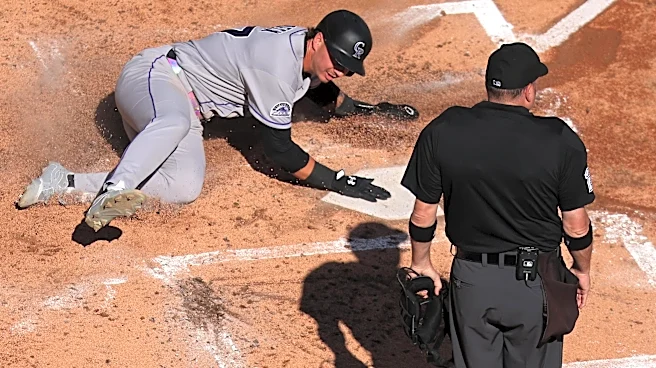
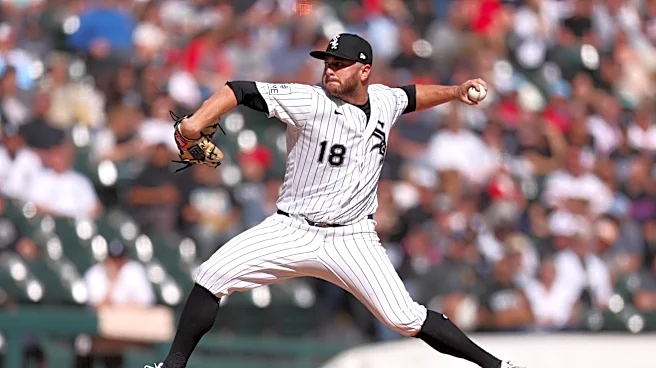
The Rockies managed to strike first in Game 162, manufacturing a run via a couple base hits and a sacrifice fly off the bat of Connor Norby against Sox starter Anthony Kay with one out in the third inning. But that was almost all the Rockies managed, and it wasn’t a lead that lasted long. Kay remained solid for five innings, with nothing more than the one run allowed. When the Sox put up four runs in their half of the fourth courtesy of two-run ding-dongs from Randal Grichuk and Brenton Doyle, Colorado ceased to put up anything resembling a fight.
Sean Newcomb threw two-thirds of an inning of relief to get him to the 90-inning threshold on the season, a gesture of goodwill that will get him an extra $100,000 on top of his base salary. A memo of reprimand from owner Jerry Reinsdorf probably reached Will Venable in the dugout before game’s end. Trevor Richards did what he does best and saved the bullpen, eating 3 1/3 innings to close things out with just a solo home run allowed to Cole Carrigg. The regular season was thus brought to conclusion with little fanfare in the big picture but to a thunderous, well-deserved round of applause from a 30,000-strong crowd at Rate Field.
Now that we’ve talked about the game for the obligated amount of time, let’s look at some interesting numbers, now that the season is officially in the books.
Of course, there’s one glaring reason than an 84-win outlay is the most fun we’ve had in a long time — it’s only the second time since 2012 they’ve even broken .500, not counting 2020. Yeesh.
On the more heartwarming side, Chase Meidroth was always mentioned last in virtually any discussion of the Garrett Crochet trade. Within the context of Sox history, near and far, he’s contributed more than pretty much anybody else involved.
Historically, second base has been mostly a wasteland for the South Siders. The last Sox second baseman to start opening day at the position is Gordon Beckham. Only four players have even put up 4.5 WAR — borderline All-Star caliber — from the keystone. Eddie Collins did it eight times as the Teapot Dome scandal stole headlines, and Nellie Fox got there five times. Don Buford’s defense got him there twice, and once by Cass Michaels, whom I had never heard of before today despite having played nearly 800 games for the Pale Hose.
As of today, Chase Meidroth is the fifth player. By WAR, the Crochet trade would be a wash if he alone was the return. Let’s take a moment to appreciate what he just did, because it’s more than what most of us have ever seen out of a White Sox second baseman in our lifetimes.

We’re definitely appreciating it lots already, but we need to appreciate more the degree to which Randal Grichuk mashed for us this summer. Isolated Power (ISO) is the stat you get by subtracting a player’s batting average from their slugging. In essence, it takes singles and walks of the equation and tells you how much raw power a hitter is producing — more extra-base hits equals a big ISO.
After today’s two-run tater, Grichuk finishes the year with an ISO of .299. Of the 535 seasons in which a Sox outfielder has taken at least 200 trips to the plate, only twice has has that mark ever been surpassed: Albert Belle in 1998 and Jermaine Dye in 2006, with Oscar Gamble’s 1977 and Carlos Quentin’s 2008 trailing just behind. That quartet probably makes up at least half of the most memorable single-season hitting performances in team history. It’s almost certainly enough to have priced him out of the front office’s plans this winter, so a tip of the cap to ya, Randal.
Hey, there’s more! Despite missing most of the year and taking a few weeks to find his footing when healthy, Kyle Teel still played at a 3-WAR pace, sitting at 0.8 rWAR in under 150 plate appearances. His defense seemed to take a big step forward, and while his offense regressed on the whole, a large part of this late-season surge has been how naturally he finally seems to have slotted into the 2-spot ahead of Miguel Vargas and Munetaka Murakami. Teel at the 2 changes the complexion of the lineup completely, and if the Sox make any kind of playoff run I’m willing to bet a big part of it will be Teel rising to the All-Star level he may be poised to hit in 2027.
Meanwhile, Sean Newcomb and Grant Taylor were buying in bulk this year in a way we’ve rarely seen from White Sox relief arms. This year marked the first time this century that the team has had two pure relievers (openers included) reach the 80-inning threshold, with Taylor reaching 84 along with Newcomb’s 90. The last time it happened was 1999, courtesy of Keith Foulke and Sean Lowe.

Sean Burke’s 4.3 WAR was quite nice, and more than enough to pace the Sox rotation, but nothing we haven’t seen even lately.
What we really haven’t seen lately — or at all, really, with one notable exception — is such a season come from a player the Sox drafted and developed truly by themselves. As a third-round pick, it’s not like Burke was ever some kind of nobody. But Sox history is such that this registered as, unironically, one of the dozen-odd best seasons ever produced by a pitcher the Sox themselves drafted outside of the first round.

I hope they buried the records of James Shields’ Chicago tenure in the same place they keep Mike Sirotka’s shoulder imaging.
At the beginning of the season, I dismissed Sam Antonacci as a possible threat to Chase Meidroth’s status as incumbent second baseman, noting that his OBP was driven by massive HPB totals that seemed like a gimmick that probably wouldn’t translate to the majors.
Lol.
Not only did Sam’s 28 plunks lead the American League, they were an all-time rookie record, clearing 2019 Victor Robles by three despite taking nearly 75 fewer trips to the plate. A gimmick, indeed.

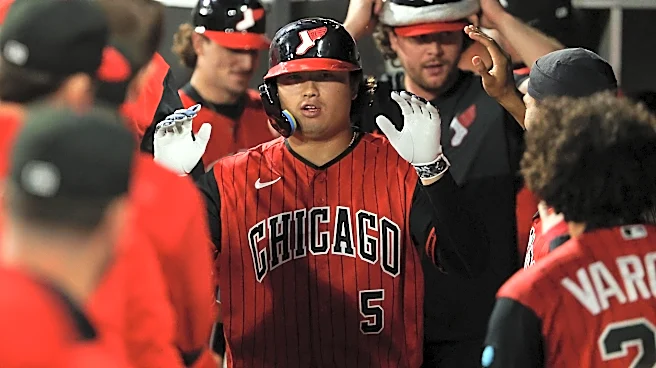
Of course, I feel like I’d be remiss to not give some love to Murakami, who came a few feet away today from tying José Abreu’s team rookie home run mark despite playing in 20 fewer games. Jerry should probably find a Brinks truck to back up before an overenthusiastic fan steals one.
Though I’d rather get to host a Game 1, I’m also not terribly sorry to have a whole week of anticipatory angst awaiting me. A flight to Houston awaits these guys after the division-sealing win for the Astros this afternoon, with first pitch of the Wild Card Series scheduled for 4 p.m. CT on Tuesday. Starters will be announced whenever they are. Sit back, relax, and strap it down for our first taste of postseason baseball in a half-decade.
MVP
Anthony Kay: W, 5 IP, 5 H, ER, 2 BB, 4 SO
Runners-Up
Randal Grichuk: 1-for-3, HR, 2 RBI
Trevor Richards: 3 1/3 IP, H, ER, 3 SO
Cold Cat
Colson Montgomery: 0-for-4, 2 SO, settling at a record-breaking 227 on the season
Runners-Up
Tommy Pham: 0-for-4
Drew Romo: 1-for- 3