
[The following is a guest post from Zach Lowy of Breaking the Lines. For more of Zach’s work, be sure to follow him on social media ]
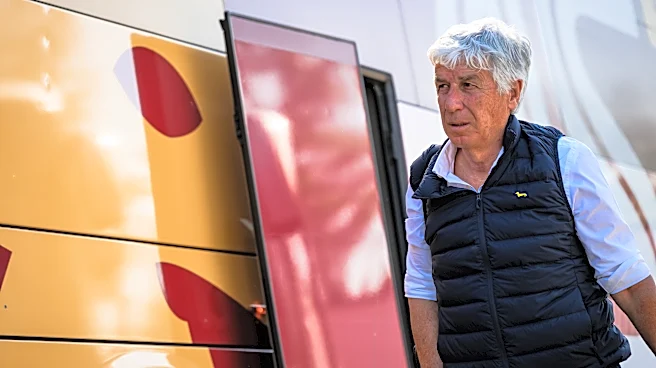
From Antonio Conte to Luciano Spalletti, from Massimiliano Allegri to Carlo Ancelotti, Italy has produced a handful of the best coaches of the past decade. But while his trophy cabinet may not be as impressive as those of his aforementioned compatriots, Gian Piero Gasperini undoubtedly deserves to be considered among the most accomplished managers in recent years.
Gasperini
spent the first decade of his coaching career in Juventus’ academy, the same place where he first developed as a player, before getting his first head coaching opportunity at Crotone. However, it wasn’t until he took charge of Genoa in 2006 that he began to lay his foundations in Italian football, spearheading Il Grifone to promotion and engineering their highest finish in 19 years. More than just good results, he oversaw aesthetically pleasing football, with the likes of Diego Milito and Thiago Motta enjoying success in his 3-4-3 formation before leading Inter to a treble. This stellar form earned Gasperini a move to Inter, where he struggled to rekindle his success, followed by an unimpressive spell at Palermo. However, he got back to basics during his three-year homecoming at Genoa, before eventually deciding to embark on a new chapter in Bergamo.
He took charge of Atalanta in 2016, where he was given the remit of avoiding the drop. After a shaky start that saw them fall into the relegation zone, Gasperini turned around Atalanta’s fortunes and led them to a shock fourth-place finish and a return to European competition after 26 years. But rather than being a one-hit wonder, Atalanta consolidated their place in the upper echelon of Serie A and went from mediocre underachievers to perennial UEFA participants. Many players arrived and left the Stadio Atleti Azzurri d’Italia, but Gasperini stayed and oversaw several deep runs in the Coppa Italia and the Champions League and Europa League. In 2024, he ticked the last remaining box – a trophy – by claiming the Europa League title and handing Bayer Leverkusen their sole defeat of the season.
While he’s only won one trophy in his entire coaching career, Gasperini is respected by his peers as one of the top coaches in the game. He’s viewed as a role model to a number of young managers, including Stevie Grieve, who, after kicking off his journey in the Finnish top-flight with SJK, is now looking to steer Swedish outfit Helsingborgs IF to promotion to the Allsvenskan.
“Gasperini was somebody whom I’d study more than most, because I don’t play 5-4-1, so for me, it was more about how do you actually activate a 3-4-2-1, or a 5-4-1, or a 3-5-2 in a man-to-man system?” stated Grieve in an exclusive Chiesa di Totti interview. “I spent a long time studying Gasperini and how he plays his way, and you can take little bits of the things that you like from lots of different ways of playing and put them into your own system. There are bits that your players allow you to do, or don’t allow you to do, or things that your personality might or might not allow.”
It’s precisely why Roma decided to take a chance on him and sign him as the club’s fourth manager in 18 months. Gasperini kicked things off in stellar fashion, leading the Giallorossi to five wins in six and spearheading them into Champions League positions. For a while, it seemed Roma might return to Europe’s elite competition. Instead, the new year has proven far more difficult. Gasperini suffered defeat at his former employers in his first match of 2026 before being dumped out of the Coppa Italia by Torino. After a torrid run of form that saw them win just two of 11 and exit the UEFA Europa League to Bologna, Roma bounced back with a 1-0 win over Lecce before falling to a 5-2 defeat at Inter. They rebounded with a 3-0 win over Pisa, but they failed to close the gap on Juventus and the fourth and final Champions League spot after drawing 1-1 with Atalanta.
As Roma hurtled towards a disappointing start to 2026, Gasperini and his predecessor Claudio Ranieri – who rejected a chance to become Italy’s head coach and instead stayed at Roma as a special advisor – began to get into a war of words. Eventually, this spat turned public, with Claudio Ranieri hitting back against Gasperini’s criticism of Sporting Director Ricky Massara and arguing, “There isn’t a player we signed he didn’t know about and approve.” It became clear that they were going to choose between Ranieri, who began his playing career at Roma over a half-century ago and who has since coached them on three occasions, and Gasperini. They made their choice clear, dismissing Ranieri from his post and instead backing Gasperini as the long-term answer: “As we look to the future, our direction is clear. The club is strong, with solid leadership and a defined vision. AS Roma will always come first. We have full confidence in the path ahead under Gian Piero Gasperini, with the shared objective of growing, improving and delivering results worthy of our history.”
With Roma likely to go trophyless and miss out on Champions League football, time is now ticking as they look to overhaul their squad in the summer transfer window and plug a number of gaping holes. It’s one thing to back Gasperini with a public statement, but can they now back him with patience and much-needed transfers?
“Whether Gasperini succeeds at Roma or not depends on how much time he’s going to get,” stated Grieve. “I think at Atalanta, if the expectation is you finish 12th, and you finish 10th, you’ve done well. If the expectation is you finish 10th, and you finish 6th, then you’re in Europe, and now you’re a hero. Then you continually develop European money and player sales and all that stuff, and it stabilizes the club, and you can invest more and stay up there, and then, you’ve done amazing. If the Roma board and fans or owners are expecting you to finish in Europe every year, and the players are not capable of doing that, or they’re not capable of pushing in the way that you want them to push, then you need to go and get better players. There’s a point where the coach helps, because that style, and the leadership they bring, and the substitutions they make, and the methodology that can take a team really far. But in the end, your players are what make you win games. You could play me center-forward and have the best system in the world, but I’m not winning you games; it’s just not going to happen. It’s all about whether you identify the players that fit your system and elevate your system.”
“When you’re doing recruitment, there are only really two questions you need to answer: Is he an upgrade, and does he fit? If he upgrades your team, then you sign him, and if he upgrades your team and fits it perfectly, then of course you sign him. You just keep doing that for every position, and you should improve, because your team should keep getting better, because the players are better. It’s up to you as a coach and as a leader to guide them in a way that keeps them on track to perform their best. Can Gasperini do it? Of course, he can, but it’s up to Roma to identify players who play his way in the manner he does. If you look at Atalanta’s team, everybody’s over 6’ tall, everybody’s big, fast, powerful, and aggressive. Do they play the prettiest football? No. But they play incredibly effective football, because the plan isn’t supposed to be pretty, but chaotic. It’s counter to what everybody else is playing: if Atalanta tried to play like Milan or Inter, they would lose more. But they played their own style under Gasperini, and that’s what made them successful. Sometimes it’s about playing in a way that counteracts what the other successful teams are playing.”