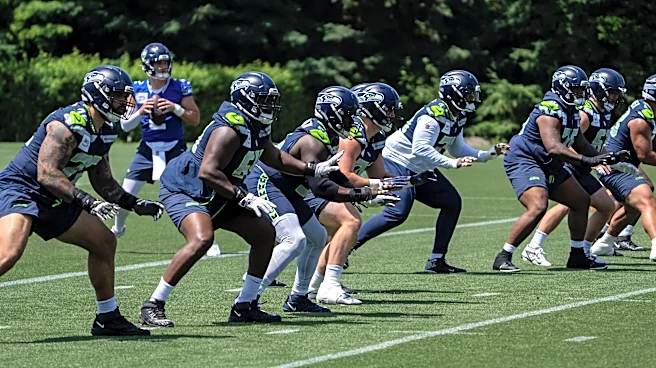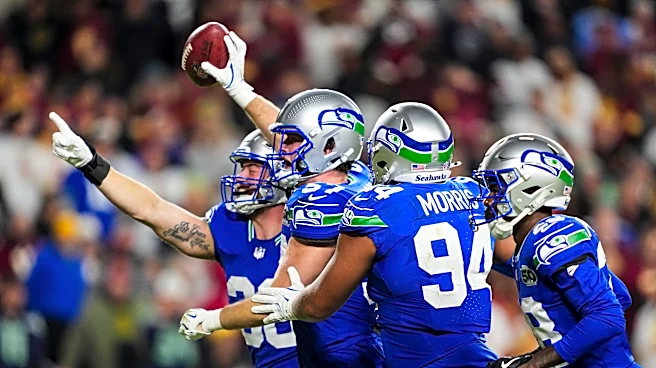




There was a time when Seattle Seahawks training camp was defined by uncertainty at the top of the roster. That’s not really the case anymore.
Mike Macdonald enters Year 3 with a much clearer picture of what his team is supposed to look like. The quarterback situation is stable, much of the offensive line returns with continuity, and the defensive core is largely intact. Instead of fighting to identify starters, Seattle is now fine-tuning a roster that already looks competitive on paper.
That changes
the nature of training camp.
The most important battles this summer aren’t necessarily about winning starting jobs. They’re about defining roles, shaping rotations, and determining which players the coaching staff trusts when injuries hit or sub-packages take over games. In many ways, these are the decisions that end up mattering most over a 17-game season.
Here are the most important ones to watch.
Who replaces Coby Bryant?
The safety group is one of the few areas where Seattle is still clearly sorting things out.
Coby Bryant’s departure opens up a meaningful role in the secondary, and there isn’t a clear successor already locked in. Ty Okada enters camp with the advantage of familiarity after spending last season in Mike Macdonald’s system, giving him a head start in terms of communication and overall defensive understanding.
Rodney Thomas brings a different profile. He arrived in Seattle with some positive early buzz and offers the kind of steady, versatile play that can earn a coaching staff’s trust quickly, even without long-term familiarity in the system.
Then there’s Bud Clark.
The rookie may ultimately have the highest ceiling of the group. His ability to play multiple roles in the secondary fits exactly what Macdonald tends to prioritize in his defensive backs, especially safeties who can disguise coverage and handle communication responsibilities. If Clark adapts quickly to the mental side of the defense, he has a realistic path to meaningful snaps early in his career.
This isn’t just about finding a backup. It’s about identifying who becomes part of the weekly defensive rotation.
Will Seattle keep six or seven wide receivers?
Unlike most position groups, this battle may be decided as much by roster philosophy as by performance.
The top five receivers appear essentially locked in. Jaxon Smith-Njigba remains the focal point of the passing game, Rashid Shaheed brings speed and explosiveness, Cooper Kupp provides veteran reliability, Tory Horton should have a roster spot if healthy, and Jake Bobo’s contract extension makes him a safe projection for the 53-man roster.
After that, things get complicated.
Seattle has to decide whether it wants to carry six or seven receivers. That decision will shape the back end of the depth chart and determine how many opportunities are available for the remaining candidates.
Emmanuel Henderson Jr., Cody White, and Irv Charles are the most realistic contenders for those final spots. Henderson offers athletic upside and developmental potential, White brings familiarity and reliability within the organization, and Charles has built his NFL value primarily through special teams, which often becomes the deciding factor in these kinds of battles.
In many ways, this isn’t just a competition between players, it’s a reflection of how Seattle wants to build its roster balance heading into the season.
Who rounds out Seattle’s edge rotation?
The top of the edge group feels more stable than it has in recent years.
Derick Hall enters the season fresh off a contract extension, signaling the organization’s belief that he is part of the long-term foundation on defense. Uchenna Nwosu returns healthy after injuries limited him over the past two seasons, while DeMarcus Lawrence provides veteran experience and stability at the top of the rotation.
That leaves the final spots in the rotation up for grabs.
Dante Fowler Jr. enters camp as the most proven option in a situational role. Even at this stage of his career, he remains a useful pass-rush specialist and gives Seattle a reliable veteran presence in obvious passing situations.
Behind him, the more interesting conversation begins.
Jared Ivey arrives with traits that Seattle consistently values on the edge: length, power, and the ability to set the edge in the run game. As a rookie, his role may take time to develop, but the upside is clear enough that he cannot be viewed as a long-term project only.
Connor O’Toole represents a different type of bet. A former wide receiver early in his football journey, he still carries standout athletic traits that show up in space and in pursuit. That background doesn’t automatically translate to pass-rush production, but it does explain why Seattle continues to invest in his development. If the technical side continues to catch up with the athletic profile, he could force his way into the EDGE4 or EDGE5 conversation.
Those roles matter more than they might appear on paper. Macdonald’s defenses have consistently relied on deep rotations, meaning the final edge defenders are rarely just roster fillers.
How will Seattle shape its tight end room?
This may be one of the most quietly important roster decisions of the summer.
Seattle carried four tight ends for much of last season, and there is little reason to believe that approach will change under Brian Fleury. The position remains central to both the run game and the structure of the passing offense, making depth more valuable than raw receiving production alone.
AJ Barner has already established himself as a key piece of the offense after a strong sophomore season, while Elijah Arroyo enters Year 2 as one of the more intriguing developmental players on the roster. His rookie season wasn’t defined by production, but the athletic tools and receiving upside that led Seattle to draft him remain very much part of the long-term plan.
That leaves the TE3 and TE4 roles as an open competition.
Eric Saubert enters camp with the clearest path after handling a similar role last season. His value has always been rooted in blocking consistency and special teams contribution rather than statistical output, and he even provided one of Seattle’s most memorable plays last year with a clutch two-point conversion catch against the Rams.
Nick Kallerup represents the developmental track. Seattle has continued to invest in his growth, and another year in the system gives him a legitimate chance to push for a larger role if he takes a step forward in camp.
Harrison Bryant adds another experienced option for a blocking tight end.
Ultimately, this isn’t just about filling out a roster spot. It’s about deciding what kind of tight end room Seattle wants behind its top two options.
Who survives the nose tackle numbers game?
Nose tackle quietly projects as one of the most competitive depth battles on the roster.
Seattle has its core contributors in place, but the rotation behind them remains unsettled. Brandon Pili returns after spending last season with the team, while Deven Eastern, Uso Seumalo, J.R. Singleton, and Bubba Thomas all enter camp competing for limited spots along the interior.
This group may not generate much national attention, but it matters in the context of Mike Macdonald’s defense. Heavy rotation up front is a consistent theme, and interior defenders who make the roster are often asked to contribute in specific packages rather than play full-time starter snaps.
In that sense, winning one of these jobs is less about making the team and more about earning a defined role within a rotating defensive front.
Final thoughts
Seattle isn’t entering training camp trying to figure out its identity.
That part is already established.
Instead, the Seahawks are fine-tuning a roster that looks increasingly complete at the top while still offering meaningful competition at the margins. These battles won’t define who starts in Week 1, but they will determine which players the coaching staff trusts when the season inevitably tests the depth chart.
And over the course of a long season, that may matter just as much as anything happening at the top of the roster.