




One of the most underrated moves an NFL front office can make is being proactive when extending its own talent. There’s always inherent risk in negotiating a deal early, but the upside is obvious. You’re locking a player up before their market value rises even higher.
For the Jets, the reality is there aren’t many players it makes sense to extend right now. Most of the roster falls into one of three categories: players they’ve already identified as long term building blocks (Garrett Wilson and now Breece
Hall immediately come to mind), players they’ve recently invested significant draft capital into who are already under team control for several more years (Armand Membou, David Bailey, Olu Fashanu, Kenyon Sadiq, Omar Cooper Jr., etc.), or veteran stopgaps they’re relying on as short term stabilizers while they search for long term answers at their respective positions (Geno Smith, Demario Davis, and David Onyemata all fit that category).
However, there is one player who could make sense for the Jets to approach about a long-term extension as early as this offseason. Let’s take a look.
Joe Tippman
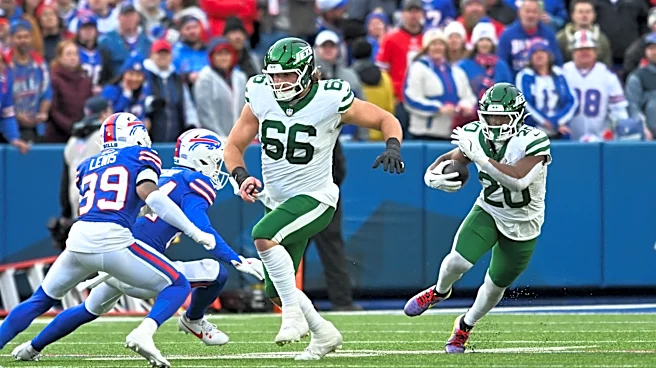
Tippman presents an interesting decision. The former second round pick is entering the fourth and final year of his rookie contract this upcoming season. Through his first three years in the league, Tippman has been a solid and dependable interior offensive lineman, even if he’s been somewhat unspectacular overall.
Durability has been a major positive. Tippman has played in 17 games in back to back seasons and has appeared in and started 48 of a possible 51 games since entering the league. He also brings versatility with experience at both center and guard.
There’s risk though. Throughout his career, Tippman has mostly been average. Last season, he graded 33rd out of 81 qualified guards according to PFF – solid, but far from elite. His pass blocking has also been fairly underwhelming overall, though it has steadily improved over the last three seasons.
So why would it make sense for the Jets to extend him now?
For starters, Tippman is still very young, having turned just 25 this past March. He also plays a position that historically develops later and ages more gracefully than many others across the league. Unlike running backs, where players often begin declining once they hit their late 20s, interior offensive linemen frequently play at a high level well into their 30s, with many of their best seasons coming in their late 20s.
In fact, PFF has shown that the percentage of career WAR generated by interior offensive linemen is nearly identical between players aged 25 or younger and players aged 30 or older.
For Tippman, the Jets would essentially be betting on an already dependable, average level starter entering what should theoretically become the most valuable stretch of his career. It wouldn’t be surprising to see him take another leap forward, especially with improved continuity around him, and eventually settle into the above average to good tier of interior linemen.
Considering the Jets currently don’t have many expensive long term contracts on the books, and with both tackle spots still under rookie control for another three and four years respectively, extending Tippman early could ultimately prove to be a very shrewd move if he continues to develop.