
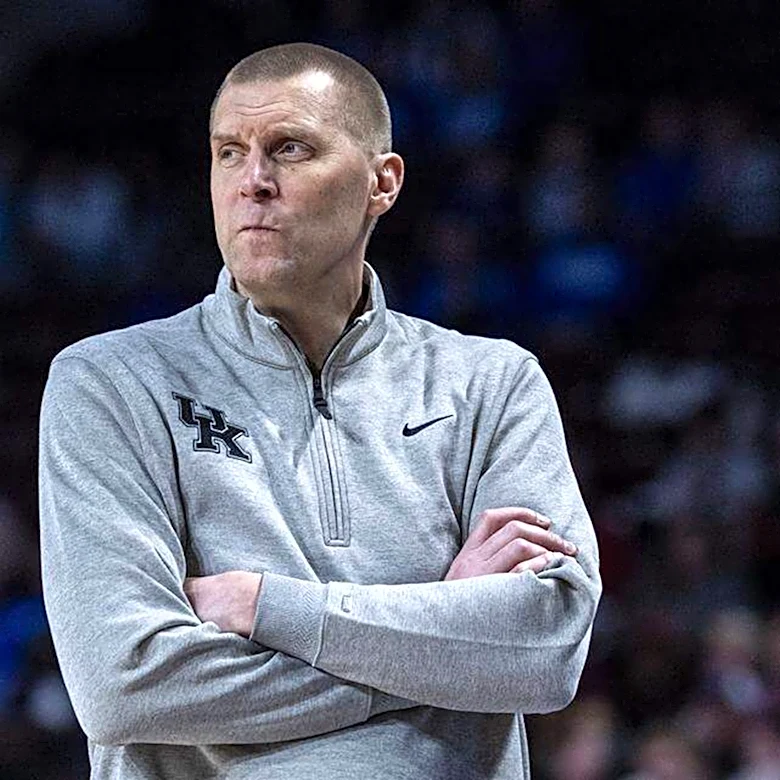


Everyone knows Mitch Barnhart loves him some long-term contracts. Whether it is locking up a head coach or securing a massive apparel deal, Kentucky’s former athletic director has a well-documented history of trading uncertainty for security. It is a philosophy built on establishing a high floor for safety while accepting a relatively low ceiling.
But it’s not just the coaches who have enjoyed a long-term ride under Barnhart’s tenure.
Back in 2013, Barnhart signed a 12-year agreement with Nike that
netted the university around $30 million. That deal, made public in 2015, ran through 2024-2025.
Then, in 2025, the university doubled down, signing another 10-year extension with the footwear giant. On paper, it sounds like a massive win: a decade-long pact worth at least $76 million, per the Lexington Herald-Leader.
However, when you pull back the curtain and look at the numbers, the flaws in Barnhart’s safety-first strategy show up again.
The structure of the new deal relies heavily on exactly how much Big Blue Nation is willing to spend at the cash register. The core terms break down like this:
- General royalties: Nike pays Kentucky a 15% royalty on sales of all branded merchandise except footwear.
- Shoe royalties: Nike pays a 5% royalty on UK-logo shoe sales.
- Minimum royalties: Nike is only required to pay Kentucky a minimum of $4 million in cumulative royalties over the entire course of the 10-year agreement.
Because the deal is uncapped, the final payout could technically be much more than the projected $76 million. It all hinges on retail volume.
The frustration for many fans stems from looking down the road at the Cards.
Back in 2017, Louisville signed up with Adidas for a staggering 10-year, $160 million contract, one of the richest deals in the history of college sports at the time. Regardless of how that Adidas partnership pans out for the Cardinals long-term, the optics are tough to ignore.
If Kentucky hadn’t already been locked into a decade-long Nike deal, one would have to think the Wildcats could have drawn a much more lucrative base guarantee than what Louisville secured.
Instead, it was nearly 100 million less in pure base value. And now Kentucky’s current contract sits around 15th in the country. The Wildcats are pulling in a lower guaranteed base than schools like South Carolina, Nebraska, and Washington.
The saving grace for Kentucky is the uncapped bonus structure. Those bonuses won’t be made available until the end of each year, meaning the Cats could absolutely climb way higher up the national revenue rankings if retail sales explode.
But it begs a very fair question from the fanbase: Had Mitch Barnhart been more aggressive at the negotiating table, would Kentucky really need to rely on merchandise bonuses just to be a top-10 earning school in the country?
When you are one of the premier brands in all of college athletics, your ceiling should probably be a lot higher.