
It’s a new week here at BCB After Dark: the coolest spot for night owls, early risers, new parents and Cubs fans abroad. Come on in and get out of the cold. We’re always glad to see a friend, old or new. We can check your coat for free. There are still a few tables available. Bring your own beverage.
BCB After Dark is the place for you to talk baseball, music, movies, or anything else you need to get off your chest, as long as it is within the rules of the site. The late-nighters are encouraged to get the party
started, but everyone else is invited to join in as you wake up the next morning and into the afternoon.
So last week we found out what happens when I fall behind and hurry to get this feature done. I had a different question, realized it wasn’t working and switched to asking you who the greatest Cubs MVP was off all-time. In my haste to finish, I forgot to include Sammy Sosa’s 1998 season. That was kind of a big error.
In any case, with Sosa not among the choices, Ernie Banks’ 1959 season won with 40 percent of the vote.
Here’s the part with the music and movies. You’re invited to join us.
Tonight we have a performance from earlier this month in Tokyo, featuring drummer Marcus Gilmore. This is a bit of funky fusion with David Virelles on piano, Emmanuel Michael plays guitar, Rashaan Carter on bass and and Morgan Guerin on an electronic wind instrument.
Even for a noir, the 1949 film Act of Violence is a dark film. Directed by Fred Zinnemann and starring Van Heflin, Robert Ryan, Janet Leigh and Mary Astor, Act of Violence is a story of two war veterans and the horrible secret that one of them is hiding. It’s a great film that rips off the veneer of the post-war American prosperity.
The film starts with Joe Parkson (Ryan) arriving in Los Angeles Joe looks down-and-out and he walks with a limp. He finds a room in a low-rent hotel and doesn’t know how long he’s going to stay for. Joe immediately pulls out of phone book and ominously circles the name Frank R. Enley (Heflin). You can tell instantly that Joe has some unfinished business with Frank. That Joe has a gun is also kind of a hint.
Frank, meanwhile, is a prosperous developer in the fictional suburban California town of Santa Lisa. He’s married to Edith, played by a very young Janet Leigh, and they has a small child. (As an aside, it seems like Leigh’s job early in her career was to serve as a wife/love interest to men far older than she was.) Frank is being toasted by the local Santa Lisa community for all he has done to build the town. He’s going off on a fishing trip at a mountain lake. Life is as good for Frank as it appears to be bad for Joe.
Joe stops by Frank’s house while he’s out. Edith tells him he’s at the lake. Frank follows him to the lake. When the guy who rented him a boat tells him that someone was looking for him and describes Joe, Frank freaks out. It’s clear that Frank knows who Joe is and why he’s after him.
After he gets home, Edith forces Frank to tell her who Joe is. At first, he just says that he’s a soldier who was under his command who blames him for everything that has gone wrong with his life. Frank then immediately heads out to a conference in Los Angeles early to hide from Joe. Joe finds Edith while Frank is gone and tells her the truth: Frank and Joe were in a POW camp together and Frank tipped the Germans off to an escape attempt by Joe and several of his fellow prisoners. Frank claims he thought he was saving Joe and the other prisoners lives. He thought the Germans would stop them all before they could get out. Instead, the Germans waited for them at the end of the tunnel and massacred them all. Joe only survived by playing dead.
So Joe is out to kill Frank out of revenge. He can’t go to the police without revealing his treachery during the war. So the rest of the film is a cat-and-mouse game with Joe trying to kill Frank and Frank coming to the conclusion that the only way to stop Joe is by killing him instead.
So yeah, this is a dark one. The seemingly good family man, a symbol of postwar prosperity, built his idyllic life on an act of treason. It’s certainly a commentary on how many of the returning G.I.s had buried dark secrets of what they had done during the war. Almost all didn’t commit treason, of course, but pretty awful stuff albeit for good reasons. Both Frank and Joe are suffering from what we today call PTSD from their wartime experiences. The war turned both of them into killers, and, contrary to Frank’s respectable life, that programming didn’t stop when they got home. At least not in their cases.
Zinnemann is better known for his later works that were lush and colorful, like Oklahoma!, The Nun’s Story and A Man for All Seasons. But he also did a few darker films, such as High Noon, and then there was From Here to Eternity that plays like a soap opera for ninety minutes and then takes a left turn at the end. But like in From Here to Eternity, the war was personal to Zinnemann. Both his parents died in the Holocaust. He would return to this theme of wartime resistance/collaboration with Julia in 1977.
In Heflin, Zinnemann has found the perfect vehicle for someone seemingly decent who holds a dark secret. Heflin is quite good at someone who constantly rationalizes his actions to convince himself that he’s the good guy here. Ryan and Leigh are playing roles that they played a lot at that time and they’re good at them, but they aren’t as interesting as Heflin’s Frank. But Mary Astor shines later in the film as a prostitute that Frank comes across while on the run from Joe.
Dore Schary, the new Head of Production at MGM at the time, wanted the studio that was known for bright musicals and family comedies to make more socially relevant films. Schary didn’t think that men who had seen the horrors of combat were willing to sit through another Andy Hardy film. He wanted to make films with a message that was relevant to the mood of postwar America. But in Act of Violence, perhaps he got too relevant. Despite getting great reviews, Act of Violence was not a hit. Maybe veterans didn’t want to watch another Judy Garland musical, but they also didn’t want to see war guilt portrayed on screen. Maybe that hit a little too close to home.
But we’re far, far removed from those sensitive topics and Act of Violence is a great film. Even taking out the whole war guilt factor, it’s a good cat-and-mouse battle akin to later films like Cape Fear (1962). But unlike Cape Fear where Gregory Peck’s Sam is pretty much blameless for Robert Mitchum’s revenge plot, in this one you can see how Frank has it coming.
Here is the trailer for Act of Violence.Watching this trailer, I realize I forget to mention how well Zinnemann features the city of Los Angeles in the film. He gives the film a feel of location.
Act of Violence is on HBO Max or whatever they’re calling it these days through the end of the month.
Welcome back to everyone who skips the music and movies.
So there was this today.
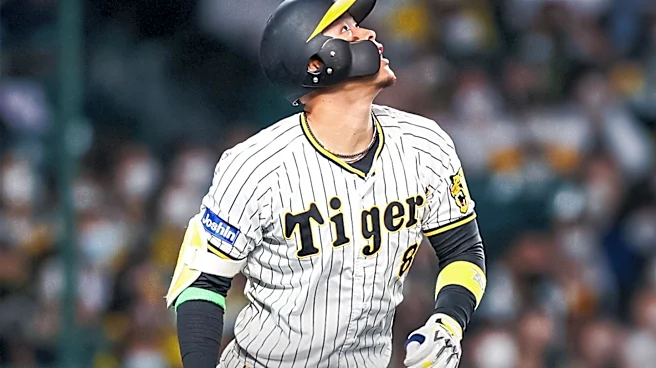
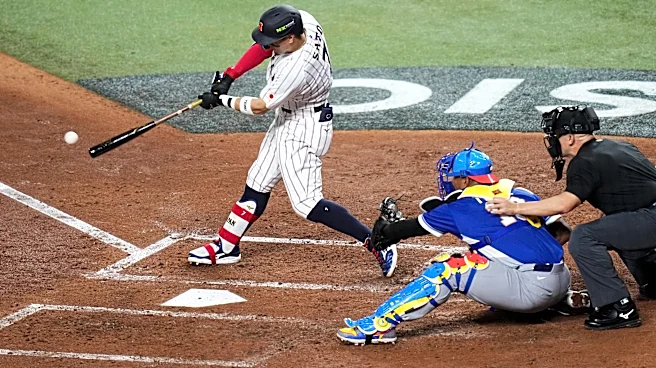
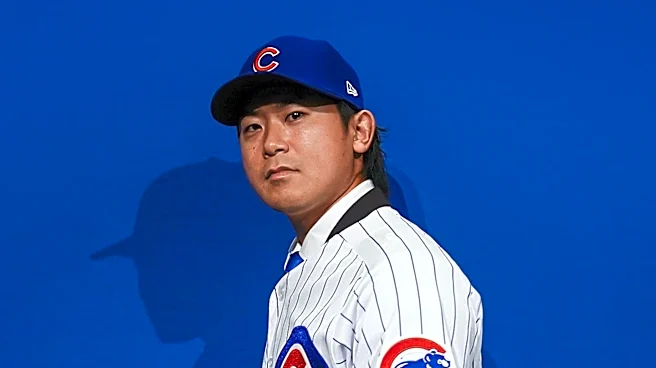
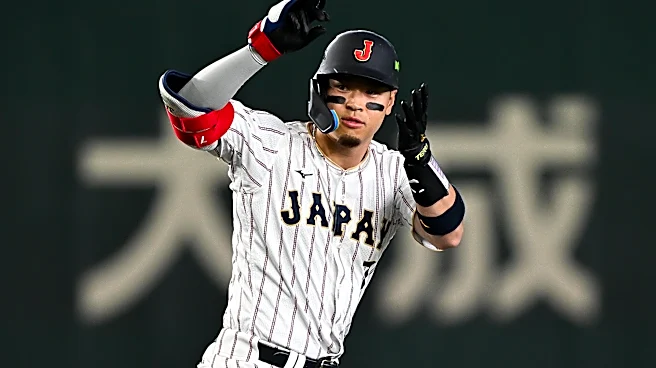
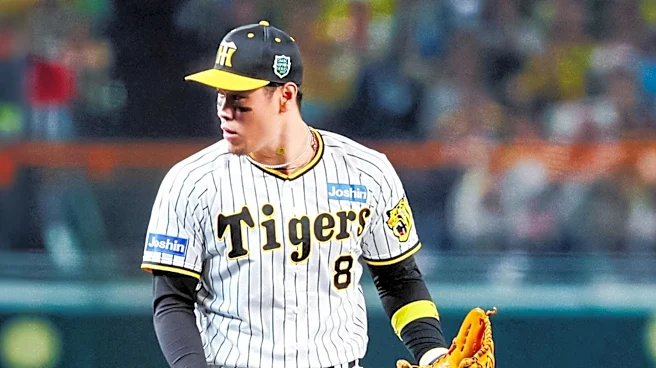
That’s actually a curious comment. Sato won the NPB Triple Crown last year, hitting .306/.383/.609 with 39 home runs and 106 RBI for the Hanshin Tigers. The 27-year-old slugger was posted by Hanshin this winter.
Now it’s not a surprise that the Cubs would want a left-handed slugger who doesn’t have a qualifying offer and draft picks attached to him. As things stand now, the Cubs are down a right fielder in Seiya Suzuki and a left fielder in Ian Happ. That’s also 50 home runs between the two of them. The Cubs need to replace that production somehow and I, at least, am skeptical that the current choices of Pedro Ramírez and Matt Shaw can do it.
But Sato is interesting in that he draws a lot of comparisons to the White Sox first baseman Munetaka Murakami. Sato is a slugger with tremendous power, exit velocity and hard-hit rate. One scout gave him “70-grade raw power” which is near the top of the scale. That’s generally translates 30 to 35 home runs a year.
But also like Murakami, there are some major concerns about Sato’s swing-and-miss issues. He struck out 164 times in 614 plate appearances last year and while that number isn’t bad for a major league slugger, Sato wasn’t facing major league pitching. Instead, he was facing much less velocity and pure “stuff” in NPB. They said the same thing about Murakami last winter and he proceeded to hit 35 home runs and a 130 OPS+, thanks to a ton of walks offsetting a low batting average. However, as many have noted, the league may have started to figure out Murakami over the course of the season. He had an .911 OPS in the first half. That dropped down to a more pedestrian .750 in the second half. Not bad, but not star numbers like in the first half.
However, it should be said that Sato seemed to have handled better velocity and left-handed pitching just fine in the World Baseball Classic. Small sample size there though.
That the Cubs would be interested in a Japanese slugger like Sato is not that hard to understand. After all, they signed Suzuki for five years and that was a success. But what’s interesting is that Sato is a third baseman and the Cubs clearly don’t need a third baseman. A lot of scouts think he could play first base in the majors, but the Cubs don’t need one of those either.
What the Cubs do need is a corner outfielder and Sato came up as one of those. But he hasn’t been an everyday outfielder in Japan since 2022 and he only played 18 games in the outfield for Hanshin last year. In that same article I linked to above, at least one scout thinks Sato could be “passable” in the outfield, which goes against the Cubs’ current emphasis on elite defense. Sure, if Sato hits 35 home runs with a .360 OBP, the Cubs or any team would be fine with “passable” in left field. But what if he doesn’t hit that much? Or what is he’s less than “passable” in the outfield?
There are two main reasons to sign Sato over trying to re-sign Suzuki, One is obvious—Sato will likely cost less in terms of money and years than Suzuki. But also, Sato is five years younger than Suzuki. It certainly makes a lot of sense to prioritize someone entering his peak years over someone who is growing older and getting farther away from his peak like Suzuki. Of course, that assumes that the two sluggers are roughly comparable in ability, and that’s a big assumption.
So should the Cubs pursue Teruaki Sato?
Thank you for stopping by tonight. You’ve managed to brighten our evening. Stay warm out there. Get home safely. Don’t forget any personal items. Recycle any cans and bottles. Tip your waitstaff. And join us again tomorrow evening for more BCB After Dark.