
Each November, college basketball teams take part in Feast Week. Programs travel to exotic locales, or Las Vegas ballrooms, to play in-season “tournaments.” The games feature nonconference matchups against
sides, and players get the chance to check out the beach between school work, practice, games, and team events. For Ohio State women’s basketball, they may soon be a thing of the past.
On July 1, 2025, the revenue-sharing era of NCAA sports began. In other words, schools can now pay players directly after years of sorting through NIL endorsements and supporting NIL collectives. There are many ways that revenue sharing will impact programs. Some good and some bad.
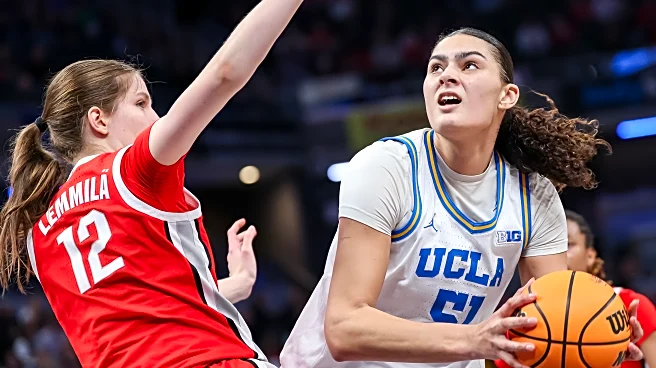
For Ohio State women’s basketball, revenue sharing is already evident in the team’s roster size. Normally, head coach Kevin McGuff goes with a full 15-player roster, with a few destined for a redshirt. This season, the Buckeyes have 11.
Holiday week trips, like this season’s Baha Mar Pink Flamingo Championship, are on the chopping block too.
On Thursday, Dec. 4, UConn WBB Weekly shared comments made by Huskies head coach Geno Auriemma about his program’s new view of travel.
“I don’t know how you can add a trip to some place in today’s environment. I don’t know how you can do that unless all your expenses are paid for and there’s money involved,” said Auriemma. “So because of the changing world that has happened to college basketball, I think it’s going to make these trips much more difficult in the future.”
Land-Grant Holy Land asked McGuff about what travel looks like for the Buckeyes in future seasons. After all, the last three seasons each featured a trip to a beach destination around Thanksgiving. In 2023 and 2025, it was in the Bahamas. Last year, the Buckeyes went to Daytona Beach, Florida.
“The Bahamas was a great experience. I’m happy our players got to do it. We had two good games. So the quality of opponents was great,” McGuff told Land-Grant Holy Land. “But he’s right. I mean, we’re in a different era where we’ve probably got to rethink it. These are discussions we’re having.”
That does not mean halting travel overall. Ohio State will still play Big Ten games on the road and schedule home-and-home games as the Buckeyes did with UConn for this season and the 2026-27 schedule. It’s the international trips that are nearing their end. Its future is already evident in the 2025-26 schedule.
While the Buckeyes did travel to the Baha Mar resort in the Bahamas this season, more tournaments will resemble Ohio State’s trip to Newark, New Jersey, for the Coretta Scott King Classic on Jan. 19, 2026. In the two-game showcase, McGuff’s side starts the doubleheader against the TCU Horned Frogs, followed by the Michigan Wolverines against the Vanderbilt Commodores.
“There are more kinds of one-off tournaments against really good opponents where the financials are a little better,” said McGuff. “So the whole thing is much cheaper than what we just did in the Bahamas.”
Programs pay the third parties to enter these tournaments. For example, the 2023 Baha Mar Pink Flamingo Championship cost $35,000 to enter. That included 15 rooms for the team and the cost of putting on the games. The 2024 Coast 2 Coast tournament, in Daytona Beach, cost Ohio State $55,000, rooms included.
What that fee does not include is the team’s travel needs, like a plane, fuel, pilot, food, or any other miscellaneous costs that come up along the way. In return, the Buckeyes get two nonconference games, and sometimes against ranked opponents like the Nov. 26 matchup against the then No. 21 West Virginia Mountaineers. The players get a trip, life experiences, and sometimes gifts from the tournament.
When it comes to the fans, there are not many who will be impacted by a potential end to these trips. Ohio State averaged 237 attendees per game against Belmont and West Virginia, with most of those likely family members of the teams.
To the people who go to the Schottenstein Center to watch the Scarlet and Gray, or pay for cable and a B1G+ streaming account to not miss a game, the tournaments are a detriment. For example, Ohio State’s trip to the Baha Mar Pink Flamingo Championship this year cost fans $27.99, before tax, to watch two games of basketball on FloSports.
Last season, Coast 2 Coast used BallerTV, a video hosting site used mainly for high school recruit highlight videos. The Buckeyes played on Thanksgiving morning, and for close to the same price as FloSports, fans could watch a game that featured no commentators, no score bug, a camera operator who sometimes forgot to move the camera when the action went from one side of the court to the othe,r and delayed audio to the video where fans heard cheers before any shot landed.
There have only been five months since revenue sharing began in college sports, and its impact will continue to grow. For now, it means smaller rosters and less international travel.
“Every year, we were doing something like that. I don’t know that that’ll be the case anymore,” said McGuff. “But we’ll probably do it every once in a while, but maybe not as consistently as we have been.”