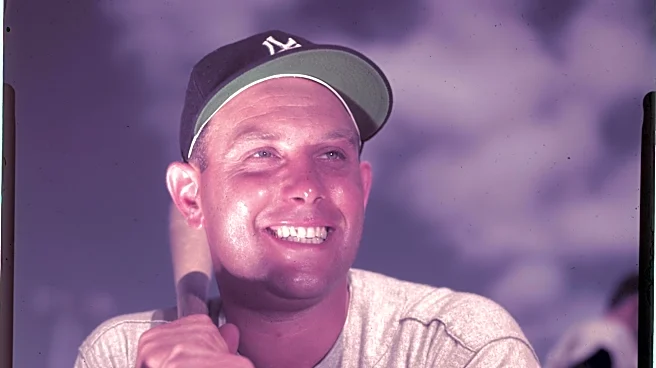

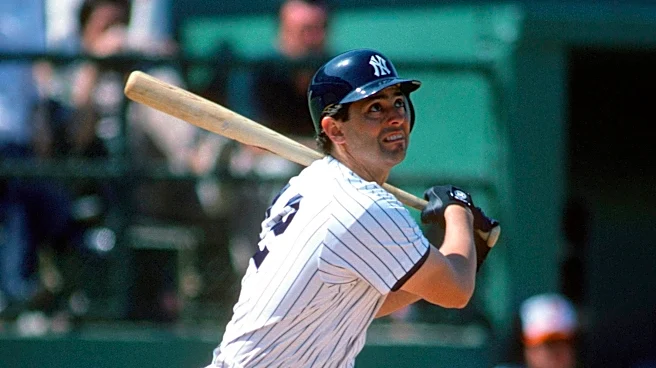
It’s hard to win five straight World Series rings and still wind up relatively forgotten by baseball history, but somehow, Gene Woodling managed to do that. Then again, he was teammates with Yogi Berra, Joe DiMaggio, Mickey Mantle, Phil Rizzuto, and Billy Martin, so perhaps it’s understandable that he didn’t end up with top billing in the history books.
Even so, in an era filled with larger-than-life characters, Woodling certainly held his own, and more than that, he was an integral part of the Casey
Stengel squad that won seven championships in a decade, including five straight.
Gene Woodling
Born: August 16, 1922 (Akron, Ohio)
Died: June 2, 2001
Yankees Tenure: 1949-1954
Born and raised in Akron, Ohio, Woodling was an exceptional athlete in his youth, playing football and basketball for Akron East High School and training to be a competitive swimmer. In his senior year of high school, his swim coach was tasked with managing the school baseball team, convinced Woodling to grab a glove, and well, the rest is history. Despite playing fewer than 20 games due to the cold Midwestern weather, Cleveland scout Bill Bradley saw more than enough, inking him to a deal ahead of the 1940 season.
Woodling steadily climbed the Cleveland farm system, making his Major League debut on September 23, 1943. He remained up for the final few days of the season, slashing .320/.346/.600 with a home run in eight games. Immediately after the season, however, another team came calling, one with a bit more priority than any Major League squad: the United States Navy. While his SABR biography says he enlisted, other sources quote Woodling saying, “I was drafted into the Navy in the fall of 1943.” Either way, Woodling was assigned to the Great Lakes Naval Training Station in Chicago, where he joined a team organized by Mickey Cochrane and which included Bob Feller, Johnny Mize, “Schoolboy” Rowe, and Billy Herman. He spent the next two years in the Pacific, touring with the Navy’s All-Star teams as part of the entertainment for the enlisted sailors and marines, before finishing his service by seeing combat in Saipon.
When he returned home in 1946, Woodling rejoined the Cleveland starting lineup. However, for the first time in his life, he struggled, batting just .188 in 61 games. The following year, he was traded to the Pirates, who then traded him to the San Francisco Seals of the Pacific Coast League after the 1947 season. While there, he adjusted his stance, hit 22 home runs, 22 doubles, and 13 triples. He caught the attention of Oakland manager Casey Stengel, and when Stengel was hired by the Yankees that winter, he orchestrated a deal to bring Woodling to the Bronx, sending four players and $100,000 to San Francisco for his rights.
Woodling spent six seasons in the Bronx, during which time he posted a .285/.388/.434 slash line as part of a “not quite a full platoon” with Hank Bauer: Woodling was in left and sat against tough southpaws, Bauer played right field and sat against some righties, and each played about 110-120 games over the course of the season; later in his life, Woodling would go on to say that the platoon was overblown by the media. At the end of the day, though, it wasn’t his offense that made him invaluable to the Yankees, but his glove. Left field in Yankee Stadium was even harder to handle than it is today, thanks to the angle of the sun and the fact that it was substantially deeper than it is now (and left-center field is already deeper than most people realize!), and Woodling handled it about as well as one could (even if he was remembered more for one misplay, one out away from sweeping Philadelphia in the 1950 World Series, than he was for his years of routine competence).
Across his six years in the Bronx, Woodling never piled up individual accolades, but he did build a reputation for coming up big when the moment needed it. He posted a career .318/.442/.529 slash in the postseason, homering in three consecutive World Series and becoming the first player to hit a pinch-hit triple in World Series history.
After they failed to make the World Series in 1954 despite winning 103 games (they finished second to 111-win Cleveland), the Yankees needed to remake their pitching staff, and they swung for the fences by putting together a seventeen-player trade with the Baltimore Orioles that remains the largest deal in baseball history, and second only to the Hershel Walker trade in sports history. Of the players headed south from NYC, Woodling was one of the two headliners, along with Gus Triandos.
Woodling struggled upon arrival in Baltimore, then was sent to his original team, Cleveland, at the trade deadline. He spent two years in Cleveland, then was traded back to Baltimore. His second go-round in Maryland went better than his first; in fact, during his three seasons there, he made his first and only All-Star appearance. He then wrapped up his career playing in the augural season for the Washington Senators in 1961 and the New York Mets in 1962, reuniting with Stengel, before ultimately retiring.
Following his baseball career, Woodling spent three seasons as the first base coach for the Baltimore Orioles, working under his former teammate, Hank Bauer. After that, he spent time as a scout for Cleveland and the Yankees, a job he was able to do between gigs as a sales rep and during down time while managing his family farm in Ohio. He suffered a stroke in 1997, then passed away in 2001 at the age of 78.

See more of the “Yankees Birthday of the Day” series here.