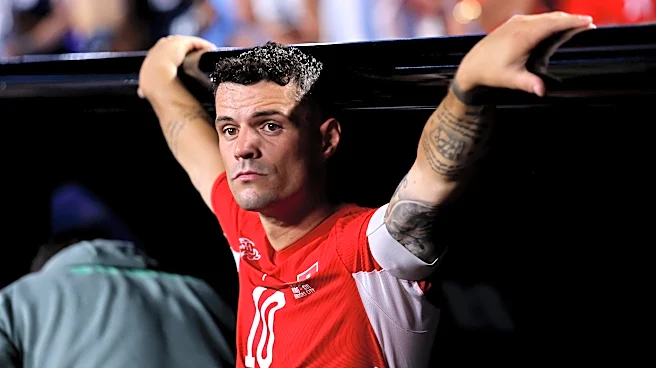


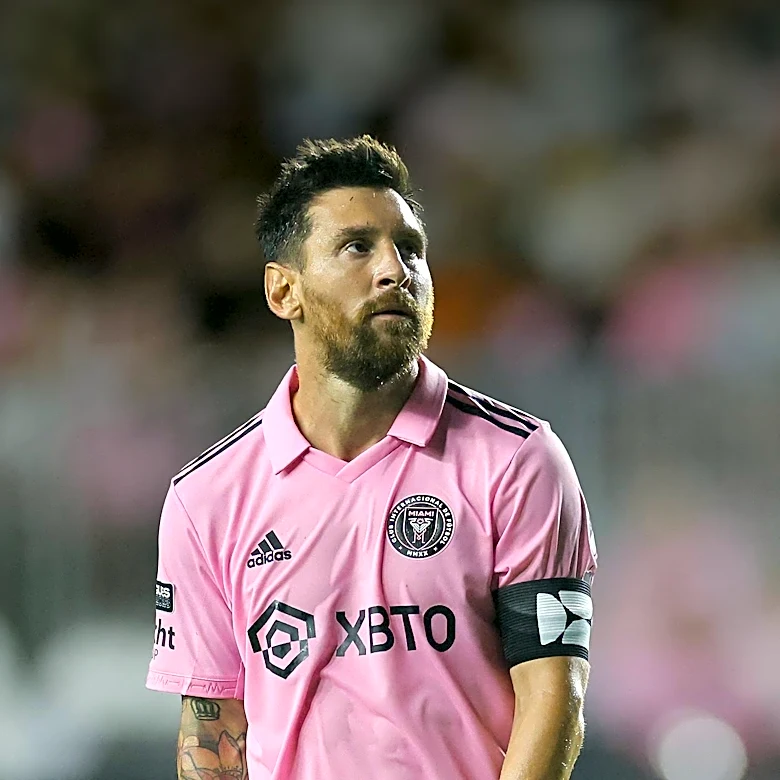

It was fitting that Granit Xhaka, our captain, remained the last of the record-breaking Sunderland contingent at this instalment of the World Cup.
With Chemsdine Talbi being the penultimate Sunderland representative to fall against France, Xhaka’s eternal campaign continued before he was eventually struck down by the inevitable Lionel Messi and his assortment of Argentine shithouses.
Seeing him exchange pennants with the man who is widely considered, in footballing quarters, to be the greatest of all time
was perhaps the perfect image to conclude what was a truly astonishing campaign for the club and its players.
It has been well publicised that only Premier League champions Arsenal had a larger delegation of personnel at this summer’s tournament in Canada, Mexico and the United States – testament not only to our recruitment team, but to the rate of our progression.
The club had only ever seen 14 of its players appear at a World Cup before this year, so to have 12 – an entire starting XI plus a substitute – was unprecedented.
Yet it isn’t the number of our players who were recognised by their countries with call-ups that left me and our fanbase gleaming with the pride and elation of a parent whose child has just learned to wipe their own arse. No, it’s the individual displays they produced on the world stage.
They weren’t just there to make up the numbers, perhaps a reflection of the mentality those same players displayed at the start of, and throughout, last season.

Sunderland were the talk of England on the final day of the campaign back in May, and we finished the World Cup one Leonardo Paredes vs Gavi fight shy of becoming the talk of the footballing world.
Every time a commentator said, “(Insert Sunderland player) starts for (insert country),” we were given a little shot of pride, smugly reminding anyone who would listen: “He plays for Sunderland, ya know.”
Whether it was Wilson Isidor’s goal-of-the-tournament-contending piledriver for a defiant Haiti, Brian Brobbey’s goals for the Netherlands, Noah Sadiki’s resplendent display against England, Nilson Angulo caressing the ball past 64-year-old Manuel Neuer from 30 yards, or Talbi and Xhaka reaching the quarter-finals, this has been a summer of Sunderland moments and Sunderland players.
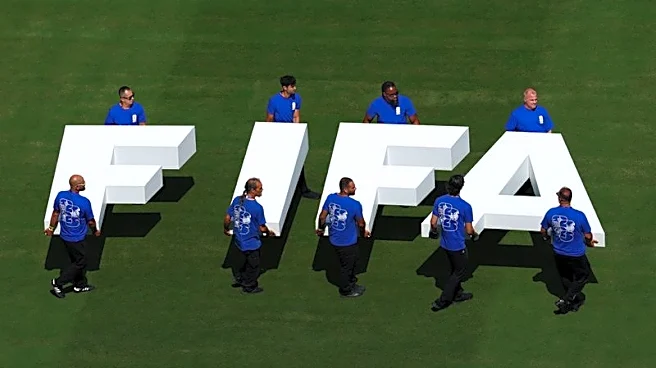
In a tournament of advert-induced hydration breaks, mega billboards aggressively force-feeding us peptides, Viagra and highly Americanised fast-food culture, Trump’s America and Infantino’s FIFA have unashamedly capitalised on capitalism – and to no one’s surprise.
Despite advertising slots reportedly costing $600,000, with that figure only increasing as the World Cup inched towards its showpiece event last Sunday, astute Sunderland haven’t paid a dime to be placed front and centre in the shop window.
I remember, albeit some years ago, the case of the vandalised white Range Rover with “Cheat” branded across the side in messy red graffiti. While it later transpired that it was merely a marketing ploy, rather than the work of some disgruntled victim of infidelity, the free publicity Jaguar Land Rover received had the nouveau riche queuing out of the showroom door.
Now, all that required some financial input, some finger lifting and some loss of equity in a brand-new car.

Kyril Louis-Dreyfus and Florent Ghisolfi hardly hired a two-sided LED advertising van and drove it up and down Route 66 showing highlights of our emerging stars, or an AI-generated image of Reinildo Mandava captured on a complicit housewife’s Ring doorbell. No, that wasn’t necessary.
Sunderland were that big white Range Rover dropped in the middle of North America – and what better place to put it than in this product-obsessed footballing soirée, where it could simply sell itself?
Instead, the pair probably watched on from the Mediterranean as the cohort of players they so ingeniously brought in last year sent both their own values and the club’s value skyrocketing.
Now, of course, it’s a seller’s market. We hold all the cards – at least, that’s what we’ve been led to believe.
And if the way we handled the Xhaka situation, as well as Jobe Bellingham, Jack Clarke and Eliezer Mayenda, is anything to go by, then it’s safe to assume that, as a club, we take an uncompromising approach at the negotiating table.
I’m sure I speak for many when I say that, after the season we’ve just had, auctioning players off to the highest bidder isn’t how I envisaged preparations for the club’s first season competing in Europe for more than 50 years.
But, should it follow that format, we not only have the recruitment strategy to replace our coveted stars, but also the pull of European football, Régis Le Bris and our ever-growing stature to attract elite talent.
Not only did the World Cup act as a vehicle – a red and white Range Rover – to showcase our abundance of talent, but it also provided a platform for Sunderland to exhibit itself to prospective players as a club looking towards the upper reaches of the game and one that is becoming an increasingly attractive destination.
Paradoxically, this was a World Cup to forget for many reasons unrelated to football, but one to remember for Sunderland and everyone associated with the club.