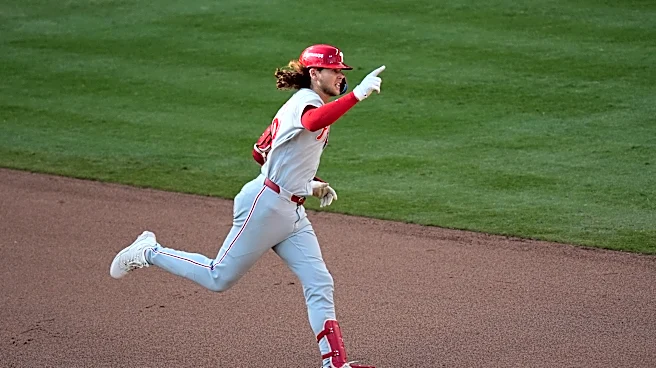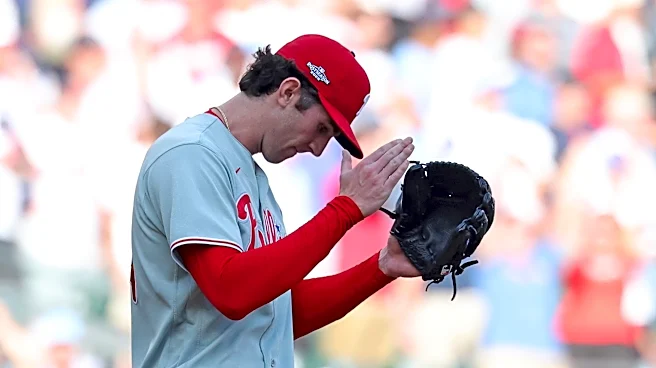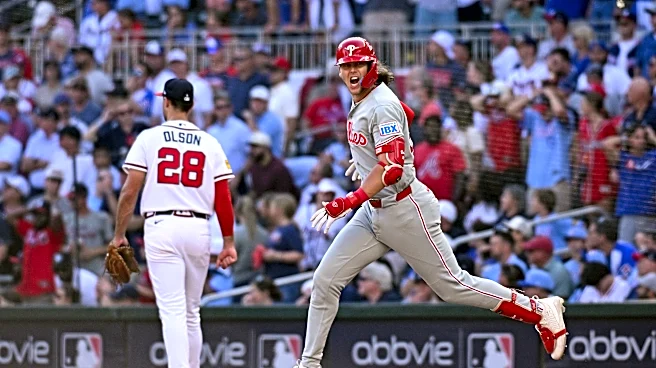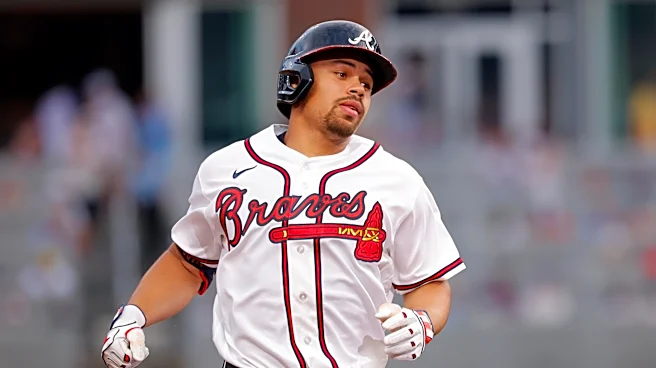


Even the players seemed to realize it this time.
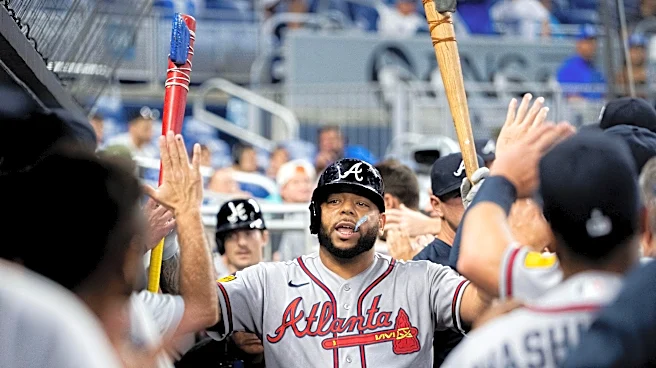
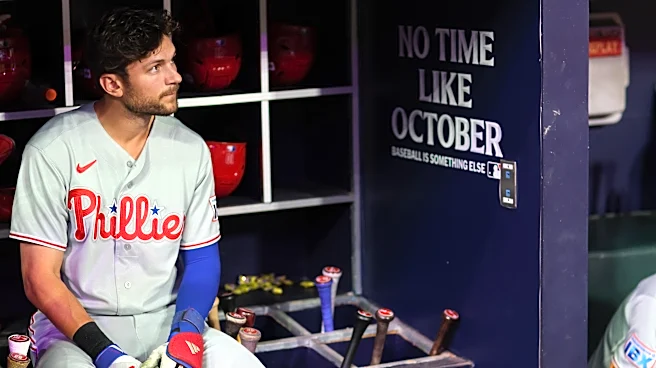
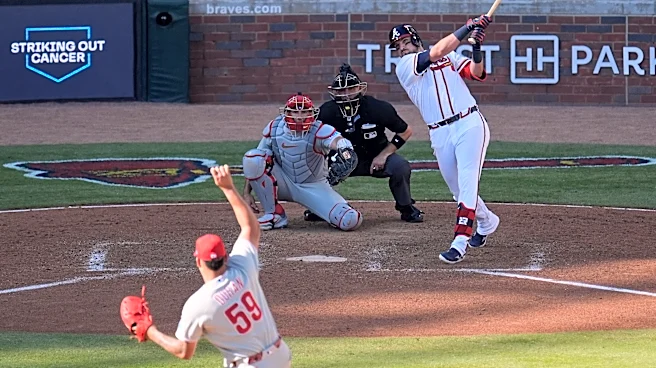
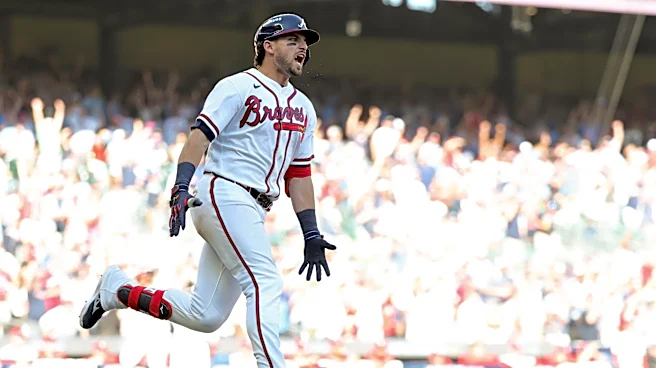
Following their 6-2 loss in Game 3 of the Wild Card series in Atlanta last night, Bryce Harper voiced a reality that he, and his teammates, were trying to avoid with one, last, deep playoff run (quotes via MLB.com).
“I’d imagine this team is going to look a lot different next year,” Harper said. “The guys that are leaving this clubhouse. We’ll see.”
Alec Bohm, Edmundo Sosa and Jose Alvarado are key free agents who are likely to leave. Others could, and should,
leave in trades.
It will look different.
One could almost understand why Dave Dombrowski decided to bring back most of a roster that won 95 games, their second straight NL East title, and fell in a very close series to the eventual World Series champions. Many didn’t agree, but there was an argument to be made it was the correct decision.
That argument cannot be made any longer.
The 2026 Phillies got another year older and the team is going backwards. After running out of gas in the 2022 World Series and choking away a return trip by losing Games 6 and 7 of the 2023 NLCS at home, this group failed to get past the NLDS in ‘24 and ‘25, and now lost to a superior Atlanta Braves team in this year’s wild card series.
The reason fans are feeling less anger and more resignation following their three-game loss to the Braves is the realization that the roster simply wasn’t good enough.
They won just 88 games this year, a 7-game drop-off, their +15 run differential, only 7th-best in the National League, meant their expected won-loss record was 83-79.
They were lucky to win even 88.
They were 19th in runs scored, 22nd in OPS and dead last in OPS+. Their team-wide Wins Above Replacement (Fangraphs) among their non-pitchers was just 12.0, 26th in MLB. Only the A’s, Reds, Angels and Rockies got less from their non-pitchers. Those teams finished with 64, 75, 62 and 58 wins, respectively. The two teams ahead of them, the Giants and Mets, won 65 and 74 games. The playoff team closest to the Phillies in this metric were the Braves, whose 17.5 non-pitcher fWAR of 17.5 was 21st. They played terrible defense all season long and lacked athleticism on the bases. They also finished tied for 16th in home runs, with only two players (Schwarber and Harper) finishing with 20 or more. No team hit fewer homers in September.
But the bullpen was also a disaster. Dave Dombrowski tried to do things, like signing Brad Keller to a free agent contract as a set-up man, and added Caleb Killian and Brooks Raley at the trade deadline. Two of those guys got hurt and one was an abject failure. Returning relievers Orion Kerkering and Alvarado became utterly unusable by year’s end, and Jonathan Bowlan ran out of gas. Their 4.43 ERA ranked 21st in baseball, consistently a bottom-10 unit all season.
Still, the Phillies tried to paper their way through October masking all these deficiencies and, had they not frittered away the final week of the season, might have pulled off at least a first round upset in Atlanta.
They would not have needed Zack Wheeler to start Game 162 if the lineup hadn’t gone ice cold. Had Wheeler been able to start Game 1, perhaps Jesus Luzardo could have been employed as a reliever, and Jhoan Duran wouldn’t have been asked to come up with a 50-pitch, two-inning hold/save. Perhaps that Austin Riley homer never happens and the Phils sweep the Braves in two games.
Perhaps Aaron Nola isn’t asked to pitch on two days rest in Game 161. No one can be sure how that affected his performance in Game 3 last night, but it couldn’t have helped. And the Luzardo injury itself came at the worst possible time, forcing Don Mattingly into the Nola decision on the final Saturday of the season, jamming up the roster for the wild card round. Luis Arraez’ injury in the final week also didn’t help, although he was not very impactful during his two months with the Phillies anyway.
Dombrowski cannot fool himself into thinking his team is better than it is. He has a remarkably good starting rotation, and that is a great place to begin to rebuild a roster. The floor is already pretty high when you have Wheeler/Luzardo/Cristopher Sanchez/Andrew Painter as your 1-4. But when you’re sporting a bottom-third bullpen and the 5th-worst group of position players in the entire sport, the numbers on the paper match the psychological need to shake things up.
The players realize it, too. The team needs to be different, and it almost doesn’t matter how it happens at this point.
Dave Dombrowski is not a creative general manager. He doesn’t pull rabbits out of his hat. He’s also not great at building farm systems. Both those areas of weakness have shown up as he’s tried to cobble this roster together. This past year, almost every major move he made failed.
He failed to add a new bat to the lineup, with Bo Bichette signing with New York. He re-signed J.T. Realmuto to a three-year, $45 million contract, then watched as he turned into one of the worst hitting catchers in baseball. The Keller signing was a disaster, although not entirely his fault, and none of his trade deadline acquisitions appeared in the wild card round at all.
So what does he do? What can he do?
Everything should be on the table. Kyle Schwarber, Bryce Harper and Trea Turner all cannot be traded without their permission, and it’s unlikely they would give it. But, Dombrowski should be open to it if an offer comes through and the player is intrigued enough to consider moving on. Should they offer one of their big-time starting pitchers for multiple pieces at multiple positions that might help? Bryson Stott may be the best overall position player on the team, but is inconsistent at the plate and has a career .181 batting average and .515 OPS in 142 career post-season plate appearances. He may be the guy most teams ask about in trade conversations.
Brandon Marsh should be traded. Turner should be moved to center field if he can’t be moved (and he can’t). Justin Crawford looks like a solid bench outfielder, but not a big league, everyday starter. The rest of the outfield is an utter mess.
The MLB lockout that will begin on December 1 will delay all these decisions. It’s likely Alex Cora becomes the new manager before that happens (likely right after the World Series), but in terms of player changes, we’re all going to have to wait. And when the season does officially begin, it’ll be a sprint to get things done, with little time for creativity.
The Phillies will be hard-pressed to spend their way to a solvent roster, unless they move on from players who have proven that, together, they are not good enough to get it done.
The psychology of so many playoff defeats together necessitates drastic change. This was actually true last off-season, but Dombrowski didn’t want to hear it.
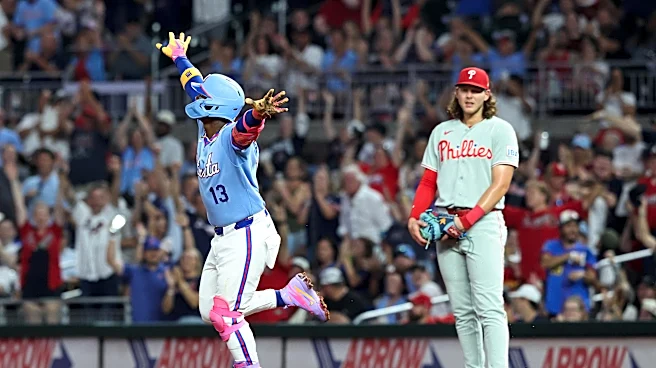
At least these Phillies gave us one last thrill in Game 2. And at least they made their ending quick and relatively painless with a non-competitive effort in Game 3. No hand-wringing, no what-ifs, just the hard, cold reality that they simply weren’t good enough.
The “fake it until you make it” masquerade simply couldn’t hold up any longer.
In recorded MLB history, no team has ever followed a streak of postseason performances like this, with the same roster largely intact, and gone on to win a World Series afterwards.
So, changes are coming.
For real, this time.