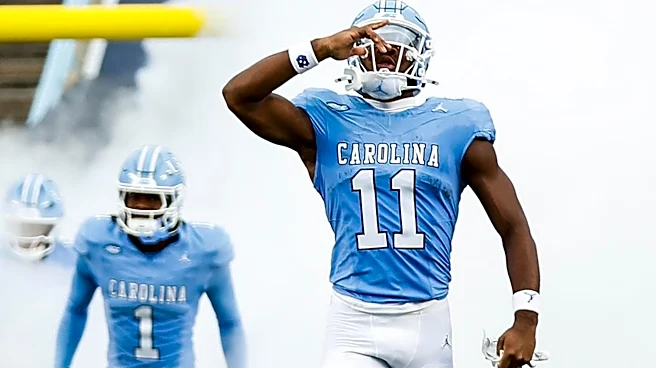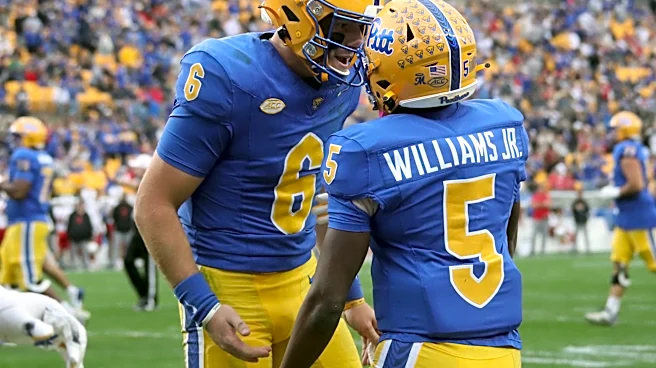


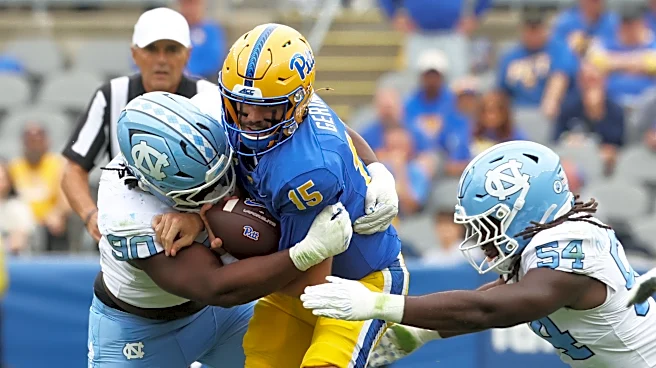
North Carolina went to Pittsburgh to face a Top 25 team in the 5-0 Pittsburgh Panthers. Unfortunately for Pitt, their starting quarterback, Mason Heintschel, was lost for the year with an ACL injury against Virginia Tech last week. Pitt was also without two of their top four tacklers. Meanwhile, UNC was missing Jordan Hall (starting right tackle), Jaylen Harvey (a starting edge), and Isaiah Johnson (a starting DT). What three things do we take away from this game?
Bad QB play isn’t going to get it done against even a hobbled UNC defense
What do the following QBs have in common?
- Grayson Loftis (QBR 15.9, 135th nationally in 2025)
- Elijah Brown (QBR 41.4, 113th nationally in 2025)
- Joe Filardi (QBR 5.6, unranked nationally in 2025)
- Jaden Craig (QBR 51, 86th nationally in 2026)
- Holden Geriner (QBR 43.2, which would rank 96th nationally in 2026 over a larger sample)
These are the opposing QBs in UNC’s five FBS wins over the past two seasons. Those wins came against opponents with extremely limited QB play at best, atrocious at worse. UNC won these five games by an average score of 21-11.
These are games a team should win, and credit to Belichick’s program for winning them. However, UNC isn’t paying $10 million for a head coach plus an operating budget north of $40 million a year to scrape by teams with objectively awful QB performance. Pitt’s offense ranked 44th nationally in F+ (an opponent-adjusted efficiency metric) even with Mason Heintschel at QB. The Panther offense seems likely to take a tumble similar to Syracuse’s last season after the loss of Steve Angeli.
Yes, technically UNC beat a ranked opponent on the road. Pitt’s not a top 25 team, and they likely won’t even be in the “others receiving votes” territory for the rest of the season. If Bill Belichick wants a signature victory this season, it needs to come against a team with both a competent QB and a winning record. That opportunity awaits next week at Duke, although the Blue Devils lost at 1-3 Georgia Tech yesterday.
The defense took a beating and kept on ticking
North Carolina’s defense entered the game missing some key starters. Key secondary players Kaleb Cost and Tre Miller exited the game with injuries. Pitt ran 47 plays to UNC’s 16 in the first half, trying to wear down the defense. Everything was going against them.
Instead, the defense in the second half shut down Pitt with the exception of one drive. For the half, UNC held Pitt to only seven first downs and 156 yards, while forcing two turnovers. Pitt for the game ran a total of 85 plays against UNC’s defense, yet the defense never broke, even short-handed. Most impressively, UNC’s defense turned the game by thwarting all four of Pitt’s fourth down attempts in the second half.
The defense holding the rope was the biggest reason UNC won the game, and much of that comes down to pure determination. It also reverses a trend from the prior two games, in which Clemson and Notre Dame’s offenses dominated the Tar Heels after halftime. A shout-out to Derek McDonald and Xavier Lewis, who notched 12 tackles each, plus all the substitutes who stepped up when called upon. UNC played a total of 24 players on defense, reaching deep into the depth chart to grind out a win against the Panthers.
The offense needs to find some consistency and hold onto the ball, or this defense is going to end up a MASH unit, if it’s not already there.
Part of that falls on the defense, which by design concedes a lot of short gains awaiting a third and long to try to get off the field. UNC’s defense bends deliberately to limit explosive plays, preferring to surrender 30 or 40 yards nine plays at a time rather than one. That means it’s going to face a higher play count and opponent time of possession more often than not, no matter how efficient the offense might be.
That said, UNC’s defense over its first four games has been on the field 82 plays more than the offense so far this season, which is more than an extra game’s worth of snaps. UNC held a seven minute time of possession advantage against Clemson, but against TCU (6 minutes), ETSU (8 minutes), Notre Dame (14 minutes), and Pitt (13 minutes), the opposing offense has been on the field around 41 minutes more than UNC’s.
Not counting drives that ended in scores or closed out a half, UNC against Pitt had seven drives of five plays or fewer. UNC had six such drives against Clemson, five against TCU, and even a couple against ETSU. UNC’s three turnovers in this game bring the season total to 9, which is more than two per game against P4 competition. The offense remains somewhat boom-or-bust, and that exacerbates exposing defensive depth. The more snaps the defense faces, the more injuries will force younger and less experienced players into the mix. With a much tougher set of opponent offenses waiting in the wings, the UNC offense needs to do a better job of staying on the field.