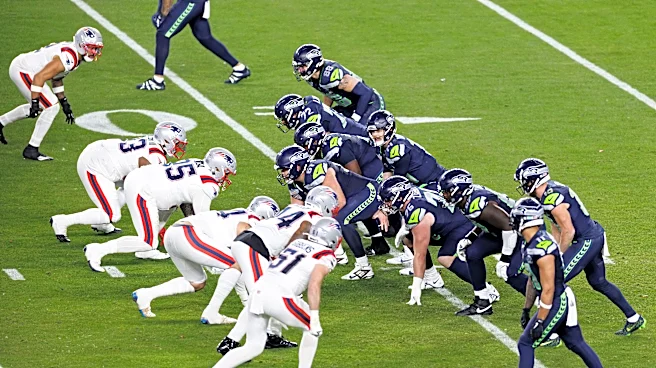





For years, one of the biggest questions surrounding the Seattle Seahawks has been the offensive line. Coaching staffs have changed, quarterbacks have changed, offfensive coordinators have come and gone. Seattle has invested heavily at wide receiver, running back and tight end, yet the same question has followed every season:
Can the offensive line finally be good enough?
Heading into 2026, there is more reason for optimism than there has been in quite some time.
Unlike previous years, Seattle isn’t
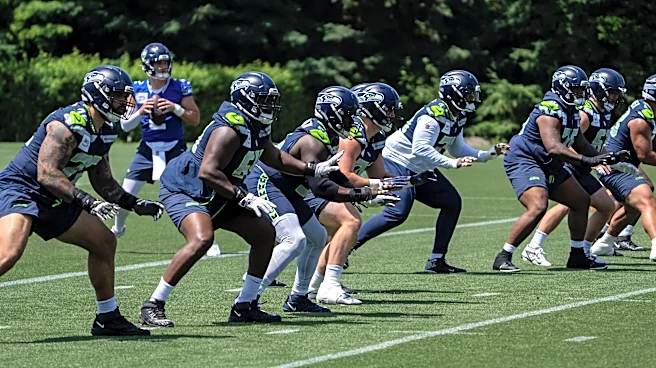
asking five new starters to learn together. All starters from last season are under contract and will return this year, a rarity for the Seahawks in recent decades. The organization has prioritized continuity, giving a young core another offseason to develop within Brian Fleury’s new system while adding depth instead of completely rebuilding the unit. Offensive line play has always been about chemistry as much as talent, and simply keeping the same group on the field could produce meaningful improvement.
That growth would affect every part of the offense.
A cleaner pocket doesn’t just reduce sacks, it allows the quarterback to reach the later stages of his progression, gives deeper route concepts time to develop and forces defenses to defend the entire field rather than sitting on quick-game concepts. Likewise, more consistent run blocking creates manageable down-and-distance situations and makes Seattle’s play-action game significantly more dangerous.
That’s especially important given the identity this coaching staff wants to establish.
Mike Macdonald has built one of the NFL’s most physical defenses, but complementary football remains at the center of his philosophy. Long, efficient offensive scoring drives keep the defense fresh, improve field position and allow Seattle to control the tempo instead of constantly playing catch-up.
The schedule won’t make life easy.
The NFC West, which just added Myles Garrett this offseason to the Los Angeles Rams, continues to feature disruptive defensive fronts capable of taking over games, meaning Seattle’s offensive line will be tested almost immediately. If the group struggles the way it has in recent years, the offense could once again become reliant on explosive individual plays. If it takes even a modest step forward, however, the entire offense becomes more efficient and far more difficult to defend.
The Seahawks don’t necessarily need an elite offensive line to contend. They simply need one that consistently avoids becoming the reason drives stall. Considering the talent now surrounding the position group, that may be enough to unlock an offense capable of taking a significant step forward in 2026.
Ultimately, Seattle’s ceiling may not be determined by its skill-position talent, of which they boast the NFL’s reigning Offensive Player of the Year in Jaxon Smith-Njigba. It may come down to whether, after years of searching for answers, the offensive line can finally become a strength instead of a weekly concern.