





While your typical football club can’t match the sheer depth of an NFL roster, where nearly 50 players suit up every Sunday, among the two dozen or so men lucky enough to don the giallo e rosso each season, there is tremendous variety: in roles, attitudes, skills, and potential. From virtuosos to role players and those we simply forgot about, Roma has employed every type of player under the sun.
And as foolhardy as it may have been, we’ve intermittently attempted to weigh and measure Roma’s roster,
separating the core components from the redundancies. We wanted to make it a part of our annual tentpole features, but never managed to get the timing quite right—we either had to do it before the summer transfer season, which would make the rankings potentially irrelevant as players were bought and sold, or at the start of the season before they had a chance to prove themselves. (Just for kicks, here is the most recent version from 2023. In retrospect, I was a bit too high on Ola Solbakken.)
Since the club is currently divided on whether to completely rebuild or simply add a few new pieces and chug along, it would be nearly impossible to rank and file Roma’s roster. So, instead of banging our heads against that wall, we’ll look at the two rumored plans: The Full Friedkin Tear-Down and Gasperini’s Gradual Rebuild, to assess which is more realistic. These strategies aren’t entirely opposite, but since they reportedly pit ownership, the board, and the manager—leaving Ricky Massara caught in the middle—Roma is a potential powder keg.
Option 1: The Full Friedkin Teardown
While the Friedkins prefer to move in silence (like real Gs), Roma’s embarrassing loss to Inter Milan on Easter Sunday seemed to stir something within the taciturn Texans. Losing to Inter Milan on the road is nothing new for Roma, but failing as they did—so completely and so feebly—didn’t reveal any new issues for the club. It did, however, expose a possible divide among the club’s power brokers over how to pull Roma out of this morass.
In the immediate aftermath of that defeat, rumors of a revolution began to spread. Knee-jerk reactions suggested the Friedkins aimed to sign up to 12 new players this summer, casting aside unwanted veterans and unproven young talents. While such extensive changes—especially in signings—are unlikely, the club might still sell several key players, let multiple loans end, and carry out other mid-tier sales and transfers, leading to notable shifts at Trigoria.
But what could that actually look like when the rubber meets the road?
You Say Goodbye…
Right away, we can assume that Roma will not retain players like Evan Ferguson, Kostas Tsimikas, and Bryan Zaragoza, who failed to make an impact this season. Similarly, the club is likely to allow veterans such as Paulo Dybala, Stephan El Shaarawy, Zeki Çelik, and Lorenzo Pellegrini to depart once their contracts end in June. There are rumors that Pellegrini might return at a lower salary, but if the team is undergoing a full rebuild, re-signing him seems unlikely, especially since he will turn 30 in June.
Artem Dobvyk is a different story. The high-priced striker is under contract with the club for three more seasons, and given his recent injury woes, he’d be a tough sell to any club. In that light, Roma may have to make the best of a bad situation and create a suitable role for the hulking striker. He’s not a typical Gasperini striker, sure, but he can score goals, so he has some value.
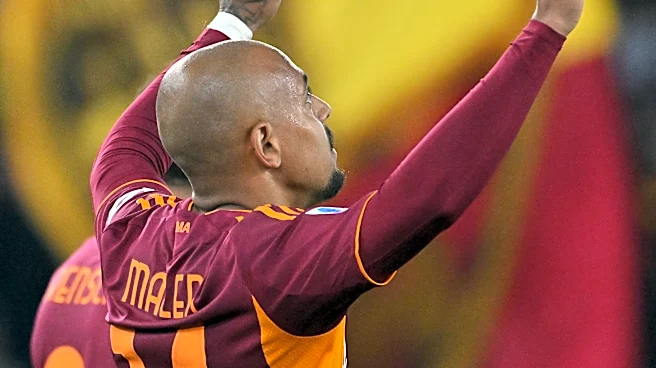
In this teardown scenario, we assume that Tommaso Baldanzi, Anass Salah-Eddine, Eldor Shomurodov, Saul Abdulhamid, and Marash Kumbuall will have their options exercised by their new clubs, so they won’t return to Roma next fall. Meanwhile, the club keeps loanees like Donyell Malen, Daniele Ghilardi, and Lorenzo Venturino, while fringe players such as Buba Sangare, Luigi Cherubini, and Riccardo Pagano return to fill vacant roster spots.
We’re already up to seven potential first-team vacancies, but we still have to deal with the 800-pound gorillas in the room: Gianluca Mancini and Bryan Cristante. With their current contracts set to expire in June 2027, the club has reportedly been working on extensions for both players, much to the dismay of many Roma fans. However, the flames of contract renewal have been doused by the club’s recent struggles, suggesting that the Friedkins have come to grips with Cristante and Mancini’s limitations and that their days at the club are numbered.
However, that still puts the club at loggerheads with two of its most tenured players: Can they arrange transfers for Cristante and Mancini this summer, or will this potentially awkward marriage continue for another season before they reach free agency?
Since we’re discussing a revolution, change is inevitable. Cristante and Mancini will need to move on; the only question is where. Are they at a stage in their careers where they’d accept a larger role at smaller clubs like Genoa, Torino, or Udinese, or is there another plan? It might sound crazy, but we can’t rule out the possibility that they could join a bigger club looking for experienced role players—perhaps Juventus or one of the Milan teams.
Either way, we’ve just shed nine first-team and/or top rotation players from the roster in this fictional teardown, which raises an important question: How will Roma replace them?
Before we answer that, we need to rip off the Band-Aid. This revolution will come at a cost; Roma will have to part with some of their prized assets to fund this adventure, which means one (or possibly two) of Evan Ndicka, Manu Koné, Niccolo Pisilli, Wesley, or Mile Svilar will need to be sold.
The next question we have to answer is simply, who can Roma survive without? With young defenders like Ghilardi and Jan Ziolkowski waiting in the wings, Ndicka seems like the safest choice. After that, you’re forced to pick your poison. Pisilli and Wesley are both U-23 players and haven’t reached their peak form (or price, for that matter), so it wouldn’t be in Roma’s best interest to sell them this summer.
That leaves us with Mile Svilar and Manu Koné, one of the best keepers in the world, and a 24-year-old wrecking-ball midfielder. Yikes.
It’s a difficult decision, but Koné is attracting more immediate interest from Inter Milan, making him the “preferred” option, even though selling him to a rival is agonizing. However, if Roma manages this effectively, they could earn €80 or €90 million from these two sales, potentially more if they hold firm with Inter, Koné’s most ardent suitor.
Okay, now that the hard part is over, let’s search for their replacements.
And I Say Hello
Economics, accounting, and FFP aren’t my strong suit, so these proposed transfers are based on basic transfer math and Roma’s historical spending thresholds. We’ll assume Gasperini’s tactics won’t change and that Ghilardi, Ziolkowski, and Mario Hermoso will be his top three defenders, so we’ll focus our efforts on the attack and depth at the wingback spots.
With that in mind, let’s get to the fun part—the new faces that will lead this revolution.
Midfielders
Let’s start with a big ticket purchase, one relatively low on experience but loaded with potential: Eintracht Frankfurt’s Can Uzun. Limited to 811 minutes this season thanks to a series of muscular injuries (See? He’s perfect for Roma!), the 20-year-old Turkish midfielder has scored six goals and provided three assists, drawing rave reviews from across the Bundesliga, leading to a €40 to €45M Transfermarkt valuation.
(Depending on what you read, he may have a significantly higher release clause, but we’ll roll with this figure.)
In this scenario, Roma gets in on the ground floor, offering Uzun a full-time role and the keys to Gasperini’s attack, before flipping him to the Premiership two years later. Win-win. To ease Uzun’s transition, we’ll sign Julian Brandt on a free transfer to provide depth when the fixture list gets packed in the late fall/early winter.
We’ll also assume that the Uzun deal is payable in installments or includes a sell-on clause, making €45 million more palatable. In that vein, we can leave a little meat on the bone in a potential deal for Koné, so we’re calling up our friends at Inter Milan and strong-arming them into a Davide Frattesi plus €30 million for the French midfielder. According to Transfermarkt, Koné is worth twice as much as Frattesi, so Roma could conceivably get as much as €35 to €40 million on top of Frattesi, depending on how desperate Inter is this summer.
With Uzun acting as the central creator or second striker, Brandt as a roaming playmaker, and Frattesi and Pisilli providing energy and vertical threats, our Cristante replacement must be defensively reliable, disciplined, and mobile. He should win duels, facilitate and defend against transitions, and be capable of operating in a high press, among many other duties.
Given our expenditure on Uzun, we can’t overspend on this player. Ideally, we’d prefer someone with experience, so I’ll throw two names at you: RB Leipzig’s Xaver Schlager and Tottenham’s João Palhinha. Schlager, a 28-year-old Austrian midfielder, isn’t as physically imposing as Cristante, but he’s a typical “hunter” who thrives under Gasperini, jumping into the opponent’s space to disrupt play, win the ball, and then quickly progress it vertically up the pitch.
Palihnha can fill that role as well, but he’s under contract with Bayern Munich for two more years, while Schlager is an impending free agent and the path of least resistance.
Forwards/Wingers
The addition of Donyell Malen this spring changed the game for Roma, giving the club a forward ideally suited to Gasperini’s tactics and removing the position from their shopping list. However, the matter of replacing Dybala remains. Fortunately, there is an in-house option: Matías Soulé. If he can take the next step in his development, Roma won’t have to replace Dybala in the strictest sense. In fact, one could argue that, since Dybala didn’t have the pace or intensity Gasperini requires of his wide forwards, he was more of a luxury anyway.
However, Soulé, who can function similarly to Josip Iličić under Gasperini at Atalanta, fits the profile of an explosive dribbler and one-on-one specialist. He is capable of drawing defenders wide, cutting inside to shoot or pass, and tracking back to press the opposition. In this context, and with no immediate opening in attack, we can afford to replace La Joya with a super-utility player who can fill three or four attacking roles.
Our focus is on FC Midtjylland’s Darío Osorio, an inverted right-winger flexible enough to operate across the front and at wing-back. While he may not match Dybala’s innate talent, Osorio’s high energy level makes him a valuable addition to the revamped attack, providing an extra option behind players like Soulé, Uzun, Schlager, and even Wesley or Angeliño.
Defenders
If Roma can resist the temptation to sell Wesley, they will have a stable core of three wing-backs, with Angeliño starting on the left and Devyne Rensch backing up both positions. However, the club might seek a better complementary player (and possible upgrade) for Angeliño on the left. At minimum, they need a capable defender to cover the back three and contribute to set pieces—ideally at a low cost.
Enter Club Brugge’s Bjørn Meijer. The 23-year-old Dutch defender is an ideal foil for Gasperini to deploy opposite Wesley. At 6’3”, Meijer has the requisite height to be a back-post weapon in attack and an imposing figure in defense, where he commands the air, winning nearly 70% of his aerial duels. He’s also a proficient crosser, hitting 36% of his crosses this season, an incredible figure that ranks in the 97th percentile among left-backs in Europe.
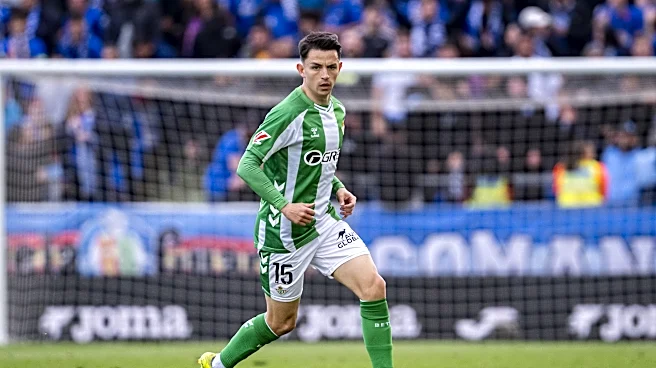
In central defense, we’re looking for a young player to join the rotation and eventually replace Mario Hermoso. If he’s left-footed, all the better. Real Betis’s Valentín Gómez fits the bill as a left-footed, ball-playing defender well-suited to Gasperini’s aggressive style. This season, Gómez has successfully completed 92% of his dribbling attempts and has made over 160 defensive actions. Since he only joined Betis last summer, Roma may have to up the ante to acquire him, but he could be a worthwhile €20 million investment.
The Teardown Team
While this reimagining of Roma may lack flashy signings, we’ve built a team better suited to Gasperini’s traditional style of play, using the proceeds from the sales of Evan Ndicka and Manu Koné to finance this overhaul. It might not be the total revolution the Friedkins envisioned, but we’ve replaced a large part of the starting lineup and key reserves, resulting in this potential first team lineup:

Coming off the bench, the primary options include Lorenzo Venturino, Robinio Vaz, Dario Osario, and Artem Dobvyk in attack; Neil El Aynaoui and Niccolo Pisilli in midfield (though he can replace Frattesi if you prefer); and Devyne Rensch, Angeliño, and Valentín Gómez in defense. Adding players like Buba Sangare, Antonio Arena, and a few other new bench members creates a balanced mix of fresh faces, younger players taking on bigger roles, and a couple of veterans from last year’s XI.
This might not be a Scudetto-winning team, but it is a Gasperini team, better aligned with the physical and tactical requirements of his style. (And, if we really want to get crazy, maybe we lure Mohammed Salah back to the capital, capping off his European career with the Giallorossi.)
The economic aspects of these deals are not as simple as they seem, but the core idea—an energetic, vertically oriented team that overwhelms opponents with intense ball pressure and quick transitions—is what Roma and Gasperini need to succeed.
But it’s not the only option…
Option 2: Gasperini’s Gradual Rebuild
For the sake of brevity, we won’t delve quite as deeply into this option. Still, by focusing on only a few key signings and retaining the core of the squad, Gasperini’s selective approach could achieve the same ends in fewer steps. It may not offer the same long-term upside, but it’s less volatile and could be the more feasible path forward.
After all, as Gasperini recently lamented:
“The goal is to improve the team from time to time. To me, it seems that if you look at Roma on Transfermarkt, we’ve brought in 30 players and only four or five play. I don’t blame anyone, but maybe there’s a need for different targets.
“I’ve seen great players and teams at Roma, the fans recognise quality players. I’m more inclined to that sort of idea (quality over quantity) rather than bringing in 30 players. Not everyone might share the same opinion.”
Under this plan, Roma retains and relies on Cristante, Mancini, and Lorenzo Pellegrini in some capacity next season, aiming to improve the squad in three key areas: attacking midfield, left wing-back, and left wing. In other words, Gasperini wants upgrades to replace Pellegrini and Angeliño in the starting lineup and a Jadon Sancho-type to complement Soulé and Malen in attack. As with the preceding plan, we’ll have to sacrifice Koné and Ndicka to fund this smaller transfer campaign.
While the names we suggested above (attackers Can Uzun and Dario Osorio, and left-back Bjørn Meijer) would fit this bill, we’ll mix things up a bit and suggest different options. Besides, if Roma narrows their transfer scope, they can theoretically spend more on these three targets.
Kerim Alajbegovic (LW)
For our Dybala replacement, we’ll turn to another member of the Red Bull Football family and target Salzburg’s Serbian winger. Like La Joya, Alajbegovic, 18, is a left-footed winger who can play centrally and create and finish chances with aplomb. In his first season in a senior league, Alajbegovic has scored nine goals and three assists across all competitions and ranks in the 86th percentile for chances created among midfielders and wingers in Europe’s top five leagues, according to FotMob. He’s also taken 70 shots in just 1,500 minutes, so he’s no wallflower.
Plus, at 6’1”, Alajbegovic brings great size and hustle to the position, which he’s already using to contribute to Salzburg’s defensive game, ranking in the 90th percentile among midfielders and wingers for possession won in the final third.
At a rumored €25 to €30 million, Alajbegovic wouldn’t necessarily be a cheap purchase by Roma standards, but he feels like a player who would thrive under Gasperini.
Davide Bartesaghi (LB/LWB)
As one of the jewels of AC Milan’s system, he wouldn’t be an easy transfer. Still, with his talent, potential, and positional versatility, he is a worthwhile target, even if it means Roma would have to sacrifice one of their own talented U-23s to grease the wheels. With exceptional size for any position (6’4”), Bartesaghi has the potential to be a brute in defense and a threat on set pieces. And what’s more, he’s already remarkably skilled on the ball, ranking among the best LM/LBs in the league in chances created, long balls, successful crosses, and expected assists per 90 minutes.
Again, this wouldn’t be an easy negotiation, but his €25 million rating could seem like a bargain in no time.
Oihan Sancet (AM)
We’ll deepen Roma’s Spanish influence with our third and final purchase, nabbing the 25-year-old midfielder from Athletic Club as our complement/upgrade to Lorenzo Pellegrini. Dealing with minor muscle strains this year, Sancet hasn’t matched his attacking highs from previous seasons, when he cracked double digits in two of the previous three, but he is Gasperini-coded in other areas. Namely, his pace, physicality and aggression.
Sancet isn’t a pure number 10 in the creative sense, but his ball-carrying prowess, nose for goal, and ability to play in a high-tempo pressing system make him an ideal cog in Gasperini’s attacking machine.
In this more restrained plan, Alajbegovic starts immediately, while Bartesaghi and Sancet can be eased into the rotation, eventually replacing Angeliño and Pellegrini, respectively. An attacking rotation featuring Alajbegovic, Sancet, Soulé, Malen, Vaz, Venturino, and even Dovbyk is a step in the right direction for Roma, providing ready-made talent and enough young upside to put them in a stronger position going forward.
Final Thoughts
Thanks to their lack of direction, indecision, and infighting, every summer feels like an inflection point for Roma, with unbridled optimism locked in a death roll with well-worn pessimism. After another tumultuous season in 2024-2025, Roma seemed to turn the page by selecting Gian Piero Gasperini as Claudio Ranieri’s successor, bringing in a manager with a well-defined identity and a plan to reshape the club.
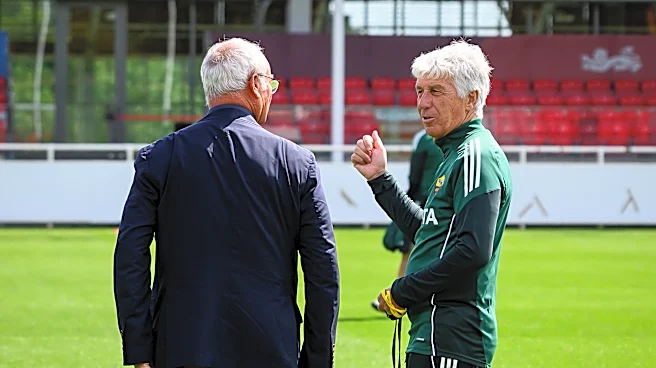
However, as we’re slowly learning, the club’s well-designed transfer campaign last summer was anything but cohesive, as Gasperini, Ranieri, and the Friedkins failed to agree on a policy. With those disagreements now seeing the light of day, not to mention disappointing results on the pitch, the club’s future is once again on a knife’s edge.
While the discord between Gasperini and Ranieri will likely subside, the importance of this transfer window cannot be overstated. Identify your weak spots, determine your priorities, compile a list of agreed-upon targets (and alternatives), and get to work. It’s a simple idea that has always deviled the club, but it’s rendered Roma irrelevant over the past decade.
To the Roma brass, I say: Channel your inner Lennon and McCartney and work this out.