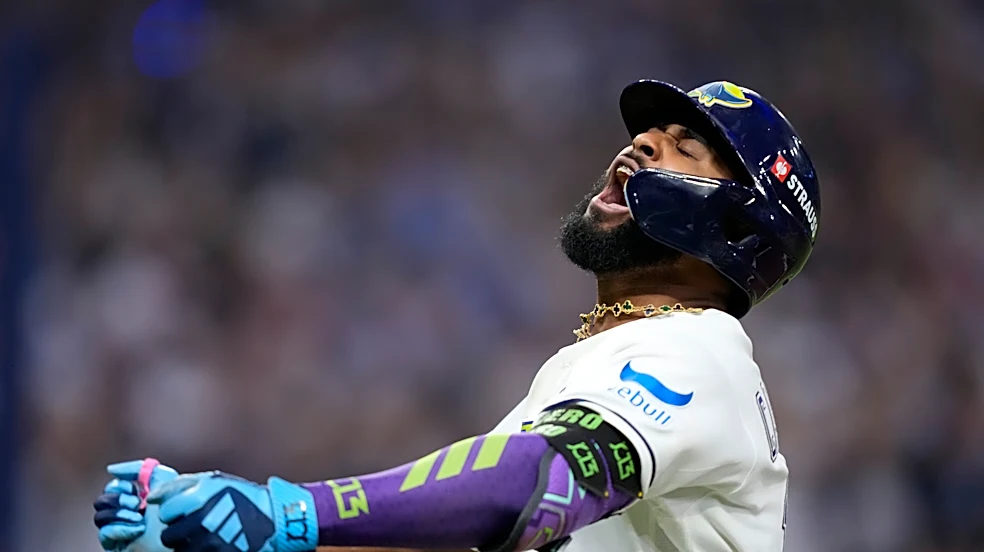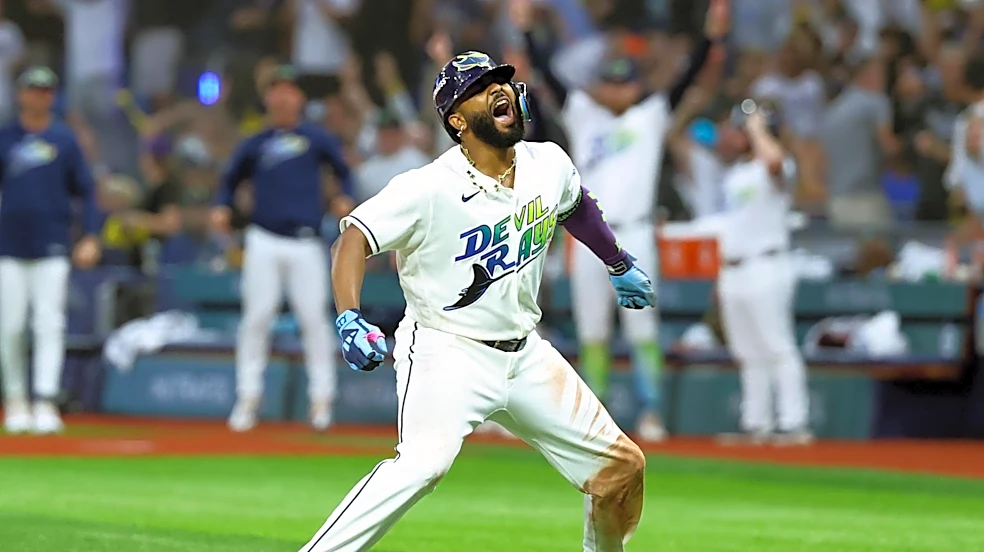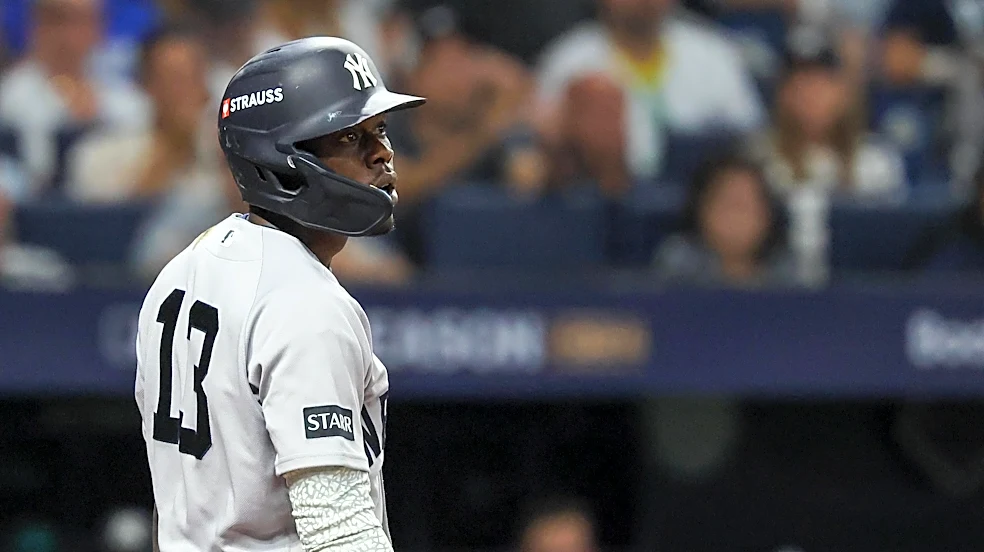

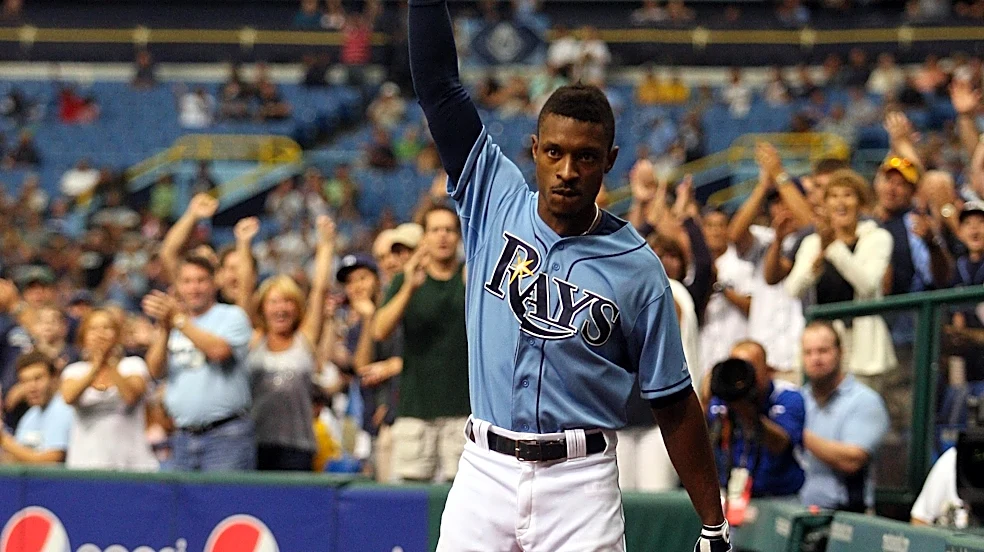

In the abstract, if you had told me going into the season that Jazz Chisholm, Jr. would hit 19 home runs, steal 40 bags, and be the second-most valuable second baseman in the American League by FanGraphs WAR, I probably would have signed up for that in a heartbeat (while complaining about the lack of power).
And that’s an excellent example of how cherry-picked statistics are the world’s most malleable clay. You can paint any picture you want with them. I apologize for mixing my metaphor. Anyway, the story
of Jazz Chisholm, Jr.’s season is more complicated than that and even more disappointing. And uglier than a pair of used bowling shoes, to boot, at least offensively.
With his free agency looming, we’ve probably seen the last of Jazz in pinstripes. If nothing else, he was an exceptionally fun and likeable player when things are going well.
Grade: D+
2026 Stats: 137 G, 532 PA, 19 HR, 69, R, 55 RBI, 41 SB, .232/.213/.399, 98 wRC+, 3.5 fWAR, 1.7 bWAR
2027 Contract Status: Free agent (QO-eligible)
In hindsight, maybe this season was doomed to failure when Jazz proclaimed his mission to go 50-50 in his walk year and earn a $300 million-plus free agent contract. Talk about setting an unreasonably high bar by which to be judged. To be fair, he’d clubbed 31 round-trippers and swiped the same number of bags the season prior, all while missing more than a month worth of games. After becoming the third Yankee in history to go 30-30 in that smaller sample, some optimism was not unwarranted heading into 2026.
But it was quickly apparent that Jazz wasn’t going to have anything close to a 50-50 season. A putrid start to the season left him barely north of the Mendoza Line (.202 BA) with almost no power (3 HR and a .330 SLG) by the end of April. As late as April 23rd, he languished at .188 with zero home runs. Once that start baked in, the only question was whether Chisholm could begin the slow climb to respectability.
May made us wonder. “So you’re saying there’s a chance.” Easily Jazz’s best stretch of the season offensively, it looked like maybe he could climb the mountain after all. The power still was not there (3 HR for the month) but he drastically cut his strikeout rate and his batting average for the month was 80 points higher than it was in the opening month-plus of the season. Little did we know, we’d seen the best 2026 Jazz had to offer.
The rest of the season was a testament to mediocrity offensively, as Chisholm spent months flirting with league average at the plate. To add injury to underperformance, a sprained thumb in September cost him two weeks.
In retrospect, a look under the hood from the year before makes Jazz’s 2026 a lot less surprising. Even as he went 30-30 in 2025, the batted-ball data was less than ideal. He didn’t hit the ball hard (35th percentile average exit velo), he didn’t square the ball up (8th percentile Squared-Up%), and there was entirely too much swing-and-miss in his game (7th percentile Whiff% and 8th percentile K%). In 2026, his batted-ball metrics cratered.

This is not to say Jazz’s entire season was a catastrophe. Again, his baserunning and fielding value were such that, at least according to FanGraphs, he was the second-best player at his position in the Junior Circuit in 2026. That is off little solace to Jazz, the Yankees, and New York fans, however, considering his 2025 campaign and the tantalizing possibility he could put together a spectacular walk year.
Speaking of free agency, Chisholm is eligible to receive the qualifying offer from the Yankees. If they chose to tender one and Chisholm accepted, they would be on the hook for $23.15 million for 2027. I suspect though that the Yankees will pass. First, they seemed to reveal their confidence in Chisholm (or specifically, their lack thereof) when they had him riding pine to begin Game 3 of the ALDS versus the Rays. If you’re not starting him over one of Anthony Volpe and José Caballero, you’re not giving him $23 million in 2027.
Second, it would likely be entirely too tempting for Jazz to say yes. As Chris Kirschner remarked in The Athletic yesterday, “he could accept it and try to reset his market entering the 2028 free-agent class.”
Personally, I am of two minds. On one hand, Chisholm plays way too much Yankee Baseball (boneheaded errors, TOOTBLANs, the baseball awareness of a literal baseball). I’ve had enough of that for a lifetime.
On the other, if you subscribe to the old axiom that 1 WAR is worth somewhere between $8-11 million in free agency, his 2026 (perhaps his worst offensive season) had a value between $28-38.5 million because of his defensive and baserunning value.
For what it’s worth, in a vacuum, I’d lean towards tendering him the QO. If he declines, great. I’ll take the draft pick. If he accepts, great. I’ll plug him into the bottom of the lineup and focus my attention on other pressing roster issues (side-eyes third base, the bullpen, and backup catcher). Someone has to play second base anyway.
But it’s all hypothetical for me. In reality, I suspect we have seen the last of Jazz in the Bronx. Ah well. We’ll always have that time he borrowed Judge’s lumber to crush a clutch go-ahead home run against Cleveland.
See more of the Yankees Roster Report Card series here.