

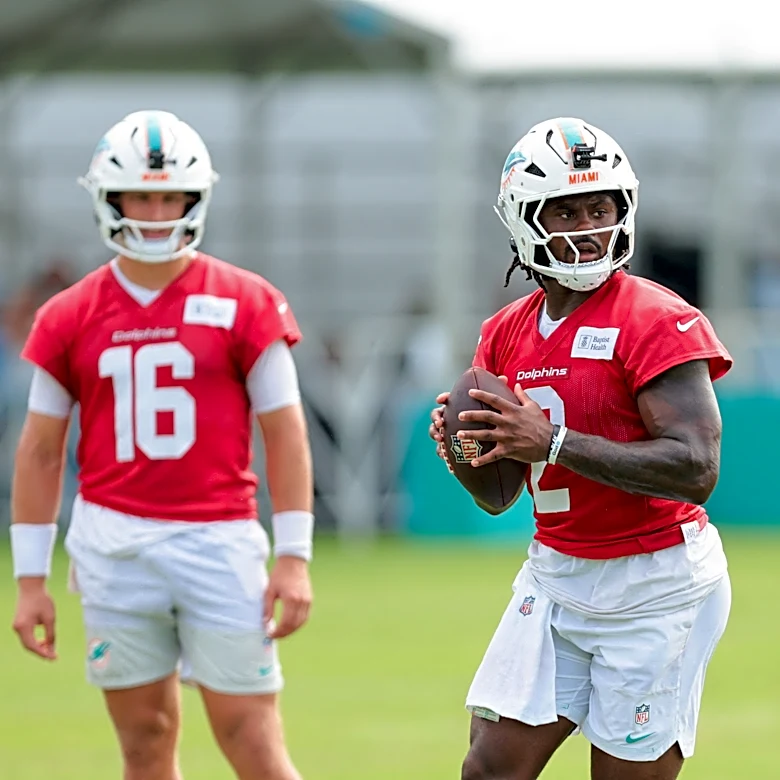
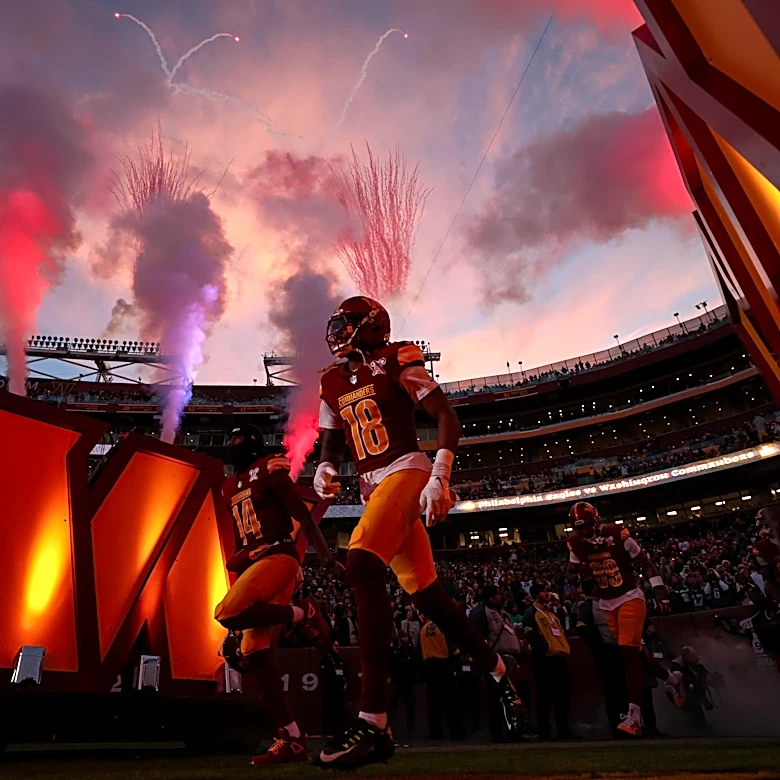
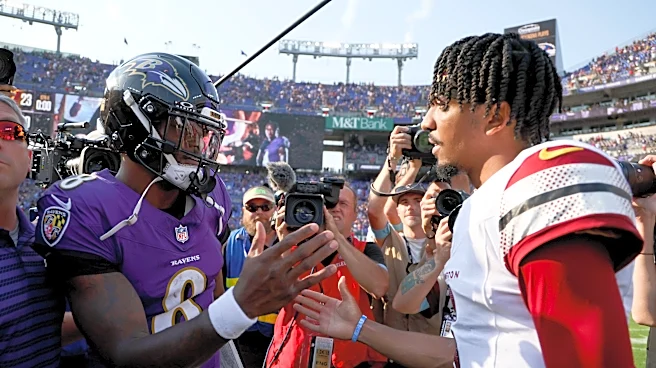
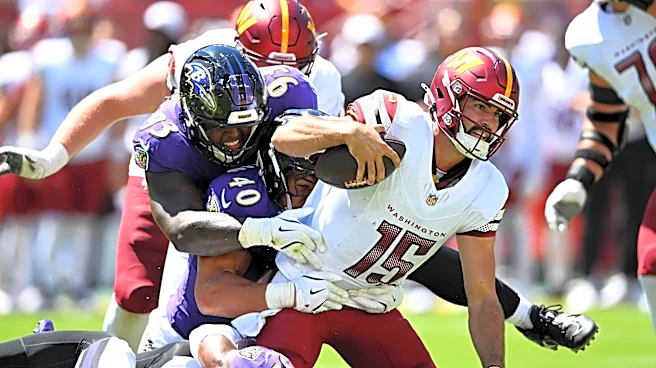
In this week’s Reacts survey conducted here at Hogs Haven, we asked readers to identify which of six high-profile free-agent acquisitions would deliver the most significant positive impact on the upcoming 2026 season.

Visit our partners at FanDuel
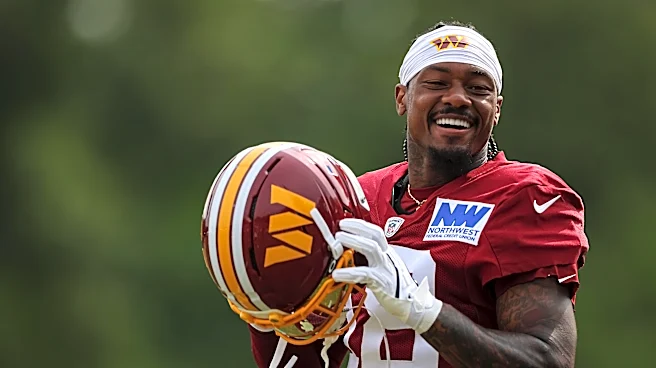
Wide receiver Stefon Diggs led the field with 47% of the total vote. Edge rusher Odafe Oweh drew the second-most support at 29%.
A deeper look into the survey results reveals nuanced viewpoints regarding roster construction, financial investments, and how
these acquisitions position the franchise to defy lackluster national narratives about the 2026 Washington Commanders.
The wide receiver room: ceiling & floor
The 47% support for Stefon Diggs confirms that many fans view having a true perimeter weapon as a key catalyst for offensive improvement and team success in 2026.

However, the fact that remains that he drew less than half the votes in our survey. Some of those who didn’t vote for Diggs argued against the receiver’s prime importance on the grounds of diminishing marginal returns. In other words, with Terry McLaurin firmly established as the primary target in Washington’s passing game, some fans felt that adding another high-volume receiver yields a lower incremental impact than addressing other roster deficiencies.
Certainly, in a fully healthy offense, Diggs and McLaurin will naturally eat into each other’s target shares, potentially flattening the statistical ceiling of the individual investment. But one of the driving forces behind the signing of Diggs a week into training camp was rooted in the lessons of the 2025 season. When McLaurin missed 7 games last season due to injury, the offense’s lack of receiving depth was exposed. With Scary Terry missing and a injured Noah Brown out for 13 games as well, the passing game stagnated and opposing secondaries easily suffocated Washington’s remaining pass catchers.
Signing Diggs is as much a floor-raising insurance policy as it is a ceiling-raising luxury. The presence of two 1,000-yard receivers ensures that if injury strikes the receiving corps again, the offense will still likely be able to field an elite route-runner capable of sustaining the passing game. When both are on the field, it forces defensive coordinators into a schematic bind, preventing them from consistently shading safety help toward the team’s only real passing game threat.
Re-making the defense: Oweh and the $96 million mandate
While Diggs received more support in our survey, Odafe Oweh represents the franchise’s largest financial commitment of the offseason. Oweh signed a four-year, $96 million contract, making it the most lucrative contract executed by the Commanders with an external free agent since Albert Haynesworth was inked to a disastrous 7-year, $100m deal in 2009. As expensive as it might be, per Over the Cap, with an average annual value of $24m, this deal ranks only 17th among edge rushers and falls far short of the league’s top-6 contracts in the position group, each of which is valued at between $40m and $50m per year.

Yet, evaluating Oweh’s impact solely through individual box-score metrics like sacks may miss the broader strategic picture. Under new defensive coordinator Daronte Jones, Washington is transitioning to an aggressive, pressure-heavy defensive scheme. His system is expected to rely on dictating matchups and using multiple fronts to create internal and external confusion for opposing offensive lines.
Oweh is not being asked to carry an otherwise barren pass rush; rather, he is expected to serve as the “lead dog” of a deep and talented rotational group. By pairing Oweh’s elite athletic profile with a wave of fresh situational rushers, Jones can maintain a relentless standard of pressure throughout four quarters. Oweh’s value will be measured by how his pressure off the edge frees up interior gap shooters, stressing the quarterback and creating opportunities for his teammates. Oweh’s contract reflects the premium placed on a foundational edge setter – but not an elite one-man wrecking crew — who can trigger the tactical components of Jones’s new scheme.
Defying the national calculus
Beyond the individual impact of Diggs and Oweh, the survey results reflect an undercurrent of optimism among Commanders fans that stands in stark contrast to national projections. Across major sportsbooks and national media previews, the Commanders are largely being discounted, with win totals and power rankings that reflect memories of Washington’s disappointing 2025 record, and which take little or no notice of the significant coaching changes and dramatic roster upheaval that took place this offseason.
For sophisticated fans looking at these underlying factors rather than relying on outdated prior year standings, there are at least three reasons to believe the national consensus is projecting the wrong trajectory for Washington in 2026:
A complete conceptual overhaul: The arrival of two new coordinators completely resets the schematic identity of the team. The predictable, easily countered schemes of 2025 – particularly on defense — have been replaced by modern, adaptable systems on both sides of the ball. National models frequently struggle to quantify the statistical jump that occurs when a roster is invigorated by fresh approaches in coaching.
Defensive roster metamorphosis: Looking at last year’s defensive metrics to project 2026 performance is fundamentally flawed. Due to tectonic offseason changes, the defensive coordinator and aggressive scheme, along with more than half of the defensive starters, will be new to the organization this season. Washington has systematically replaced low-ceiling depth with proven or high-potential scheme-specific veterans and draft picks.
Regression to the (injury) mean: In 2025, Washington was one of the NFL teams most severely impacted by adjusted games lost due to injury. NFL history demonstrates that extreme injury luck—good or bad—is rarely sustained from year to year. By simply regressing to the league average in health, the Commanders would be positioned to experience an organic boost in continuity and performance.
Outlook
The Reacts survey demonstrates that the fan base recognizes the strategic logic behind the Commanders’ offseason roster haul. Diggs provides critical stability and redundancy to the perimeter, while Oweh gives Daronte Jones the elite chess piece required to unlock his defensive vision. While national analysts remain anchored to the results from 2025, the critical changes in coaching, health, and personnel suggest that Washington has built a new and different team, still fueled by its franchise quarterback, Jayden Daniels, that is likely to surprise the disbelieving broader universe of NFL media, analysts and fans in 2026.
Visit our partners at FanDuel