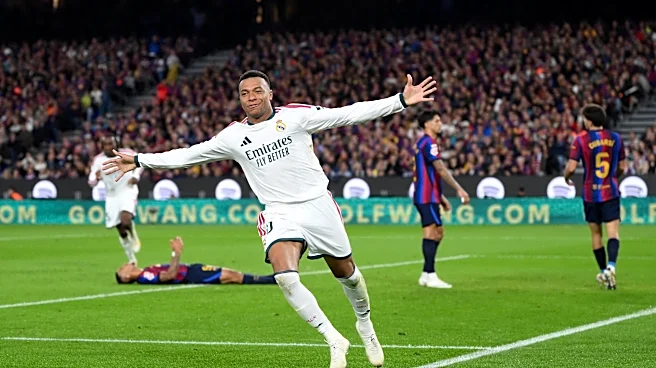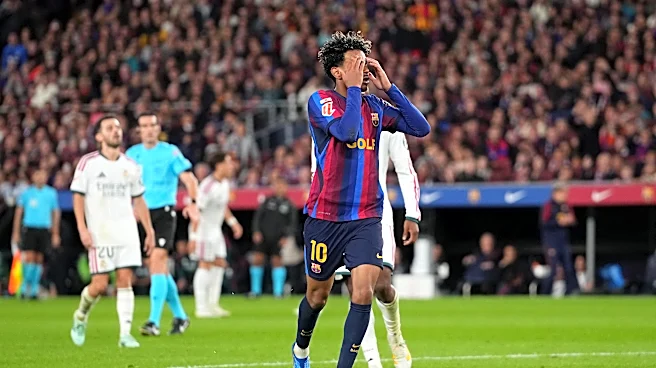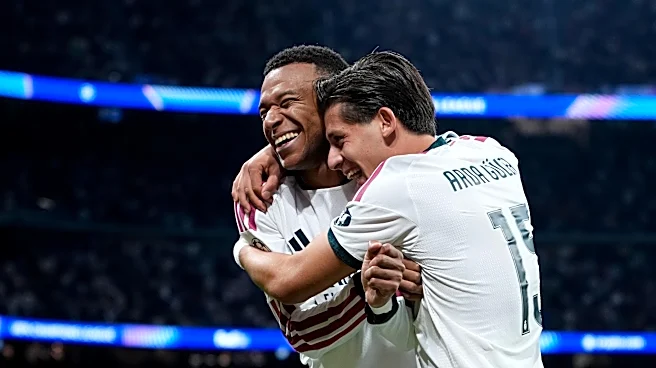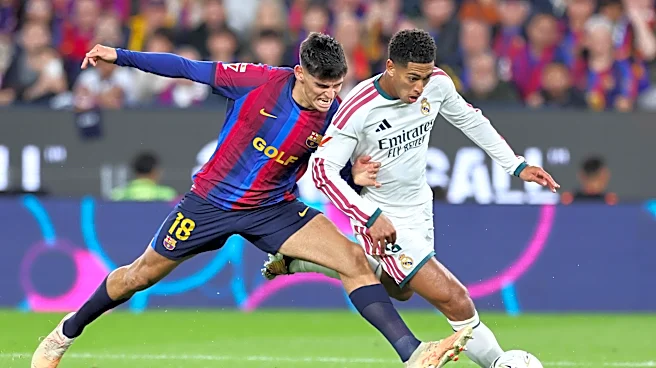


At Parc des Princes, in the 12th minute, Barcelona pressed Paris Saint-Germain after a possession loss in the final third. The Catalans tried to funnel the play toward the flanks, given Lamine Yamal’s position and distance from Lucas Hernandez. With a third-man combination, PSG found the free left-back.

As a reaction, Xavi Espart had to leave Kvaratskhelia and jump diagonally onto the ball carrier. The distance between the fullbacks was too large, and the rest of Barcelona’s backline had to shuttle
across to cover the ball side. Lucas Hernandez made use of the time and space on the ball to switch play to the opposite side, where Hakimi, Vitinha, and Doué overloaded Cancelo and Olmo.

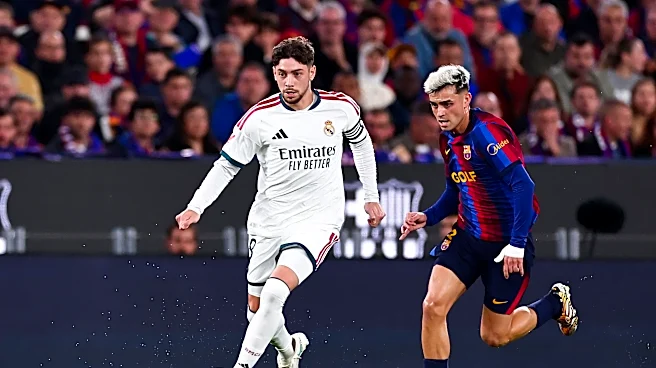
Real Madrid headed into El Clásico well prepared to exploit Barcelona’s weaknesses in the high press. Fifteen minutes in, Valverde’s very deep position increased the distance to Cancelo, which put the Uruguayan in the same situation as PSG’s left-back to switch the ball to the opposite side. When the play was channelled to Real Madrid’s right side, Lamine Yamal tucked in, getting close to Huijsen. That gave room for Cucurella to push on into the left half-space and receive the switch behind Lamine Yamal. That set off a domino effect. Yan Diomandé receiving the ball near the flanks pulled Xavi Espart across. Cucurella remained free because Lamine Yamal didn’t track him back, and the distance between the right and left half-spaces was too large for Pedri to cover and arrive in time.

If Yan Diomandé’s pass hadn’t been behind Cucurella’s path, the gaps were there for the taking. Diomandé was running beyond Espart, Mbappé was well positioned to sprint in behind, and the switch to Guler was a real possibility.

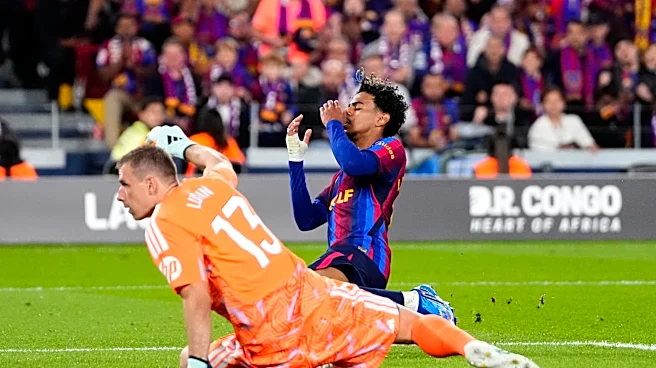
Thibaut Courtois was left out with the flu. Andriy Lunin was a good replacement between the sticks in terms of shot-stopping and added more value to Real Madrid’s build-up.
This diagonal long ball landed in the right place behind Cancelo and targeted Arda Guler’s preferred foot to lay it off to Valverde from the first touch. Real Madrid had an extra player out wide on both sides of the pitch.


Real Madrid’s intentions were clear: drag Barcelona to the right side and generate the optimal situations for Federico Valverde to switch play. His passing map clearly embodied Real Madrid’s on-ball strategy.

Valverde picked his head up and switched the play to the left side, where this time Mbappé, Diomandé, and Cucurella outnumbered Xavi Espart.


On this occasion, it was Mbappé who exploited the gap between Espart and Cubarsí. After being closed down around the six-yard box, Mbappé worked the ball back to Tchouaméni, who picked out Arda Guler around the penalty box, ready to pull the trigger.

Forty minutes in, the Catalans found themselves in a situation where they had to transition from a medium block into a high press. The same scenario repeated itself. The distance between Barcelona’s and Real Madrid’s ball-side fullbacks was too big to put pressure on the ball carrier in time. Also, Pedri and Rodri shifted across and remained zonal. As a result, Real Madrid could work the ball out via short diagonal passes behind Raphinha and Gordon.


Again, Cucurella advanced freely and hugged the touchline, as Diomandé headed into the gap between Cancelo and Cubarsí. Cucurella set Diomandé free into the box in order to cross the ball to the players coming from behind. Gerard Martin’s clearance hit Mbappé, who converted it home.

Dragging Barcelona toward the ball side before switching the play to the opposite side was one of the weaknesses that Paris Saint-Germain and Real Madrid exploited to gain an advantage. Working the ball down the same flanks via wide combinations and exposing Barcelona’s high line and offside trap via late runs were the other alternatives for Enrique’s and Mourinho’s sides to exploit the defensive frailties of the Catalans.
It was through baiting the winger forward, which triggered the ball-side fullback to jump onto his opposite fullback as well. Then, the dominoes fell.

Here, the fullback’s jump was followed by one of the pivots shifting across to cover behind.

Therefore, PSG generated an overload in midfield to work the ball out down the flanks. Then, Hakimi proceeded with a late run between the centre-backs to avoid the offside trap and expose the spaces in behind.

Barcelona’s high press and the close proximity between the backline and the double pivots forced opponents to progress down the wide channels. High-quality understanding and syncing in terms of rotations and combinations between the fullback, central midfielder, and winger were a must to escape Barcelona’s wide traps. Real Madrid’s passing map showed the connections between Valverde and Guler on the right and Cucurella and Diomandé on the left.

In this example, Anthony Gordon stepped up to press Ibrahima Konaté. Federico Valverde and Bernardo Silva swapped positions. Pedri marked the Uruguayan and was waving his hands to question why Bernardo Silva hadn’t been closed down yet:

João Cancelo couldn’t step out because he was already pinned by Arda Guler, so Pedri had to peel off wide. Rodri was also unable to support Pedri because he had to keep tabs on Jude Bellingham. As a result, Valverde and Silva outnumbered Pedri on the wide channels:

Valverde fed Arda Guler, and he immediately surged forward between Gerard Martin and João Cancelo. Guler set him free in a position to reverse the pass into players coming late. However, Martin blocked off the pass:

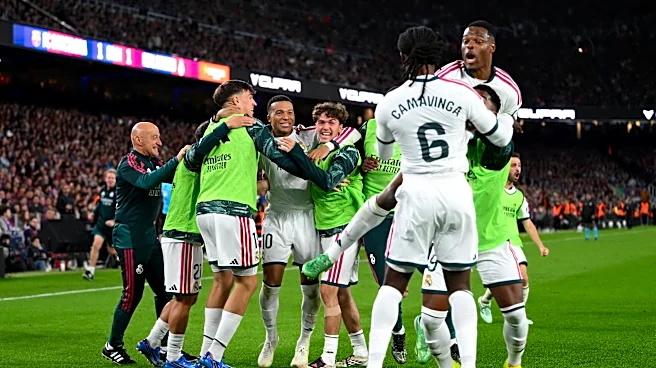
Three minutes left before injury time, Bellingham collected the loose ball. À la Zidane, he bypassed the caging of Pedri, Jesús, and Balde to find Camavinga ahead of him. The French midfielder, as his coach instructed him, attacked the space behind via a late run. Arda Guler, with the pre-assist, released Camavinga, who poked the ball around Cubarsí to skip past him and cut the ball back to Mbappé. The latter guided the ball home:

Leipzig’s game proved that Real Madrid can be a dominant side, whereas El Clásico demonstrated that Los Blancos can defend in a compact shape and neutralise opponents of similar quality, while maintaining a versatile bag of solutions on the ball. In both cases, José Mourinho introduced his most balanced lineups that gave the team the edge in his contests. Right now, Mourinho’s job is to keep building on that.