


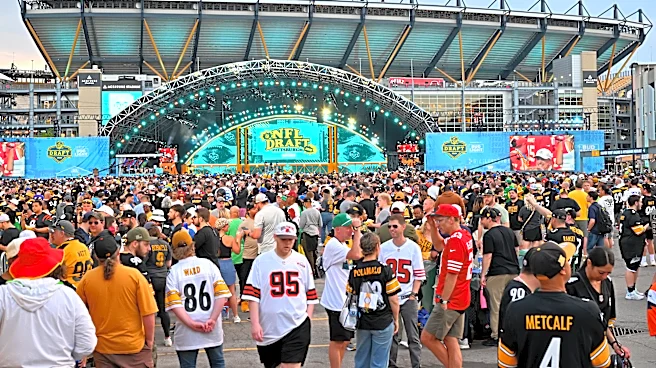
The Minnesota Vikings concluded an eventful three days of the NFL Draft that included a few trades, including Jonathan Greenard, the drafting of nine players, and the signing of 19 undrafted free agents.
It was largely a defensive draft for the Vikings, with the first three picks going for defensive players and four of the first five. And while that emphasis corresponded with the Vikings’ roster needs, the increased influence of newly extended defensive coordinator Brian Flores could be felt. The
results also provide some insight on how the coaching staff view their existing roster, and a little into their drafting process and roster priorities.
Brian Flores and the Vikings Draft Process
This off-season has seen the elevation of Brian Flores in terms of influence within the Vikings organization. The Vikings were eager to extend his contract, but Flores allowed it to lapse as he considered any head coaching opportunities. But in January he also expressed a lack of confidence in the direction of the front office, meaning general manager Kwesi Adofo-Mensah. That reached ownership in their season-end evaluations in mid-January, with Flores still unsigned, and led to the unusually timed firing of Adofo-Mensah at the end of January after ownership had a chance to review the situation and ultimately decide to part ways with him. The Wilfs hadn’t planned to fire Adofo-Mensah at the end of the season, otherwise they would have done so earlier in January, immediately after the season was over, which is the customary timeframe for such moves. But when Flores raised his dissatisfaction, the Wilfs fired Adofo-Mensah. It wasn’t until after Adofo-Mensah was fired that Brian Flores agreed to an extension that reportedly makes him one of the highest paid coordinators in the league, if not the highest.
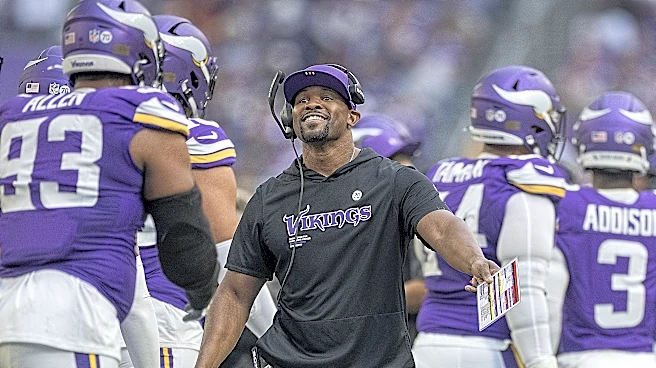
Clearly that sequence of events speaks to how well Flores is regarded in the Vikings organization. And it comes after Flores didn’t see eye-to-eye with Assistant Head Coach Mike Pettine last year, which resulted in Pettine switching to the offensive coaching staff (although he had always been a defensive coach) and his retirement after last season. Head coach Kevin O’Connell clearly values Flores’ input and having him as his defensive coordinator as he has always spoken highly of him and pretty much allows him to run the defense his way.
But it is also apparent that Flores, a former scout who still enjoys scouting players, has some of his own ideas about scouting and personnel issues. Ideas that didn’t mesh with Adofo-Mensah’s apparently. And so with Adofo-Mensah’s dismissal, and interim general manager Rob Brzezinski not having a background in player evaluation or scouting, someone had to fill the void. And while some of that may have been filled by O’Connell and the scouting staff, it seems that a lot of it was filled by Flores and his approach. I don’t get the impression that has been an unwelcome development, although it is notable that assistant general managers Ryan Grigson and Demitrius Washington seem to have been sidelined to some degree compared to last year.
Kevin O’Connell’s position has, if anything, become stronger as a figurehead for the franchise central to football-related decision-making, but he seems happy to defer to Flores on decisions related to the defense, including drafting decisions. Rob Brzezinski remains chiefly the salary cap guy, trade and contract negotiator, and consensus builder. He runs the draft, but particularly on the defensive side, it looks like Flores overseas the pre-draft process and really sets the parameters for the players the Vikings draft.
Different Process from the KAM Era?
Kwesi Adofo-Mensah was supposed to be the analytics GM, because that was his background. Generally regarding draft picks, including undrafted free agents, that translated into picks that almost always had good or great production as measured by PFF grades. That may or may not have been the metric used internally, but there is remarkable consistency in KAM’s draft picks in that regard.
The other key component in measuring prospects is their physical traits, often summarized by their Relative Athletic Score or RAS. There wasn’t nearly as much consistency with KAM’s picks in that regard. For example, the Vikings’ 2023 class had no players with an RAS of 8.00 or above. In the 2025 class, all draft picks had an RAS above 8.00. Other KAM draft classes had mixed RAS scores.
During the KAM era, the Vikings typically met with top draft picks in a Top 30 visit, but not so much with later round prospects. However, they did use Top 30 visits as a recruiting tool for undrafted free agent prospects with some effectiveness.
There didn’t seem to be any consistency with other factors, such as only drafting Power 4/5 conference players, age, etc. Throughout the KAM era, the mantra of drafting tough, smart prospects with whom football is very important was consistent. Also, after KAM’s first draft, he never took a player with significant known injury risk.
In this first draft of the post-KAM era, the same mantra has continued, but at least based on this first draft, there are some differences.
Both college production (measured by PFF grades) and physical traits (measured by RAS) are important. PFF grades of all drafted players remain good or better and RAS are all at least 7.50.

Overall, this draft class seems to have a more clearly delineated minimum for both production and physical traits than was apparent in the KAM era. There may have been some minimum requirements in the KAM era, but there were either exceptions or a lower threshold in some cases.
The other aspect of the draft process that has at least some visibility from the outside is the use of prospect meetings. All but one of the players the Vikings drafted this year had Top 30 visits with the team. A few were not publicly reported prior to the draft but were subsequently mentioned by the team or player after they were drafted. The Vikings met informally with Caleb Tiernan at the Combine and again at his Pro Day, but he was the only draft pick in 2026 not invited for a Top 30 visit.
The Vikings’ Director of College Scouting Mike Sholiton mentioned during his post-draft press conference that the Vikings used the Top 30 visits to help build consensus within the organization for the pick. Of course most prospects invited for Top 30 visits were not picked, so that could have also helped build consensus not to pick a prospect too.
Another aspect of meeting with players, particularly in more substantial Top 30 visits, is to get a better read on the prospect’s personality, football IQ and ability to process. Brian Flores talks about the ‘want to’ as one of his factors in evaluation prospects. An acceptable prospect for him must have the commitment and determination to put in the work necessary to get better, which is necessary for all college players entering the NFL. Meeting in person can help measure some of these mental aspects.
It’s also a way to guard against Lewis Cine-type busts. There was no way to anticipate either Lewis Cine’s freak injury or his complete bust. Both his college production in the SEC and physical traits were outstanding, and he had no significant injury history. But apart from having his rookie season derailed due to a freak injury (which I think the timing of injury makes it that much more difficult to succeed in the NFL), Cine proved to be something of a loner who didn’t interact much with his teammates. That likely contributed to his not working out with the Vikings or the Eagles (who had a lot of former Georgia defensive players on their roster). The Vikings traded down before selecting Cine and there are no reports that they had a Top 30 visit with him. In future drafts the Vikings had Top 30 visits with at least their top draft picks.
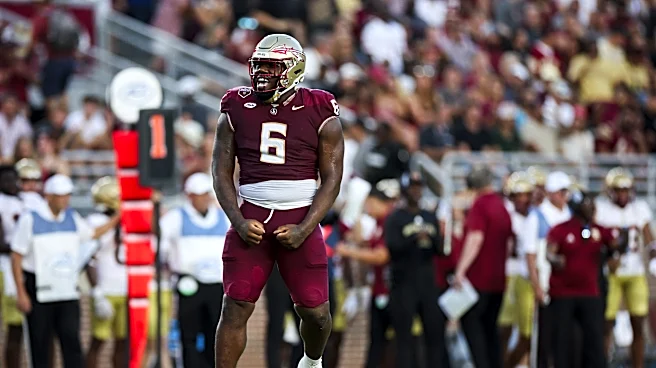
In this draft, the Vikings also drafted a prospect in Caleb Banks with a known injury issue with a fractured foot. The Vikings haven’t drafted a prospect with known injury issues since Andrew Booth Jr., KAM’s second pick who was also a bust. Booth had a quad injury that prevented him from doing predraft workouts, and had a history of sports hernia and knee injuries. Booth was placed on IR in November of 2022 after having started only one game that season and was released after the 2023 season.
Rob Brzezinski said the Vikings’ doctors did their due diligence on Banks’ fractured foot and were not concerned about it. Banks’ doctor also put out a letter to NFL teams indicating that he is on track to be fully cleared for football activities in June. He has no other significant injury history apart from the foot fractures.
The Draft Picks
While I’ll go into a more detailed assessment of each draft pick in future breakdowns, there are some general insights on the Vikings’ draft picks worth mentioning.
Caleb Banks
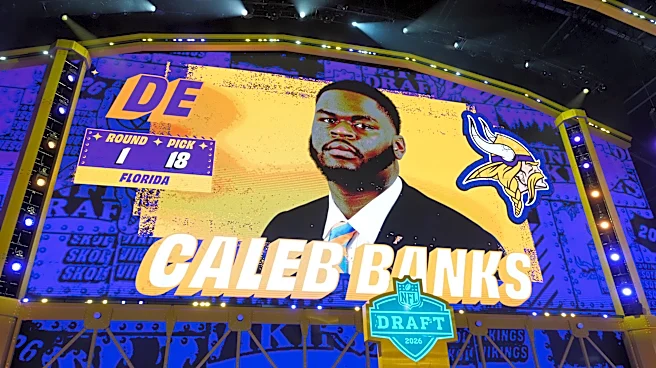
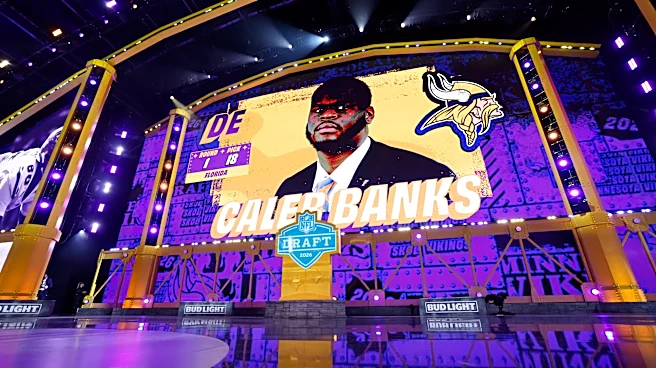
Banks is widely regarded as a reach for the Vikings at #18 and was a surprise pick. Part of the reason he was a surprise pick even though defensive tackle was a big need for the Vikings was because there was no reported interest in Banks in the form of meetings with the Vikings (there was an unreported Top 30 visit however, among others) and because he was expected to be drafted in the second round based on consensus boards.
Banks fell out of the first round due to his on-going foot fracture history. He broke his foot early last season but played a few games on it, then had surgery and (probably) came back too soon afterward. It’s unclear what bone he broke in his 2025 foot injury, but he broke his fourth metatarsal the night before his Combine workout, possibly by wearing the wrong cleats. Anyway, his doctor sent a letter to NFL teams a few days before the draft indicating that he is on-track to be fully cleared for football activities in early June, which is consistent with the recovery timeline for that injury. Banks was asked about it and said this:
“It’s the fourth metatarsal, so a fourth metatarsal break,” Banks said. “It didn’t fully break through, it was like a little crack on the side of the bone, so it wasn’t nothing too crazy. But they just went back in and repaired it, put a bigger plate in there. So, I’m all good now.”
Still, after the injury was reported, it would be normal for teams to dock Banks a half to a full round on their draft boards or possibly more to account for the injury risk. That also caused him to slide on consensus board rankings and mock drafts. But the Vikings had their doctors do their due diligence on Banks’ foot injury and did not have concerns, which cleared the way for the Vikings to draft him at #18.
However, if all the other teams had a second-round grade or lower on Banks, why didn’t the Vikings trade down before drafting Banks? Taking him at #18 looks like a reach.
We may never know the truth, but there could have been several teams interested in drafting Banks at the end of the first round or beginning of the second round. One of those teams may have been the Vikings’ division-rival Bears, who were thought to be looking to add to the defensive line and were picking at #25, and the Chiefs who drafted defensive tackle Peter Woods at #29 but had Banks in for a Top 30 visit. The Cardinals, Raiders, and Titans all had Banks in for a Top 30 visit as well. They all picked at the top of the second-round. The letter Banks’ doctor sent out was just a couple days before the draft and so didn’t have much impact on the consensus board, which is an aggregate of dozens of rankings and/or mock drafts going back a few months. In any case, Banks finished ranked #37 on Arif Hasan’s consensus board. Donovan Jackson was ranked #37 last year on the consensus board when the Vikings drafted him at #24. The Vikings taking Banks at #18 was the second-largest reach relative to the consensus board in the first round after the Rams taking Ty Simpson at #13.
Whether or not it was truly a reach depends on whether the Vikings’ doctors are right about the severity of Banks’ foot injuries. If healthy, Banks was easily the best passing rushing defensive tackle in the draft, with the highest ceiling, and those are valued much higher than the strictly run-stuffing types.
Getting Bigger in the Trenches
Caleb Banks, Domonique Orange, and Caleb Tiernan are all over 320 pounds. That makes it clear the Vikings want to get bigger in the trenches. They have smaller defensive tackles on the roster with the exception of Taki Taimani who is probably last on the depth chart, all of them being 305 pounds or less, so adding a couple of 320+ pounders will certainly help anchor their defensive front. The league is generally moving toward bigger linemen and heavier formations on offense, with greater use of 12 and 13 personnel, which all of the Vikings’ NFC North rivals use a lot of. So the Vikings have responded by adding more size and completing what could be quite a formidable defensive front against the run or pass. Even the center the Vikings took in the seventh round- Gavin Gerhardt- is listed as 309 pounds- one of the bigger centers in this draft class.
Blake Brandel and Tai Felton
The Vikings didn’t take a center until the seventh round (Gavin Gerhardt), which seems like a strong indication that they like Blake Brandel as their starting center. Brandel had eight starts last season at center, and apart from a rough game against the Eagles in his second start, fared pretty well giving up an average of 1.5 pressures per game. Gerhardt may challenge Michael Jurgens for the backup spot, however, as Jurgens has been underwhelming since being drafted two years ago.
And perhaps the Vikings are happier with Tai Felton’s development than we know about. He didn’t play much as a rookie outside of special teams with Jalen Nailor and Adam Thielen on the roster most of the season, but he was a third-round pick last year with elite sub-4.4” speed and explosion. And he was productive his last season at Maryland. From the outside it’s impossible to know much about player development when they’re not on the field. On the other hand, the draft may have simply unfolded in a way that prevented a targeted wide receiver from being drafted. The Vikings met with several receivers in the pre-draft process, however, suggesting interest in adding to the position, which may still be done via free agency now that the draft is over.
Domonique Orange and Caleb Tiernan Value Picks?
Both Orange and Tiernan slide from their consensus board rankings- Tiernan a full round from 67 to 97- and Orange from 70 to 82 may have impacted the Vikings picks at 82 and 97- especially Tiernan’s slide.
The Vikings had met with Orange on a Top 30 and so his being available at 82 appears to have been enough of a slide to put him as their best available when they picked at 82. The Vikings hadn’t met with Tiernan- the only draft pick they didn’t meet on a Top 30 visit- which may be a clue that they didn’t expect him to be available that late into the third round. Tiernan’s short arms for a tackle may have caused him to drop and he is a candidate to slide inside to guard.
On the other hand, a couple of offensive prospects they had met with- WR De’Shaun Stribling and TE Oscar Delp, went two rounds and one round higher than the consensus board rankings, putting them out of reach for the Vikings.
Jakobe Thomas Over Jalon Kilgore?
The Vikings had Top 30 visits with both Thomas and Kilgore (Thomas’ was not reported), both safeties, but the Vikings opted for Thomas at 98 which was a big reach according to the consensus board, which had Thomas ranked 177. Kilgore was ranked 91.
But the Vikings weren’t the only team to pass on Kilgore, who slide two more rounds all the way to about where Thomas was ranked at 167.
Max Bredeson Looks Like a Big Reach- But Was It?
H-Back types that can line up anywhere and block went ahead of the consensus board throughout the draft. Most of these are listed as tight ends but are smaller than traditional tight ends at around 240 pounds and averaging around 6’4”. Kind of a story about where NFL offenses are going. Bredeson is bigger at just over 250 pounds, but shorter at 6’2” and is really more of a fullback than tight end, although he never actually had a carry at Michigan. He did have a grand total of 12 receptions… over four seasons. So, whatever you want to call him, he’s a movable blocker and a very good one which is becoming more important as the NFL trends toward more heavy formations and gap scheme runs.
Bredeson was drafted at 159 but was outside the top 300 on Arif’s consensus board- I believe he was ranked around 371. However, Riley Nowakowski another fullback-type H-back ranked below Bredeson by the few analysts who rank fullback types, was drafted just ten picks after Bredeson by the Steelers. So, overall throughout the draft I think the consensus board didn’t appreciate the growing value of these types of players to more and more teams- many who haven’t carried them on their roster much in the past.
Bredeson is an able successor to CJ Ham and probably an upgrade. He’s about 20 pounds heavier and a few inches taller than Ham. He was also a two-time team captain and a special teamer. He can wham block edge rushers, he can lead block, he can stalk block, he can block down field- and he’s really good at all of them. I don’t think I’ve ever seen such an impressive blocking highlight reel.
Most fifth-round picks don’t add up to much but I could see Bredeson as a fixture on the Vikings roster for the next ten years. The only danger is if someday they eliminate the fullback position, but the trend away from fullback types seems to be reversing.
It’s also notable that the Vikings could have drafted Emmett Johnson here- he was drafted just two picks later- but opted for Demond Claiborne with their sixth-round pick.
Demond Claiborne
Claiborne was ranked 144 on the consensus board but fell to the Vikings at 198. There was differing views of Claiborne among draft analysts. Some had him as high as the third-ranked running back in the draft and others had him as low as seventh. A lot of that had to do with how analysts view his size at 5’10”, 188 pounds, which is small for a running back. And with small running backs go durability concerns and how much of a load they can carry. But he was one of the few that has breakaway ability, being able to accelerate quickly and with 4.37” speed. Some analysts compare him to De’Von Achane, the star running back for the Dolphins, who was listed as 5’8”, 188 pounds and ran a 4.32” 40 at the Combine.
The Vikings passed on drafting Emmett Johnson as they were looking for a speedier replacement for Aaron Jones. Vikings’ new run game coordinator Frank Smith also worked with Achane in Miami with great success.

Charles Demmings
It’s a fun fact that both defensive backs the Vikings drafted have the largest hands at their position (100th percentile). Big hands can be an advantage, but usually not a trait teams draft for in a defensive back. Demmings is a physical corner who specializes in press-man coverage and has the traits to eventually become a starter. But coming from FCS, it may take him some time to adjust to NFL competition. Brian Flores has been searching for a good press-man corner who can also do everything else required, and Demmings looks like his latest attempt. He’s got all the traits- size, speed, length, explosion desired in a corner but did poorly on the agility drills, particularly the 3-cone, which shows up sometimes in his tape as being a little slow in his movements at times. But overall, good traits to work with and good production in college, albeit at the FCS level, for a corner taken this late in the draft.
The UDFA Class
In addition to the nine draft picks, the Vikings signed another 19 undrafted free agents. Last year ten UDFAs made the roster. I’d be surprised if that many made the roster this year, but there are a few that stand out who have a decent or better chance to make the roster.
Punter Brett Thorson is one of them. He was regarded as the best punter in this draft class and has a booming leg and is good at both landing punts inside the 20-yard line and not having them returned. The one issue is he hasn’t been used as a holder. The Vikings acquired veteran punter/holder Johnny Hekker, who is now 36, in free agency on a minimum contract. I wouldn’t be surprised if they leveraged Hekker as a mentor to Thorson who ultimately wins the punter/holder job. Perhaps there is an outside chance the Vikings retain Hekker as well to be the holder if Thorson doesn’t work out in that role, but I would consider that a small chance. It’s also possible the Vikings try out a backup quarterback to be the holder. We’ll see. But I expect Thorson to have the inside track at winning the job.
Offensive lineman Tomas Rimac played both guard and tackle positions last year at Virginia Tech but would likely be positioned as a guard and/or center. He’s 6’5, 317 pounds with 34” arms and a 9.97 RAS at guard or 9.99 at center. He played most of last season at right guard and had a clean sheet in four of his last five games in pass pro. He played three seasons at West Virginia at left guard prior to transferring with his offensive line coach to Virginia Tech.
Offensive tackle Tristan Leigh was given the maximum allowed guaranteed amount for a UDFA and drew a lot of interest in the predraft process. He’s a raw but prototypical tackle size but with some versatility to play guard. He had one start at guard in college. He was a five-star recruit that didn’t live up to that status in college but had a lot of teams curious about potentially unlocking that ability. Watching his tape at left tackle, he doesn’t have the balance or movement skills to compete against NFL edge rushers. He’s a big barrel-chested guy but doesn’t have the lower-half bulk you’d like to see in an interior blocker, but he has more of a chance at guard than tackle.
Scooby Williams is a well-rounded linebacker but standout in any one aspect of the position. Has some ability in coverage that would be welcome if it can develop to the next level, good recognition which helps him get downhill quickly in run defense and is a good blitzer. He’s a modern linebacker in that he’s smallish at 230 pounds (like Eric Wilson) and could have more trouble shedding blocks at the next level.
Jacob Thomas, not to be confused with Jakobe Thomas, is also a safety with excellent RAS of 9.19, 6’0”, 215 pounds with 4.44” speed with a 6.84” 3-cone which is elite. He went to James Madison and was very productive in all phases- run defense, coverage, and as a blitzer. Remains to be seen if he can do as well against NFL competition, but he has the traits.
Keenan McCardell likes his Maryland receivers (he used to coach there) and the Vikings signed another one in Shaleak Knotts, the 6’3”, 196 pound receiver ran a 4.32” and 4.34” 40 at his pro day, although I’m not sure he looks quite that fast on tape. In any case, maybe that’s why they didn’t draft Ted Hurst or Jeff Caldwell, who they met with during the predraft process, as Knotts is a similar type receiver.
The Greenard Trade
The Vikings also traded Jonathan Greenard during the draft, yielding pick #98 this year and another third-rounder next year. The Vikings also sent the Eagles the last of their seventh-round picks. ESPN’s NFL insider Adam Schefter has since provided some further detail on the lead-up to the trade, saying that the Vikings and Eagles had been in talks going back a month or so and that the Vikings wanted a second-round pick while the Eagles had offered a third-round pick. In the end, the Eagles added a 2027 third-round pick to compromise while the Vikings kicked back their late seventh rounder this year. He didn’t mention any other offers- at least any other competitive offers- having been made for Greenard.
Ultimately the Vikings got a third-round pick for each of the remaining two years on Greenard’s contract, the first having been used to draft Jakobe Thomas. Greenard is a good player, but also wanting a raise that didn’t make sense for the Vikings to provide given they have Dallas Turner ready to take over Greenard’s starting job. Given that, it made a lot of sense for the Vikings to reallocate resources by trading Greenard, who turns 29 next month, freeing up salary cap space and adding two top 100 picks by this time next year.
It’s unspoken at this point, but the Vikings and Rob Brzezinski have been aggressively managing their salary cap space not just to curtail the spending from last year, but also to make space for a potential Kyler Murray extension.
How Much of this Draft Class Will We See This Season?
I expect that Caleb Banks and Domonique Orange will work into the defensive tackle rotation when the season starts. I wouldn’t be surprised with 20-30 snaps per game for each and ramping up depending on how they do. Conditioning is an issue for both of the big men, so working on that this offseason and training camp should be a focus for their development early on.
I would also expect linebacker Jake Golday to get some reps too, maybe 20 a game. It will be interesting where he lines up. Kevin Seifert reported that he may be behind Andrew Van Ginkel in that edge rusher/sometimes drop in coverage role, but I could see him taking some reps as an inside linebacker as well.
I also expect Max Bredeson to take over for C.J. Ham and perhaps see more snaps as an H-back in a slightly new look offense with Frank Smith as run game coordinator. Bredeson should also have a big role on special teams.
I don’t expect Demond Claiborne to get a lot of reps with Aaron Jones and Jordan Mason ahead of him, but if either get sidelined with an injury I expect Claiborne to step in. Outside of injury, Claiborne will need to earn the reps he gets but I expect him to earn some. Probably not more than ten per game, but we’ll see how it goes.
Whether Jakobe Thomas sees the field will depend some on whether Harrison Smith retires, but he’ll have to beat out some guys to see the field. The Vikings have Josh Metellus, Theo Jackson, and Jay Ward on the roster, and maybe Smith, and Thomas will start at the bottom and have to work his way up.
Caleb Tiernan and Charles Demmings will be backups that are unlikely to see the field this year outside of injuries. Demmings would not be the primary backup either. He could see a few development reps in garbage time situations and he and Thomas will likely have significant roles on special teams.
With Blake Brandel at center, Tiernan could end up being the primary backup at guard- I expect that’s where they will position him with only UDFAs competing for the backup guard spot beyond Tiernan. Tiernan could challenge Will Fries for the starting right guard spot next season as the Vikings could move on from Fries’ contract if Tiernan works out. If Fries has a good year his contract could bring some decent draft capital in trade.
Gavin Gerhardt will compete with Michael Jurgens for the backup center spot.
Overall, this is a draft class that will allow the Vikings to get younger and fill in several position groups and eventually replace some aging and more expensive veterans with hopefully ascending players on rookie contracts. The Greenard trade accomplished that too with Dallas Turner poised to take over and being able to add Jakobe Thomas and another rookie in the top 100 picks next year too. But while this draft isn’t particularly flashy, it does seem like a draft class that should have some longevity and hopefully yield some core players of the future.
We’ll see.
Follow me on X/Bluesky @wludford