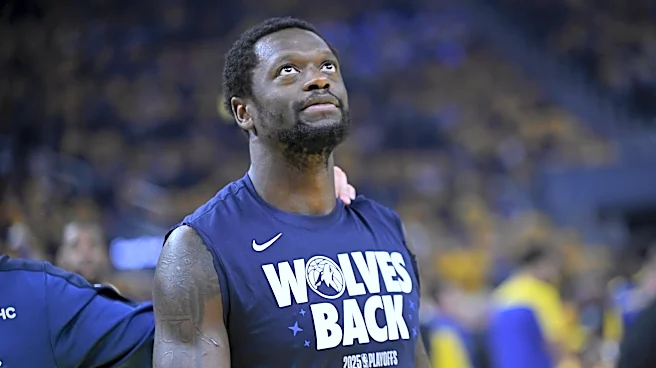




A lot has happened in the past couple of days for the Minnesota Timberwolves. It started on Monday night when they traded away Julius Randle to the Brooklyn Nets in what was essentially a salary dump.
Shortly thereafter, they re-signed Ayo Dosunmu to a five-year, $112 million contract. The deal will keep him under contract through at least the 2029-30 season before he has a player option on the final year of his new deal in 2030-31.
After the Randle trade, which sent out the Wolves’ 28th overall pick
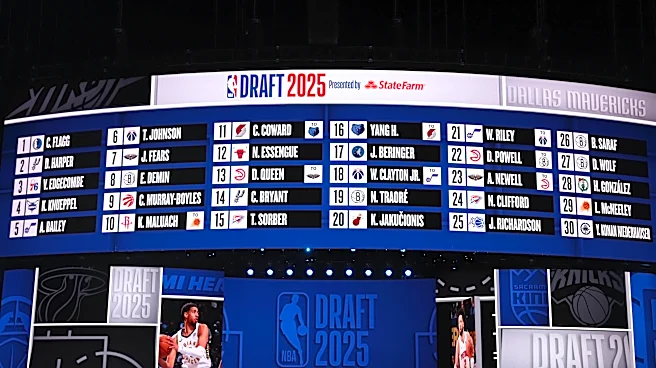
in exchange for the 33rd overall pick, Minnesota was left without a first-round pick. In the second round, the Wolves selected Isaiah Evans from Duke with the 33rd pick and Purdue’s Trey Kaufman-Renn at the 59th.
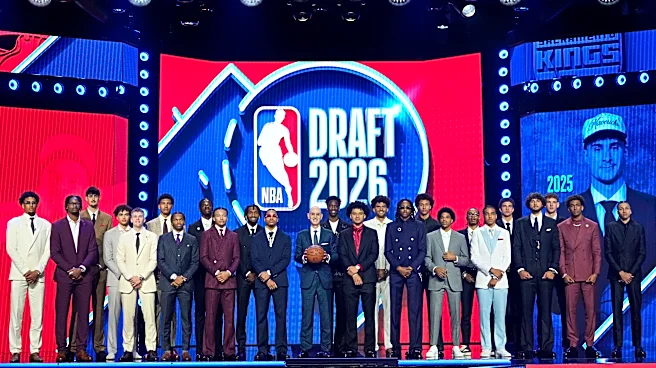
That is a lot to happen all in the span of three days, so here are some news and notes about where the Timberwolves find themselves with the 2026 NBA Draft now in the books.
Editor’s note- As this was being published, the Timberwolves traded Naz Reid and draft picks to the Charlotte Hornets for LaMelo Ball and Josh Green
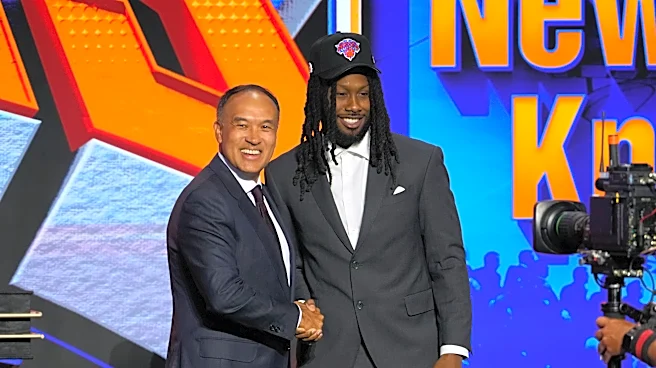
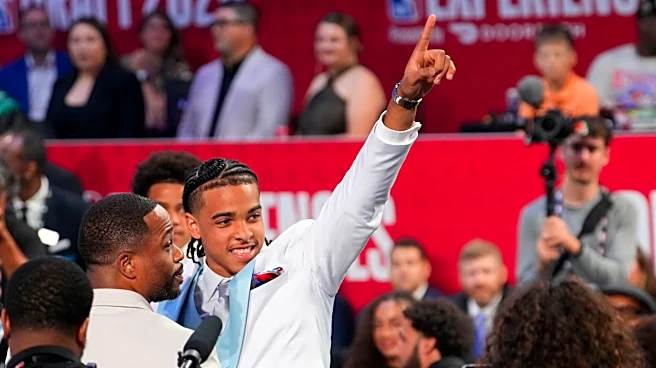
Wolves pick Isaiah Evans with the 33rd Pick
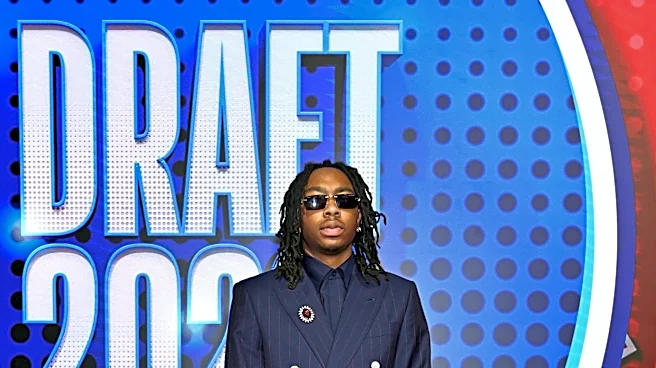
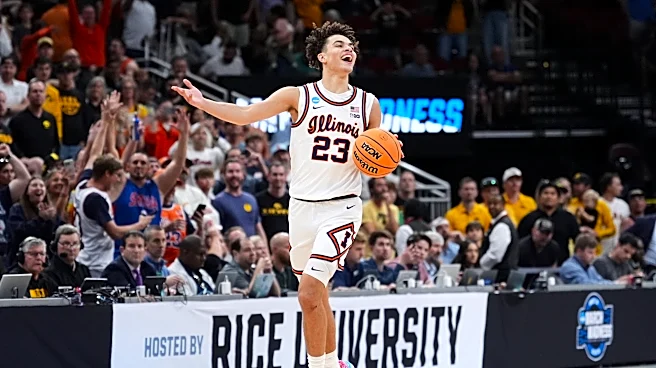
After moving back five spots following the Randle trade, the Timberwolves made their first selection of the 2026 NBA Draft, taking Evans with the 33rd overall pick. Evans is a six-foot-six wing from Duke who projects as one of the best shooters in this draft class.
The Wolves had Evans much higher than 33rd on their draft board and were considering taking him in the first round before they traded back. The Timberwolves believe they can develop Evans as a movement shooter and think highly of his confidence and mental makeup.
“I think it was just my ability to stretch the floor,” Evans said to reporters about the aspect of his game that he felt the Wolves were intrigued by. “It was my shooting ability that really got me in the door.”
The Wolves’ new rookie also spoke about who on the Wolves roster he is looking forward to learning from, saying, “Jaden McDaniels is a lot bigger than me, but I’m really interested in learning from him, how to affect the game on the defensive side as much as he does. Obviously, when Donte gets back, I really want to be able to fill in that role behind him and just learn how to come in and be that guy who is impacting the game on the wing alongside the guards.”
The main area of improvement for Evans that will determine the success of his time in Minnesota, and likely his NBA career, is his defensive ability, as is the case with many young prospects. Minnesota will try to develop him into a player who can defend multiple positions and will look for him to add muscle this summer.
Dodging the Luxury Tax?
When the Timberwolves did not receive anyone back in the trade that saw the Wolves send out their starting power forward, it was immediately clear that the move was about creating financial and salary cap flexibility.
The Wolves possibly could have traded Randle to a different team and received a small amount of future draft compensation, but that likely would have come with another player’s salary coming back. The Wolves elected instead to fully remove Randle’s $33.3 million contract from their books.
The trade gave the Wolves a ton of added financial flexibility. Even after re-signing Dosunmu to a deal that starts at $19.3 next season, Minnesota is $24 million below the Luxury Tax line and $30 million below the 1st Apron. That space gives the Wolves many paths to backfill Randle’s salary, including the $15 million mid-level exception and a $33 million trade exception.
During ESPN’s broadcast of the second round of the draft, Brian Windhorst gave a different opinion on why the Wolves sent Randle away.
“Minnesota has paid $100 million in luxury tax over the last three years, and they’ve drawn the line,” Windhorst said. “They are looking at a way to offload salary, get out of the luxury tax, and that is what this move was predicated on.”
Timberwolves President of Basketball Operations Tim Connelly was asked about the Luxury Tax after Tuesday’s first round of the draft and said, “I’ve been very fortunate since I got here with Glen and Becky [Taylor], Marc [Lore] and Alex [Rodriguez], it’s about winning. If the moves can exponentially increase our chance to win the highest level, we’re all in. We can’t be irresponsible fiscally, but we can’t ignore the real realities and the increasing punishment getting deeper and deeper than the tax, but we’re here to win.”
“Sometimes it’s financially motivated,” Connelly later said about the team valuing flexibility with the NBA’s current collective bargaining agreement. “Sometimes it’s hey, we think the more nimble we are in this new cycle, the more things present themselves. Sometimes it’s we have to re-up the guys, so we want to be a year ahead of it… Certainly, the more optionality you have, the more you can make moves.”
It is worth noting that at last season’s trade deadline, in a similar deal to this Randle trade, the Wolves’ salary dumped of Mike Conley, which saved Wolves ownership from tens of millions in luxury tax.
To be fair, the trade also put the Wolves below the 1st apron, which could have proven to be necessary if the Wolves had found a partner for a big-swing trade. Conley also eventually returned to Minnesota after being traded to and bought out by the Charlotte Hornets.
Only time will tell if the Timberwolves decide to keep their spending below the Luxury Tax line or not. The offseason has only just begun, and another big-time trade could further shake up the Timberwolves roster and salary cap books.
Internal Growth
While the Wolves start their search of free agency to add talent to the roster, many in the Timberwolves front office believe that one of the main ways Minnesota will improve heading into next season is from players already on the roster getting better.
“I think we’re going to put a huge emphasis on internal development,” Connelly stated. “I think we have a couple guys that had very limited roles last year that are capable of a lot, lot more.”
The two most notable players that the Wolves expect to see growth from are Naz Reid and Jaden McDaniels. Both are set to see increased roles on next year’s team, with Reid joining the starting lineup and McDaniels likely slated for more on-ball possessions.
“It’s just about creating the opportunities now,” Timberwolves Head Coach Chris Finch said of Reid and McDaneils. “I think we’ve seen what they can do, and it’s their job to make sure it stays at a consistently high level… We’ve talked about it before. When you have a lot of great options, it’s just a usage puzzle, and we just gotta make sure that the usage is appropriate.”
With Randle out of the way,
Finch shared a similar sentiment when speaking about Terrence Shannon Jr. and Joan Beringer, who are both set to have more carved out roles for them in the rotation.
“It’s about creating pathways for those guys to be able to play,” Finch explained. “You might say, ‘Isn’t that the coach’s job?’ But sometimes, you know, there’s a gridlock. When you have the type of roster construction that we’ve had in the last couple of years, which has been a large part of our identity. So we’ve gotta look at how we can either kind of change things around or get to a point where these guys can get a more consistent role.”
Beringer, especially, has caught the eye of the Timberwolves brass as he has steadily improved behind the scenes during his 12 months with the organization.
“Oh boy, here we go,” Timberwolves General Manager Matt Lloyd said excitedly when asked about Beringer. “His progression since he got here, first off, he learned English, so that tends to help a little bit, and secondly, he’s put the work in to elicit a positive outcome because that’s who he is.”
The Wolves are still likely going to add pieces to their roster, with the point guard position lingering as a need. Minnesota is also banking on the improvement from the young core of its roster. From starters like Reid and McDaniels, down to the 20-year-old French kid set to see his first consistent stretch of playing time, the Wolves are expecting the returning portion of their roster to take big strides next season.
Anthony Edwards isn’t Going Anywhere
Almost immediately after Giannis Antetokounmpo was traded from the Milwaukee Bucks to the Miami Heat, the NBA world, mostly on social media, went searching for the next superstar that they wanted to see traded.
Unfortunately for Timberwolves fans, that led them to Anthony Edwards. Even though Edwards still has three years left on his contract, that didn’t stop many from wondering if the 24-year-old, four-time All-Star is currently disappointed with the current state of his team.
While that may be what opposing fans want to see from Edwards, it is certainly not what he or his camp have indicated to local reporters or the Timberwolves themselves.
“I think he’s super super excited,” Connelly said about Edwards. “There’s been countless things we could have done. I think our roster is pretty well though of league wide. When you go to your leaders like Ant, you say it takes this to get that, and the conviction he has in our guys is evident, and we say, No, we’re not trading this guy.”
The discourse about Edwards potentially leaving the Wolves one day are not likely to stop any time soon. Online fans who only follow the sport by hopping from one trade rumor to the next are not likely to give it up until they either get what they want or Edwards signs an extension past his current contract.
The only thing the Timberwolves can do now is put the best team possible around Edwards so that when he is handed that potential extension as soon as next summer, he signs it without hesitation.