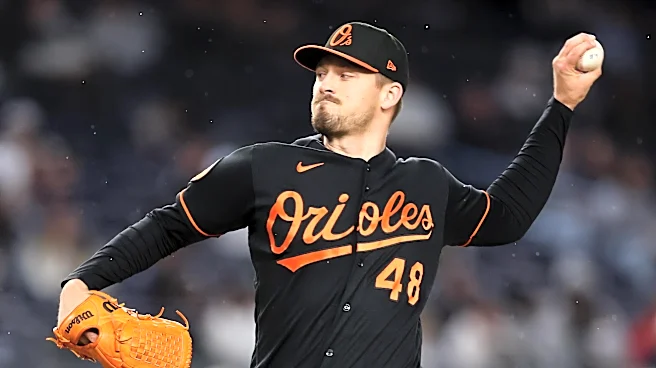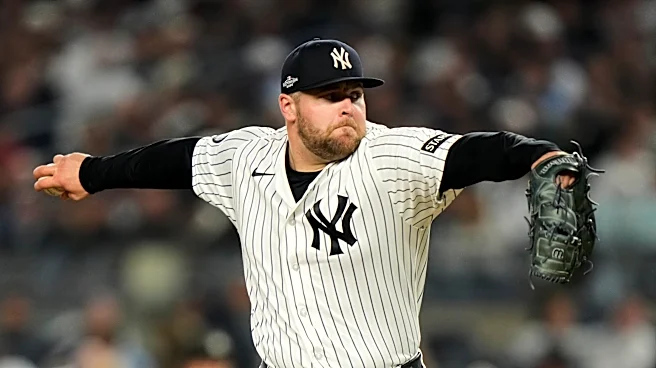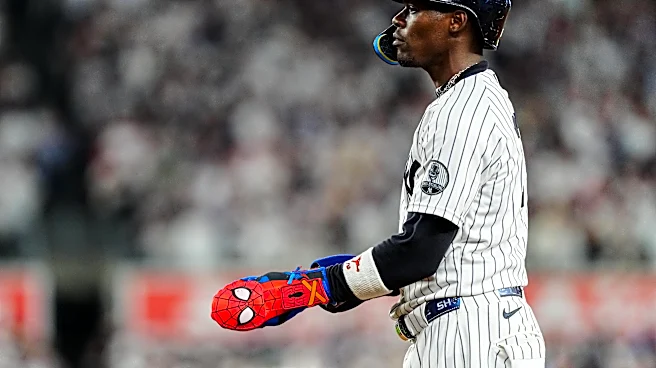


The Yankees did what was expected by issuing a qualifying offer to David Bednar but not to Jazz Chisholm Jr., refusing to commit to a $23.15 million, one-year deal in hopes of receiving draft-pick compensation if the player declines. Jazz set himself up for disappointment by stating he aimed to become only the second player in MLB history to deliver a 50-50 (HR/SB) season, joining a group whose sole member is Shohei Ohtani, only to deliver a subpar campaign that was easily his worst in pinstripes.
Through the back end of 2024 and the entire 2025 campaign, the Yankees had managed to unlock Jazz’s power and if all else failed, that felt like a dependable part of his game —that is until he delivered a slugging percentage under .400 this past season, qualifying as one of the more disappointing Yankees. The speed is a dynamic part of his game, and he did kick things up a notch by stealing 41 bases in 50 attempts, but if you’re not hitting, it’s all damn near inconsequential — at least for a player of his perceived magnitude.
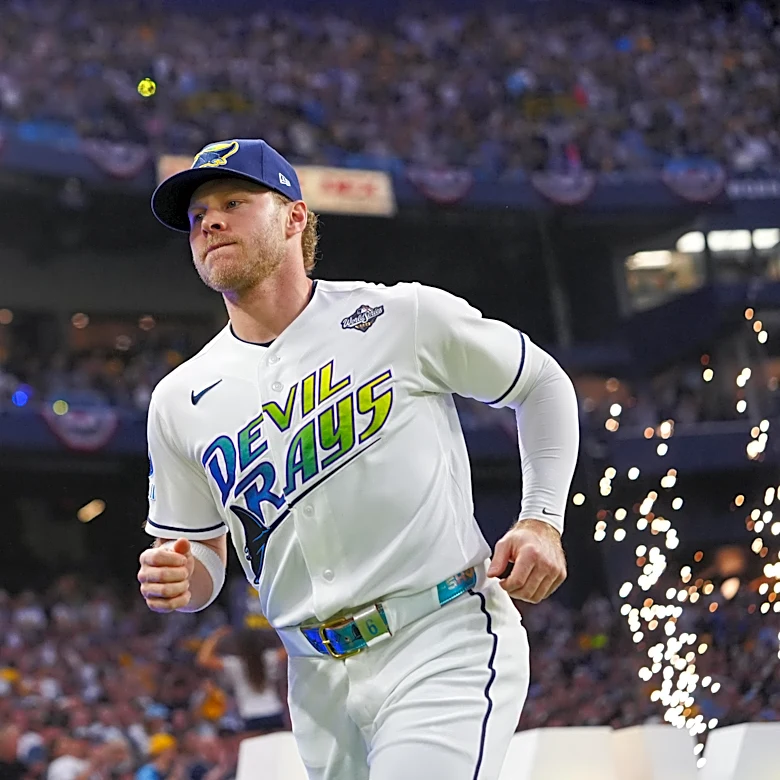
While in contrasting situations, it’s impossible to analyze the decision not to hand Jazz the qualifying offer without rewinding the clock a year. In a scenario of a potentially questionable qualifying offer, the Yankees took the risk and gave it to Trent Grisham following a breakout year — only to see him revert to the player he was before 2025 while earning one of the highest salaries on the team. Grisham was among the few who gave Jazz a run for his money in terms of underwhelming output this past season.
In Jazz’s case, he has the multi-year track record to back a turnaround while coming off a poor campaign. The Yankees could’ve feasibly gambled on that to bring him back without risking a long-term deal, especially since there isn’t an in-house replacement lined up for his position. On the other hand, given just how melancholic the end of Jazz’s 2026 was, the fear of once again committing to a large salary with great uncertainty as to what you’ll get contributed to the parting of ways.
The comparison with Grisham is even more pertinent when you account for the strong likelihood that Jazz would’ve taken the Yankees up on this offer. About to turn 29 early next year, Jazz is young enough that he could afford to take a one-year deal to rebuild his value and put himself in the best position to receive a lucrative long-term deal a year later. My colleague Josh advocated for the QO when reviewing the Yankees’ pending free agents last month.
When you go through the second-base market and see the likes of Luis Arraez, Brandon Lowe, and Mauricio Dubón, it’s not as if the options are plentiful for replacements who you’ll feel great about. The counterpoint to that is that the Yankees could pay less for the production they got from Jazz last season and save up for a big shot elsewhere.
Herein lies the problem with Chisholm, though, and his early boom with the Yankees contributes to this issue. As much as we can talk about how disappointing his 2026 campaign was, the first version he showed New York was also not the real Jazz we’ve seen in the bigs. Jazz is a career .756 OPS hitter heading into free agency; his power/speed/athleticism are eye-popping, but the great player we saw in 2025 is as much of an outlier as the one we saw in 2026. Even reading his 2026 production as moderate belies the fact that the Yankees did not feel great about him against lefties down the stretch; he has a .662 career OPS against southpaws and it was .650 in 2026. If we’re forced to accept that owner Hal Steinbrenner is going to play the strict budget game, then $23.15 million in the 2027 budget is hefty for a borderline platoon bat.
Having seen the highs and the lows of the Chisholm roller-coaster, the Yankees are probably more willing to defer to a safer big investment.