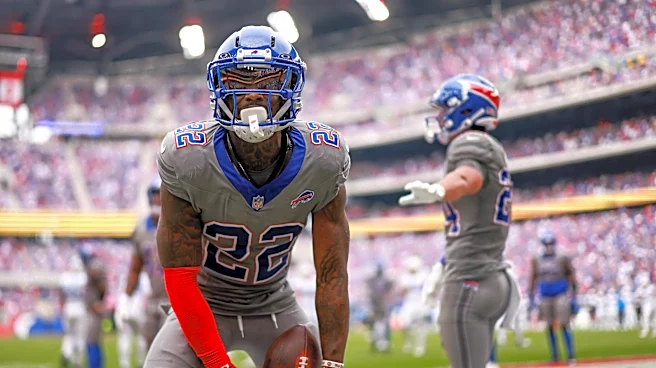


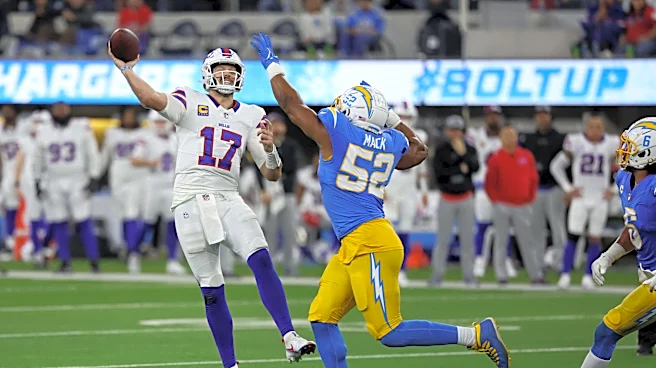
After two gorgeous wins to open the season, the Buffalo Bills proved they can win ugly in a five-turnover victory over the Los Angeles Chargers in Week 3.
The 24-16 win came after Buffalo trailed 10-0 in the first half, and these were my takeaways from the contest that got the Bills to 3-0.
Buffalo’s defense was damn good, in a modern NFL type of way
These were the Chargers drive results after building a 1o-0 lead that came after three Bills turnovers in the first 16 minutes of the game:
- Missed field goal
- Punt
- End of half
- Field goal
- Punt
- Interception
- Turnover on downs
- Field goal
I don’t care about the yardage allowed on each of those drives. In today’s
NFL that is stingy defense. And even if we count the missed field goal as a make, that would’ve been nine points on Los Angeles’ final eight drives. A 1.12 yards-per-drive rate is very pedestrian for any offense.
After allowing 31 points in consecutive weeks to begin the season, surrendering 16 points in a contest in which the offense committed five turnovers is downright sensational.
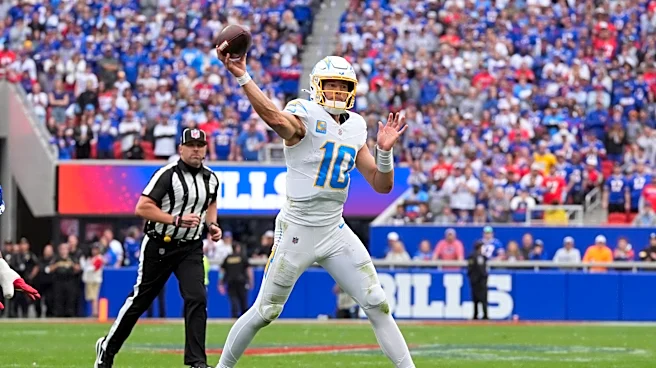
And, heck, it absolutely felt like Justin Herbert was on his game yesterday. But he did ultimately finish with a 6.6 yards-per-attempt average — 7.0 is the benchmark for solid albeit unspectacular quarterback efficiency. For perspective, Jared Goff averaged 8.6 yards per attempt in Week 2, and C.J. Stroud’s YPA was 7.2 in Week 1.
If Buffalo’s offense drove the Bills to victories in the opening two weeks, its defense saved the day in Week 3, which should serve as another reminder football is the ultimate team game.
No, 348 yards of total offense allowed is not representative of suffocating defense, yet in today’s NFL, it was a strong, situation-based effort from the Bills defense in this win.
Chargers took away away middle of the field
In Week 3, beyond the line of scrimmage and over the middle, Allen was 7-of-13 for 84 yards with two interceptions, a far cry from the 20-of-29 for 316 yards with four touchdowns and no picks in the first two games on over-the-middle throws.
Clearly, the Chargers realized Allen both loves the middle of the field and is excellent throwing passes in that area of the field, so they regularly inserted a “robber” safety, free to roam there, especially at the intermediate level. Rookie Genesis Smith was that robber on Allen’s first interception, jumping an in-breaking route over the middle intended for DJ Moore.
But it wasn’t just that throw. Khalil Shakir, who normally feasts over the middle, only caught one pass for six yards and was targeted on one of the Chargers five pass breakups in this game.
This is not to suggest Los Angeles unlocked the secret to limiting Allen through the air. He’s more than capable of ripping throws outside the numbers on a regular basis to dice secondaries that way. But like I wrote earlier last week, it appeared the Bills game plan was centered around the Chargers being vulnerable at safety with Elijah Molden out, and it actually was Los Angeles’ safeties who made some significant plays in this game. Imagine that.
The Chargers had one of the more unique pass-rush plans I’ve seen
In this contest, Los Angeles started its defensive ends exceptionally wide — almost as if they were blitzing corners. That wrinkle did two things — first and foremost, it kept Allen in the pocket far more frequently than he’s accustomed to. Secondly, it forced the Bills tackles to block on an island with plenty of space around them.
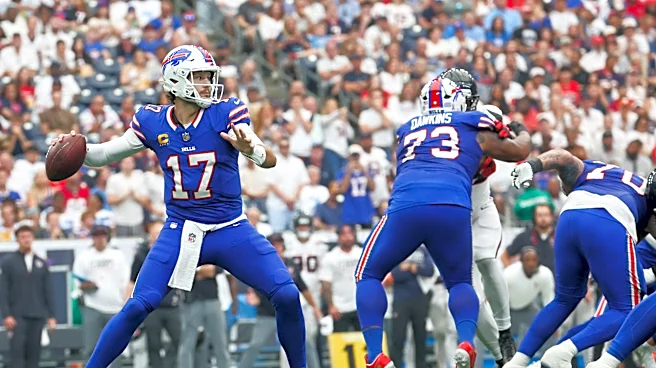
Dion Dawkins and Spencer Brown are fine island blockers, but the unique approach from those extra-wide rushers seemed to throw off the blockers’ timing. They were deep into their vertical pass-protection sets, and Khalil Mack and Akheem Mesidor/Tuli Tuipulotu were still steps away from them, charging ahead at full speed.
That disrupted timing for Buffalo’s talented tackles, and gave Mack and Co. flat angles to get to Allen. The Chargers pressured Buffalo’s quarterback on 38.7% of his drop backs despite only blitzing 22.6% of the time.
Couple those creative pass-rush looks with Los Angeles’ prioritizing the elimination of Allen’s easy outlets between the numbers, and you get an awkward-looking superstar for a large portion of this contest.
Was there something to Josh Allen not running as much early?
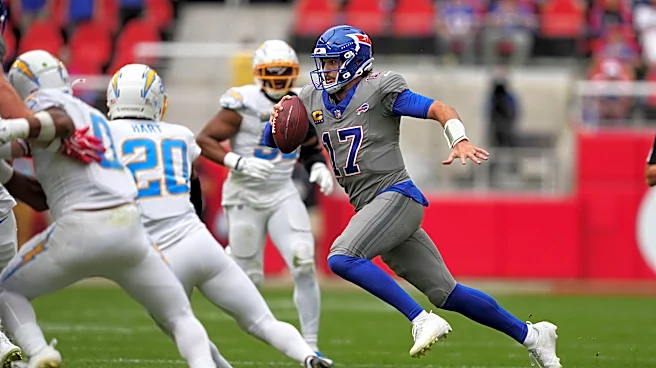
From the Dawson Knox (failed) tush push to a few instances in the first half that appeared to be easy-access running opportunities than Allen stunningly passed up, at the half, I wondered if Allen was a little dinged OR if it was suggested to him to stay away from taking big hits as a runner after the NFL saw a litany of starting quarterback suffer injuries in Week 2.
Fortunately for the Bills — and the quarterback’s natural tendencies — there was plenty more scrambling and designed-run opportunities in the second half. It all appeared back to normal.
But in those opening two stanzas, things were different.
Can’t discount the Chargers defensive game plan — which was damn good, I alluded to above — keeping him contained as well.
The sample size is plenty big enough… I don’t expect Allen to become timid as a runner. But it probably is something to monitor for at least into Week 4’s game against the Patriots.
The value of James Cook (and Ty Johnson)
In a game like that one, where the opponents’ defensive game plan and execution are incredible, it’s quite the luxury to have the reigning rushing champion and one of the league’s best third-down backs at your disposal.
For as much as I’m an advocate for Allen being the center of every tactical plan each week, Cook’s presence cannot be ignored. Toting the rock 24 times for 154 yards with a score against that run defense? Magnificent. Hats off the big boys up front too.
And how about Johnson? Four catches for 50 yards, none bigger than his 29-yarder on a 4th down with the Bills trailing by three in the fourth quarter. The importance of his return to the field cannot be overstated.