






After a tumultuous sub-.500 season that disappointed fans, players, and ownership, the Dallas Mavericks parted ways with their head coach. He had four years remaining on his contract. He had brought a championship pedigree as a player. He had been tasked with steadying a roster that had gone off the rails. The season was so historically dysfunctional that the franchise decided continuity was no longer the answer.
The year was 1994. The coach was Quinn Buckner.
Three decades later, ask the casual NBA
fan to name the Dallas Mavericks head coach who got fired despite years left on his contract after a 13-69 disaster, and nine out of ten won’t recognize the name. Buckner was a footnote almost the moment the season ended. He never head-coached in the NBA again. The fireball burned hot, burned fast, and the franchise moved on toward what would become part of the long wilderness between the Reunion Rowdies and Mark Cuban’s arrival.
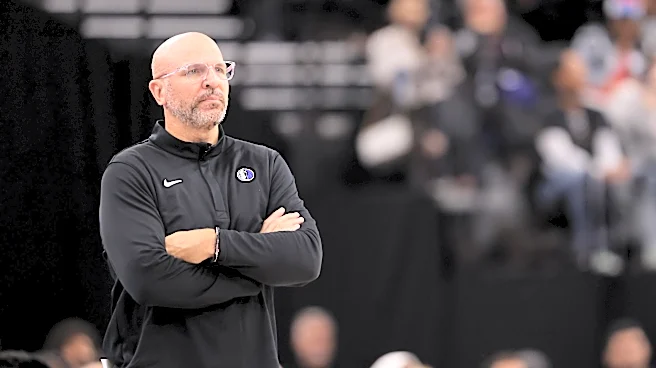
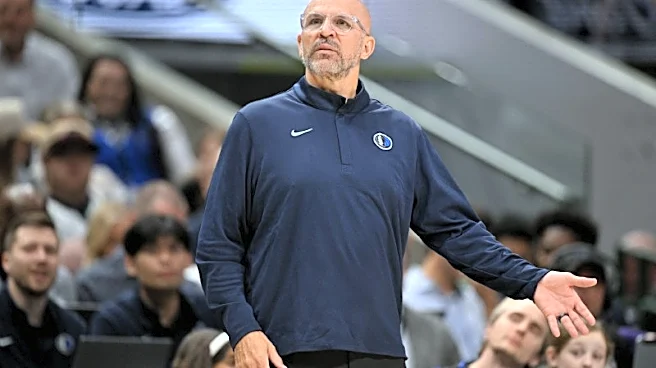
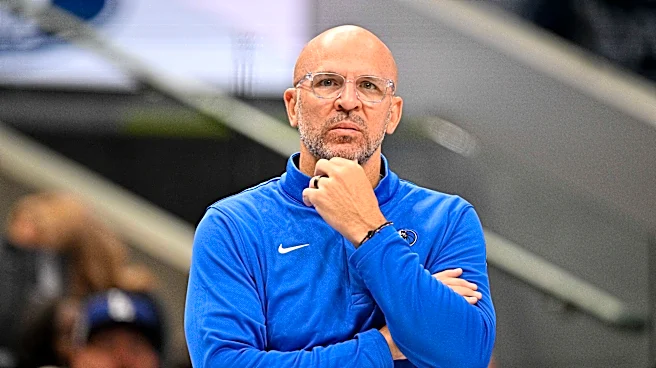
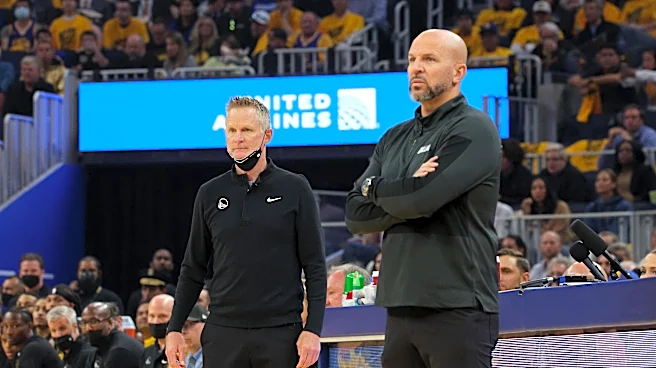
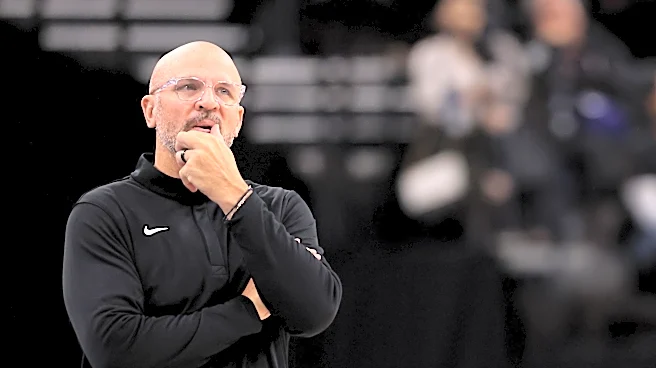
This week, the Mavericks parted with another head coach. He, too, had years remaining on his contract — four of them, more than $40 million still owed. He, too, brought a championship pedigree, in his case as both a player (the 2011 ring is on his finger) and as an assistant on the Lakers staff that captured the 2020 bubble title. He, too, presided over a sub-.500 season that disappointed fans, players, and ownership.
This is what a bad marriage that lingered too long looks like when it finally ends.
The trilogy this completes
This past season marked my fourth on staff at Mavs Moneyball. Covering Jason Kidd has been a big part of that. So has charting the fallout of the worst single transaction in NBA history, which is now eighteen months in the rearview.
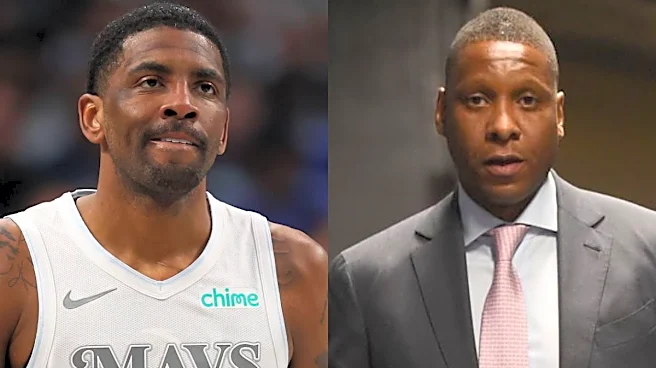
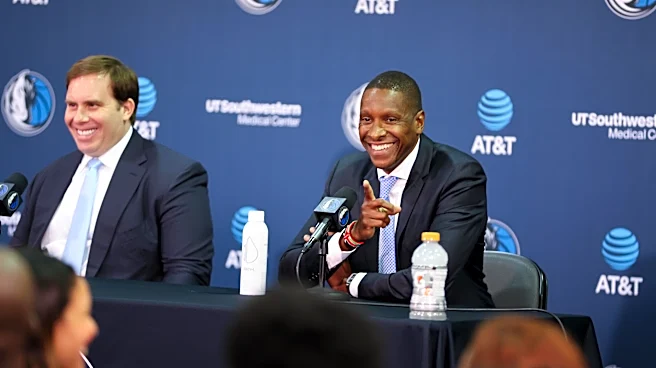
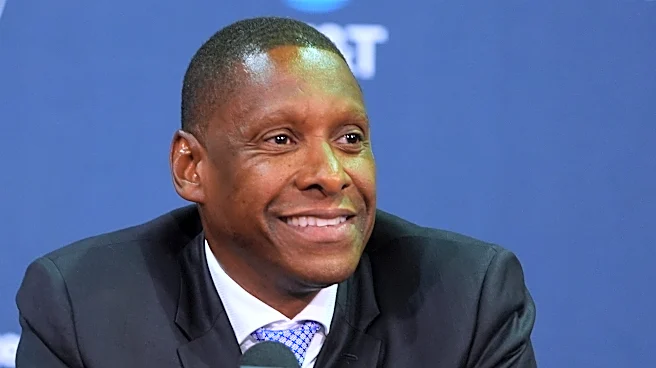
This is the third piece in a slow-motion conclusion. In April, I argued the Mavericks needed to part with everyone tied to the Dončić trade. In May, after Masai Ujiri arrived, I wrote that the organization was about to receive a full-body scan. Kidd was the last unresolved reading on that scan. Now the result is in.
ESPN’s Tim MacMahon reported Tuesday that Patrick Dumont had informed Kidd months ago he would not be considered for the president of basketball operations job, and that Kidd had been kept out of the loop during the process that led to Ujiri’s hiring.
His Friday-morning press conference back in early April, the one where he insisted he had been informed of the Dončić trade only at “the 11th hour,” looks different in that light. He was answering Mark Cuban’s bombshell. He was also building external market value for whatever came next. The internal door to any sort of ascension had been shut for months.
The fireball versus corrosion
Sometimes the worst-case scenario for a partnership is not the dreadful train wreck that flames out in a year or two. Sometimes the worst case is the marriage that lingers via just enough success to keep it alive long enough to do real, structural damage.
If you think about people in your life or your own history, you can probably name a relationship that was so volatile, so fundamentally mismatched, that it ended quickly. Those relationships leave scars. The people involved usually recover.
Then there are the marriages that are not disasters. They are not great either. They have moments. They have good months. They have just enough chemistry, just enough shared history, just enough flashes of why this seemed like a good idea, that nobody pulls the trigger on ending it. The damage accumulates. Years pass. Opportunities are missed. By the time the divorce papers come, the real cost is not the breakup. It is everything the lingering took.
What Kidd was
When the Mavericks hired Jason Kidd in the summer of 2021, they needed someone who could survive a post-Carlisle Luka era. After friction between Dončić and Rick Carlisle reached a breaking point, the franchise needed a head coach with credentials a rising superstar could not hand-wave away. Who better than the point guard of the only championship in franchise history?
Kidd had spent the prior season as an assistant under Frank Vogel on the Lakers staff that won the 2020 bubble title. He brought that defensive system to Dallas. He never lost the locker room in its entirety, even in the back half of this season, when the roster had every reason to mail it in. Veterans like Daniel Gafford, PJ Washington, Naji Marshall, and Klay Thompson played hard for him to the end. That is a real skill. It is also the floor of the job, not the ceiling.
In 2022, with a roster that featured Dončić and Brunson, the Mavericks rode duct tape and bailing twine to the Western Conference Finals with what amounted to a seven-and-a-half-man rotation. That run was Kidd at his best.
In 2024, with deadline-acquired Daniel Gafford and PJ Washington plugged into a roster anchored by Dončić and Kyrie Irving, the Mavericks reached the NBA Finals. The basketball was electric for two months. They ran into a Boston Celtics team that was probably going to beat anyone in the league that year, and they went down in five. The run was still real. It was also Kidd at his best.
Two deep playoff runs in five years. A 22-18 postseason record. That is not a fraud’s resume. That is a competent NBA head coach who twice found his stride under the playoff spotlight when his rosters cooperated.
It is also the just-enough success that bought the regime the runway to detonate the future.
Strip the halo
Take Jason Kidd’s playing career, his 2011 championship ring, and his Hall of Fame credentials, and superimpose his record over five years onto some other random NBA head coach. Would the conversation about his firing sound the same?
The final ledger in Dallas reads 205-205. Exactly even. Five seasons. Won as many as he lost. Three lottery-bound finishes in those five years. Conversely, the two playoff runs were amazing, propelled by transcendent guard play.
According to MacMahon, with Luka Dončić in the lineup, Kidd’s Mavericks went 136-87. A .610 winning percentage, roughly the pace of a 50-win team. Without Luka, they went 69-118. A .369 winning percentage, roughly the pace of a 30-win team. The gap between those records is the size of a franchise’s entire playoff window.
That gap is the halo. Luka was driving the bus. Kidd was helping shape the route, and to his credit he was a good defensive coach who knew what to do when the playoffs arrived. It is also clear that the engine of winning in Dallas under Kidd was Luka Dončić. Take Luka out, and the team was below mediocre.
Now imagine that record without the Hall of Fame name. Imagine the headlines reading “Mavericks fire 205-205 head coach with three lottery finishes in five seasons.” The halo bought Kidd time. It bought him contract extensions from Patrick Dumont. It bought him a louder voice on personnel decisions, an enabler in Nico Harrison, and the runway to be in the room when the worst trade in NBA history got made.
The halo is also what makes the firing feel ungentle to some. The question is not whether Jason Kidd, the player, deserves reverence in Dallas. He does. The question is whether Jason Kidd, the coach, earned five years and a sizable, unfinished contract. The record, stripped of the playing career, says no.
The other partner
I have written about Nico Harrison so many times over the last eighteen months that I would happily never type the name again. The Harrison piece of this is structural, though, because the marriage we are talking about was not Kidd-and-Dallas. It was Harrison-and-Kidd. The two of them ran the basketball operation together for the first four years. The damage was joint.
Harrison’s part of the story is well-documented now. His disdain for Dončić. His long-standing fascination with Anthony Davis, frozen in his memory at the prime All-Star version of Davis from 2014 rather than the brittle 30-something who would play 31 games across two partial Mavericks seasons before being salary-dumped to Washington. His freedom, once Cuban’s ownership stake was reduced, was to operate inside the information silo he constructed around Patrick Dumont, where dissenting voices were kept away from the cloistered neophyte.
It would shock me if Harrison ever resurfaces in an NBA front office. He is more likely to be the punchline in a hypothetical revival of SNL’s late-’80s Bad Idea Jeans commercial than the architect of another franchise.
Kidd’s path is different. He will most likely land somewhere as a head coach. Whether he ever gets the front-office personnel power he reportedly wanted in Dallas is a separate question, and one I would not bet on. The pattern is now public. He wanted that kind of role in Milwaukee. He wanted it in Brooklyn. He wanted it in Dallas. In each city, the relationship ended when the answer was no.
What comes next
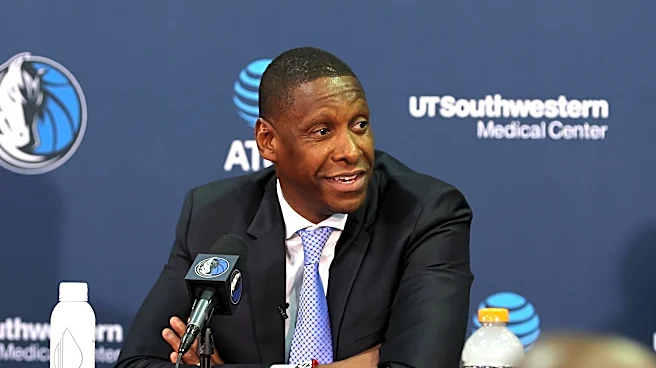
Masai Ujiri said it at his press conference. A clean slate. A new direction. A thorough, disciplined search for the next head coach.
I would expect that search to favor someone Ujiri can grow with. His two prior major coaching hires (Nick Nurse and Darko Rajaković with the Raptors) were both first-time NBA head coaches. The pattern matters because Ujiri’s job is not to win 50 games next year. His job is to build the foundation around Cooper Flagg, the 19-year-old Rookie of the Year and the prince Ujiri publicly anointed at his introductory press conference.
It also matters because the new general manager in Dallas, Mike Schmitz, is himself a first-time GM, brought over from the Portland Trail Blazers, where he had been an assistant general manager. Ujiri is building a front office of people who have not done this version of the job before, gathered around an architect who has. That is by design.
The hardest adjustment for Mavericks fans may be that this is not going to be a quick reset. Dallas has not gone through a true rebuild in over a quarter-century. The Dirk era arrived, the Big Three of Nash, Finley, and Dirk coalesced, the 2011 championship happened, the post-Dirk wilderness was brief because Luka was so good so fast. The lack of first-round pick control will lead to chatter about how the Mavericks need to be competing for a postseason run right away, but that may not be the plan. A more measured approach to a rebuild should not surprise anyone.
Will Irving — or, for that matter, other veterans acquired to contend in an era that just ended — be kept for the start of next season? Or are we about to see a series of transactions before, during, or after the draft that reorient the roster toward a window that aligns with the age of the new franchise player?
Speculate as you like. My guess is that Ujiri shops everyone on the roster outside of Flagg and listens to every offer. That is what a scout does. That is what the body scan delivers.
Footnote and cautionary tale
Henry Abbott, who has covered Jason Kidd since his playing days with the Nets, wrote yesterday: “This is a great firing.“
I would not have used those words. The firing of Jason Kidd was necessary. It was inevitable from the moment Patrick Dumont chose Masai Ujiri over the man who had reportedly wanted that chair. It was the structural consequence of a marriage that should have ended sooner.
But great is not the word, because great implies a happy ending. The happy ending was always going to be Luka Dončić in a Mavericks jersey, the team that almost won the championship in 2024 coming back healthy for one more run, Klay Thompson playing the role he signed up to play, the franchise’s window staying open for the player who had spent his entire career making it possible.
That happy ending is what the lingering marriage took.
Quinn Buckner’s tenure was a fireball. It ended at 13-69 in a single season. Thirty years later, almost nobody remembers it. The Mavericks recovered. The franchise rebuilt. The wilderness years gave way to Dirk, and Dirk gave way to a championship.
The Harrison-Kidd era will be remembered because it lasted just long enough to cost the franchise something a fireball could never have cost.
Luka Dončić and that 2024 team deserved at least one more bite at the apple. They earned that. They didn’t get it.
That is the difference between Buckner and Kidd. One was a mid-90s wayward season lost to history. The other became a cautionary tale we won’t soon forget.
A fireball clears out quickly. Corrosion sticks around long enough to change the shape of the franchise.