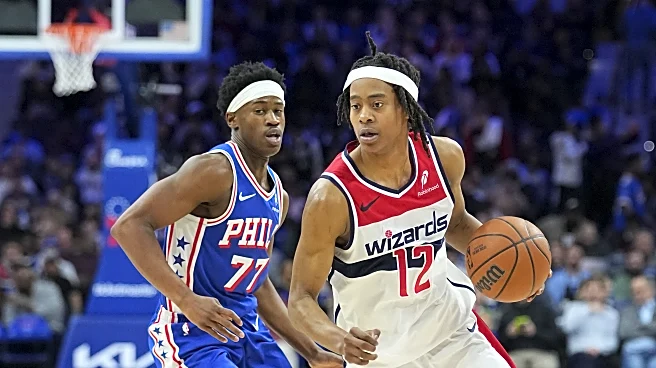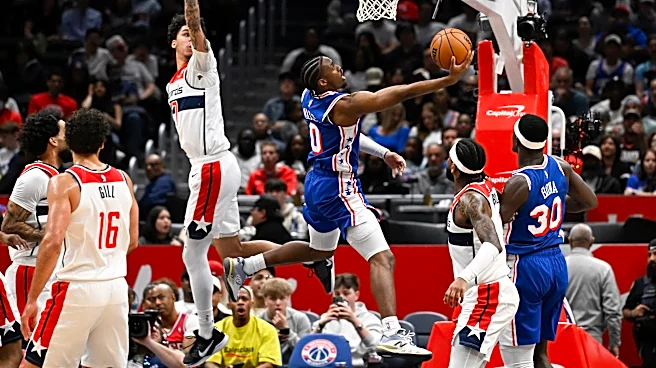


The Wizards accomplished a few things in their 153-131 loss to the Philadelphia 76ers, the most important of which was moving back to the top of the NBA’s Draft Lottery standings. Their loss, paired with the Indiana Pacers getting a second straight win, puts Washington back into “league worst” status.
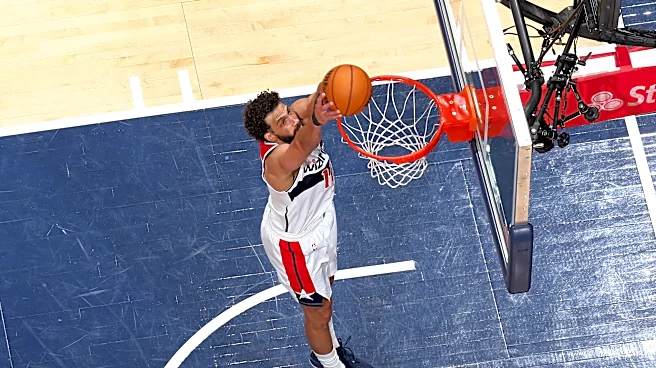
Some of their “accomplishments” last night were of the good variety. Anthony Gill hit 8-9 from the floor en route to a career high 21 points. He connected on all three of his three-point attempts, and
added six rebounds and six assists.

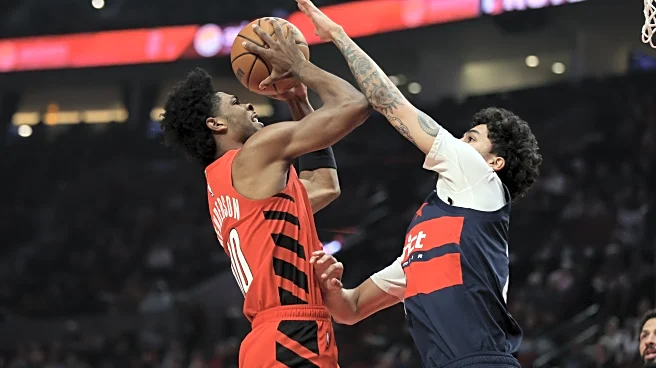
Justin Champagnie produced 17 points, 7 rebounds, a steal and 2 blocks in just 21 minutes.
Tristan Vukcevic scored 17 points in 11 minutes and needed just 7 shots to do it.
Their other “accomplishments” were more dubious:
- They shot 60.7% on twos, 40.0% on threes (with 16 makes), posted a 125 offensive rating (league average is 115.6 this season), scored 131 points…and lost by 22.
- They let the Sixers shoot 68.8% on twos and 48.6% on threes. Philadelphia made 17 threes.
- They allowed a season high 153 points, though it was “only’ their third worst defensive game of the season. Washington allowed even higher defensive ratings to the Boston Celtics back in December, and about 10 days ago to the New York Knicks.
In case you were wondering, Philadelphia’s 153 points was only the fourth most allowed in Wizards franchise history:
- 162 — Indiana Pacers, March 27, 2025
- 159 — Houston Rockets, Oct. 30, 2019
- 157 — San Antonio Spurs, Feb. 25, 2022
- 153 — 3x — Philadelphia 76ers, April 1, 2026 | Boston Celtics, Nov. 27, 1970 | Cincinnati Royals, Feb. 21, 1962
- 152 — Atlanta Hawks, Jan. 26, 2020
A few tidbits from that list:
- Second year guard Oscar Robertson was on that Royals team. He had 18 points and 17 assists in that game, and the Royals saw eight guys score in double figures.
- In that game against the Hawks, current Wizards guard Trae Young had 45 points and 14 assists. The Wizards for some reason started Ian Mahinmi, Thomas Bryant, and Isaiah Thomas. They gave 29 minutes to Ish Smith, 33 to Davis Bertans, and 15 to Anzejs Pasecniks.
- In the 1970 contest, Boston’s John Havlicek had a triple-double — 33-10-10. Dave Cowens had 20 points and 14 rebounds. For Washington, Wes Unseld had 14 points, 14 rebounds, and 4 assists. Gus Johnson had 22 and 14, though he shot just 7-18. Earl Monroe played just 17 minutes, for some reason.
Back to last night’s game for a moment, I’m not going to delve much into the notebook because they can be summed up in two words: try harder.
This is not just about physical effort, though I think that’s been flagging in recent weeks, and was palpably absent last night. This is also about putting in the mental effort to focus on responsibilities within their system and the situation at hand, and trying to execute.
I get that the Wizards are young and developing. I get that they need to gain experience and get stronger, and that they’re supposed to lose. But I’d still like to see more possession-by-possession compete out of them.
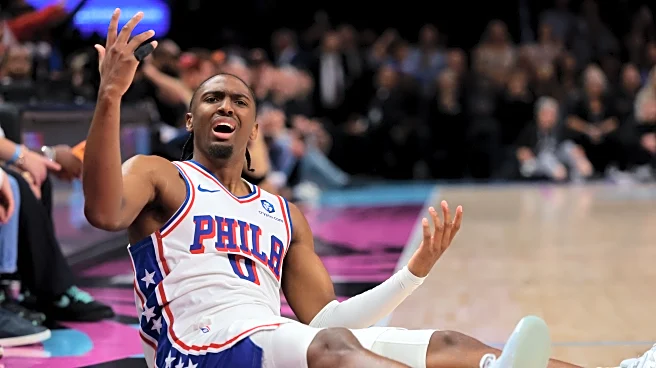
What do I mean by that? Stuff like Bub Carrington trailing Tyrese Maxey out top on a baseline out of bounds play and simply getting out run to the basket for a layup.
Stuff like Justin Champagnie getting switched onto Maxey and then defending with nonsensical crowding, atrocious footwork, and a pointless swipe in the general direction of the ball…leading to a Maxey blow-by dunk.
Of course, sometimes you try and just get beat. On two second half possessions, Gill didn’t help on one Maxey drive despite being low man and in perfect position to get there. A few possessions later, Gill helped hard on a Maxey drive and got to the right spot, but Maxey turned left, attacked the spot Gill had just left, and got a layup. He’s good.
Bright side: only six more of these left.
Four Factors
Below are the four factors that decide wins and losses in basketball — shooting (efg), rebounding (offensive rebounds), ball handling (turnovers), fouling (free throws made).
The four factors are measured by:
- eFG% (effective field goal percentage, which accounts for the three-point shot)
- OREB% (offensive rebound percentage)
- TOV% (turnover percentage — turnovers divided by possessions)
- FTM/FGA (free throws made divided by field goal attempts)
Stats & Metrics
PPA is my overall production metric, which credits players for things they do that help a team win (scoring, rebounding, playmaking, defending) and dings them for things that hurt (missed shots, turnovers, bad defense, fouls).
PPA is a per possession metric designed for larger data sets. In small sample sizes, the numbers can get weird. In PPA, 100 is average, higher is better and replacement level is 45. For a single game, replacement level isn’t much use, and I reiterate the caution about small samples sometimes producing weird results.
POSS is the number of possessions each player was on the floor in this game.
ORTG = offensive rating, which is points produced per individual possessions x 100. League average so far this season is listed in the Four Factors table above. Points produced is not the same as points scored. It includes the value of assists and offensive rebounds, as well as sharing credit when receiving an assist.
USG = offensive usage rate. Average is 20%. Median so far this season is 17.7%.
ORTG and USG are versions of stats created by former Wizards assistant coach Dean Oliver and modified by me. ORTG is an efficiency measure that accounts for the value of shooting, offensive rebounds, assists and turnovers. USG includes shooting from the floor and free throw line, offensive rebounds, assists and turnovers.
+PTS = “Plus Points” is a measure of the points gained or lost by each player based on their efficiency in this game compared to league average efficiency on the same number of possessions. A player with an offensive rating (points produced per possession x 100) of 100 who uses 20 possessions would produce 20 points. If the league average efficiency is 115, the league — on average — would produced 23.0 points in the same 20 possessions. So, the player in this hypothetical would have a +PTS score of -3.0.
Players are sorted by total production in the game.