

It’s a good thing there are more important things in life than the Philadelphia Eagles.
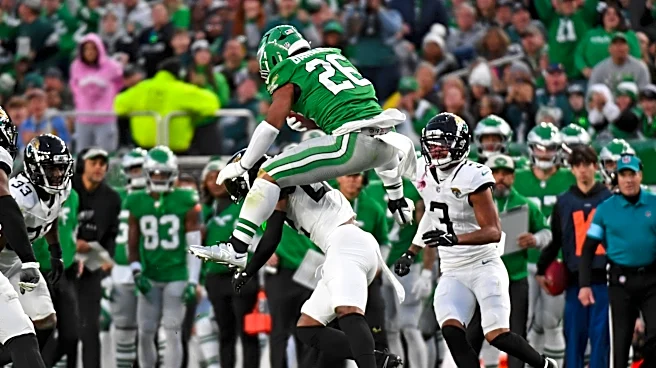
If that wasn’t the case, Sunday’s stunning 19-17 loss in London to the Jacksonville Jaguars might have plunged you into a deep, dark depression. The Eagles had somehow overcome a myriad of injuries and, as seven-point underdogs, flown across the Atlantic Ocean and stunned a superior Jags team with a unclean-but-effective effort to move to 3-2 on the season.
Until they hadn’t.
The 2026 Eagles roster is not nearly
as talented as preceding years, and it’s even less so with all their banged-up players. Now, more than ever, the coaching staff has to do everything in its power to put the players they have in the best positions to succeed.
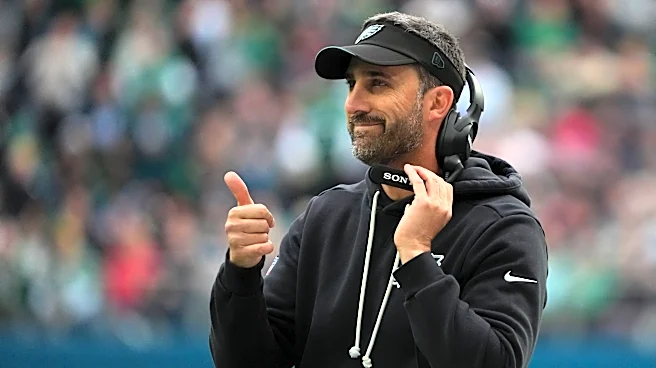
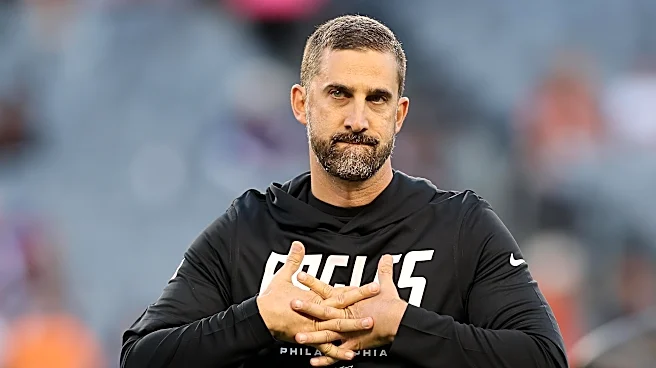
Nick Sirianni cannot be a reason the Eagles are losing games.
On Sunday in London, he was. Sirianni admitted this publicly, and to the team, following their heartbreaker of a defeat.
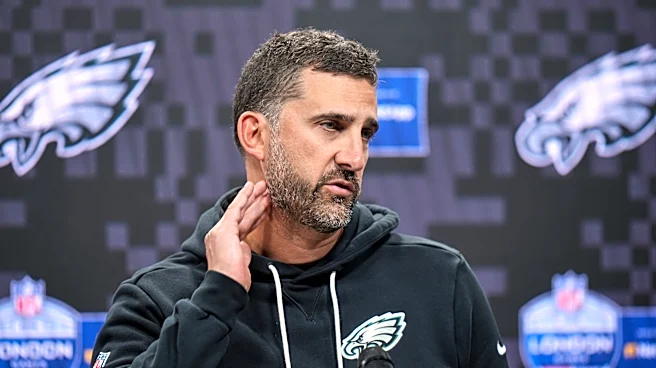
“I didn’t make the right decision, and I lost us that game. And that’s what I told the guys,” he said.
After Jake Elliott drained a go-ahead field goal with eight seconds left in the game to put the Birds up 17-16, Sirianni and special teams coach Michael Clay decided to have Elliott place the ensuing kickoff inside the target zone for a return rather than through the end zone.
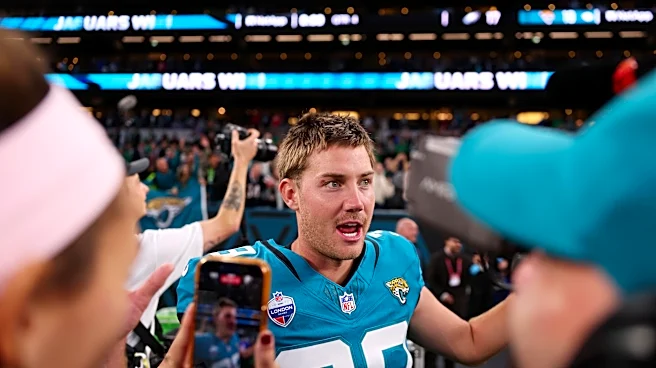
A touchback would have put the ball at the 35-yard line, about 20-25 yards away from field goal range for Jacksonville’s outstanding long-range kicker, Cam Little. Sirianni was undoubtedly hoping his special teams unit (which had given up a touchdown on the opening kickoff of the game that was called back due to penalties) would tackle returner Ameer Abdullah while at the same time burning most of the remaining time off the clock.
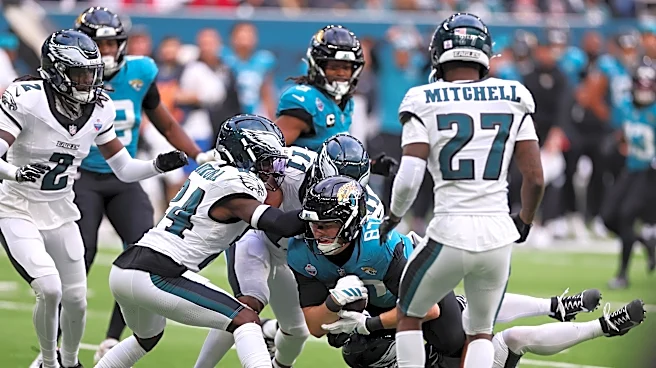
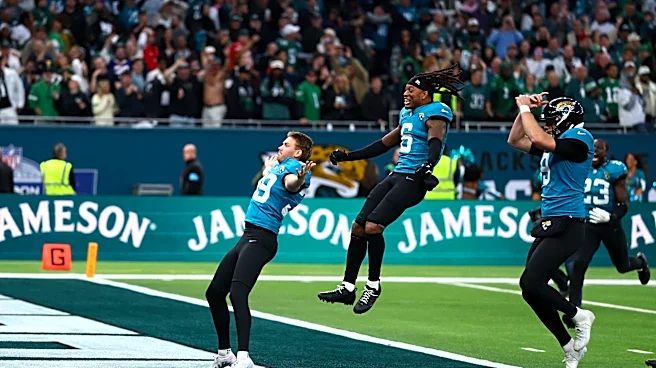
In 99 instances out of 100, that’s probably exactly what happens. But with many of the team’s special teams players forced into action on offense and defense due to injuries, that unit was more inexperienced and undermanned. As a result, Abdullah received the kickoff at the 5-yard line and ran it 53 yards into Eagles territory, setting up Little’s stunning 57-yarder with one second left.
It probably goes too far to say Sirianni single-handedly lost that game for the Eagles. The offense’s second half struggles (no touchdowns and one field after halftime over the last three weeks) and injuries throughout the roster took their toll.
But every fan watching this game was thinking the same thing prior to the kickoff: “Just kick it through the end zone. Just kick it through the end zone.” It’s always fascinating when the fanbase watching a sporting event is all screaming for one strategy while the coaches/managers on the field are thinking something entirely different. It’s also fascinating how often the fans are right, and the best football minds in the country get it so very wrong.
Sirianni doesn’t call plays on offense. In fact, Sirianni’s offense doesn’t exist. There isn’t one. He has nothing to do with the defense. His entire job as CEO head coach is to be in charge of in-game decisions exactly like this one. And yet, Sirianni has not executed this part of his job well.
Undoubtedly, he looked at recent events around the NFL in making the decision to kick it short of the end zone. On September 27 when the Cowboys lost the Ravens on a last second field goal, the Cowboys had just tied the game with a field goal with under 10 seconds left. Dallas kicked the ball into the end zone, giving the Ravens the ball at the 35-yard line. Lamar Jackson hit Zay Flowers with a 27-yard pass and called a timeout with one second remaining. Baltimore then kicked a shocking game-winning field goal, just as Jacksonville did on Sunday.
But Baltimore had a timeout remaining. They could throw the ball in the middle of the field and stop the clock. The Jags were out of timeouts, and would have had to force a long completion outside the hash marks and get out of bounds to stop the clock. That’s an enormous difference that Sirianni and Clay should have factored into the equation. They also seemed to ignore the fact they almost gave up a kickoff return for a touchdown earlier in the game, and were undermanned in that unit.
These were all thoughts fans were thinking in the moment. Why wasn’t Sirianni? Why wasn’t someone else?
New kickoff rules are admittedly making late-game decisions more difficult for head coaches. Touchbacks used to be at the 30-yard line until last year, when they were moved up to the 35 in order to convince more coaches to encourage returns. And now, with kickers allowed access to special kicking balls before the games, we are seeing more field goals of 55+ yards being made throughout the league. It’s no longer necessary to get the ball to the opposing team’s 35-yard line for a realistic shot at a field goal. Most kickers can hit from 55+ with relative ease, and some can go from 60.
The league is happy because endings like Sunday’s in London is exactly what the NFL wants. It was exciting, if you weren’t an Eagles fan.
But this is the reason Nick Sirianni is still employed by the Eagles. He can’t run an offense. He can’t run a defense. He’s supposed to have mastery over in-game decisions like this. He’s supposed to know when to go for it on fourth down and when not to. And, no, he’s not going to get every decision correct, simply because he’s asking other grown men to execute his decisions for him. Sometimes, they’re going to fail, even if it is the right decision.
No one thought this was the right decision. Not in real time and certainly not in hindsight.
Sirianni didn’t let us in on his thought process after the game. It would be helpful for us to know why he did what he did, but he is not required to tell us. He owned the decision, and that’s that. The 2026 season is shaping up to be his most difficult and challenging yet, and there is little margin for error. There is not enough talent on this roster to paper over mistakes by the head coach, especially ones that every fan in the Delaware Valley could see as it unfolded in front of them.
The Eagles need Nick Sirianni to be a force multiplier. They need him, as CEO, to give them an edge.
Too often this season, he’s done the opposite. If he cannot improve in this most important part of his job, it’s going to be difficult to argue he should continue for much longer.