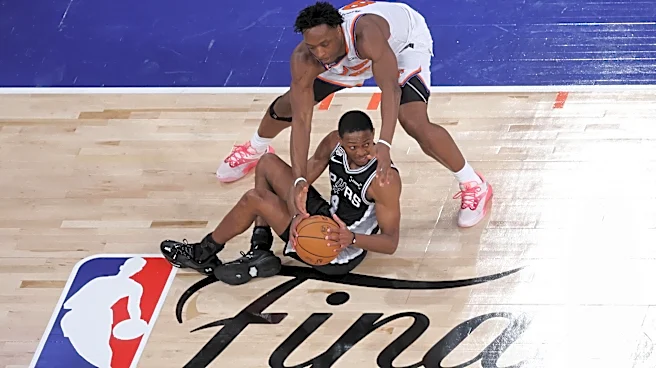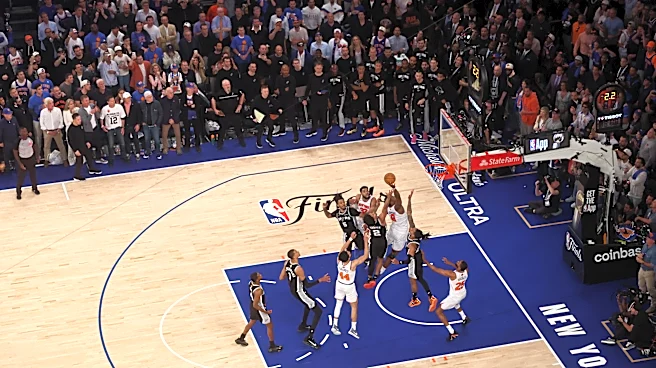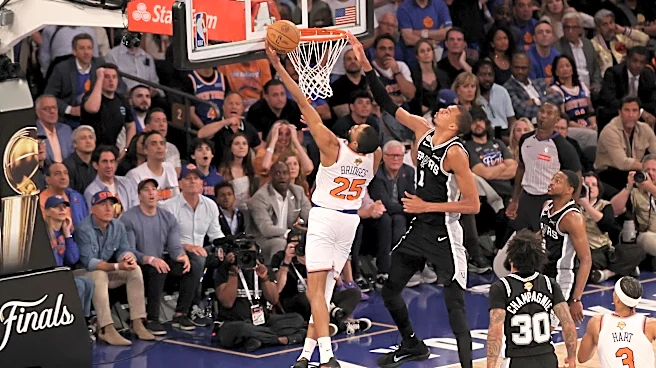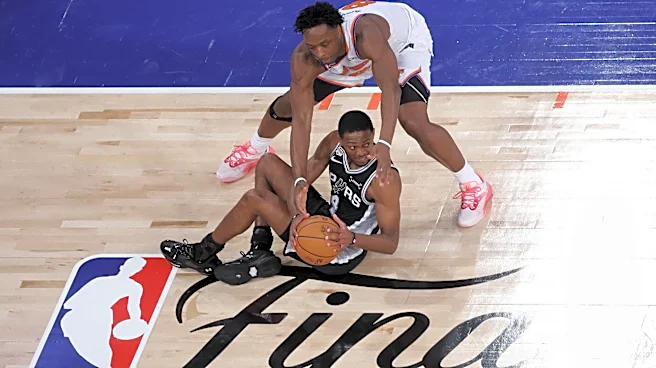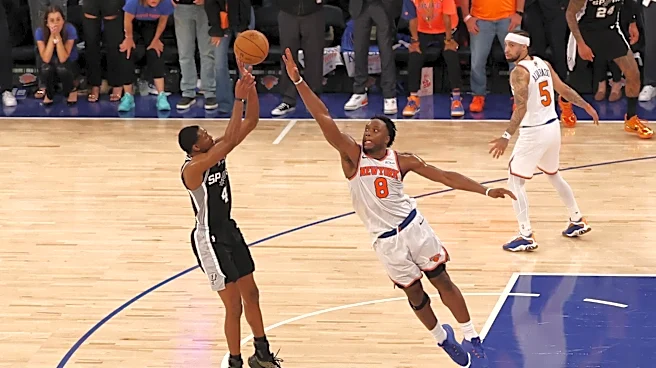






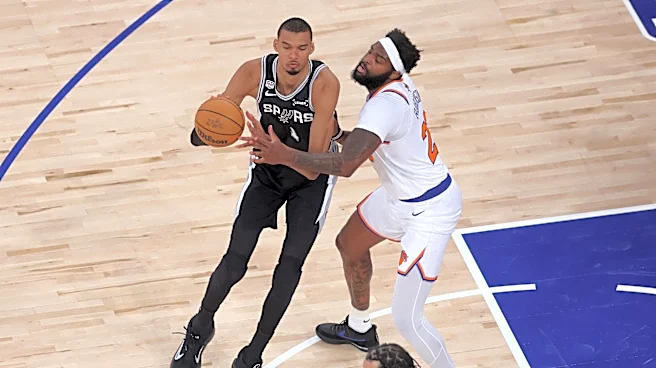
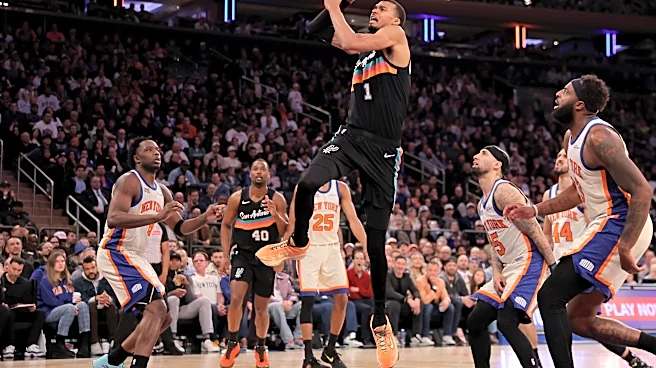



This wasn’t Game 6 in the 2012-2013 finals, but on the scale of Spurs heartbreak I think it falls firmly into second place. Without question, the second half of last night’s game was the worst 24 minutes I’ve seen any Spurs team play, and from all appearances it happened because the team was playing not to lose rather than to win. Of course, I wish that this young team could have learned that this approach won’t cut it in a less painful way; on the other hand, perhaps the scale of the loss will make
the lesson more enduring. All San Antonio can do now is seek redemption one game at a time; until then, let’s review the box score:
Note: Now that we’ve moved into the postseason, the reference period used for grading changes from the set of regular season games since 2012-2013 to the set of postseason games since 2012-2013. Unless otherwise noted below, this set DOES include play-in games. As of the end of June 10 2026, this group include 1,205 games.

Factors that decided the game
- This is a perhaps the clearest example possible of a game in which the overall box score obscures the full narrative of the game, as this was truly a tale of two completely different halves. I am working on a version of the graded box score that provides a quarter-by-quarter breakdown to capture variation in play within each game, but sadly that update isn’t ready at the moment. In the meantime, I’ll note some of the key half-to-half differences in the rare stats section.
- San Antonio had some notable advantages in offensive opportunity that they generated by having fewer turnovers and more offensive rebounds, though (as you may have guessed) these opportunities were concentrated in the first half.
- Although the Knicks took eight fewer shots and 11 fewer threes, their shooting efficiency (both overall and from distance) was better over the full game, a truly remarkable feat given how the first half went. As a result, both teams made exactly 36 shots, though San Antonio outscored New York by two from the field because they made two more threes.
- Finally, the only area in which the Knicks achieved notably above average winner-loser box score differentials was at the free throw line, where they had eight more attempts and three more makes. That point differential (+3) was just enough to overcome the Spurs’ edge from the field.
Rare Box Score Stats
- As I mentioned above, the overall box score really fails to tell the story of this game, because the first and second halves were so different. I’m going to dedicate this section to highlighting how dramatic and rare these differences were. All of the values below are examining the likelihood of different outcomes in the complete set of 76,040 team-games that have taken place across NBA regular and postseasons since 1996-1997. In this context, a “team-game” is the performance of a specific team in a given game (i.e., there are two team-games in each NBA game, one for each team):
- Relative to its first half totals, San Antonio had 12 fewer assists and seven more turnovers in the second half. Since 1996-1997, there have been just 60 other team-games in which a team had second-to-first half assist and turnover differentials at least that bad. That’s about once in every 1,267 team-games.
- The Spurs’ FG% was 39.06 percentage points worse in the second half (relative to the first). That’s the 26th largest decline in FG% observed from the first half to second half for a team since 1996-1997. Put another way, the odds that a team’s FG% would drop by at least as much between the first and second halves of a game is about 1-in-2,925 team-games.
- San Antonio’s second half scoring total was 46 points worse than its first half scoring total, which is tied for the fourth worst differential since 1996-1997. Empirically, the chance that a team would have a second-to-first half point differential this bad or worse during this 30-season period is about 1-in-10,863 team-games.
- There have been just three cases since 1996-1997 in which an NBA team’s second-to-first half FG%, 3P%, and FT% differentials were at least as bad as -39, – 36, and -21 percentage points (respectively). In other words, second-half falloffs in shooting efficiency as bad or worse in all three dimensions happen about once in every 25,347 team-games.
What are Team Graded Box Scores?
Very briefly, these box scores grade winner-loser differentials for basic box score statistics, with the grade being based on the winning team’s differential relative to other NBA winners during a defined reference period. Think of it like a report card for understanding how a given winner performed relative to other winners. The reference period used runs from the start of the 2012-2013 season to the latest date of play, including only games in the same season category (i.e., regular season and playoff games are not compared to each other).
Data Source: The underlying data used to create these box scores was collected from Basketball Reference. In all cases, the data are collected the morning after the game is played. Although rare, postgame statistical revisions after data collection do occur and may affect the results after the fact.