
Lincolnshire side Gainsborough Trinity made their first trip to Roker Park for an FA Cup tie, and whilst the visitors were a second-tier outfit their reputation for developing future stars meant they were likely to be a tough prospect.
Several former players had since gone on to perform well at a higher level and the current crop were busy making their own way in the game, with their reputations enhanced with a good showing against Sunderland. The hosts had been boosted ahead of kick-off with the return
of captain Billy Farquhar from injury, yet they were given a stern test by their guests, who came away with a credible draw to earn a replay – although curiously enough, it soon transpired that it wouldn’t be played at their usual Northolme ground.
Using a brand-new ball and played amidst regular flurries of snow, the game saw Trinity take the lead moments behalf half time when a shot rebounded off the post for Jack Dixon to put away. The second half then brought an onslaught from the Lads as they tried to get themselves back into things, and it wasn’t until the final ten minutes that Gainsborough’s resistance was broken, a corner leading to a goalmouth scramble that culminated with Alex Barrie shooting in off the underside of the crossbar.
The two sets of players exchanged the usual pleasantries at full time, with the home team no doubt relived to have avoided an upset. It appears though that club officials were already looking ahead to the replay, as in the moments that followed it was announced that a consultation had taken place and an agreement reached with Gainsborough that would see the second game also taking place on Wearside.
Sunderland’s form on the road under new manager/secretary Bob Kyle had been questionable during 1905-06 and having been so close to victory first time around there was a feeling that Gainsborough would have fancied their chances even more had they been back on familiar ground. Although neither party was willing to comment at the time it was understood that a ‘substantial guarantee’ had been offered up to ‘induce’ their directors to agree to the unusual return, and so the following Wednesday everybody reconvened.

Trinity had in the meantime gone back to Redcar, where they had originally set up camp prior to the original clash, but next time out things were a little more routine for the Black Cats. Billy Hogg made way for Norman Brown in the starting XI, and his goal on 32 minutes had Sunderland in the driving seat; already leading through Arthur’s Bridgett’s angled shot, he pounced on a half-cleared corner to send a rising attempt into the net. Things were then wrapped up when George Holley struck from distance after the break and scored in off the post, and into round 3 Sunderland went for the first time in over a decade.
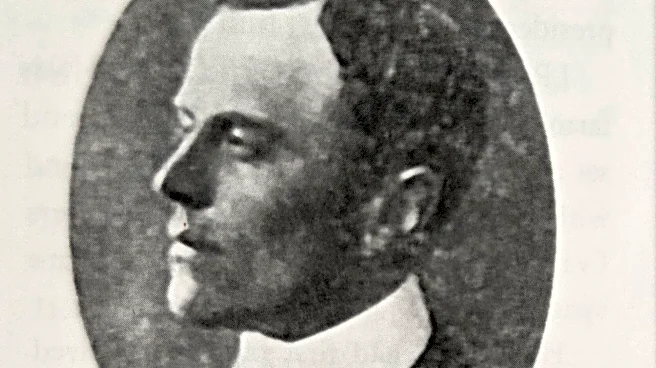
The change of venue for the replay was certainly a talking point, with SAFC since believed to have handed over around £300 to Gainsborough for the privilege. In turn, the continual hosts were said to have retained gate receipts totalling £244, 4s, 9½d, the short fall presumably being deemed a price worth paying for progress in the competition. Nevertheless, this wasn’t the only influence the board had had on proceedings, for chairman Frederick William Taylor had also spent a period of the first encounter running the line!
Bolton official Jack Howcroft was struck in the face by a wayward shot during the opening 45 minutes and whilst he was later able to resume duties needed a period of treatment beforehand. Due to the wintery conditions and distinct possibility of poor light later in the afternoon it was agreed that the best course of action would be to try and play on whilst he was looked at, and so senior linesman Mr Morton came into the middle and following a coin toss, asked Taylor to temporarily cover him.
Taylor was given a warm reception from the crowd when he took up the position and whilst Trinity may well have preferred their own representative to have been involved there were no complaints come the end concerning his display. Besides, FW’s concurrent position as a local Councillor in the town presumably helped convince the visiting party that he was a man of good standing, and their opener actually came whilst the Sunderland man was helping preside, yet this was just one of many intriguing sidenotes in the life story of a remarkable man that for years served his club and community.
Later an Alderman for the Hendon ward, Taylor had already been on the board prior to a 1903 return that was prompted by the resignation of John Potts Henderson. He then succeeded Henderson’s own successor Sinclair Todd as chairman in 1904 and made Kyle his first permanent appointment, the new man becoming the longest serving manager in Sunderland’s history. In another move that would put the club in good stead for several years he bought the land Roker Park had been built on, whilst he also found time to serve on the committee for Sunderland Cricket and Rugby Club at Ashbrooke and work with both the River Wear Commission and the Football Association.
Sunderland’s Deputy Mayor for two years, FW was a skilled administrator, businessman and civic figure, as well as being a keen sportsman. A handy rugby player utilised mainly at half or full back, he was playing for the Ashbrooke club’s first team at Hartlepool Rovers when he picked up an injury that forced him to retire. Hanging up his boots led to an increased interest in soccer seemingly, whilst he was also a ‘capital swimmer and good shot’ and a prized dog and bird breeder too, taking on another role when he became President of the Sunderland Canine Society. Not only that, but he also played a key role in the construction of Grangetown Methodist Church having earlier made his money through ship brokering and by becoming a senior partner for a firm created by his grandfather that exported coal and provided services as colliery agents.
When Taylor resigned as chairman in 1913 the Lads were reigning Football League champions and had recently reached the FA Cup final for the first time. At a club dinner held at the Grand Hotel on Bridge Street in August that year he was presented with a silver table centre and fruit vases as a token of appreciation for the job he had done thus far, and even though he was thought in 1935 to have sold his remaining shares to Duncan White (Sunderland chairman between 1938 and his death in 1940) he continued to serve the club as a director until 1946.
Having been one the SAFC delegates that spoke to guest of honour Queen Elizabeth at the 1937 FA Cup final, ‘Fred’ as he preferred to be known for the most part, represented Sunderland to the highest standard at all times. He passed away in 1947, his extraordinary existence including a Cambridge education (playing rugby for Leys School whilst there), and, perhaps fittingly given his reputation, the man referred to as ‘Mr Sunderland’ due to his tireless drive and involvement saw him own one of the first cars in the country and hold the first vehicle registration in the town.
Saturday 3 February 1906
FA Cup 2nd Round
Sunderland 1 (Barrie 83’)
Gainsborough Trinity (Dixon 44’)
Sunderland: Naisby; Bell, Watson; Farquhar, Barrie, Willis; Hogg, Gemmell, Shaw, Holley, Bridgett.
Roker Park, attendance 14,270