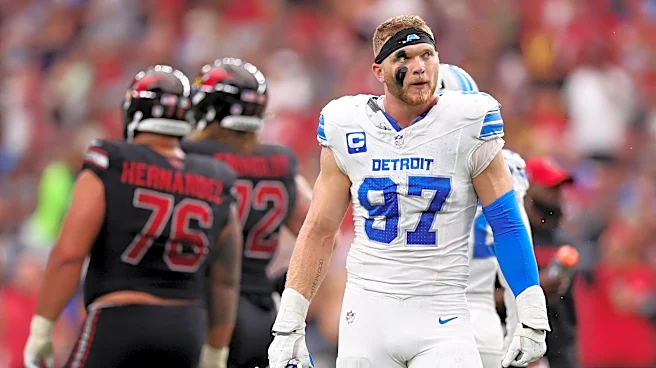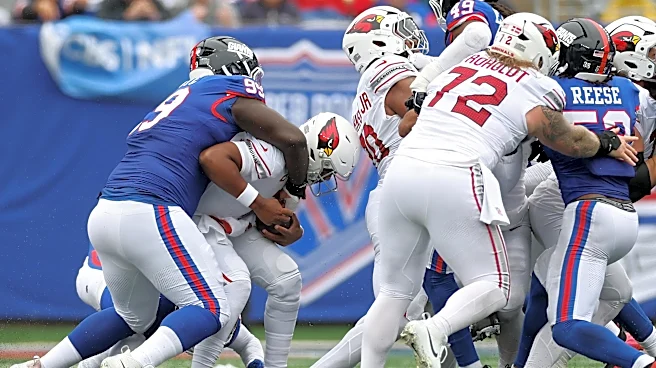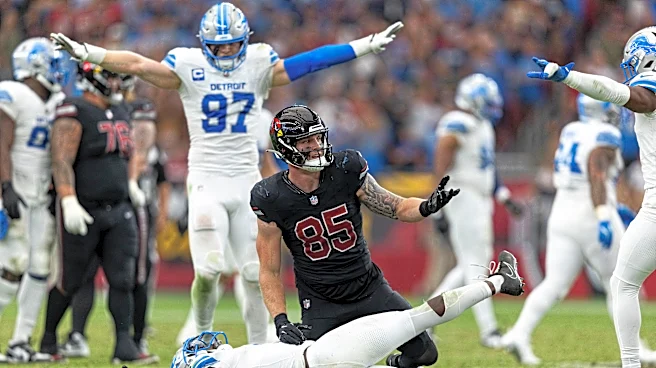


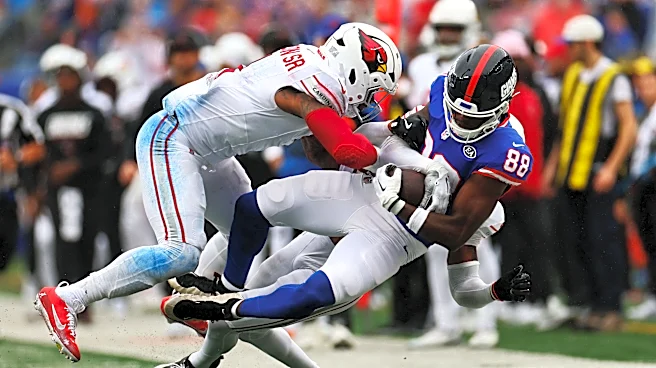
The Detroit Lions had started at least 4-1 in each of the previous three seasons. Leading the NFC North pack from the jump was starting to become the norm. Not only have they suffered their earliest second loss since 2022, but both losses came in utterly demoralizing and shocking primetime fashion. Now they appear to be a team that has lost respect nationally and around the league, a month into the season without having played anything close to a complete game.
It was one of the most unenthusiastic
weeks to be a Lions fan in recent years following the Bryce Young buzzsaw they ran into in Charlotte. Now they’ll head to the desert to take on the younger LaFleur brother, Mike, needing a get-right victory and a complete four-quarter performance to inspire some hope for the season heading into the much-needed early Week 6 bye. They’ll do so riding a 5-1 record against the Cardinals since 2017, after the Ford family’s franchise went 0-7 in seven matchups with Arizona between 2006 and 2015.
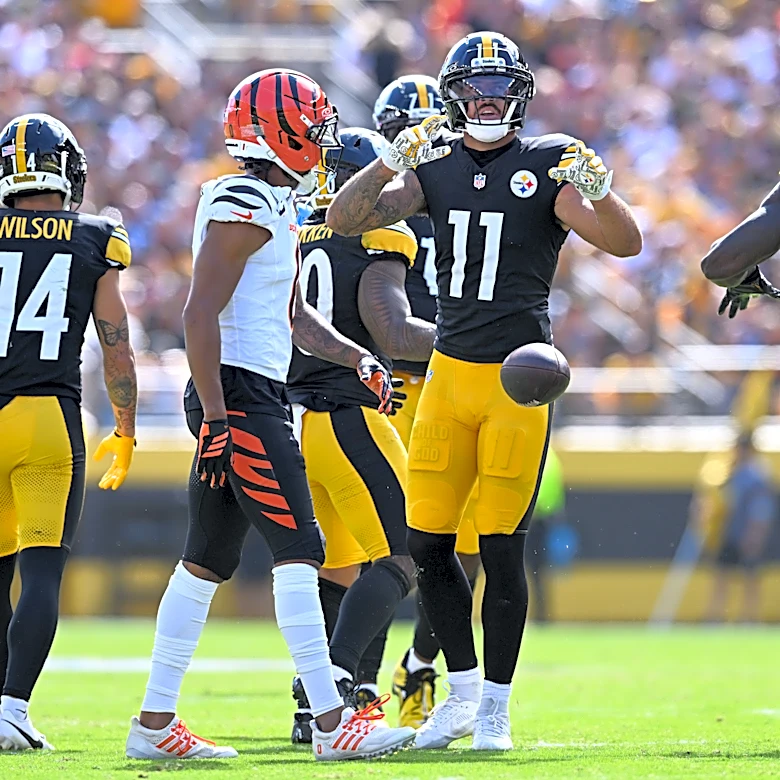
The Cardinals have invested heavily in their skill players, with Trey McBride, Michael Wilson, Jeremiyah Love, and Marvin Harrison Jr., and all eyes will be on the Lions defense fighting back and moving past the narrative that they’re the worst defense in all of football. Every team in football has warts right now, so let’s get into my three key stats and matchups for Sunday afternoon’s West Coast business trip and how the Lions can rid themselves of those warts.
Note: Unless otherwise indicated, all statistics are sourced from NFL Pro, FTN Fantasy, Pro Football Reference, SumerSports, or Pro Football Focus.
Three TEs is a Crowd
While the Detroit Lions defense has been inexplicably dysfunctional this season, one thing they haven’t been on a bus straight to Rock Bottom on is defending against 13-personnel. Despite struggling overall in run defense against the Bills and Panthers, they’ve found some success against three tight end sets, allowing only 3.31 yards per rush on 16 attempts, with just one explosive rush allowed.
Even against 13-personnel as a pass defense, where the Lions typically match with their base defense, they’ve been effective, allowing 10-of-17 passing (58.8% completion percentage) for 102 yards (6.0 yards per attempt, 12th), a 41.2% success rate (14th), 4.9 yards per catch (13th), and a 5.9% explosive pass rate (14th). All respectable numbers. If they could simply be middle of the pack in most pass-defense metrics, the outlook for their season would be a lot more optimistic than it’s felt in the aftermath of the last two dreary defeats. Most promisingly, the Lions’ pass rush against 13-personnel has generated a 66.7% pressure rate (3rd) and a 9.5% sack rate (8th).
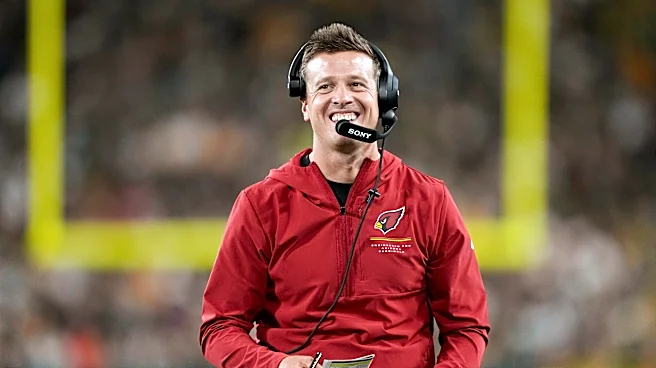
Their 13-personnel defensive prowess is important when facing the Cardinals in a post-Drew Petzing world. While Arizona’s 12-personnel usage has sharply declined from 36.2% (3rd) last season to 14.8% under LaFleur, its 13-personnel usage has remained a priority, jumping from 11.0% in 2025 (3rd) to 20.1% (3rd) when deploying Trey McBride, Elijah Higgins, and Hunter Long (with Tip Reiman injured). [Note: Long was placed on IR this week, with veteran Teagan Quitoriano expected to take his place.]
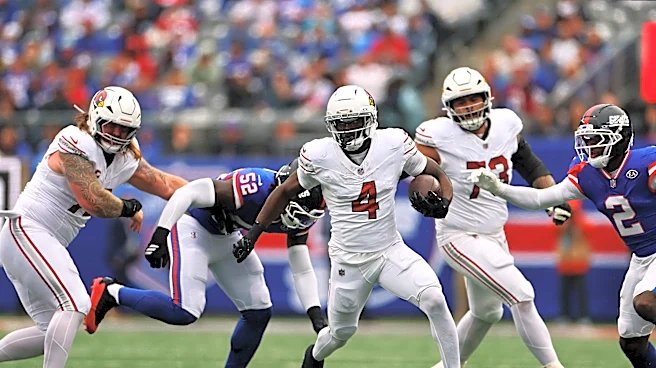
The Cardinals’ rushing attack from three-tight-end sets has maintained success, averaging 4.14 yards per rush (t-6th), a 47.2% success rate (14th), and +0.02 EPA/rush (10th). They’re also top 10 in both yards before and after contact per carry, with both Jeremiyah Love (47.6% success rate) and Tyler Allgeier (+0.04 EPA/rush) averaging over 4 yards per carry from 13-personnel.
Some of Jacoby Brissett’s best analytical metrics come from his 16 dropbacks (fourth most) when passing out of 13-personnel. He’s 11-for-16 for 90 passing yards (5.6 yards per attempt), two touchdowns, +0.367 EPA/pass (11th), and a 62.5% passing success rate (11th).
While it’s a small sample size, the Lions defense needs to chip away and find avenues where it can have success. Being able to defend well on roughly every fifth play when the Cardinals go to 13-personnel would be a step in the right direction toward getting off the field and holding Arizona to field goals instead of touchdowns in the red zone.
Death by a Thousand Checkdowns
While it’s beneficial for the Lions that Cardinals left tackle Paris Johnson Jr. will miss the game due to injury, leaving either seventh-round rookie Jayden Williams or recently signed Jedrick Wills to man Jacoby Brissett’s blind side, with possibly backup Jon Gaines II filling in for the injury-battling right guard Isaiah Adams, the defense proved Sunday night against the Panthers that a favorable offensive line matchup isn’t always enough.
While Detroit’s defensive front can generate pressure and take advantage of porous offensive lines, the back end hasn’t allowed it to fully capitalize. Receivers were running wide open for easy throws from Bryce Young, who also stood strong in the pocket just long enough to deliver backbreaking completions before the rush could get there. The Cardinals’ passing approach could further mitigate the effectiveness of the Lions’ defensive front against Arizona’s below-average offensive line.
It’s not a dynamic passing attack, instead operating largely on dinking and dunking, which could provide a foundation for the Lions to keep everything in front of them, clean up their short-pass coverage, and maybe even force a hurried mistake.
Among 29 qualifying quarterbacks, Jacoby Brissett ranks last in yards per pass attempt (5.4), 27th in average depth of target (6.10 yards) and average time to throw (2.6 seconds), and 26th in deep-ball rate (5.9% on throws of 20-plus air yards). He’s also tied with Joe Burrow for the second-most throws in under 2.5 seconds (94).
All pedestrian and manageable numbers. The Cardinals’ passing offense is by far the least explosive in the league, averaging an explosive pass rate of only 2.6%. The next closest is the Giants at 6.2% (31st), while Arizona’s rushing offense isn’t much better, also ranking last with a 5.6% explosive run rate.
The Lions defense ranks bottom five in both explosive pass and run rate allowed, but maybe this Cardinals offensive bunch is one against which they can finally look like a decently taught and executed defense, with all 11 players on the same page and where they need to be. Dan Campbell mentioned the need for his defensive players to be more disciplined this week and also said, “I want our guys to be where they’re supposed to be when they’re supposed to be there.”
Perhaps this Cardinals offense is the starter kit Detroit needs to build back toward being bend-but-don’t-break as opposed to simply being broken.
Finding Their Roar
Drew Petzing should be all too familiar with his former co-worker, Cardinals fourth-year defensive coordinator Nick Rallis, someone who makes chicken salad out of chicken shit with disguised blitzes and simulated pressures. Petzing’s offensive unit has managed to put up points every game, but it hasn’t been as consistent or had as cohesive an approach throughout a game as one would like given its talent.
Dan Campbell challenged the offense during multiple media availabilities this week.
“We’re not going to be average. We’re going to raise the floor on these guys. Man, we’re going to push them,” Campbell said on local radio. “We’ve got too much offensively right now. Our quarterback’s too good. Our playmakers are too good. And we’ve got a young, hungry offensive line that’s got a ton of room to grow.”
Petzing, in what some might call a revenge game against a talent-deficient Cardinals defense, will look to put together his most complete game plan of the season.
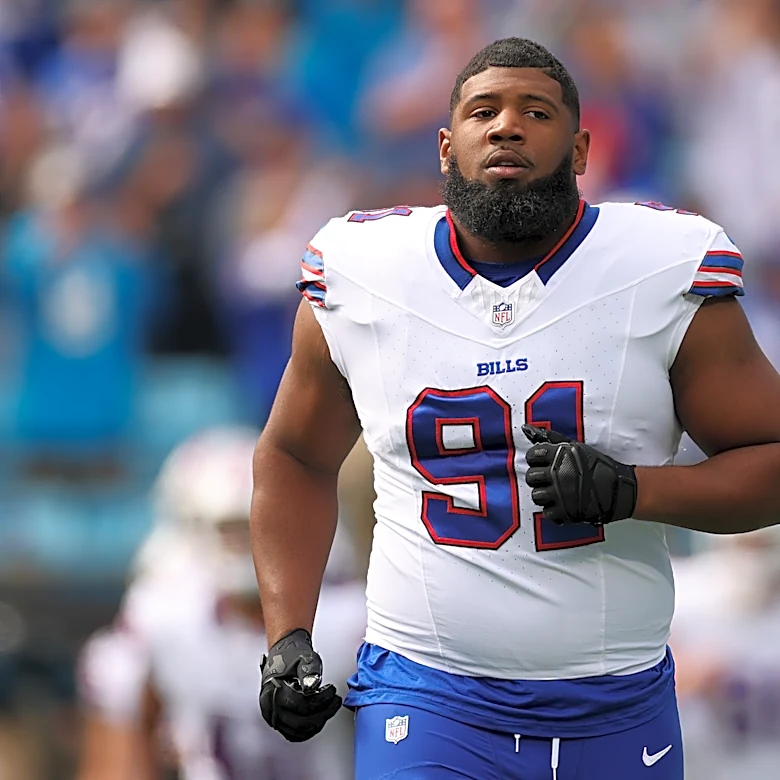
The Cardinals’ defensive front has some solid players in Josh Sweat, Darius Robinson, edge-setter Zaven Collins, promising young defensive tackle Walter Nolen Jr., and imposing old friend Roy Lopez. Much like the Lions defense last week, it’s the Cardinals’ spine of the defense, led by 10-year veteran Budda Baker, fellow safety Andrew Wingard (ruled out this week), and linebackers Mack Wilson Sr. and Jack Gibbens, that the Lions offense could exploit.
While the Lions’ third-down offense has been middle of the pack by most metrics, one of the Cardinals’ two glaring defensive weaknesses is getting off the field on third down, where they’re allowing a 47.7% conversion rate (26th) and +0.698 EPA/play (32nd). The Cardinals are also getting bombarded allowing a league-worst 12.7% explosive pass rate.
The Lions need to continue striving for better results on early downs, but against the Cardinals, they can dominate possession of the football and keep their defense off the field by finding more success moving the chains on third down and generating chunk plays through Jared Goff’s bevy of weapons in the passing game.