
The Buffalo Bills finished with a 12-5 record in 2025, only good enough for second in the AFC East. They earned the six seed in the AFC playoff race, defeated the Jacksonville Jaguars 27-24 in the Wild Card Round, and fell to the Denver Broncos 30-33 in overtime of the Divisional Round.
Offensively, the Bills ranked fourth in points scored (481 total; 28.3 per game) and dominated on the ground with a league-leading 2,714 rushing yards (159.6 ypg), 30 rushing touchdowns, and 5.0 yards per attempt.
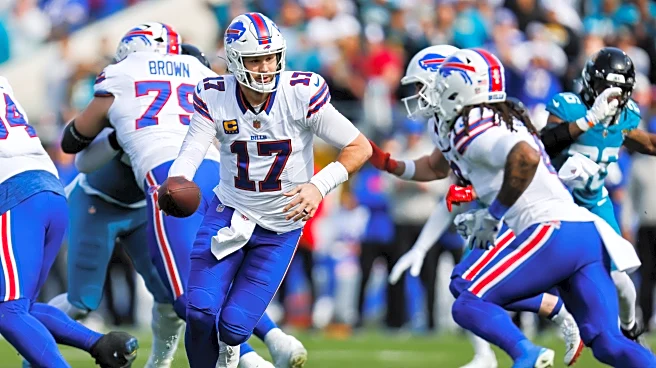
Quarterback Josh Allen threw for 3,668 yards, 25 touchdowns, and 10 interceptions (102.2 rating) and was once again a significant force in the run game. The defense excelled in pass coverage (2,668 pass yards allowed, 156.9 ypg) but was vulnerable against the run.
Advanced metrics highlighted Buffalo’s elite drive efficiency, red-zone scoring (top-3 TD rate), and expected wins over performance (11.2 projected to 12 actual). The 2025 season underscored a balanced, run-first identity despite inconsistency by the wide receiver room.
Here are the players and coaches who separated themselves (positively or negatively) from the others, and who heavily impacted the results of Buffalo’s season.
Offensive rookie of the year: TE Jackson Hawes (Round 5, Georgia Tech)

Jackson Hawes delivered immediate dual-threat value with 16 receptions for 187 yards and three touchdowns in limited snaps. He earned elite Pro Football Focus (PFF) grades (85.2 overall) in both pass- and run-blocking work.
Hawes’ play was huge for the league’s top-ranked rushing attack, with Hawes providing leverage in the run game and occasional red-zone reliability. Advanced blocking metrics supported top-tier yards before contact and gap integrity.
Defensive rookie of the year: DT Deone Walker (Round 4, Kentucky)

Deone Walker emerged as a reliable contributor, appearing in all 17 games with 16 starts. He recorded 38 tackles (17 solo, 21 assisted), 1.5 sacks, nine tackles for loss, and 16 quarterback pressures/hits. His massive frame (6’7″, 331 pounds) and relentless motor helped disrupt interior lines, support the run defense in key moments, and contributed to the unit’s elite pass coverage (No. 1 in pass yards allowed).
As a Day 3 selection, his high snap count, starting experience, and efficiency metrics (run-stop rate and pressure generation) highlighted Walker’s immediate impact and upside among rookies.
Honorable mention: CB Maxwell Hairston (2 interceptions, multiple pass breakups, and strong coverage snaps in 11 games despite a knee injury)
Protector of the year: OT Spencer Brown

Brown anchored the right tackle position in 14 regular-season games (13 starts) and both playoff contests, earning a solid 76.2 overall PFF grade with strong run-blocking contributions (top-10 in several key run metrics among tackles). His play was key to the league’s leading rushing attack, boosting the team’s top marks in yards before contact per rush (3.1) and run block win rate (74.7%).
Despite Buffalo’s offensive line allowing 17 sacks overall (per PFF), Brown’s individual pass-protection efficiency helped limit pressures on his side, and enabled Josh Allen’s mobility and the offense’s fourth-ranked scoring output. Brown’s consistency, size, and technique in zone/power schemes made him the standout protector in a run-dominant scheme.
Honorable mention: LT Dion Dawkins (veteran Pro Bowl anchor with strong overall grades and leadership)
Special teams player of the year: RB/KR Ray Davis

Ray Davis earned First-Team All-Pro honors as a kick returner after taking over in Week 9, returning 31 kickoffs for 943 yards (NFL-leading 30.4 average) and one 97-yard touchdown (at Texans in Week 12, shifting momentum). His explosive vision, decision-making, and yards-over-expected metrics transformed field position, setting single-season Bills records and aiding playoff positioning.
Honorable mention: K Matt Prater (veteran reliability with strong field goal percentage, long-range accuracy, and clutch makes)
Most disappointing player of the year: WR Keon Coleman

Coleman flashed early (8 receptions for 112 yards and 1 TD in Week 1 vs. Ravens) but regressed sharply, seeing limited targets, healthy scratches, and failing to emerge as a consistent downfield threat, as off-field issues multiplied. The receiver room’s overall lack of 700-pluss yard performers amplified his failure to perform relative to draft pedigree and hype.
Honorable mentions: LB Terrel Bernard (failed to replicate prior production levels, struggling to stay healthy and lead the defense as expected as the unit’s captain)
Comeback player of the year: LB Shaq Thompson

Shaq Thompson provided veteran stability with 56 tackles (33 solo), one sack, and run stops across 12 games after transitioning to the Bills and overcoming prior injury that limited his availability. His leadership and production in linebacker rotations helped maintain defensive cohesion, particularly in coverage and against the run, despite unit challenges. Furthermore, Thompson became the true captain of the unit.
Honorable mentions: CB Tre’Davious White (the veteran corner returned from major injury history with renewed starting snaps, strong coverage grades, and key interceptions)
Coach of the year: OC Joe Brady

As offensive coordinator, Brady masterminded a historic run-heavy scheme that produced the NFL’s top rushing attack (2,714 yards, 30 TDs, No. 1 efficiency in EPA/rush and breakaway metrics), fourth-ranked scoring (28.3 ppg), and elite overall drive success despite WR struggles and occasional pass game issues. Advanced metrics like No. 1 EPA/play, high success rate, and sustained production with Josh Allen showcased efficient play-calling and player usage.
That all directly fueled the 12-5 record, playoff win, and the team’s overall success, positioning Brady for greater responsibility — he earned a promotion to head coach of the Bills for 2026, continuing as play-caller in the offensive side of the ball.
Honorable mention: OL Coach Aaron Kromer (masterful development of the offensive line that powered the league’s top rushing attack through elite run-blocking schemes and player improvement)
Defensive player of the year: CB Christian Benford

Christian Benford anchored the NFL’s top-ranked pass defense (2,668 yards allowed, 156.9 ypg). He recorded 43 tackles (32 solo, 11 assisted), 2.0 sacks, two interceptions (one returned 63 yards for a touchdown), four pass breakups, and multiple forced incompletions across 14 starts (798 defensive snaps).
He earned AFC Defensive Player of the Week honors in Week 13 (INT + fumble recovery TD) and posted strong coverage metrics, including a low opponent completion percentage and yards per target when tested. Benford’s shutdown performances against top receivers overall impact on the field were critical to limiting explosive passes on a unit that ranked elite in passer rating against.
Honorable mention: S Cole Bishop (team-high 85 tackles and 3 INTs)
Offensive player of the year: RB James Cook

Cook claimed the NFL rushing title with 1,621 yards, (5.2 yards per carry, 12 rushing TDs) and added 33 receptions for 291 yards and 2 TDs, totaling 1,912 scrimmage yards and 14 TDs. He anchored the No. 1 rushing offense through elite breakaway ability, yards after contact, and vision, powering drive efficiency and red-zone success. Postseason contributions further cemented his value as the team’s top weapon at the skill positions.
Honorable mention: WR Khalil Shakir (consistent slot production near 700+ yards despite team-wide WR struggles)
MVP: QB Josh Allen

Allen anchored the offense with 3,668 passing yards (319/460, 69.3%, 25 TD/10 INT, 102.2 rating, 8.0 Y/A) plus rushing contributions (including 14 TDs), leading the fourth-ranked scoring unit and earning Pro Bowl nods despite a lack of talent at wide receiver. Big-time throw rate, low turnover-worthy play percentage, and playoff output (556 pass yards, 4 TDs in two games) highlighted his dual-threat dominance and ultimate impact.
In what looked like a down year, playing half of it on a broken foot, Allen still put up MVP-worthy production, showing he is the force that makes the Bills go.
Honorable mention: RB James Cook (rushing title and production with high volume)
Final thoughts
The 2025 season highlighted the Bills’ ground-game prowess and secondary strength while exposing needs at receiver and run defense. Without Sean McDermott at the helm anymore, changes are expected under new HC Joe Brady. GM Brandon Beane runs the show the way he seems fit right now, together they will need to quickly fix the team’s issues and keep it competitive during the regular season to earn a chance at doing better in the playoffs, McDermott’s ultimate Achilles heel. Interesting offseason ahead.
Catch up on all this and more with the latest edition of Leading the Charge!