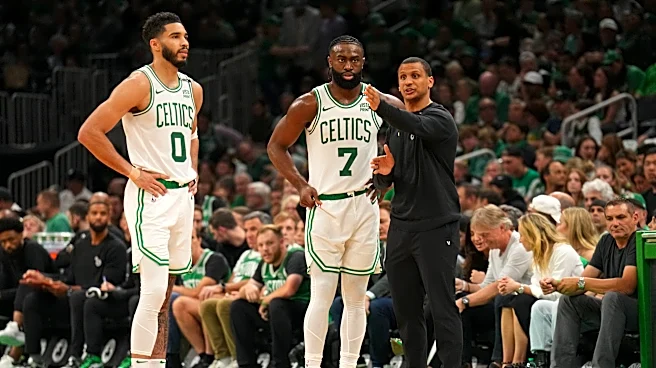

For the Boston Celtics, there are seven games left in the regular season.
Seven.
That means we’re officially at that point of the year where every glance at the standings gets a little longer every time, where you start doing the mental math on tiebreakers you swore you’d never learn, and where the phrase “play-in implications” somehow becomes part of your daily vocabulary.
The Celtics have already taken care of the important stuff. Another playoff berth is locked in (twelve in a row, count ‘em), the rotation
is mostly settled (pending a return from injured big man Nikola Vučević), and the bigger picture is clear: this team is very much gearing up for a championship run.
Still…a championship run requires you to win the first round. In fact, of the 79 league champions in NBA history, exactly ZERO of them lost in the first round in the playoffs. So you really don’t want to lose in the first round.
Let’s get ready and look across the battlefield at the Celtics’ potential opponents. Because while Boston should feel good about any matchup that comes its way, not all paths are created equal. Some series are clean. Others are physical. And some are just plain funky.
With the No. 2 seed seeming like the probable landing spot, the Celtics will face whoever wins the 7–8 play-in game which, as of now, puts a handful of very different teams on the table.
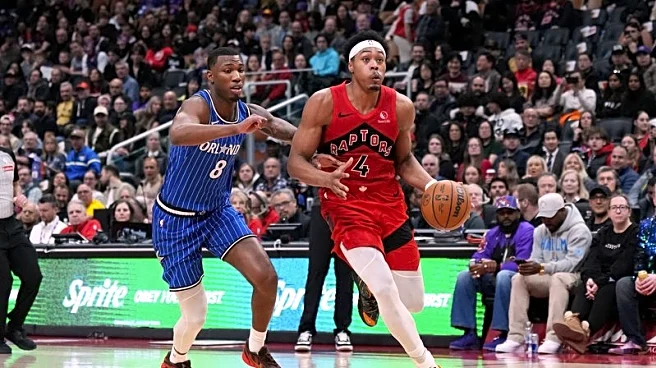
Quick note: I didn’t think Toronto would be in the play-in mix when I started writing this, but now they’re only a game ahead of the 7th-place Sixers. These standings just don’t sit still. Toronto is not covered in the below analysis, but could certainly end up in the #7 vs. #8 play-in game.
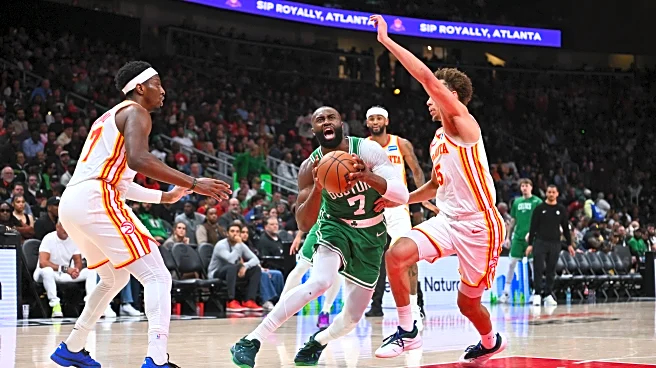
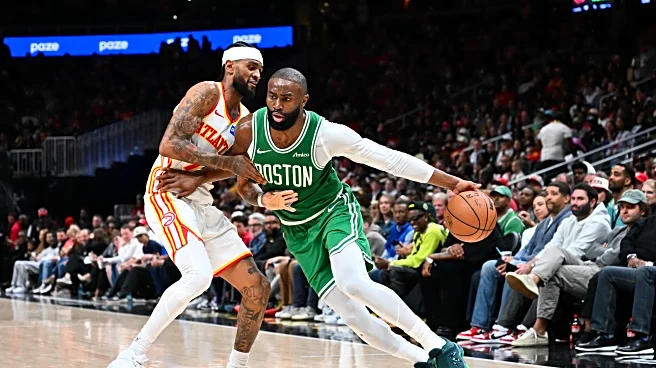
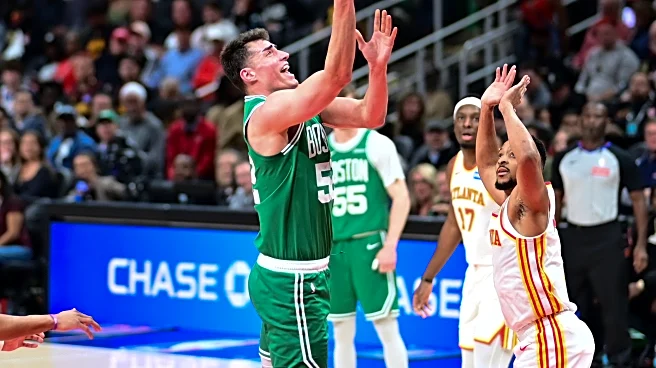
Atlanta Hawks

Tale of the tape
- Season series: Tied 2-2
- Average score: Boston 112.3 — Atlanta 109.3
- Injuries: Essentially clean rotation (unless you consider Jock Landale’s common cold series-defining)
- When you boil it down: One of the hottest teams in the league since the All-Star break, and fresh off a win over Boston that showed exactly how they can make things uncomfortable.
Boston will win if…
They control the possession battle and keep Atlanta out of transition.
This Hawks team is built on disruption. They rank near the top of the league in forcing turnovers and converting them into points, and they’ve completely flipped their identity on the glass since the break.
So the formula for Boston is simple, but non-negotiable: purposeful offense, strong defensive rebounding, and limiting live-ball turnovers. We just saw how turnovers, second chances, and pace flipped the recent game versus Atlanta, even with Boston controlling things early. If the Celtics force Atlanta to operate in the halfcourt, the matchup will tilt in Boston’s favor. That means initiating switch actions involving CJ McCollum and Nickeil Alexander-Walker as primary handlers, staying home on shooters, and making Atlanta rely on tougher, late-clock creation.
Offensively, Boston can also target Atlanta’s weaker perimeter defenders through Tatum-led pick-and-rolls, especially involving McCollum. If that action consistently bends the defense, it opens up the exact shots Boston wants — corner threes, quick swing passes, and second-side drives.
Atlanta will win if…
They win the margins and let their athletic wings dictate the game.
This version of the Hawks is way less heliocentric and way more collective than the Trae Young-led Hawks of years past. The pressure points now are Nickeil Alexander-Walker and Jalen Johnson.
NAW has been on an absolute heater as of late; hyper-efficient, high-volume shooting, deadly in transition, and comfortable playing off turnovers or quick-hitting actions. If Boston loses him in space or lets him get downhill early, he can swing quarters in the blink of an eye.
Johnson is the other swing piece for ATL. His ability to rebound, push, and attack mismatches gives Atlanta a way to generate offense without needing a set play. Pair that with Dyson Daniels’ defensive activity, and suddenly the Hawks can create the exact kind of game they want: messy, physical, and tilted toward effort plays.
If Atlanta is winning on the glass, forcing turnovers, and getting early offense, they can absolutely win some games.
Worry Level: A glass sitting near the edge of a table, but nobody’s really near it. (Boston in 6)
Atlanta’s improvement on the boards and ability to generate turnovers makes this more annoying than it should be, especially if Boston gets careless. But in a slowed-down, halfcourt series, the Hawks still lack a consistent, go-to offensive engine late in games, which limits how far that pressure can realistically carry them in a series.
That glass on the table is probably fine. But if it tips, it’s going to make a mess real quick.
Philadelphia 76ers

Tale of the tape
- Season series: Tied 2–2
- Average score: Boston 109.8 — Philadelphia 106.3
- Injuries: Mostly healthy core down the stretch; Embiid, Maxey, and Paul George all active
- When you boil it down: The Sixers still have the highest-end talent of any potential opponent, but they’ve spent the season trying to piece together consistency and avoid the play-in.
Boston will win if…
They make this a series about execution, not star power.
Because this is the one matchup where you can start talking yourself into trouble if you let your brain wander.
Joel Embiid is still going to be a problem. He’ll draw fouls, slow the game down, and force Boston into decisions. Tyrese Maxey’s speed can bend a defense quickly, and Paul George gives them a third scorer who can hit tough shots late in the clock.
But Boston’s edge is in how clean their process is. When the ball moves, when the spacing holds, when possessions don’t die early, the Sixers start to crack. You can pull Embiid into space, involve Maxey in screening actions, and force Philadelphia into rotations they don’t always handle well.
Defensively, Boston has the versatility to throw different looks at Embiid without fully committing, stay attached to Maxey, and live with the rest of the roster having to beat them. If the Celtics stay disciplined and don’t gift Philly easy points at the line or in transition, the game trends back toward structure — and that’s where Boston wins.
Philadelphia will win if…
Their stars finally deliver The Process that was promised
If Embiid is controlling the whistle and dictating tempo, if Maxey is consistently getting downhill, and if Paul George is giving them real, reliable secondary creation, then suddenly this becomes something different. They’ll need more than talent on paper at this stage, but the small sample size suggests they could apply actual, sustained pressure over the course of a game.
And if that version shows up, Boston is going to have to work for it.
Because there are enough complementary pieces here to make things interesting. Quentin Grimes can get hot quickly and swing a quarter. VJ Edgecombe brings defensive activity and chaos on the perimeter. Even guys like Dominic Barlow or Kelly Oubre Jr. can give you stretches where they just tilt the energy of the game ever so slightly. It’s not overwhelming depth, but it’s enough if the stars are carrying the weight.
That said, this series will ultimately come down to Embiid. Maxey may have already surpassed Embiid as the Sixers’ best player, but they’ll need a pretty good version of Joel if they want to compete. Over a full series, the question is always around what he looks like over 48 minutes, then two nights later, and then again after that. You’ll probably know pretty early if this series will be close. If he’s getting downhill, living at the line, and moving with purpose, look out. If he’s drifting, settling, or looking gassed up and down the court, Boston can close the door quickly.
Worry Level: You just replied all to the entire company with a Joe Mazzulla gif (Boston in 6)
It’s not the end of the world. But yeah…you’re definitely feeling a pit in your stomach.
That’s Philadelphia. You trust Boston to get it done. It’s not like this is a rivalry, after all. But there’s just enough high-end talent on the other side for Philly that if it all clicks at once, you’re going to feel it in real time.
This probably ends up fine if it comes to fruition. It just might be uncomfortable for a little bit.
Orlando Magic

Tale of the tape
Season series: Celtics lead 2–1
Average score: Boston 119.7 — Orlando 115.7
Injuries: Ongoing flux — Franz Wagner nearing return, others (Jonathan Isaac, Anthony Black) working back into the mix.
When you boil it down: Big, physical, defensive-minded team that wants to drag you into the mud and make every possession uncomfortable.
Boston will win if…
They stay patient offensively and trust their shot profile.
Orlando’s entire defensive identity is built around taking away what Boston does best. I know that sounds scary, but keep reading! The Magic press up on shooters, deny clean catch-and-shoot looks, and turn possessions into late-clock isolations. We saw it in last year’s playoff series, a gritty, borderline exhausting matchup that never really let Boston play clean basketball (and maybe contributed to the lackluster effort we saw in the next round versus the Knicks).
The key this time around is resisting that drift.
If Boston keeps moving the ball, leans into second-side actions, and trusts that good shots will come even if they’re delayed, the math eventually wins. Tatum and Brown are also equipped for this kind of matchup now. They’ve already shown they can punish switches, absorb contact, and create efficient offense even when the system bogs down.
Defensively, Boston also has the upper hand. With no elite perimeter shot creation outside of Paolo Banchero, the Celtics can load up, switch across Wagner/Banchero actions, and force Orlando into contested midrange looks. If Boston controls the glass and limits second chances, the Magic’s offense should stall quickly.
Orlando will win if…
They turn the series into a rock fight and make Boston uncomfortable for long stretches.
Orlando is not a finesse team. They win by making you feel them.
Paolo Banchero is the main attraction for the Magic, a downhill force who can bully smaller defenders, draw fouls, and carry offense in stretches. Franz Wagner, if healthy, adds another layer as a secondary creator who thrives attacking tilted defenses. Together, they give Orlando just enough shot creation to survive if the game slows down.
The players around them will have to rise to the occasion as well.
Guys like Jonathan Isaac and Wendell Carter Jr. bring length and physicality that can disrupt Boston’s rhythm. Jalen Suggs, Desmond Bane, and Anthony Black add point-of-attack pressure that can blow up actions before they even start. If Orlando is bumping cutters, contesting every catch, and forcing Boston into isolation-heavy possessions again, the series starts to look a lot like last year. Low scoring, choppy, and closer than it should be.
They don’t need to out-execute Boston. They just need to drag them into discomfort.
Worry Level: Your phone slips out of your pocket while you’re getting out of the car. (Boston in 5)
You’re not panicking, but you might get that uneasy feeling in the pit of your stomach.
Orlando doesn’t have the offensive ceiling to win a clean series against Boston, but their size, physicality, and defensive discipline can absolutely make this harder than it should. If the Celtics lose their offensive patience or let the game turn into isolation basketball for long stretches, this will get annoying quickly, even if Boston is still the better team.
However, despite your phone clanking off the pavement, you’ve actually got a solid case on. Don’t sweat this matchup.
Miami Heat

Season series: Celtics lead 3–0
Average score: Boston 115.3 — Miami 108.7
Injuries: Norman Powell dealing with back issues; otherwise mostly intact rotation
When you boil it down: The name still carries weight, but the current version is sliding — Miami has lost 7 of its last 8 and is trending firmly toward the play-in
Boston will win if…
They treat this like a basketball series and not a psychological test.
That sounds obvious, but it could decide the entire matchup.
Boston has already shown what this matchup looks like when played straight. Three wins in three tries this season, all without needing anything particularly special or exotic. The Celtics have more shot creation, more spacing, and more lineup versatility on both sides of the court. When they run their normal offense — Tatum and Brown in pick-and-rolls, quick decisions, drive-and-kick sequences — Miami just doesn’t have the same defensive ceiling it once did to blow those actions up consistently.
And defensively, Boston has the personnel to flatten Miami’s offense. You can switch across Herro actions, crowd Bam Adebayo’s short-roll playmaking, and live with secondary guys trying to create late in the clock. The Heat can still rebound and play hard, but their offense has been wildly inconsistent, giving up 130+ in five of their last seven games tells you the defensive identity isn’t what it used to be either.
If Boston keeps the game clean, executes at its normal level, and avoids any dark Heat magic still left over from the Playoff Jimmy era, this should be over quickly.
Miami will win if…
Pat Riley successfully completes the Trials and Tribulations of Heat Culture and summons Playoff Jimmy from the depths of the nether realm. I think that’s what it would take.
That being said, this is still the Heat. That part of the Culture where you take it to another level for the playoffs doesn’t go away even when the bedrock of your culture leaves town. More often than not, Miami is good at making life uncomfortable once the regular season is put to bed.
Even in a down year, they’re top-tier on the glass and play with a level of physicality that can shift games. Bam can control possessions as a rebounder and short-roll hub, and Tyler Herro is capable of going on heaters that tilt entire quarters. Davion Mitchell and Andrew Wiggins give them defensive bodies to throw at Boston’s wings, and if those matchups start getting sticky, the game can slow down in a hurry.
Miami’s most likely path to winning would have to be forged through disruption.
Scrums for loose balls. Avoid giving up second chance points. Offensive possessions that take 22 seconds and end in something ugly. Boston turnovers that turn into runouts. That’s the environment Miami needs. Because if this becomes a rhythm series, they don’t have the offensive firepower to keep up over seven games.
They don’t need to be better. They just need the game to feel worse for the Celtics.
Worry Level: You just heard a weird noise in your house at night that’s probably nothing…probably. (Boston in 5)
You know, logically, physically, spiritually, mathematically, Boston should be fine in this matchup. The Celtics are better, deeper, and have already beaten this version of Miami three times. This isn’t the same team from all those matchups in previous years, and it hasn’t played like one that should seriously threaten a top seed over a full series.
And yet.
Even without a clear reason, this is the one matchup that still messes with my head a little. The Heat have a way of lingering, dragging games into uncomfortable places, and then suddenly reappearing when you thought the moment had passed. Like a horror movie villain you watched go down, only to hear a twig break outside your window a few minutes later.
It’s probably nothing.
But there is something about the Miami Heat that gives off supernatural killer vibes.
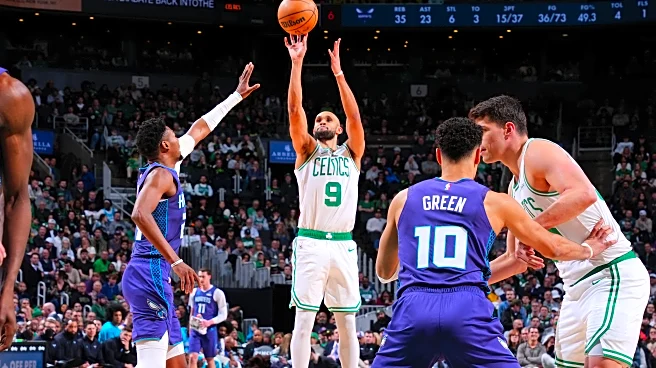
Charlotte Hornets

Tale of the tape
- Season series: Split (Celtics 1–1)
- Average score: Boston 101.5 — Charlotte 108.5
- Injuries: Mostly healthy core after early-season absences (LaMelo Ball, Brandon Miller now fully integrated)
- When you boil it down: Meet the Junior Celtics. High-volume threes, win in the margins, and have been one of the hottest teams in the East since the midway point.
Boston will win if…
They impose physicality and take away Charlotte’s rhythm from three.
The Hornets want to shoot a lot of threes, play with a lot of pace, and relentlessly crash the offensive glass. They’re near the top of the league in three-point volume and makes and lean heavily into that math advantage.
Boston has already shown the blueprint here. In the win in Charlotte, the Celtics defended the arc, limited second chances, and made the Hornets play inside the lines. When that happens, Charlotte’s offense loses some of its bite. They can still score, but it becomes more dependent on individual creation from LaMelo Ball or Brandon Miller rather than their preferred ball movement and spacing game.
On the other end, Boston can hunt mismatches. Charlotte has length, but they don’t have a ton of answers for Tatum and Brown working downhill or in space. If the Celtics keep the ball moving and avoid stagnant possessions, the shot quality will be there all series.
Charlotte will win if…
They win the math battle and turn this into a volume shooting contest.
The Hornets don’t need to out-execute Boston possession by possession. They just need to take more shots, hit more threes, and create just enough chaos to swing a couple of games.
LaMelo’s playmaking is the engine for everything they do. He can generate high-value looks quickly, especially in early offense. Brandon Miller adds another layer as a scorer who can heat up from deep or attack mismatches.
And then there’s the ecosystem around them. Kon Knueppel’s shooting, newly returned Grant Williams doing all the annoying Grant Williams stuff, Miles Bridges flying around defensively — it all adds up to a team that can compete on a nightly basis.
If Boston gets loose with turnovers or loses shooters without making adjustments, Charlotte could absolutely put together some quarters where the math gets out of hand.
Worry Level: You’re having a great time in the pool but you briefly wonder if the water might be a little too warm (Boston in 5)
You’re not getting out of the pool. You’re not even moving from your spot. But now the thought is in your head, and you don’t love that it’s there.
Charlotte can plant that same thought if they assert themselves in this series. Boston should handle this comfortably, but the Hornets’ pace, three-point volume, and ability to string together quick runs can make the Celtics work for it, which can be enough to knock a championship run off course. Charlotte has a way of making the game feel faster and more chaotic than it should. If Boston can play their game, they’ll be fine.
There’s probably nothing to worry about. Pools run warm sometimes. You just don’t want to be the one still in it when it’s more than clear that something is off.