
Pitching injuries happen. They have always happened, and they always will happen. That’s why when someone says “there’s no such thing as too much pitching”, they’re correct, regardless of how much pitching that team actually has. You could have a rotation of prime Clayton Kershaw, Justin Verlander, Pedro Martinez, Cy Young, and Randy Johnson, and that would still not be enough pitching (I don’t know why those are the five names that came to mind. It’s late. Leave me alone).
The Red Sox, despite having
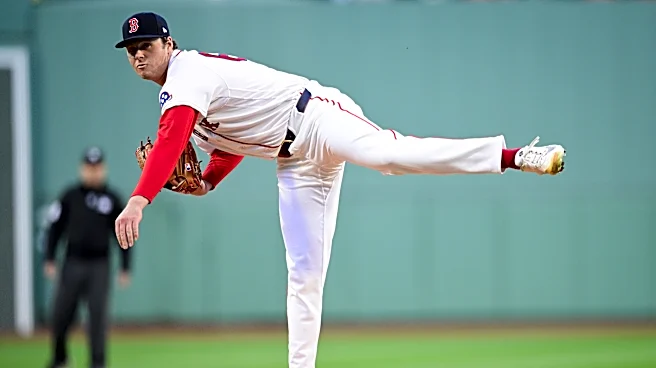
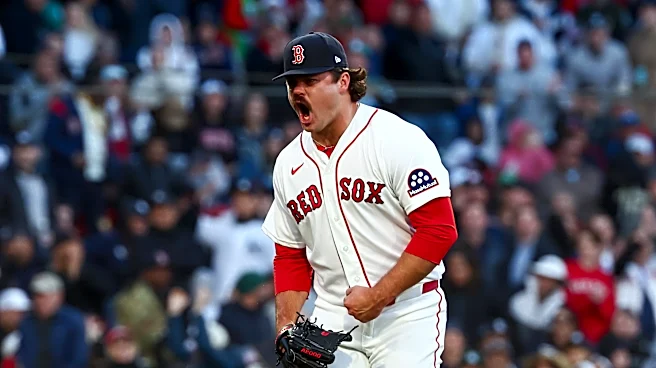
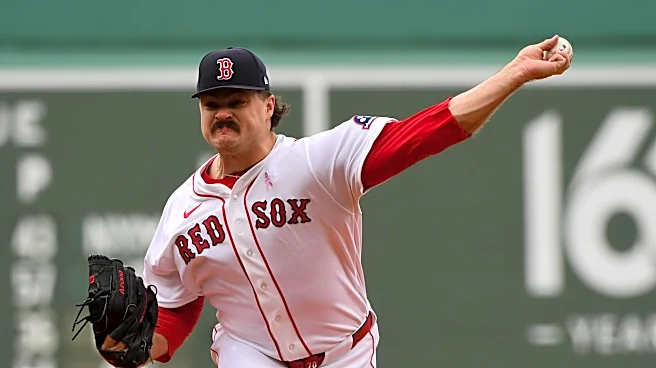
plenty of pitching, have proven that rule. Through the first month or so of the season, they’ve had eight different pitchers start games, and only one has been a scheduled opener. That also doesn’t include Johan Oviedo, who was injured before he could get a crack at the rotation. One of those pitchers was Jake Bennett, who most didn’t expect to debut in May. Thanks to a series of injuries, some major and some minor, he got his chance on May 1st. Since then, he’s made two starts, thrown 10.1 innings while registering a 4.35 ERA, 9.5% strikeout rate, and 9.5% walk rate. While those numbers are far from stellar, they’re not bad, and he’s held his own in those two games.
After Spring Training, I was excited about Bennett as a prospect. He’s a huge lefty who was throwing hard and using his frame to get down the mound. He’s also equipped with a plus changeup, a useful tool in neutralizing right-handed hitters. After two starts in the big leagues, I walked away underwhelmed, but not discouraged.
Bennett struggled to punch out hitters. Over his two starts, he only struck out four guys. He got to two-strike counts against 19 hitters. I actually don’t know what the league-wide conversion rate for two-strike counts into strikeouts is, but about 19% of two-strike pitches go for strikeouts, so it has to be above Bennett’s mark of 21%. Doing my best to be polite to Mr. Bennett, I’d say it’s because his stuff isn’t good enough. Here’s a look at his two-strike command against each side.


Against righties, it looks pretty good. The changeups are down and away, while the four-seamers are upstairs. Of those 37 pitches, however, just two returned whiffs, while 12 were fouled off to extend at-bats. While I can’t definitively give a reason for that, I’d say it’s because the four-seam fastball isn’t enough of a threat. Through two starts, it’s averaged 92.6 mph. The 7.1 feet of extension it’s thrown with helps it play up, but it only has about 11 inches of induced vertical break. The height-adjusted vertical approach angle is just 0.5 degrees, meaning it’s not an outlier at all in terms of shape.
It’s returned two strikeouts, but it feels to me like hitters aren’t threatened by it. His changeup is his best pitch, and he’s yet to strike out a right-handed hitter with it, depsite good locations. Almost half of his two-strike changeups to righties have been fouled off. It’s a good pitch; it’s generated whiffs earlier in counts, but it feels to me as if he’s missing a third pitch to prevent hitters from seeing a low pitch and identifying it as a changeup.
He has a curveball and a cutter, but neither has shown bat-missing ability so far. He doesn’t generate a ton of spin on any of his pitches, so finding a breaking ball to add to his arsenal could be a challenge. The low spin rate allows him to create depth on his changeup, which is a plus, but it makes it difficult for him to get lift on his fastball and move the ball to the glove side with a breaking ball. I think adding a quality breaking ball will be difficult, so his best path forward is likely to add velocity. It’s easier said than done, but his fastball was up to 98 mph in Spring Training, so there’s clearly room to grow in that department.
Against lefties, the story is similar. He does a good job locating his sinker on the arm side for weak contact and quick outs, but a breaking ball, something to throw away from lefties, is necessary to increase his strikeout rate. He uses his changeup against lefties, which can miss bats, but the downside is it’s often in an area where lefties can drop the barrel and tee off on it. That hasn’t happened for Bennett yet, but it happens to same-handed changeups when they’re poorly located.
It’s not all bad, though. Bennett hasn’t made many mistakes over the plate and has missed barrels as a result. It’s not overpowering, and he probably hasn’t been in the zone as much as he’d like, but he’s done a nice job living on the edges. With Sonny Gray and Ranger Suarez returning to the rotation, Bennett was optioned back to Triple-A. If the Red Sox need him, though, he’s a high-floor option, with the ceiling of an excellent pitcher. He’ll need to add some velocity and potentially a breaking pitch to reach that ceiling, but the bones of a major league rotation piece are there.