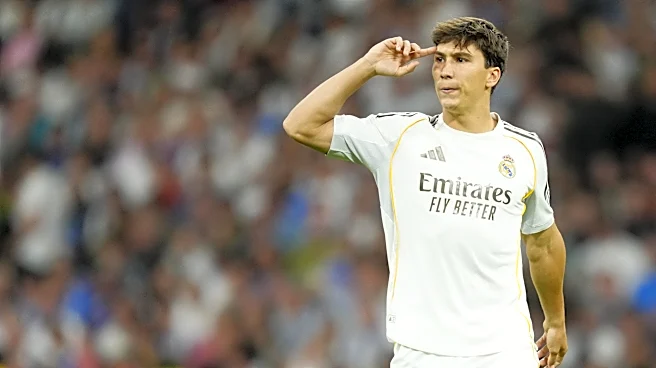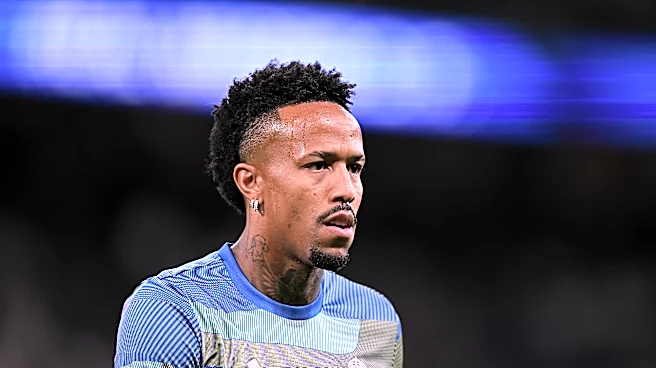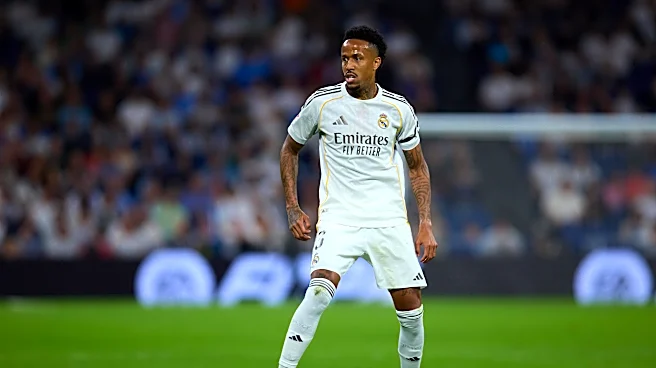



Lasse Lempainen, the surgeon who operated on Real Madrid defender Éder Militão, has shed light on the seriousness of the Brazilian’s injury in an interview with Marca, emphasizing that surgery was the only viable option to preserve his career at the highest level.
Lempainen described the gravity of the situation:
“There was no other option. Militao is my patient, and we have a trusting doctor-patient relationship. I can’t reveal anything that hasn’t been previously published. What I can say is that his
injury was very serious. The only option was surgery: with that hamstring injury, he couldn’t continue his professional career at the highest level. The decision was clear. We are very sorry that, as a result, he won’t be able to participate in the World Cup this summer.”
He went on to explain how common hamstring injuries are in football, while highlighting the distinction between typical cases and more severe ones like Militão’s:
“Generally speaking, musculoskeletal injuries, and hamstring injuries in particular, are very common in football. Most affect muscle tissue and can be treated without surgery. However, when the injury is severe and the athlete is at a high level, surgery is often necessary. There are different types: some are complete tendon ruptures, like Militao’s, and others are less severe, with different rehabilitation processes. In severe cases, several months are needed to return to play, and return-to-performance tests must be performed before clearing the player to return.”
Discussing recovery timelines, Lempainen provided a general framework for elite athletes dealing with similar injuries:
“It also depends on their physical condition prior to the injury. Generally speaking, when a top-level footballer suffers a serious hamstring injury, it takes between four and six months for them to be able to return to competing at the highest level.”
He also acknowledged the inherent risks that come with returning from such injuries, stressing the importance of careful rehabilitation:
“There is always some vulnerability and residual risk, as with many other injuries: knee, ankle, etc. In a sport as demanding as professional football, there is always some risk. That’s why it’s essential to have a good operation and a well-planned rehabilitation, progressing step by step. At the end of the process, the goal is to minimize that risk as much as possible so that the athlete can return with the best possible chance of success.”
Despite the severity of the injury, Lempainen expressed optimism about the possibility of a full return to peak performance:
“Yes (Militao can return to his explosive best). I’ve treated many elite athletes with serious hamstring injuries, and they’ve been able to return to their peak performance. Many young players have even had their best years after a serious injury and surgery.”
He also touched on the broader context of injury risk, particularly for players with a history of knee problems:
“I can’t speak to Militao’s case here, but generally speaking, we know that an athlete who has suffered a knee injury and undergone cruciate ligament surgery has a slightly higher risk of subsequently suffering a lower body muscle injury. This is a known fact, but it doesn’t necessarily apply to Militao’s situation.”
Finally, Lempainen emphasized the importance of managing workload in modern football to prevent injuries and support recovery:
“it’s important to find a balance between the workload of matches and rest and recovery. We know these athletes play in the league, in the Champions League, they travel constantly… All of that must be taken into account. A good balance must be found between the demands placed on muscles and tendons and the recovery exercises.”